
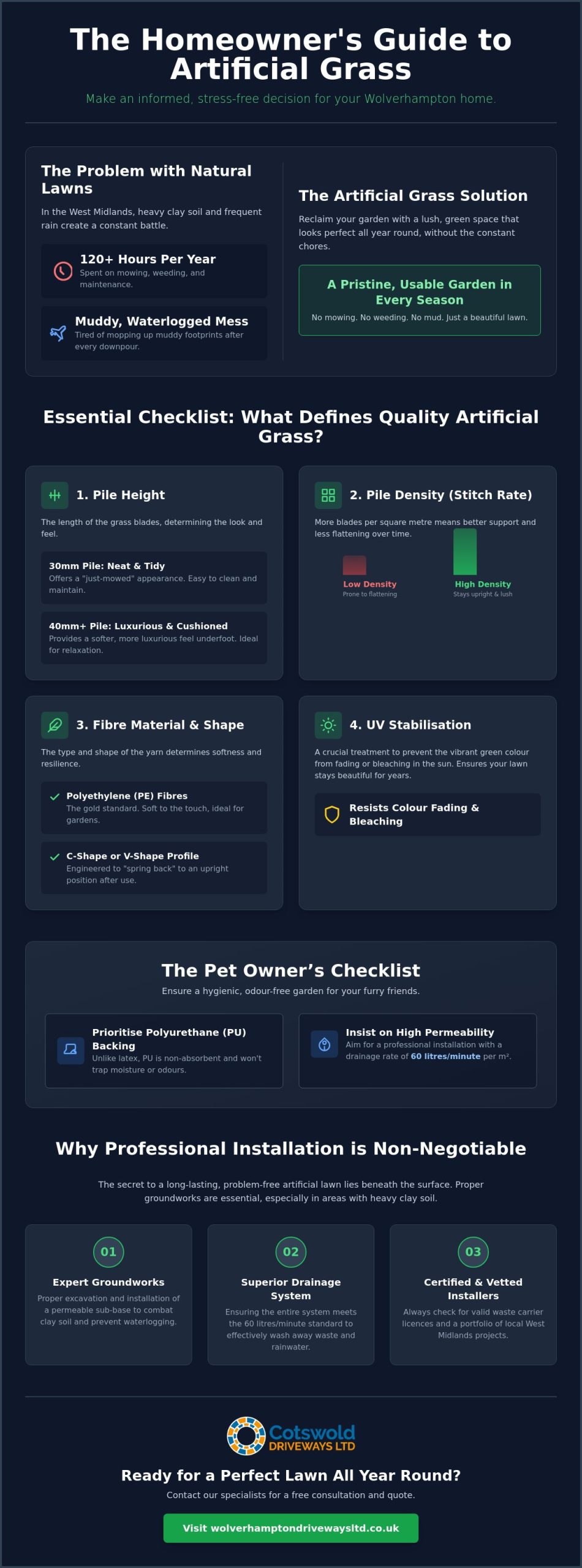
The average UK homeowner spends upwards of 120 hours every year on natural lawn maintenance. For many families in the West Midlands, that time is often spent battling heavy clay soil that quickly turns into a muddy mess after a typical downpour. If you’re tired of mopping up footprints or dealing with patchy, waterlogged turf, switching to artificial grass wolverhampton offers a reliable way to reclaim your garden. You want a lush, green space that looks great without the constant chore of mowing and weeding.
We understand that the sheer variety of grass piles and densities can feel overwhelming when you’re just looking for a simple solution. This guide provides a clear, practical checklist to help you choose a high-quality lawn that drains properly and stays vibrant through every season. We’ll walk you through the essential steps of a professional installation, from selecting pet-friendly materials to ensuring your drainage meets the 60 litres per minute standard. It’s everything you need to make an informed, stress-free decision for your home.
Key Takeaways
- Learn how to distinguish high-quality turf by comparing pile heights and stitch rates to ensure your new lawn stays upright and lush for years.
- Discover the best options for pets and families, focusing on durable fibres and permeable backings that effectively prevent drainage issues and odours.
- Understand why professional groundworks are the secret to a successful installation of artificial grass wolverhampton, especially in areas with heavy clay soil.
- Master simple maintenance routines, including regular brushing and debris removal, to protect your investment and keep the garden looking pristine.
- Identify the essential credentials to check when hiring a local specialist, such as valid waste carrier licences and a portfolio of local West Midlands projects.
Essential Checklist: What Defines Quality Artificial Grass?
Choosing artificial grass wolverhampton homeowners can trust starts with looking past the surface. When you’re presented with a dozen different samples, it’s easy to feel overwhelmed by the choice. The build quality of the turf determines whether your garden remains a vibrant asset or becomes a flattened, faded disappointment within a few seasons. You need a lawn that stands up to the unpredictable West Midlands weather whilst providing a safe, comfortable space for your family.
Pile height is your first major decision. A 30mm pile offers a neat, “just-mowed” look that’s incredibly easy to keep clean. If you want a more luxurious, cushioned feel underfoot, opt for 40mm or higher. However, height alone isn’t enough. You must check the pile density, often referred to as the stitch rate. A higher density means more blades of grass per square inch. This provides the structural support needed to prevent the turf from looking flat after people walk on it. To understand the technical side, it’s helpful to know what artificial turf is made of, as the combination of primary and secondary backings creates the foundation for this durability.
UV stabilisation is another critical factor. Quality turf is treated to resist the sun’s rays, ensuring the colour doesn’t bleach or fade over time. Finally, look at the backing material. High-quality SBR latex is a dependable choice for most gardens, but polyurethane (PU) backings are becoming increasingly popular. PU is non-absorbent, making it a superior option if you have pets, as it won’t trap odours like traditional latex can.
The “Hand-Feel” Test for Homeowners
Don’t just look at the grass; touch it. Soft polyethylene fibres are the gold standard for residential gardens. They feel gentle against the skin, unlike scratchy polypropylene which can be abrasive. For a truly natural look, check for a multi-coloured “thatch” layer. This consists of curly brown and tan fibres at the base that mimic the organic matter in a real lawn. You should also test the spring-back capability. Fibres with a C-shape or V-shape profile are designed to snap back into an upright position far more effectively than flat fibres.
Safety and Certification Check
Your garden must be a safe environment for everyone. Always verify that your chosen artificial grass wolverhampton product is certified lead-free and non-toxic. This is especially important for households with young children and pets who spend time close to the ground. Fire retardant certifications are equally vital, providing peace of mind during the summer months when you might be using a barbecue nearby. Many modern homeowners also look for recyclable backings. Choosing a product that can be repurposed at the end of its lifespan is a responsible way to enjoy a green space.
Selecting the Right Grass for Your Lifestyle
Your garden serves a purpose. Whether it’s a football pitch for the kids, a sanctuary for pets, or a pristine frame for your home, the type of turf you choose must match your daily life. Selecting artificial grass wolverhampton homeowners can rely on involves more than just picking the prettiest sample. You need to consider footfall, drainage requirements, and how the texture will feel underfoot after a year of heavy use. A high-density pile is essential for family play areas to ensure the fibres don’t flatten under the weight of garden furniture or active children.
For many, the lawn is the finishing touch to a wider renovation. It should sit seamlessly alongside your garden patio design in Wolverhampton, creating a clean transition between hard landscaping and green space. If you’re focusing on a front garden or a decorative area with low traffic, you can prioritise a longer, more luxurious pile height that emphasises aesthetic beauty over pure durability. If you’re planning a full garden transformation, we can help you select the ideal artificial grass to complement your existing outdoor features.
The Pet Owner’s Checklist
Pet owners face unique challenges, particularly regarding hygiene and odours. Standard latex-backed grass can sometimes trap pet urine, leading to unpleasant smells during the warmer months. We recommend prioritising polyurethane (PU) backing, which doesn’t absorb moisture. When combined with a high-permeability sub-base, this allows for a drainage rate of approximately 60 litres per minute per square metre. This ensures that waste is washed away effectively during rain or when you hose down the area. Using antimicrobial infills can also provide an extra layer of protection against bacteria and lingering scents.
Maximising Kerb Appeal
A well-chosen lawn can significantly enhance your property’s appearance. In the West Midlands, natural grass often has a specific deep green hue. Selecting the right artificial grass wolverhampton variant ensures you get a product that mimics this local colour, so your garden doesn’t look out of place amongst neighbouring properties. Non-directional piles are an excellent choice here; they look consistent from every angle, preventing that shiny, “plastic” appearance when viewed from the street. A lush green lawn also provides a striking contrast when it frames a professional tarmac driveway in Wolverhampton, giving your home a finished, high-end look that lasts all year round.
The Professional Installation Checklist: Base Prep and Drainage
A beautiful surface is only as good as the groundworks beneath it. For a long-lasting installation of artificial grass wolverhampton homeowners need to look past the green carpet and focus on the excavation. Quality starts with removing the existing turf and soil to a depth of at least 75mm to 100mm. This creates enough space for a solid, multi-layered foundation that won’t shift or sag over time. Once cleared, a heavy-duty geotextile weed membrane is applied. This layer is vital; it prevents regrowth whilst allowing water to pass through freely into the sub-base.
The sub-base itself usually consists of two distinct layers. We use Type 1 MOT for the primary structural layer to provide a stable, load-bearing surface. This is followed by a finer layer of granite dust or grit sand, which is compacted to create a perfectly smooth, level finish for the grass to sit on. To keep everything in place, secure edge restraints are essential. Whether you choose treated timber, brick, or composite edging, a solid perimeter ensures the lawn remains taut and prevents the base materials from migrating into your flower beds.
Solving the Wolverhampton Clay Problem
Many gardens in the West Midlands suffer from poor drainage due to heavy clay-heavy soil. Standard DIY projects often fail here because they don’t account for how water behaves in these conditions. Without a “dynamic” sub-base that allows water to escape the surface quickly, your lawn can become a boggy mess during a typical British winter. If your garden is particularly prone to standing water, we often recommend installing additional land drains or soakaways before the main sub-base goes down. This ensures your artificial grass wolverhampton remains usable and puddle-free even after a heavy downpour.
The Finishing Touches
The difference between a DIY job and a professional finish is found in the final details. Professional seaming is a craft; you should never be able to spot a join in a high-quality installation. We use professional-grade adhesive and joining tape to create a seamless, unified surface. Once the grass is secured, we apply a kiln-dried sand infill. This sand settles at the base of the fibres, providing the weight needed to hold the carpet down and the support required to keep the blades standing upright. We finish the project with a power brush, which lifts the pile and gives the lawn that perfectly manicured, “freshly installed” look from day one.
Longevity and Maintenance: Keeping Your Lawn Lush
It is a common misconception that synthetic turf is entirely maintenance-free. Whilst it certainly removes the need for weekly mowing, a small amount of regular care is essential to protect your investment. To keep your artificial grass wolverhampton looking as vibrant as the day it was installed, you should adopt a simple routine. This ensures the surface remains safe, clean, and durable for its entire lifespan. Most tasks take just a few minutes but make a significant difference to the garden’s appearance.
Debris removal is your most important task. Organic matter like fallen leaves, twigs, or seeds can break down over time if left alone. When this happens, it creates a fertile base for moss or weeds to grow amongst the synthetic fibres. A quick sweep with a plastic leaf rake or a leaf blower once a week is usually enough to keep the surface clear. If you do spot any moss, a water-based weed killer can be used safely, provided it doesn’t contain bleach or strong acids that might discolour the blades.
Brushing is equally vital for maintaining the “grain” of the lawn. In high-traffic zones, the fibres can eventually begin to lean or flatten. You can easily fix this by using a stiff natural-bristle broom to brush against the pile. This simple action pulls the blades back into an upright position and redistributes the sand infill. For accidental spills like coffee, wine, or oil, acting fast is key. Most stains can be removed with warm, soapy water and a clean cloth. If you’re ready to enjoy a garden that stays green all year with minimal fuss, we can provide a high-quality artificial grass installation tailored to your specific garden layout.
Seasonal Care Guide
Your lawn reacts differently to the changing West Midlands weather. In autumn, stay on top of leaf clearance to prevent the sand infill from becoming clogged. During winter, it’s best to let snow and ice melt naturally. Using a metal shovel can snag the backing or tear the polyethylene blades. If we experience a summer heatwave, you might find the surface feels warm underfoot. A quick spray with a garden hose will lower the temperature instantly, making it comfortable for children and pets to play on again.
Protecting Your Investment
There are a few external factors that can cause permanent damage if you aren’t careful. “Turf melt” is a real risk caused by sunlight reflecting off highly reflective surfaces like double-glazed windows or mirrors. This concentrated heat can actually melt the plastic fibres. You should also avoid using a vacuum cleaner on your lawn; it will suck up the essential kiln-dried sand infill that provides stability. Finally, ensure your garden remains a tidy, secure environment. Many local homeowners choose to frame their new lawn with professional garden fencing in Cannock to keep the perimeter looking as sharp as the turf itself.
Choosing an Artificial Grass Installer in Wolverhampton
Selecting the right team for your artificial grass wolverhampton project is just as critical as the quality of the turf itself. You want a contractor who understands the local area and has a proven track record in Wolverhampton, Telford, or Dudley. A local reputation isn’t just about a friendly face; it’s about seeing real-world results that have stood the test of time in West Midlands gardens. When you review a portfolio, look closely at the edges and joins. A master-craftsman ensures the joins are invisible and the edges are crisp, secure, and flush with your flower beds or patios.
Don’t be afraid to ask for proof of insurance and licensing. Any reputable installer should hold valid public liability insurance and a waste carrier licence. The latter is especially important because installing a new lawn involves removing a significant amount of old turf and soil. You need to know that this waste is being disposed of legally and responsibly. If your garden renovation is part of a wider property tidy-up, professional firms like Clear This Ltd House Clearance Services set the standard for ethical waste disposal and property clearing. When comparing quotes, ensure they are comprehensive. A professional quote should clearly include the cost of groundworks, waste removal, sub-base materials, and the final kiln-dried sand infill. If a price seems too good to be true, they might be cutting corners on the essential preparation layers we discussed earlier.
The Full-Service Advantage
There is a distinct benefit to hiring a specialist who also handles driveways and paving. Because we are experts in groundworks and drainage, we treat your lawn foundation with the same precision as a structural project. This holistic approach is perfect if you’re planning a complete garden transformation. Many homeowners choose to coordinate their new lawn with a resin bound driveway in the West Midlands for a cohesive, high-end finish. Using a single contractor for both the hard and soft landscaping ensures that drainage levels and aesthetic styles match up perfectly across your entire property, saving you the stress of managing multiple tradespeople.
Questions to Ask Your Local Contractor
Before you sign any contract, have a direct conversation with your installer. Ask them specifically about how they handle the clay-heavy soil common in Wolverhampton. You should ask: “What depth of sub-base do you use for clay-heavy soil?” A shallow base will lead to drainage issues later. Follow up by asking: “How do you secure the edges to prevent tripping hazards?” and “Can I see a local project you completed at least two years ago?” Seeing an older project is the best way to verify that their installation techniques prevent sagging or flattening over the long term. This transparency builds the trust you need for a successful, long-lasting home improvement. For a real-world example of how integrated groundworks and landscaping come together, see our landscaping and driveways Telford property transformation case study, which demonstrates how a single contractor can deliver a cohesive result across an entire plot.
Transform Your Outdoor Space Today
Reclaiming your garden starts with making the right choice for your lifestyle. We have explored the importance of selecting high-quality fibres and the critical role that professional groundworks play in managing the local clay soil. A successful installation of artificial grass wolverhampton homeowners can be proud of depends on attention to detail, from the sub-base depth to the final power brush finish. By following this checklist, you ensure a lawn that remains vibrant and usable regardless of the weather. To further improve your home’s appearance and enjoy your new garden from the inside, you can visit Universal Blinds UK for a selection of made-to-measure blinds.
We are specialists in West Midlands groundworks and drainage, providing a reliable service that can reduce your garden maintenance by up to 90%. Our team consists of fully insured and licensed installers committed to delivering a stress-free transformation for your home. You deserve a garden that looks pristine without the constant chore of mowing or weeding. We are ready to help you achieve that perfect look with a durable, high-quality finish that stands the test of time.
Get your free, no-obligation artificial grass quote from Wolverhampton Driveways Ltd today.
We look forward to helping you create a beautiful, low-maintenance garden that your family will enjoy for years to come.
Frequently Asked Questions
Is artificial grass in Wolverhampton safe for dogs?
Yes, it is perfectly safe for pets and highly durable. We recommend choosing a polyurethane (PU) backing because it doesn’t absorb liquids, which helps prevent unpleasant odours. Combined with a permeable sub-base, pet waste drains away quickly. It is a great way to stop muddy paws from being trailed through your house during the wetter months.
How long does an artificial lawn installation take?
Most residential installations are completed within one to three days. This timeline includes the initial excavation, base preparation, and the final laying of the turf. Larger gardens or those with complex shapes might take slightly longer. We always aim to work efficiently to minimise disruption to your home whilst ensuring the groundworks are perfect.
Does artificial grass get hot in the summer?
Synthetic turf can become warm in direct sunlight during a heatwave. However, it rarely becomes too hot to walk on comfortably. If the surface feels warm for children or pets, a quick spray with a garden hose will cool the polyethylene fibres instantly. Many modern grasses are also designed with UV stabilisation to manage heat better.
Will artificial grass help with my garden drainage problems?
Yes, professional installation is a highly effective solution for waterlogged gardens. By replacing clay-heavy soil with a dynamic sub-base of MOT Type 1 and granite dust, we create a system that can drain up to 60 litres of water per minute. This ensures your artificial grass wolverhampton stays dry and usable even after the heavy rain common in the West Midlands.
Can I install artificial grass over my existing patio or decking?
You can install it over hard surfaces, provided they are level and have adequate drainage. We usually apply a shock-absorbent underlay first to ensure the grass feels soft and natural underfoot. It is a popular way to transform a tired concrete area or a slippery wooden deck into a lush green space without a full excavation.
How long does artificial grass actually last in the UK climate?
High-quality artificial turf typically lasts between 10 and 15 years in the UK. The durability depends on the density of the pile and the quality of the initial groundworks. Regular brushing and debris removal will help extend its lifespan. It is designed to withstand frost, heavy rain, and intense UV exposure without fading or degrading.
Is artificial grass better for the environment than a real lawn?
It offers several environmental benefits, such as eliminating the need for petrol mowers and chemical fertilisers. You won’t need to use thousands of litres of water to keep it green during a dry spell. Whilst it is a synthetic product, many modern backings are now being designed to be recyclable at the end of their life.
What is the best way to clean artificial grass?
The best way to keep your lawn clean is to use a plastic rake or leaf blower for organic debris. For general dust or pet areas, a simple hosing down with water is sufficient. You can use a stiff natural-bristle broom to brush the pile back up in high-traffic areas. Don’t use power washers on high settings as they can displace the sand infill.