
A good artificial lawn starts with the ground beneath it. Installation in Telford typically takes 1-3 days, depending on garden size and preparation work. Experienced artificial turf fitters in Telford prepare the area, build a suitable base and fit the grass so it sits neatly.
If you’re considering artificial turf fitters in Telford, there’s more to the job than rolling out grass over soil. Careful preparation helps create an even surface and supports drainage, while accurate cutting and joining give the lawn a neat finish. Knowing the stages makes it easier to plan the project and understand what affects the work.
This guide covers the process, from clearing and preparing a garden lawn to laying artificial grass, and explains what to consider for domestic, commercial and sports projects. You’ll also learn what can affect the timescale and how to plan an installation that suits your space.
Key Takeaways
- Match the turf and installation approach to how the space will be used, whether it’s a family garden, a commercial area or a sports project.
- Assess access, existing ground conditions and drainage before planning the work; these details shape the preparation needed for a garden lawn.
- Understand what a site survey and written quote should clarify, including the work involved and the factors that affect the project price.
- For a driveway project rather than a lawn, explore Wolverhampton Driveways’ tarmac, block paving and resin bound options.
Domestic, commercial and sports projects
Artificial grass can suit many spaces, but the surface and preparation should match how you intend to use it. Start by identifying who will use the area and what demands it needs to handle.
Planning and drainage considerations
For a Telford garden, assess the ground, nearby buildings and existing drainage before deciding on the lawn’s layout. Planning requirements depend on the property and the work involved, so the choice of grass alone does not determine them. A site assessment should establish where rainwater will go and whether the proposed base could affect existing drainage routes.
Site surveys and quotes
Free surveys and quotes depend on each fitter’s policy; there isn’t one standard arrangement for Telford projects. A site visit can help establish access, ground conditions, lawn shape and preparation needs. Compare written quotes by checking that they describe removal, base preparation, grass fitting and waste handling, rather than looking only at the final figure.
Domestic lawns should be planned around everyday use. A family garden, for example, may need clear routes between the patio, lawn and garden gate. A small courtyard calls for careful measuring and neat joins around planters. Tell the installer how people will use the space, including whether children or pets will regularly cross it.
Commercial settings bring different practical demands. An entrance or shared outdoor area needs a layout that works around access points and existing features. Sports projects require particular attention to the activity, surface requirements and expected use. A lawn for informal recreation is not automatically suitable for organised sport. The project’s purpose matters as much as its appearance.
Reviews and examples of past work are most useful when they relate to your project. Compare completed gardens similar in shape, access and intended use to yours. Look for consistent comments about communication, preparation and finish, rather than relying on a single rating. Read any written guarantee carefully, including its coverage, exclusions and maintenance conditions.
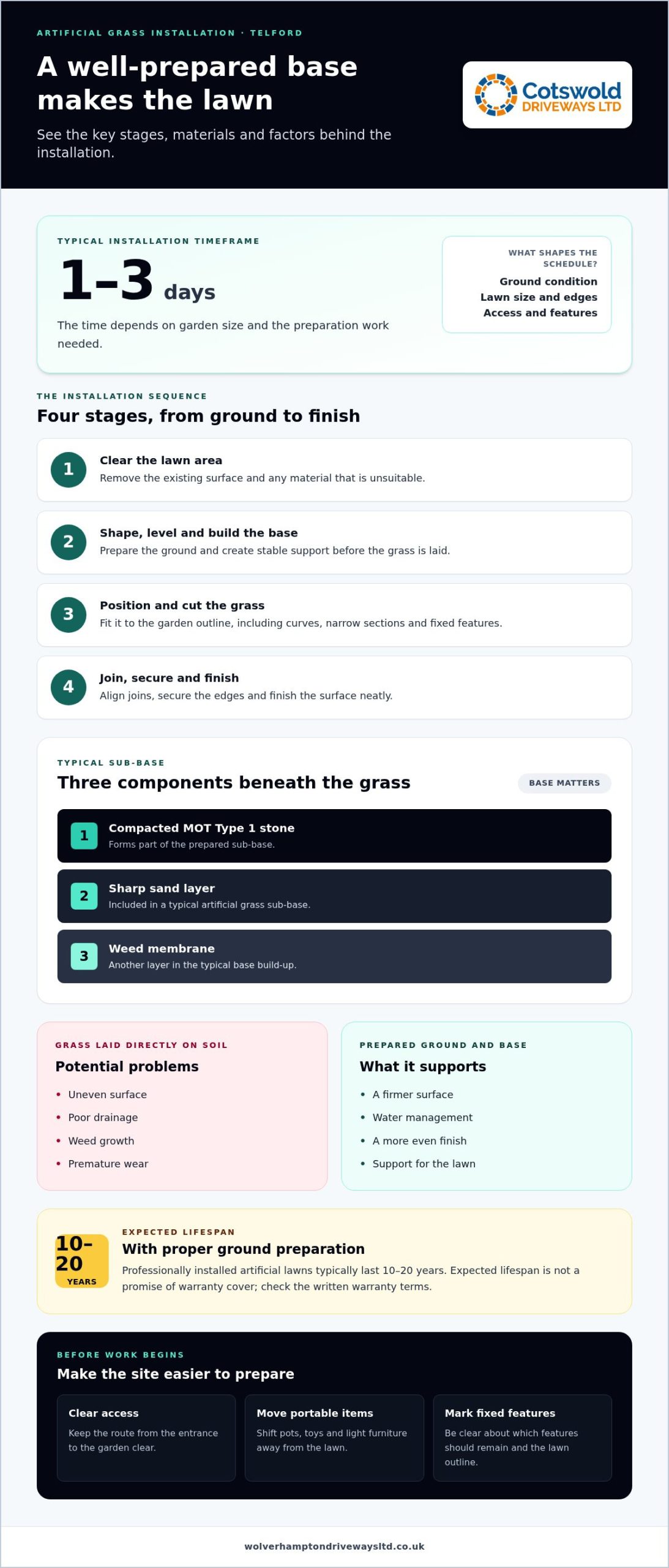
Professionally installed artificial lawns with proper ground preparation typically last 10-20 years. Regularly remove leaves and other debris, and follow the product’s care instructions. The expected lifespan and warranty are separate: a stated lifespan isn’t a promise of cover. Read the warranty terms before agreeing to the work.
Garden lawn installation
What types of artificial grass suit Telford gardens, pets and children? Options range from shorter, neater-looking grass to longer, softer-looking styles, with different colours and textures. Choose based on the lawn’s intended use, appearance and maintenance needs, rather than assuming one type suits every household.
For a garden shared with children and pets, map out the areas they use most. A route from the back door to a play space, for instance, may need a different layout from a decorative border around a patio. Consider where outdoor furniture, toys or pet areas will go so they do not interrupt the finished lawn.
Measure the lawn’s length and width, then note any curves or fixed features. A simple sketch showing the garden gate, shed and patio helps make the intended shape clear. Include awkward corners and narrow strips, as these affect how the grass is cut and positioned. Accurate measurements can also reduce unnecessary offcuts.
Artificial grass installation in Telford typically takes 1-3 days, depending on garden size and preparation work. A compact, straightforward lawn may involve less work than a larger garden with uneven ground or several edges to fit. The condition of the existing surface is a key factor in planning the job.
Before work begins, clear access to the garden gate and lawn. Move pots, children’s toys and light furniture, and decide which fixed features should remain. This gives the installers room to work and keeps the agreed lawn outline clear throughout the project.
Installation process
A sound installation follows a clear sequence, from removing the existing surface to fitting and finishing the grass. Each stage prepares the garden for the next.
Installation stages
First, installers clear the lawn area and remove unsuitable material. They shape and level the ground, then build a stable base. A typical artificial grass sub-base includes compacted MOT Type 1 stone, a sharp sand layer and a weed membrane.
Grass laid directly on soil can create an uneven surface, drain poorly, allow weeds to grow and wear prematurely. A prepared base gives the lawn firmer support and helps manage water. The ground and base layers need to be assessed together, not treated as separate details.
Once the base is ready, installers position the grass and cut it to fit the garden’s edges. They align the joins, secure the edges and finish the surface. For example, a lawn with a curved border needs accurate trimming to follow the outline neatly and avoid gaps.
Installation timeframe
Artificial grass installation in Telford typically takes 1-3 days, depending on garden size and preparation work. The calendar time is shaped by the amount of ground to clear, the condition of the existing surface and the number of edges or features to fit around.
A clear, accessible lawn with a simple outline needs less preparation than a garden with uneven ground, narrow sections or several fixed features. Base preparation is an essential part of the schedule, not a stage to skip for speed. Fitting and finishing follow once the surface is ready.
Before work starts, keep the route from the entrance to the garden clear. Move portable pots, toys and furniture away from the lawn, and mark any garden features that must stay in place. These practical steps help installers reach the work area and understand the intended layout.
At completion, look across the lawn for consistent joins, tidy edges and an even finish. Check how the grass meets paths, borders and other fixed features. These details show how carefully the fitting follows the garden’s shape.
Do Telford turf fitters provide free site surveys and quotes?
Whether a site survey or quote is free depends on the fitter’s terms; there’s no single arrangement for every Telford project. A written estimate helps you understand the proposed work before making a decision. Check what the survey covers and whether any charge applies before arranging a visit.
A useful survey considers the lawn’s measured area, shape and intended use. A rectangular garden with clear boundaries, for example, is simpler to assess than a lawn with curved edges, trees or several separate sections. These details help the fitter describe the work and identify practical requirements.
Prepare a few details before requesting a quote. Note the lawn’s approximate dimensions, existing surface, access route and features that need trimming around. Photos can help explain a narrow side passage or raised border. Be clear about whether you want the whole garden covered or only a defined section.
Read the written quote for a clear description of the proposed work. It should explain which preparation and installation tasks are included, how the lawn’s edges and joins will be finished, and how removal of existing material is handled. If an item is described broadly, ask for its scope to be set out plainly before accepting.
Price depends on the project and is given after a quote request; the lawn’s size, shape, access and preparation requirements affect the cost. Compare quotes on the same scope of work, not just the headline total. A lower figure may describe fewer tasks, so check that each estimate covers the same parts of the project.
Keep the estimate and any agreed specifications together. Before work begins, confirm the chosen grass, the area to be covered and the finish around fixed features. For a straightforward next step, discuss your garden project and outline the lawn’s size, access and intended use.
Wolverhampton Driveways: Tarmac Driveways
Wolverhampton Driveways is a natural next step if your garden project also includes a driveway. Artificial grass can renew the lawn, while a separate driveway improvement addresses the approach to your home.
For a new or updated driveway, Wolverhampton Driveways offers Tarmac Driveways, Block Paving and Resin Bound Driveways. If the existing surface needs attention, Driveway Cleaning & Repairs may be suitable. The right option depends on the driveway work you need, not the lawn installation itself.
Keep the two parts of your plans distinct: identify which area is for artificial grass and which is for the driveway. This makes it easier to explain the scope of each project and plan how the garden and entrance should work together.
To discuss driveway options, contact Wolverhampton Driveways or visit wolverhamptondrivewaysltd.co.uk.
Plan the next step for your garden
Before arranging your project, decide how you want the finished garden to work day to day. A clear idea of the lawn’s use, edges and relationship to paths or a patio will help you explain the result you have in mind to artificial turf fitters in Telford.
If your garden changes are part of a wider home improvement, consider how the entrance and outdoor areas should fit together. Wolverhampton Driveways offers Tarmac Driveways, Block Paving and Resin Bound Driveways, alongside artificial grass. Planning these surfaces together can help clarify the work.
Whether you’re focusing on a garden lawn or also considering a driveway update, take the next step when you’re ready. Contact Wolverhampton Driveways today to discuss your project. A well-planned outdoor space can make your home more practical and enjoyable.
Frequently Asked Questions
What’s involved in an installation?
An installation involves planning the lawn area, preparing the ground, fitting the grass and finishing its edges. Before work begins, agree which parts of the garden are included and how the grass should meet paths, borders or a patio. A narrow strip beside a shed, for example, needs careful measuring. Check the finished area for secure edges and visible joins.
Which artificial turf fitters serve Telford and nearby areas?
Wolverhampton Driveways Ltd serves Telford and nearby areas, including Wolverhampton, Cannock and Dudley, and offers artificial grass. If you’re looking for artificial turf fitters in Telford, describe the garden’s location and the area you want covered when making an enquiry. This helps set out the job clearly, especially if access or the layout needs explaining.
What artificial grass installation services do Telford fitters offer?
Artificial turf fitters in Telford can help plan the lawn area and how its edges meet existing features. Wolverhampton Driveways Ltd offers artificial grass for outdoor projects. A garden with a patio, fencing or decking may need a clear plan for where each surface ends. Focus your request on the finished area and how it relates to the rest of the garden.
What preparation and installation steps are included in an artificial turf fitting?
Preparation typically includes removing unsuitable material, shaping the ground and creating a firm base before fitting the grass. A suitable base commonly uses compacted MOT Type 1 stone, sharp sand and a weed membrane. Installers then position and cut the turf, align joins and secure the edges. Flag features such as drain covers or posts so their positions are considered in the layout.
What drainage and ground-preparation requirements apply to artificial turf installation?
The ground needs preparation to support an even finish and allow water to drain through the base. Artificial grass laid straight onto soil can become uneven, drain poorly and encourage weeds. The installer should assess the surface and its levels before work begins, including low spots and the direction water can flow. This helps prevent runoff from being directed towards a building or trapped beneath the lawn.