
Could your limited parking space be the secret to boosting your home’s kerb appeal? Many homeowners feel stuck with a cramped front entrance, fearing that any new installation will only make the area look more cluttered or create drainage headaches. We understand those concerns. A small driveway shouldn’t feel like a compromise; it’s an opportunity to create a sharp, functional, and high-impact entrance that adds genuine value to your property.
This guide will show you how the right paving for small driveways can trick the eye into seeing more space while ensuring your home remains practical. We’ll walk you through the best materials, from sleek resin bound surfaces to classic block paving, and explain the design patterns that provide a clean, modern finish. You’ll discover how to choose a layout that feels open and airy, alongside practical advice on SuDS regulations to keep your plot well-drained and compliant. By the end, you’ll know exactly how to transform a tight urban plot into a stylish asset that feels far larger than its footprint suggests.
Key Takeaways
- Learn why choosing the right paving for small driveways is essential to avoid a cluttered look and ensure your home’s entrance feels truly spacious.
- Discover why seamless materials like resin bound surfacing can visually expand a tight plot by removing distracting visual breaks.
- Understand how to use diagonal patterns and the “border rule” to lead the eye and define your space without shrinking its footprint.
- Find out how to stay compliant with UK drainage regulations so you don’t need planning permission when selecting permeable materials.
- See why high-quality installation is critical in compact areas where every detail counts and how local soil conditions impact your build.
Why Small Driveways Require a Strategic Paving Approach
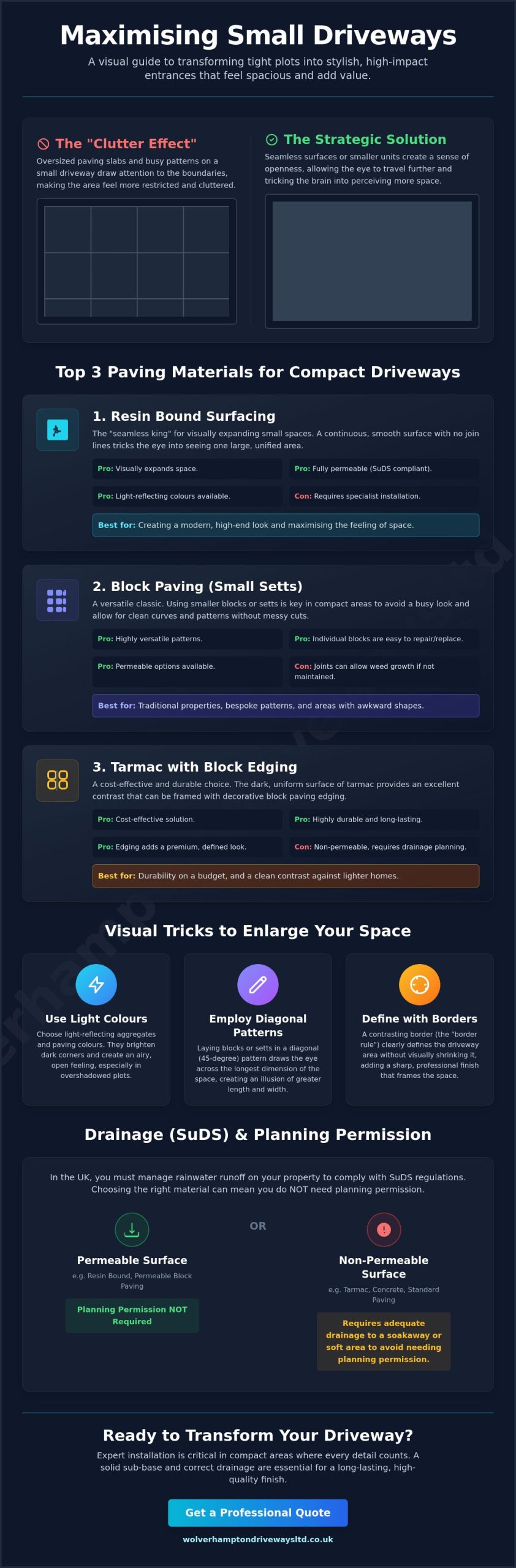
Designing for a compact area isn’t just about shrinking a standard plan. It’s about rethinking how materials and layout interact with your home’s architecture. Choosing the right paving for small driveways requires a careful eye for scale. If you opt for oversized slabs in a tiny space, you often encounter the “clutter effect.” Large units can make a small area feel even more restricted because they draw attention to the boundaries too quickly. Smaller units or seamless finishes allow the eye to travel further, creating a sense of openness that larger materials often disrupt.
In the tight urban settings of the West Midlands, balancing functionality with kerb appeal is a daily challenge. Many homes in Wolverhampton feature narrow plots where every centimetre counts. You need a surface that looks premium but can also handle the physical realities of modern life. Durability is a major factor here. In a small drive, your vehicle tyres are almost always turning in the exact same spot. This repeated “power steering scuff” puts immense pressure on the surface. Without a strategic choice of material and a solid sub-base, you’ll see wear and tear much faster than on a sprawling country lane.
Maximising Every Square Inch
Every awkward corner or “dead space” is an opportunity. A clever design can reclaim these areas for parking or better foot traffic. We often see non-rectangular plots that feel unusable. A professional survey is vital for these shapes. It ensures the drainage falls correctly and the patterns align with your existing garden features or fencing. Integrating your driveway with your landscaping creates a unified look. It prevents the drive from looking like an afterthought. When space is at a premium, you should also consider permeable paving options to manage water runoff efficiently without needing bulky traditional drains.
The Impact on Property Value
A well-planned driveway is a significant investment in your home’s marketability. In local markets, a bespoke paved entrance consistently outshines a generic, cracked tarmac patch. It signals to potential buyers that the property is well-maintained and thoughtfully designed. First impressions happen at the kerbside. A clean, modern finish can make a modest plot feel like a high-end residence. High-quality paving acts as a primary welcome signal that immediately elevates the perceived value and character of your entire home for every visitor who arrives at your door.
Top 3 Paving Materials for Compact Driveways
Selecting the right material is the most significant decision you’ll make for your project. In a limited area, the texture and finish of your surface dictate whether the space feels cramped or curated. While many options exist, three specific types of paving for small driveways stand out for their ability to maximise visual area and withstand heavy use. Each material offers a different balance of aesthetics, cost, and long-term upkeep.
Block Paving: Versatility and Repairability
Block paving is a staple for a reason. For smaller driveways, we recommend using smaller blocks or setts rather than large, wide slabs. Small setts are much easier to work into tight curves or awkward corners without requiring messy, visible cuts. This creates a far cleaner finish that respects the boundaries of your property. If a vehicle leaks oil or a block gets damaged, you can simply lift and replace that individual piece. This makes it a highly practical choice for busy households. For a perfect finish, it’s best to work with Block Paving Installers in Wolverhampton who understand local ground conditions and drainage needs.
Resin Bound: The Seamless Expansion
If your goal is to make a tiny front garden look twice its size, resin bound surfacing is the “seamless king.” Because it is poured as a continuous liquid, it removes the join lines that typically break up a floor. This lack of visual interruption tricks the brain into seeing one large, expansive surface. You can also choose light-reflecting aggregate colours. These help brighten dark, overshadowed corners common in terraced housing. When checking local paving regulations, you’ll find that resin is often favoured because it is naturally permeable. You can explore various Resin Bound Driveways in the West Midlands to find a shade that complements your home’s brickwork.
Tarmac with Brick Edging
Tarmac is a reliable, cost-effective choice for many homeowners. It provides a smooth, dark surface that contrasts beautifully with a house’s exterior. To avoid a “car park” feel, we always suggest adding a decorative brick border. This defines the space and adds a touch of class. In terms of upkeep, tarmac is relatively low-stress. While block paving requires occasional re-sanding to prevent weed growth, tarmac only needs resealing every few years. This protects the surface from the unpredictable British weather and keeps it looking fresh; for additional care tips, McCready Home Improvements provides expert guidance on preventing moss growth on tarmac surfaces. If you want a tidy entrance without a massive price tag, this combination is hard to beat.
Choosing the right finish depends on your home’s style and how you use the space. If you are unsure which material fits your budget, our team can help you compare the best options for your property.
Visual Tricks: Using Patterns and Colours to Expand Space
The layout of your driveway is just as important as the material you choose. When dealing with a restricted area, how you orient the blocks can fundamentally change how the space is perceived. Strategic paving for small driveways often relies on diagonal patterns. By laying blocks at a 45-degree angle to the house, you lead the eye across the longest dimension of the plot. This simple trick makes the brain perceive the area as wider and deeper than it actually is. If you lay blocks in straight lines parallel to the house, you risk creating a “ladder” effect that can make a short drive feel even more clipped.
Structural integrity is another reason to be fussy about your patterns. For driveways where cars are constantly turning in tight circles, the 45-degree herringbone pattern is the gold standard. It provides a superior interlock compared to the 90-degree version. This means the blocks are less likely to shift or “creep” under the weight of a vehicle. It combines safety with a sophisticated, premium look that suits both modern and traditional Wolverhampton homes.
We also frequently recommend the “Border Rule.” A contrasting border, perhaps a dark charcoal edge against a silver-grey centre, defines the space. It gives the driveway a finished, intentional look. Far from shrinking the area, a well-placed border acts like a frame on a mirror, making the central section appear more prominent and organised. It prevents the paving from simply “bleeding” into the surrounding walls or fences.
Choosing the Right Colour Palette
Colour choice has a massive impact on the “feel” of your frontage. Lighter tones like buff, sand, or silver-grey are excellent for opening up enclosed drives. These shades reflect more natural light, which is particularly helpful if your entrance is overshadowed by tall fencing or neighbouring buildings. Whilst many Wolverhampton homes feature traditional red brickwork, you can add a modern twist by opting for cool greys or charcoals. These are currently trending for their ability to hide tyre marks whilst looking sharp. However, we advise against using “busy” multi-coloured blocks in a tiny area. Too many colour variations can create a frantic visual texture that makes the space feel cluttered and smaller.
Pattern Direction and Flow
If your driveway is particularly short, a stretcher bond pattern laid lengthways can help “stretch” the visual field. This creates long, clean lines that draw the eye toward the property. While decorative features like fans or circles can look beautiful, they should be used sparingly in small-scale applications. Overcomplicating the design can overwhelm the plot. The direction of the paving should always lead the visitor naturally toward the entrance.
Practical Considerations: Drainage, Access, and Regulations
When you’re planning a new entrance, the technical details are just as vital as the colour palette. Choosing the right paving for small driveways involves navigating local planning laws and physical constraints. In Wolverhampton, many front gardens have been converted into parking areas over the years. This has led to stricter rules about where rainwater goes. You don’t want to finish a beautiful project only to face a council fine or a flooded front door because the water has nowhere to escape.
Sustainable Drainage (SUDS) Explained
The UK government introduced Sustainable Drainage Systems (SUDS) regulations to prevent urban flooding. If your new driveway is larger than five square metres and you use impermeable materials like standard tarmac or concrete, you’ll generally need planning permission. You can usually avoid this paperwork by choosing permeable paving. Permeable blocks are designed with wider joints to let water through, whilst resin bound systems are naturally porous. In tight urban plots where there is no lawn or soakaway, these systems allow water to filter directly back into the ground. This keeps your home compliant and your foundations dry.
Access and Ergonomics
A common mistake in small driveway design is ignoring “pinch points.” You might have enough room for the vehicle, but can you actually get out of it? You need to calculate the swing of your car doors against boundary walls or fences. We often recommend making the driveway entrance slightly wider than the parking spot itself. This makes the transition from the road feel much smoother and less stressful. If you’re creating a new access point, you’ll also need to ensure you have a legal dropped kerb. This requires a specific licence from the local authority and a professional installation to ensure the pavement remains safe for pedestrians.
Finally, the sub-base is the most important part of the build. In a small drive, your car tyres will likely pivot in the same spot every single day. This creates massive friction and pressure. A thin or poorly compacted base will quickly lead to sinking, rutting, or cracked blocks. We prioritize a deep excavation and high-quality sub-base materials to ensure your driveway stays level and looks sharp for years to come. Precision at this stage prevents expensive repairs down the line.
Ensuring your driveway is both legal and practical doesn’t have to be complicated. If you’re unsure about the regulations for your property, you can book a site survey to check your drainage and access needs.
Expert Installation for Small Driveways in Wolverhampton
Installing high-quality paving for small driveways is a task that leaves no room for error. In a sprawling country estate, a slightly uneven line might go unnoticed. On a compact urban plot, every single cut and joint is visible from the front door. Precision is the difference between a driveway that looks like a professional asset and one that looks like a DIY project. We take pride in the fine details because we know that in a small space, the small things are actually the big things.
Local knowledge is another vital part of a successful build. The West Midlands, particularly around Wolverhampton and Dudley, is known for its heavy clay soil. This type of ground holds onto moisture and can shift significantly as it dries out or freezes. If your installer doesn’t understand these local conditions, your new driveway could begin to sink or heave within just a few seasons. We’ve spent years working with this specific geography. We ensure our excavations and sub-bases are designed to withstand the unique pressures of the local landscape.
The Pitfalls of DIY in Small Spaces
It’s tempting to think a small driveway is a manageable weekend job. However, the most common mistakes happen underground. Without professional-grade compactors and the right depth of MOT Type 1 sub-base, the surface will eventually fail. Achieving perfect cuts around Victorian bay windows or 1930s brickwork also requires specialised wet-saws and years of experience. We often see “cheap” paving jobs that require expensive repairs within two years because the edges weren’t properly haunched or the drainage was ignored. Choosing a professional team ensures the job is done once and done right.
Your Local Paving Specialists
Wolverhampton Driveways Ltd is committed to delivering excellence across Wolverhampton, Cannock, and Dudley. We understand that living in a terraced or semi-detached home means space is tight for everyone, including your neighbours. We organise our installations to be as efficient as possible. This means we keep the site tidy and minimise disruption to your street whilst we work. Our goal is to be the “reliable local master-craftsman” you can trust to treat your home with respect. We don’t just lay blocks; we build entrances that you’ll be proud to park on every evening.
Ready to see what’s possible for your home? We offer a straightforward, no-nonsense service from the first phone call to the final sweep of the brush. You can transform your small driveway with a free quote from Wolverhampton Driveways Ltd today. Let’s work together to create a space that is functional, durable, and adds genuine value to your property.
Transform Your Compact Entrance Today
A small driveway is far more than just a place to park; it’s a vital part of your home’s character. By choosing the right materials, such as seamless resin or small block setts, you can create a sense of space that belies your plot’s actual size. Remember that the right paving for small driveways also relies on smart patterns and light-reflecting colours to keep the area feeling open and airy. Ensuring your project is SUDS-compliant and built on a solid sub-base will protect your investment and ensure your home remains practical and legal.
As expert installers across the West Midlands, our team is here to help you navigate every design choice and regulation. We are fully insured and licensed contractors who specialise in SUDS-compliant permeable paving. We take pride in delivering a clean, modern look that increases your property value whilst removing the stress of the build. Book your free small driveway design consultation today to see how we can maximise your space. We look forward to helping you create a sharp, functional entrance that you’ll be proud to come home to.
Frequently Asked Questions
Do I need planning permission for a small driveway in the UK?
You generally don’t need planning permission if your new driveway uses a permeable surface that allows water to drain through, such as gravel or permeable block paving. Regulations state that if the surface is impermeable and over 5 square metres, you must direct the run-off to a lawn or border to drain naturally. If the water drains onto a public highway, you will likely need to apply for formal permission from your local council.
What is the cheapest paving for a small driveway?
Gravel is typically the most budget-friendly option for homeowners, followed closely by tarmac. Whilst gravel has the lowest initial installation cost, it does require more regular maintenance to keep the stones level and free from weeds. Tarmac provides a more permanent, mid-range solution that is highly durable and requires very little upkeep over its lifespan, making it a popular choice for busy Wolverhampton households.
Which paving material makes a small driveway look the biggest?
Resin bound surfacing is the most effective material for creating a sense of space. Because it is a “seamless” system without the grout lines found in block paving or slabs, it provides a continuous visual field that tricks the brain into seeing a larger area. Opting for a light-coloured aggregate, such as silver or buff, will reflect more light and further enhance this feeling of openness.
How long does it take to pave a small driveway?
A professional installation usually takes between three and five working days to complete. This timeframe includes the essential excavation work, the laying and compacting of a solid sub-base, and the final application of your chosen surface. Factors like the weather and the complexity of the site’s drainage can occasionally extend the project, but we always aim to minimise disruption to your street and daily routine.
Can I pave over my front garden if it is small?
You can certainly convert a small front garden into a parking space, provided you follow the relevant drainage laws. It’s important to choose paving for small driveways that prioritises water management, such as a resin bound system or permeable blocks. If you are also creating a new access point from the road, you will need to apply for a dropped kerb licence from the local authority before work begins.
What is the best colour for a small driveway?
Lighter shades such as silver-grey, sand, or light buff are the best choices for compact frontages. These tones reflect natural light and prevent the entrance from feeling dark or enclosed, which is common in narrow urban plots. Whilst dark charcoal or black can look very modern, they can sometimes make a tiny area feel more restricted unless they are balanced with a lighter contrasting border.
Is resin bound better than block paving for small spaces?
Resin bound is often considered superior for visual expansion because of its smooth, join-free finish and natural permeability. However, block paving remains a fantastic option because it is incredibly versatile and easy to repair. If a single block is stained or damaged, it can be replaced without disturbing the rest of the drive. Both materials are excellent choices, so the “best” option depends on your specific design goals.
How do I maintain paving in a high-traffic small driveway?
Regular sweeping with a stiff brush is the simplest way to keep any surface in top condition. For block paving, you should check the joints annually and top up the kiln-dried sand if it has washed away, as this prevents weeds from taking root. Resin and tarmac surfaces benefit from an occasional power wash to remove dirt and tyre marks, ensuring the entrance to your home always looks sharp and well-maintained.