
A block paving cleaning service in Dudley can tackle surface grime, moss, weeds and stains on driveways and patios. Cleaning lifts dirt from the paving, and where joint sand has been displaced, replacing it with kiln-dried sand can help inhibit moss and weed regrowth. The right approach depends on the paving material and its condition.
Weeds returning between the blocks or an oil mark spoiling the look of a driveway can be frustrating. A thorough clean can refresh the surface, but different materials need suitable treatment rather than the same method applied everywhere.
Learn how driveway and patio cleaning works, how moss, weeds and common stains are treated, and what to consider when cleaning block paving, tarmac, concrete and patios. We’ll also cover upkeep and when professional driveway cleaning and repairs can be a practical next step.
Key Takeaways
- Cleaning methods should suit the surface, so block paving, tarmac, concrete and patios may need different treatment.
- Pressure cleaning can lift grime and organic build-up, but the condition of the paving and its joints matters when choosing an approach.
- Learn how pre-treatment helps tackle stubborn marks and why oil stains, moss and weeds each need attention.
- After cleaning block paving, replacing displaced joint sand helps inhibit moss and weed regrowth.
- Find out how ongoing maintenance can help keep your driveway or patio looking tidy and in good condition.
Are You Searching For A Residential Block Paving Cleaner Near Me?
A residential clean can address grime, weeds and moss on block paving, paths and other driveway surfaces. The right method depends on the material, its condition and the type of build-up.
Driveway surface cleaning options
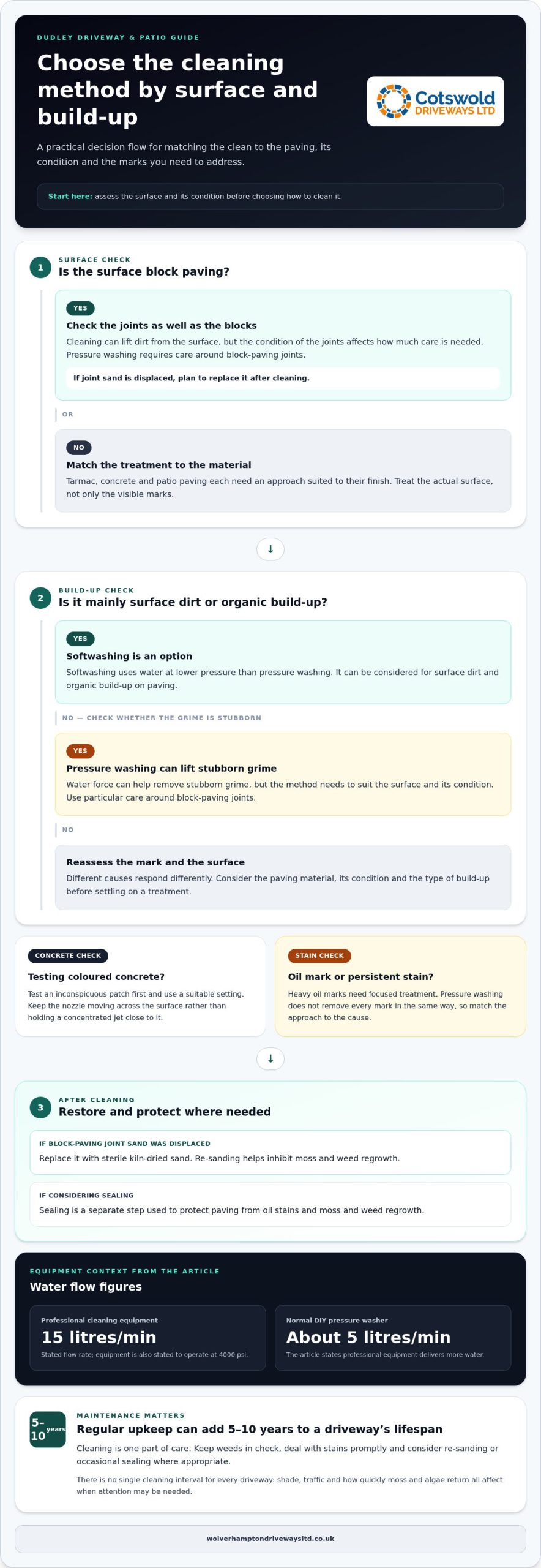
Block paving needs care at the joints as well as on the visible surface. Cleaning can lift dirt from the blocks, while the joints’ condition helps determine how much attention they need afterwards. Tarmac, concrete and patio paving also collect grime, but each material needs an approach suited to its finish. Choose a method that treats the actual surface, not just the obvious marks.
Softwashing driveways and paths
Softwashing applies water at lower pressure than pressure washing, making it an option for surface dirt and organic build-up on paving. Pressure washing uses water force to remove stubborn grime, but requires care around block joints. The choice depends on the paving’s condition and the type of build-up. The blocks and joints should be assessed before choosing a cleaning method.
Prices by surface area
Surface area is one factor in driveway cleaning prices because it affects how much paving needs cleaning. The material, level of staining, and amount of moss or weed growth also shape the work involved. A larger driveway may take more cleaning than a short path, while heavy oil marks need focused treatment. The price depends on the work required, with area, surface type and condition among the factors considered when preparing a quote.
Choosing a Dudley cleaning company
Compare what a cleaning service includes: surface cleaning, attention to joints, re-sanding and sealing are distinct steps. Reviews can help you assess reported customer experiences, but check what service those reviews describe. Dudley driveway repairs are rated an average of 10 out of 10, based on 139 customer reviews from a randomly selected postcode. That figure relates to repairs, not a rating for every cleaning service.
After cleaning, displaced joint sand can be replaced with sterile kiln-dried sand to inhibit moss and weed regrowth. Sealing is a separate step; it is used to protect paving from oil stains and moss and weed regrowth.
Cleaning time and when you can use the driveway depend on its size, condition and the work involved. Include expected completion and drying arrangements in the cleaning plan, particularly if you need vehicle access.
Block-paved driveways usually do not require planning permission when the surface is permeable and the area remains within applicable size limits. Public footways are different from private driveways: Dudley Council says obstruction reports are free and can be made anonymously. Keep the cleaning work within your property and leave pedestrians a clear route.
Why Should I Get My Driveway Cleaned?
Pressure cleaning can remove grime and organic build-up that dulls a driveway’s surface. How often professional cleaning is needed depends on shade, foot and vehicle traffic, and how quickly moss and algae return.
Removing organic build-up
Moss, algae and other organic matter can collect on paving, particularly where moisture and shade linger. Pressure washing lifts this build-up, but the water jet needs to suit the material and its condition. Use a controlled clean that addresses affected areas without unnecessarily disturbing block-paving joints or the finish.
Professional driveway and patio cleaning equipment is stated to operate at 4000 psi, with a flow rate of 15 litres per minute. That combination delivers more water than a normal DIY pressure washer, which is stated to use about 5 litres per minute. Water flow and pressure both affect how the wash tackles dirt, so the surface and build-up should guide the method.
A pressure washer can clean coloured concrete, but the finish needs careful treatment. Test an inconspicuous patch first and use a suitable setting, rather than holding a concentrated jet close to the surface. This shows how the colour and texture respond before you clean a wider area. Work methodically, keeping the nozzle moving across each section.
DIY pressure washing can help with light surface dirt, but a strong or poorly directed jet may mark the finish or dislodge material from joints. Keep the nozzle moving and avoid aiming it directly at loose edges. Clear furniture and other obstacles first, then work in manageable sections so you can see how the surface responds.
Professional cleaning frequency
There’s no single cleaning interval that suits every driveway. A shaded surface with recurring moss may need attention sooner than a sunny, open driveway with little organic growth. Check for slippery build-up, visible staining and weeds, then use those signs, along with traffic and general upkeep, to decide when a professional clean may help.
Regular maintenance can add 5-10 years to a driveway’s lifespan. Cleaning is one part of that care; keeping weeds in check and dealing with stains promptly also helps limit persistent build-up. Block-paving joints need particular attention after washing, since displaced sand can leave them less secure. Re-sanding and occasional sealing are maintenance steps to consider alongside cleaning.
Pressure washing doesn’t remove every mark in the same way. Organic growth, general dirt and coloured-concrete staining can respond differently, so the cleaning approach should match the cause. For persistent staining or a surface that needs more than routine upkeep, driveway cleaning and repairs may be a practical next step.
Pre-treatment and cleaning treatment process
Pre-treatment prepares paving for cleaning by addressing visible grime and organic growth. The method should suit the blocks, joints and surrounding areas.
Applying pre-treatment
Start by clearing leaves, pots and other loose items from the driveway. This exposes the full surface and helps you identify oil marks, moss patches and weeds between blocks. Check the edges, joints and nearby planting before applying treatment, so the cleaning plan accounts for the surrounding area.
Pre-treatment focuses on areas that need extra attention before the main clean. A moss-covered section, for example, may need a different approach from a driveway marked by general dirt. The surface condition guides the method and its application. Treating the area evenly helps avoid visible differences between treated patches and untreated sections.
After the treatment stage, cleaning can lift loosened debris from the blocks and joints. A low-level cleaner removes debris to a depth of 10 mm from block-paving joints. This helps clear material held between the blocks, where surface brushing may not reach. The depth also makes joint condition worth checking before work begins.
Treating organic growth
Biocide treatment addresses organic growth such as moss and algae. It targets growth on the paving, while the cleaning method removes loosened material from the surface. Treating affected patches before washing gives the treatment time to work, rather than relying on water pressure alone to remove established growth.
Weeds need attention both at the visible plant and where they have taken hold in the joint. Remove growth from the paving, then clear debris from the gaps. Roots may extend below the visible leaves, so weed treatment and careful joint cleaning are separate parts of the process. Avoid disturbing sound blocks while clearing growth.
After pressure washing, displaced joint sand should be replaced with sterile kiln-dried sand to inhibit moss and weed regrowth. This restores the material between the blocks and supports the finished surface. Check that joints are clear before re-sanding, especially where weeds or compacted debris had collected.
Tailor the treatment plan to the driveway. A shaded corner with moss, an oil-marked area and a weedy path each have different cleaning needs. Addressing them in sequence helps the chosen method work across the full paved area.
Wolverhampton Driveways Ltd applies sealer to block paving to help protect it from oil stains and moss and weed regrowth. Dudley Council says organisations carrying out work on the highway, including pavements, are responsible for ensuring a safe route for pedestrians and other traffic.
Removing oil stains, moss and weeds
Oil marks, moss and weeds need different treatments on block paving. Identifying the cause helps match the cleaning method to the stain and the condition of the joints.
Removing grime, algae and mud
General grime, algae and dried mud can sit across the blocks or collect in their joints. Clear loose leaves and soil first, then clean the affected surface so dirt is lifted rather than spread. A low-level cleaner removes debris to a depth of 10 mm from block-paving joints, helping reach material that a surface rinse may leave behind.
Assess how widespread the build-up is before cleaning. A muddy track beside a lawn may need attention along its full length, while algae may be limited to a shaded corner. The cleaning method should suit the paving and its condition, particularly where joints look loose or worn.
Moss and weed removal
Moss can spread across damp blocks, while weeds take hold in joints where soil and debris gather. Remove visible growth and surrounding material, then clean the affected area. Treating both paving and joints addresses more than the leaves above the surface, where compacted debris can remain between blocks.
After pressure washing, displaced joint sand should be replaced with sterile kiln-dried sand to inhibit moss and weed regrowth. This is an important finishing step because washing can remove some of the material between blocks. Sealing is another maintenance option: it helps protect paving from oil stains and moss and weed regrowth.
Check the joints after cleaning. If gaps still contain soil or plant matter, clear them before re-sanding to leave less loose debris between the blocks. This sequence addresses both visible moss and the spaces where weeds have grown.
Oil stain removal
Oil stains need targeted attention because a surface wash may not lift a mark that has soaked into the paving. Identify the affected blocks, then treat the stain separately from surrounding grime. The mark’s size, age and depth affect how it responds, so avoid spreading oily residue across clean sections.
After treating the stain, rinse the area as part of the wider clean and assess the blocks in daylight. A persistent mark may remain if oil has penetrated the surface. Sealing can help protect block paving from future oil stains, but it follows cleaning and does not remove existing residue.
For a driveway with oil, algae and weeds, address each type of build-up separately. Clearing loose debris, treating stains, cleaning joints and replacing displaced sand are distinct steps. Following this sequence helps leave the blocks and their joints clean and properly finished.
Cleaning block paving, tarmac, concrete and patios
Block paving, tarmac, concrete and patio surfaces each need a suitable cleaning approach. Match the method to the material, its condition and the type of dirt present, rather than treating every surface alike. This focuses the work where it is needed and helps refresh the driveway or garden.
Block paving needs care around its joints. Pressure washing removes surface dirt, whilst the low-level cleaner can remove debris to a depth of 10 mm from block-paving joints. After washing, replace displaced joint sand with sterile kiln-dried sand to inhibit moss and weed regrowth. Re-sanding is part of the finish, not an optional substitute for removing the dirt first.
Tarmac has a continuous surface rather than individual blocks and joints. Cleaning should account for its condition and visible marks, such as general grime or oil staining. Do not assume a method suited to block paving is automatically right for tarmac. Assess the surface first, then clean the affected area in a controlled way.
Concrete driveways and patios also benefit from a surface-led approach. Coloured concrete needs particular care, since cleaning should respect its finish as well as remove dirt. Test a small, inconspicuous patch before treating the full area. For a patio, move furniture and clean in sections so the treatment reaches the paving beneath tables and pots.
Pressure-washing equipment used for driveway and patio cleaning is stated to operate at 4000 psi, with a flow rate of 15 litres per minute. A normal DIY pressure washer is stated to use about 5 litres per minute. Those figures show why the equipment and technique matter. The correct approach depends on the surface, the build-up and the condition of the paving.
- Block paving: clean the blocks and joints, then replace displaced sand.
- Tarmac: assess the surface and treat marks with a suitable approach.
- Concrete: take account of the finish, especially on coloured areas.
- Patios: clear furniture first and work across the paving systematically.
Cleaning these different surfaces can refresh a driveway, path or patio and improve the appearance of the street frontage. For help with paving and outdoor surfaces, arrange driveway and patio cleaning as a practical next step.
Block paving needs maintenance after cleaning, too. Wolverhampton Driveways recommends pressure washing, re-sanding the joints and occasional re-sealing. Together, these tasks make cleaning part of an ongoing care routine rather than treating washing as the only step. Re-sanding addresses the joints after cleaning, while occasional re-sealing is also part of the recommended upkeep.
When planning future maintenance, consider the paving and its joints as one surface. Pressure washing, re-sanding and occasional re-sealing are the recommended measures for block paving; apply them according to its condition and cleaning needs. This keeps attention on both the blocks and the spaces between them, with a clear sequence for ongoing care.
Wolverhampton Driveways: Tarmac Driveways
Wolverhampton Driveways provides driveway cleaning and repairs for homeowners dealing with built-up grime, weeds or staining. If cleaning reveals damaged paving or a surface that needs more than routine maintenance, the company’s driveway repair work may be a useful next step. It also offers block paving, resin driveways and tarmac driveways when you’re planning a new or repaired driveway.
For a surface that needs cleaning rather than replacement, the right treatment depends on its material and condition. For more substantial wear, repairs may address the issue without making cleaning do work it cannot do. To discuss your driveway, contact Wolverhampton Driveways.
Choose the right next step for your driveway
Before arranging work, decide whether you want to refresh the existing surface or change the driveway itself. A block paving cleaning service in Dudley may suit paving that needs attention, while loose or damaged areas may call for repairs. Start by considering the condition and material of your driveway.
Wolverhampton Driveways offers Block Paving, Tarmac Driveways and Resin Driveways, so you can discuss cleaning alongside options for a new or renewed surface. Consider whether you want to restore the paving you have or choose a different finish. A straightforward discussion can help identify the most relevant next step for your home.
Contact Wolverhampton Driveways today to discuss your driveway. A clear plan can help you move towards a cleaner, more welcoming entrance.
Frequently Asked Questions
Can’t I Clean It Myself?
You can clean light surface dirt yourself, but a domestic pressure washer may not remove ingrained grime as evenly as professional equipment. Start by sweeping and testing a small patch, then avoid directing a concentrated jet at joints or worn blocks. If the paving has persistent oil marks, widespread moss or loose sections, professional cleaning can address those issues as part of a planned surface treatment.
What’s The Process?
The process starts with assessing the paving and identifying problem areas, such as oil marks near a parking space or moss beneath a shaded wall. Loose items and debris are cleared before treatment and washing. The work then focuses on the surface and joints, followed by replacing displaced joint sand. Sealing is a separate finishing step, not an automatic part of every clean.
What is included in professional block paving cleaning?
Professional cleaning can address surface grime, organic growth and stains, focusing on the affected paving. For block paving, the joints matter too: displaced sand can be replaced after washing, and sealing may be considered as a separate protective treatment. If cleaning reveals damaged blocks or other defects, Wolverhampton Driveways’ driveway cleaning and repairs service can help address the maintenance work.