
The best block paving sealer in the UK depends on the finish and protection you want. Acrylic sealers can deepen colour and add a slight sheen, while penetrating sealers protect paving without substantially changing its appearance. If your paving is permeable, keep its joints open and clear for drainage, so don’t seal them.
It’s understandable to want a product that keeps a driveway or patio looking tidy without making the surface slippery or changing its appearance more than intended. The right choice starts with the paving itself, its condition and how you use the space.
This guide explains which paving surfaces can be sealed, how to prepare them and what protection a sealer can offer against moisture, stains and UV damage. It compares the main options, including acrylic, penetrating and polyurethane sealers, so you can understand their differences before choosing what suits your driveway or patio.
Key Takeaways
- Match the sealer finish to the look you want, from a subtle matt effect to a glossier finish.
- Allow newly laid block paving at least 4 weeks to settle, then clean it and replace missing kiln-dried sand before sealing.
- Sealer can help protect paving from moisture, staining and UV damage, but it won’t prevent every weed indefinitely.
- Compare sealer types by their finish, application method and expected reapplication needs to find a practical fit for your paving.
What type of paving can I apply a sealer to?
Choose a sealer labelled for the exact paving material, such as block paving or concrete. The surface and its joints matter: permeable paving relies on open, clear joints for drainage, so don’t seal them. On standard block paving, sealer can help stabilise jointing sand and reduce gaps where weeds can take hold, but it won’t stop every weed indefinitely.
Choose a finish by deciding how much you want to change the paving’s appearance. A penetrating sealer soaks into the surface and protects it without substantially changing its natural look, making it the closest option to an invisible finish. Acrylic sealer can enhance colour and add a slight sheen. Wet-look products give paving a richer appearance, while matt, silk and satin describe different levels of sheen. Check the product description, as finish names can vary between formulations.
Polyurethane sealer offers another finish choice: one coat can give a matt finish, while two coats can produce gloss. Applying any sealer too thickly can make paving slicker, so follow the stated coverage and coat instructions rather than adding extra product to intensify the effect.
Solvent-based and water-based sealers differ in formulation, but neither label alone tells you the final performance or appearance. Compare the stated surface compatibility, finish and application directions, and follow the product’s safety instructions. For UK environmental and VOC considerations, read the product’s VOC information and disposal guidance, and follow the handling precautions on its label.
Weather matters too. Apply sealer only when the paving is clean and dry and the product’s temperature and weather requirements can be met. Allow the stated curing period, keeping rain from disturbing the coating.
Uneven application or an unsuitable surface can lead to whitening or patchiness, while applying too much can make paving slick. Test the finish in an inconspicuous spot, apply evenly and keep permeable joints clear. These steps let you judge the result before treating the whole area.
Cleaning and preparing paving before sealing
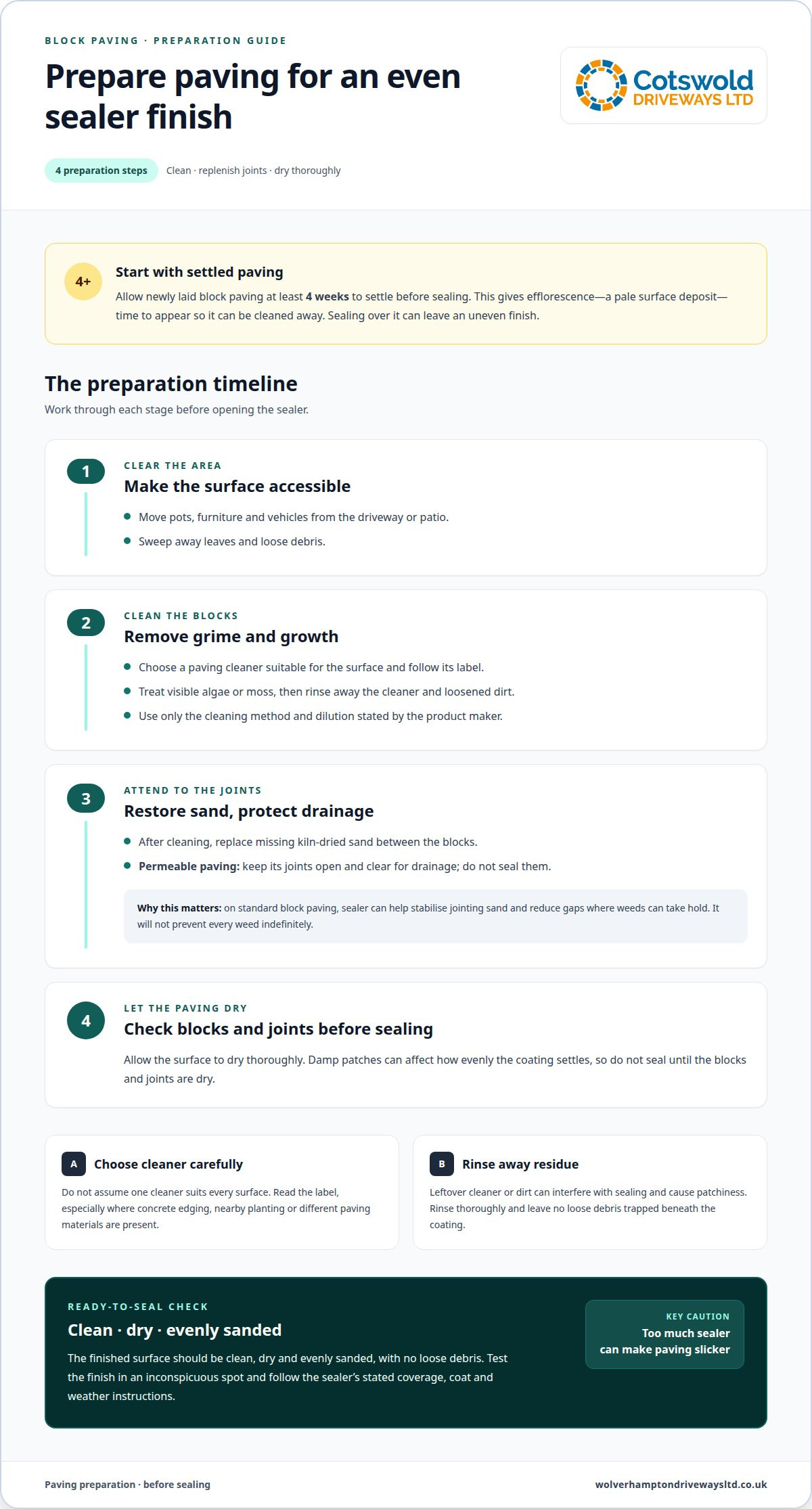
Sealer needs a clean, sound surface to coat evenly. Newly laid block paving should be allowed to settle before sealing, so efflorescence can appear and be cleaned away. Efflorescence is a pale deposit on the surface; sealing over it can leave the finish uneven. Prepare established paving just as carefully, removing grime and growth from the blocks and joints first.
Work through these preparation steps before opening the sealer:
- Clear the area. Move pots, furniture and vehicles from the driveway or patio, then sweep away leaves and loose debris.
- Clean the blocks. Use a paving cleaner suitable for the surface and follow its label. Treat visible algae or moss, then rinse away cleaner and loosened dirt.
- Attend to the joints. After cleaning, replace missing kiln-dried sand between the blocks. Keep permeable joints open and clear for drainage.
- Let the paving dry. Check the blocks and joints before sealing. Damp patches can affect how evenly the coating settles, so allow the surface to dry thoroughly.
Choose driveway and patio cleaning products for the paving material rather than assuming one cleaner suits every surface. Read the label before use, especially if the area includes concrete edging, nearby planting or different paving materials. Use only the cleaning method and dilution stated by the product maker. Rinse away residue thoroughly: leftover cleaner or dirt can interfere with sealing and cause patchiness.
Acrylic sealer still needs clean, dry paving; its finish won’t hide poor preparation. If cleaning leaves stubborn deposits or uneven joints, professional paving cleaning can help prepare the surface properly before sealing. The finished surface should be clean, dry and evenly sanded, with no loose debris trapped beneath the coating.
Sealer protection against moisture, staining and UV damage
A paving sealer forms a protective layer on the surface, helping limit moisture, staining and UV damage. The protection you need depends on exposure and the marks your driveway or patio commonly collects.
Protection from Water and Oil
Block paving sealer is designed to reduce moisture absorption and help protect against water and stains. This can make spills easier to manage before they mark the surface. For areas exposed to vehicles, look for a product suited to oil, diesel and petrol contaminants. Two coats of polyurethane sealer are preferred for this type of protection. Sealer helps resist stains, but it doesn’t make paving stain-proof.
Weather and UV Protection
Rain and other weather expose paving to repeated moisture, while sunlight can contribute to UV damage and fading. A suitable sealer helps protect the surface from both. If keeping the original colour matters, consider how the product changes the finish as well as its protective claims. A penetrating sealer can protect without substantially changing the paving’s appearance; acrylic can enhance colour and add a slight sheen.
Protective Benefits
Protection is not only about appearance. Sealer can help stabilise jointing sand and reduce gaps where weeds can take hold, as well as help guard against moisture, staining and UV damage. It won’t prevent every weed indefinitely. Match the product to the paving and its main exposure, such as oil around a parking area or weather on an open patio. Applying it too thickly can make the surface slicker, so follow the product instructions.
Consider the finish and the surface’s main risks together. This makes it easier to choose protection suited to the paving’s everyday conditions.
Block paving sealer product range
Choosing the best block paving sealer in the UK means matching the product to your paving, preferred finish and application method. A sealer suited to a natural-looking patio may not create the richer colour you want on a driveway. Compare the stated surface compatibility, coat instructions and finish, then consider how the paving is used and exposed to weather.
Penetrating sealers soak into paving and protect it without substantially changing its appearance. Acrylic sealers can enhance colour and add a slight sheen, whilst polyurethane options offer matt or gloss finishes depending on coat application. Polyurethane paving sealers usually have a resin content of 20% or more. Check the formulation alongside the finish and the product’s stated use when looking for the best block paving sealer in the UK for your project.
Application tools vary by product. Some block paving sealers can be applied with a brush, cloth, roller or spray gun. A brush can help reach edges, while a roller can cover broader areas. A sprayer may suit a larger space. Follow the product instructions for the recommended applicator and an even coat.
Consider maintenance as well as the initial result. Polyurethane-based sealer is described as providing 5-6 years of protection, while solvent-based polyurethane usually needs reapplication after 4-6 years. Traffic and weather exposure affect how long a coating lasts, so a busy driveway may need attention sooner than a sheltered patio.
Use a paving cleaner before sealing, and make sure the surface is clean and dry. The best choice depends on the paving, finish, exposure and application method, not just the stated protection period. For help planning paving work around your property, discuss your paving project.
Wolverhampton Driveways: Tarmac Driveways
Wolverhampton Driveways Ltd can help when sealing isn’t enough to address your driveway’s condition. If blocks are damaged, joints need attention or the surface needs cleaning, its Block Paving and Driveway Cleaning & Repairs services offer a practical next step. If you’re considering a different surface, the company also provides Tarmac Driveways and Resin Bound Driveways.
The right choice depends on what needs solving: cleaning and repairs may suit a worn but serviceable driveway, while a new surface may be a better fit when the existing paving no longer meets your needs. Consider the appearance and upkeep you want before deciding how to proceed.
For help with your driveway or paving project, contact Wolverhampton Driveways Ltd.
Choose the right next step for your driveway
Before settling on a finish, think about how you want the space to serve you over time. A driveway used for parking has different priorities from a patio arranged for relaxing, so consider its everyday role alongside its appearance. This gives you a clearer brief for the work ahead.
Choosing the best block paving sealer in the UK means weighing the look you want against the paving’s condition and how you use it. If sealing feels like only a short-term answer, consider whether maintaining, repairing or changing the driveway better fits your plans. You can then discuss the surface and the result you want before choosing an approach.
Ready to explore your options? Talk through your paving plans with Wolverhampton Driveways and take the next step with confidence.
Frequently Asked Questions
Can a Driveway Sealer Help Prevent Weeds?
A driveway sealer can make it harder for weeds to take hold by helping keep jointing sand in place, but it isn’t a weedkiller. Remove existing weeds and debris before sealing, as trapped growth can spoil the finish. Afterwards, deal with new seedlings promptly. Seeds can settle in surface debris, so keeping the paving clear remains part of routine upkeep.
How long will it last?
A quality block paving sealer typically lasts three to five years, depending on traffic and weather exposure. Acrylic sealers may need attention sooner, with reapplication described every two to three years. Watch for uneven wear in turning areas or places where vehicles regularly park. Those spots can show coating deterioration sooner than quieter parts of the driveway.
Is Sealing a Faded Driveway Worth It?
It can be worthwhile if the blocks are sound and you want to refresh their appearance. Acrylic sealer can enhance colour, while a penetrating product offers protection without substantially changing the surface. Sealer won’t repair damaged blocks or correct poor drainage. For a faded driveway in Wolverhampton, consider whether the surface needs cleaning or repairs before choosing a finish.
Wet look or matt?
Choose a wet-look finish if you want the paving to appear richer; choose matt for a more subdued result. Gloss and matt can also depend on the product and number of coats. Before committing, test the sealer on a small, inconspicuous patch. This shows how it affects your actual blocks, rather than relying only on a product photograph.
Why Does Block Paving Fade Over Time?
Sunlight, weather and everyday use can gradually change the appearance of block paving. Vehicle movement and repeated cleaning also wear the surface, making the colour look less vivid. Different areas may fade at different rates, especially where exposure or traffic varies. A faded appearance alone doesn’t establish that sealing is the right fix; first consider the paving’s condition and the result you want.
Why choose an acrylic paving sealer?
Choose acrylic if you want to enhance the colour of block paving and add a slight sheen. It can refresh the look of older blocks, making it a practical option when appearance matters as much as surface protection. Acrylic isn’t the only finish choice, though. Compare its sheen with a penetrating sealer’s more natural appearance, and factor in its reapplication needs.