
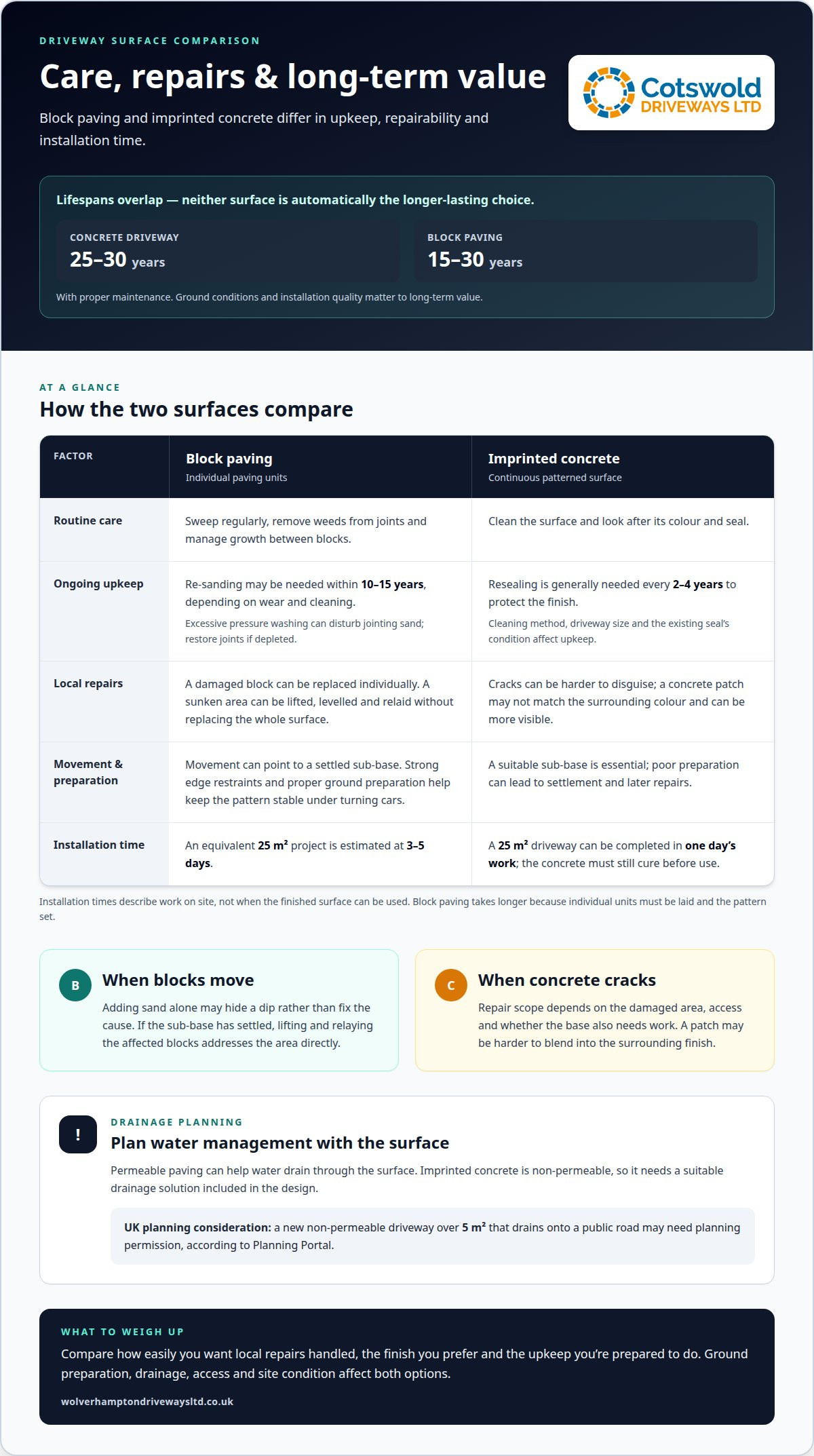
Concrete driveways can last 25 to 30 years with proper maintenance, while block paving typically lasts 15 to 30 years. Those ranges overlap, so neither surface is automatically the longer-lasting choice. The block paving vs concrete driveway cost decision also depends on installation, upkeep and how straightforward repairs or re-levelling will be.
It’s understandable to focus on the upfront cost, but the ground beneath the driveway and the quality of installation matter just as much to long-term value. With block paving, a damaged block can be replaced individually; repairs to concrete can be harder to blend into the surrounding finish.
This comparison explains what affects installation costs, how lifespan and maintenance differ, and what can lead to movement or re-levelling. It also covers how drainage, site preparation and finish influence your choice, helping you weigh the options against your property and how you use the driveway.
Key Takeaways
- See which installation details can shift the overall cost, from excavation and sub-base preparation to edging and surface finish.
- Understand how drainage needs and permeable paving can influence your driveway design and planning considerations.
- Compare the ongoing care each surface needs, including looking after concrete’s finish and managing block-paving joints.
- Use ground conditions, vehicle use and repair needs to judge which option better suits your driveway over time.
Maintenance and re-levelling requirements
Block paving is made up of separate units, so a sunken area can be lifted, levelled and relaid without replacing the whole surface. Movement often points to a problem beneath the blocks, such as a settled sub-base; adding sand alone may hide the dip rather than fix it. Strong edge restraints and proper ground preparation help keep the pattern stable under turning cars.
For routine care, sweep the garden drive regularly and remove weeds from the joints before they spread. Annual weed control can help manage growth between blocks. Re-sanding may be needed within 10 to 15 years, depending on wear and cleaning. Pressure washing can remove dirt, but excessive force may disturb jointing sand, so restore the joints if they become depleted.
Imprinted concrete has no block joints for weeds to grow through, but its colour and seal need attention. Resealing is generally needed every two to four years to protect the finish. Cleaning method, driveway size and the condition of the existing seal affect upkeep. Cracks can be harder to disguise than a replaced block, and a concrete patch may not match the surrounding colour.
Repair and replacement costs depend on the damaged area, access and whether the base also needs work. A block can be replaced individually, making a local repair easier and cheaper than repairing cracked concrete, which can require a larger, visible patch.
| Surface | Routine care | Repair and re-levelling |
|---|---|---|
| Block paving | Sweep; control weeds; renew joint sand | Lift and relay affected blocks |
| Imprinted concrete | Clean; reseal every two-to-four years | Cracks can be difficult to blend |
Drainage matters too. In the UK, a non-permeable new driveway over 5 m² that drains onto a public road may need planning permission, according to Planning Portal. Permeable paving can help water drain through the surface, while imprinted concrete needs a suitable drainage solution. This can affect layout and installation work beside a front garden.
Choose by weighing how easily you want local repairs handled, which finish you prefer and what upkeep you’re prepared to do.
Installation and product factors affecting cost
The finished cost reflects more than the visible surface. Excavation, ground preparation, material choice, access and drainage all affect the work involved.
Concrete driveway installation costs
Concrete creates a continuous surface, so its finish and drainage layout need planning before the pour. Imprinted patterns, colours, edging and site access can change the work involved. For a typical 50-square-metre concrete driveway, the price depends on preparation, materials, drainage and finish, and is given after a quote request. A complex pattern or difficult access can add work compared with a straightforward layout.
Installation time and project duration
A 25-square-metre concrete driveway can be completed in one day’s work, while an equivalent block-paving project is estimated at three to five days. Block paving takes longer because the installation involves laying individual units and setting the pattern. Time on site is not the same as when the surface can be used; the concrete must cure, and block paving needs its laying and finishing work completed first.
For a typical 50-square-metre block-paving driveway, the price depends on excavation, sub-base preparation, block choice, borders and access, and is given after a quote request. The same factors shape costs for other sizes, so a square-metre comparison alone cannot account for the full project.
Material choices matter. Concrete blocks come in different colours and patterns, while permeable options can help water drain through the surface. Imprinted concrete creates a pattern without separate paving units, but drainage must be included in the design. A suitable sub-base is essential for both surfaces, since poor preparation can lead to settlement and later repairs.
Installation time and cost also depend on what needs removing, the ground condition and the driveway’s shape. A simple, accessible area needs less preparation than a sloping site or one requiring substantial excavation. Choose the option that suits your preferred finish, drainage needs and project priorities.
Block paving and imprinted concrete driveway costs
To assess block paving vs concrete driveway cost, compare the full project scope, not just the visible finish. Material choice, ground preparation, drainage and future maintenance all affect the decision. The same-sized driveway can involve different work depending on its shape, access and existing surface. A measured plan makes the options easier to compare fairly.
For block paving, concrete blocks, clay pavers, permeable blocks and natural stone offer different material choices. Colour, edging and laying pattern also shape the design and installation work. A herringbone layout, for example, arranges the blocks in an interlocking pattern. The specification should cover the whole area, including borders and transitions to paths or the road.
Imprinted concrete creates its pattern in a continuous surface. Its design, colour and finish influence the work, along with preparation and drainage. A detailed design may involve a different installation scope from a simpler finish. Because the surface is not permeable, drainage needs to be part of the plan from the outset.
Consider repairability when comparing block paving vs concrete driveway cost over time. Individual paving units can be lifted for access or local repairs, while a concrete repair may be harder to blend into the surrounding finish. Future utility work may also affect your choice: lifting and reinstating blocks can be more straightforward than matching a patterned concrete surface.
Ground preparation is a major factor for either option. Excavation, levelling and a suitable sub-base are part of the project scope, while the site’s condition affects the work required. A fair comparison should specify the proposed materials, preparation, drainage, edges and finish for both surfaces. This lets you weigh design preferences and practical requirements together, rather than choosing on appearance alone.
Estimated lifespan of concrete and block paving
A useful lifespan comparison needs to distinguish the surface from its foundations. Block paving driveways typically last 15 to 30 years, while concrete driveways can last 25 to 30 years with proper maintenance. These ranges overlap, so the longer-lasting choice depends on installation quality, ground conditions and ongoing care.
With block paving, individual blocks can be lifted and replaced if one becomes damaged or an area settles. That makes local repairs practical without removing the whole surface. The joints need attention over time, and a poorly prepared base can allow movement. Good drainage and a stable sub-base help limit standing water and uneven sections.
Concrete provides a continuous surface, but cracks can be difficult to repair neatly. A patch may remain visible if its colour differs from the surrounding finish. The 25-to-30-year expectation applies to concrete with proper maintenance; damage, poor drainage or movement beneath the slab can affect its condition before then.
Installation matters for both materials. A well-compacted base supports block paving, while suitable ground preparation and drainage help protect concrete from movement and water damage. If a driveway repeatedly holds water or develops dips, the underlying cause needs addressing. Resurfacing or replacing the visible finish alone may not resolve a problem with the base.
Block paving allows more flexibility for targeted repairs, while concrete can provide a long service life when maintained properly. A driveway used for regular parking faces different wear from a garden path, so consider traffic, drainage and repair options together. Tarmac is another surface choice, but assess its expected lifespan separately rather than assuming it matches either material.
For help planning a durable surface around your property, discuss driveway options and repairs.
Wolverhampton Driveways Ltd: Block Paving
Wolverhampton Driveways Ltd installs block paving and provides driveway cleaning and repairs. Ground preparation, drainage and layout all affect how the finished driveway works around your property, including where it meets paths or garden areas.
If you’re still weighing up finishes, Tarmac Driveways and Resin Bound Driveways are also available. For an existing paved surface, Driveway Cleaning & Repairs can help with upkeep. The right next step depends on whether you’re planning a new installation or improving an existing driveway.
Contact Wolverhampton Driveways Ltd to discuss your driveway project.
Choose the surface that fits your plans
Before settling on a design, decide what matters most to your household: a particular look, straightforward repairs or a surface that works with your drainage layout. This gives your driveway project a clear starting point and makes it easier to explain what you want from the finished space.
The block paving vs concrete driveway cost comparison is most useful when it reflects your priorities, rather than being treated as a price-only decision. Wolverhampton Driveways Ltd installs Block Paving, as well as Tarmac Driveways and Resin Bound Driveways, and can provide a free, no-commitment quote for your property.
Share whether you’re planning a new drive or improving an existing one, and what you want the space to do. Contact Wolverhampton Driveways Ltd today to talk through your project and take the next step with confidence.
Frequently Asked Questions
Durability and lifespan: Which lasts longer?
Neither surface is certain to outlast the other on every driveway. Their expected lifespans overlap, and installation quality, drainage and maintenance affect how long each remains serviceable. Block paving has the practical advantage of allowing individual blocks to be replaced after local damage. Concrete offers a continuous surface, but repairs can be more noticeable. For a Dudley property, assess the base and drainage alongside the chosen finish.
How much does a driveway cost?
Driveway cost depends on its area, the existing surface, access and the preparation required beneath it. Removing an old surface or correcting uneven ground changes the work involved compared with laying a driveway on a suitable prepared base. Material, edging, pattern and drainage also affect the specification. A quote based on the actual site gives a more useful figure than a broad estimate.
What affects the cost of block paving?
Block choice, laying pattern, driveway shape and ground preparation all affect the total. A patterned layout or contrasting border involves different laying work from a plain, straightforward design. Excavation and sub-base requirements also matter, particularly if the existing ground needs correcting. In Dudley, access and drainage can influence the work required, so compare quotes against the same project scope.
What is the best finish for my patio or driveway?
The best finish depends on how you use the space and the appearance you want. Block paving offers individual units and a choice of colours and patterns, while imprinted concrete creates a continuous patterned surface. For a patio used mainly for seating, appearance may guide your decision; for a driveway, consider vehicle use, drainage and how you’d prefer repairs handled. Match the finish to the job.
What is the average cost per square metre for block paving in the UK in 2026?
There isn’t one price per square metre that fits every block-paving project. The total depends on the blocks selected, the area, excavation, sub-base, edging and laying pattern. A basic layout on accessible, prepared ground has a different scope from a shaped driveway requiring removal and more groundwork. For an accurate budget, get a quote based on the measured site and specified materials.
What is the average cost per square metre for a concrete driveway in the UK in 2026?
A per-square-metre figure alone won’t capture the full cost of a concrete driveway. Site preparation, access, drainage and the chosen surface design all affect the work and materials. Imprinted finishes also involve design choices that a plain surface doesn’t. For a useful comparison, assess the same driveway area and preparation requirements, then consider what each specification includes before choosing.