
What if the best way to save on paving is to lay less of it? A carefully planned patio can make your garden more useful without covering every inch. If you’re looking for cheap paving ideas for back garden Telford, focus your budget on the areas you’ll use most, then choose a design and materials that suit the space.
It’s understandable to worry that a lower-cost choice might look plain or wear badly. A considered layout and sound preparation can help a modest paved area feel complete, while leaving room for planting and managing rainwater. In this article, we’ll look at practical ways to plan a patio, compare material and maintenance considerations, and prepare for a durable finish. Wolverhampton Driveways Ltd serves Telford, Wolverhampton, Cannock and Dudley, offering patios, unbiased advice on material selection and design, and free, no-commitment quotations.
Key Takeaways
- Decide how you’ll use the garden, then size the paved area around that purpose.
- Measure and mark out a simple layout before choosing a shape.
- Compare paving slabs and block paving by appearance, upkeep and how each suits your garden.
- Use these cheap paving ideas for back garden Telford projects to make practical choices without losing sight of durability.
- Prepare a concise project brief with measurements, intended uses and access details to support a clear patio quotation.
Cheap paving ideas for a Telford back garden: start with the space you use
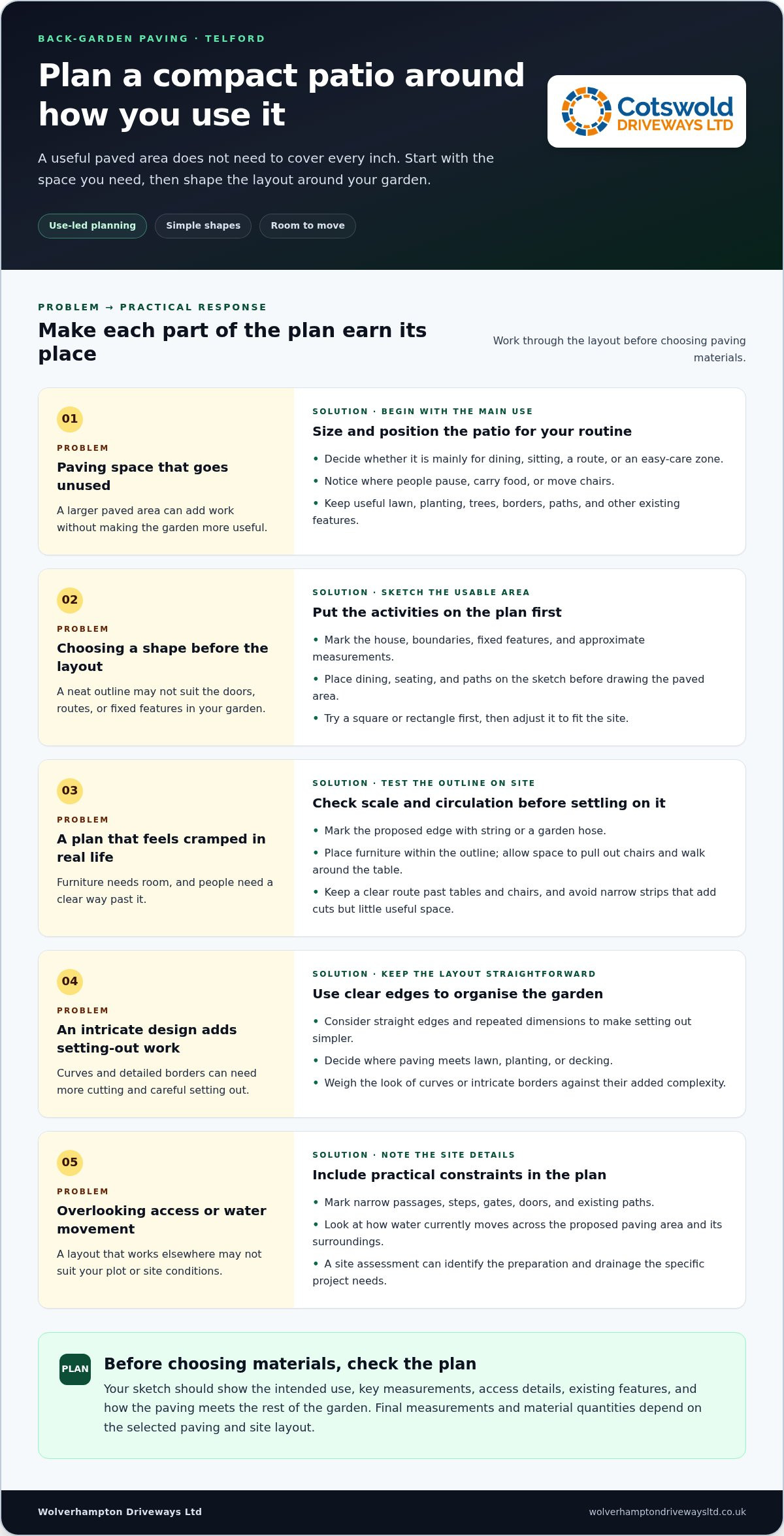
A garden can feel completely different with a well-placed patio, without paving every square metre. Before comparing materials, decide what the paved area needs to do. Is it mainly for outdoor dining, a clear route from the house, somewhere to sit, or an easy-care zone? Let that answer guide the size and position. Paving unused corners may add work without making the garden more useful.
For cheap paving ideas for back garden Telford homeowners can use, begin with the space you already have. Walk through your usual routines and notice where people pause, carry food or move chairs. Keep lawn, planting and existing features that still serve a purpose. A tree, established border or usable path can help shape the layout rather than being removed to create a larger paved surface.
Which parts of the back garden are worth paving first?
Trace the route between the back door, seating area and garden entrance. Make sure the dining space leaves room to pull out chairs and move around the table. If garden furniture needs to be shifted regularly, allow space for that too. Keep established features where they work with these routes. Paving around them can help the finished space feel connected to the rest of the garden.
Think about how different surfaces will meet. A clear edge between paving and lawn, planting or decking makes each area feel intentional and can stop a small patio looking like an unfinished patch. A simple border or change in direction can define the seating area without extending hard surfacing across the whole garden. For background on the types of paving materials, consider how different options might suit the use and appearance you have in mind.
Can a smaller paved area still feel complete?
Yes. A defined seating or dining area can give the garden a focal point, while lawn and planting preserve open space and soften the edges. Before choosing materials, sketch the garden from above and mark the house, routes, existing features and proposed patio. Add measurements, even if they’re approximate at first. This helps you see whether the space will work before settling on a design.
Every Telford garden has its own access and site conditions, so avoid assuming a layout that works elsewhere will suit your plot. Note narrow passages, steps, gates and anything that could affect moving materials to the work area. Look at the proposed paving area and its surroundings, including how water currently moves across the space. A site assessment can help identify the preparation and drainage the specific project needs, rather than relying on assumptions about local ground conditions.
- Map the use: mark dining, seating and the routes connecting them.
- Keep what works: retain useful planting, lawn and existing features.
- Sketch and measure: draw a simple outline and note access details before choosing materials.
Low-cost back-garden paving layouts that make a small area work harder
A simple layout can make a compact garden feel organised and help avoid unnecessary cutting. Before settling on a shape, work through the plan in order. These cheap paving ideas for back garden Telford projects start with how you’ll use the space, then turn that into a practical outline.
- Measure the usable area. Note the house, boundaries and fixed features, then record the dimensions of the space you’re considering paving.
- Mark the main use. Place dining, seating or a path on your sketch before drawing the paved area around it.
- Choose a straightforward outline. Try a square or rectangle first, adjusting it to suit doors, routes and existing features.
- Plan the edges. Decide where paving will meet lawn, planting or decking, and consider how that boundary will look from the house.
Test the outline on site with string or a garden hose, then place your furniture within it. This gives you a better sense of circulation and scale than a drawing alone. Keep a clear route past chairs and tables, and avoid narrow strips of paving that add cuts but little useful space.
How can zoning create a more useful garden?
Give dining, movement and planting distinct places, even if the garden is small. A paved rectangle beside the house could hold a table, while a narrower route leads towards a shed or gate. Use a consistent direction for the paving to tie the areas together. For more on layout and balance, Penn State Extension’s principles of garden design offer useful ideas to consider.
Proportion matters. Sketch the furniture at roughly its real size, including the space needed to pull chairs out and walk around them. A paved zone should accommodate the way you use it, rather than taking over simply because its outline is easy to draw. Repeating the same direction or edge line can make separate areas feel connected without adding decorative details.
Which simple shapes can help limit unnecessary cuts?
Straight edges and repeated dimensions are usually easier to set out than a layout with many angles. A square seating area with a direct path can work around existing features and keep the plan clear. Curves and intricate borders can create a softer look, but may need more cutting and careful setting out. Weigh their appearance against the extra complexity.
Plan around the back door, existing paths, steps and fixed features rather than forcing them into a new pattern. Final measurements and material quantities should follow the selected paving and site layout, since the size and arrangement of the chosen product affect how it fits. A clear sketch can help make a patio design enquiry more useful, with the intended shape and key dimensions ready to discuss.
Compare affordable paving approaches by upkeep, appearance and intended use
The best-value choice isn’t simply the material with the lowest initial cost. Consider how the surface will be used, how you want the garden to look and what routine care you’re comfortable with. For cheap paving ideas for back garden Telford homeowners can compare fairly, assess the material and the size of the paved area separately. A smaller, well-placed patio may suit your plans better than paving the whole garden in a less suitable finish.
Paving slabs
Garden use: Can form a defined area for seating or dining, depending on the layout and chosen slabs.
Appearance: The overall effect depends on the slab’s colour and finish, and how it sits alongside the house and garden.
Upkeep: Consider how you’ll keep the surface and joints clear of leaves and other garden debris.
Planning: Think through the area to be paved, its edges and how the layout meets lawn, planting or existing paths.
Block paving
Garden use: Can be arranged to create a paved zone or path, with the pattern planned around the space.
Appearance: Block paving offers a wide range of colours and patterns. Consider the arrangement alongside the exterior of your home.
Upkeep: Regular care includes cleaning, controlling weeds and re-sanding the joints when needed.
Planning: The outline, pattern and boundaries all affect how the design fits the garden. Block paving can last for decades with proper maintenance.
These are planning prompts, not fixed promises about how every product will look or perform. The specific paving and the site both matter. Keep the material decision distinct from the area decision: first establish which parts need a firm paved surface, then consider which option suits those areas. That makes it easier to compare like with like rather than letting a material choice dictate the whole garden.
Is a mixed paving and garden layout a sensible alternative?
Often, different zones can serve different purposes. Paving might provide space for a table, while lawn or planting keeps another part of the garden open. Decking can create a separate spot for sitting, and artificial grass can be considered as a complementary garden surface, not as paving. The garden patio design guide offers further layout inspiration.
A fully paved zone may suit a garden where you want a continuous surface, but a combination can help retain the character and features you value. Compare the whole design: how people move between areas, how the boundaries meet and whether the materials look coherent together. Wolverhampton Driveways Ltd offers patios and unbiased advice on material selection and design, helping you weigh the options against your intended use and the specific site.
Plan a Telford paving project carefully before work begins
A clear brief helps turn an idea into a practical paving plan. Before requesting a quotation, gather the information that explains what you want the garden to do and what the site is like. You don’t need a finished design. Approximate measurements, a few preferences and a note of any constraints give the conversation a useful starting point.
What should you prepare before requesting a paving quote?
Make a short checklist, then add details as you look around the garden. Include the intended use and any features or surfaces that may affect the proposed work. Keep essentials separate from optional details, such as a particular edging treatment, so your main priorities stay clear.
- Area: Note approximate length and width, and mark the part you’re considering paving.
- Use: Describe whether you need space for dining, seating, a route or another purpose.
- Existing garden: Record current surfaces, paths, steps and features you’d like to retain.
- Access: Note gates, narrow passages, changes in level and the route into the work area.
- Design preferences: Bring a simple sketch or reference images to show the look you have in mind.
These notes can help distinguish must-haves from nice-to-haves. For example, keeping a clear route to the garden entrance may be essential, while a decorative border could remain optional until the main layout and material have been discussed.
Why do groundwork and drainage belong in the plan?
The visible paving is only part of the project. Preparation beneath and around the proposed surface matters to how the finished area sits and performs over time. Concrete and slab specialists such as Born Integrated Construction consistently note that proper ground preparation is vital to prevent movement and cracking. The right approach depends on the actual site, the existing surface and the design, so don’t assume one standard method suits every Telford garden.
Look at the proposed area after rain and note where water appears to collect or flow, without assuming the cause. Share those observations along with any uneven or previously altered areas. A site assessment can then inform preparation and drainage decisions for that specific project. This is more useful than choosing materials in isolation and leaving practical site questions until later.
Before settling the brief, mark each detail as essential or optional. Essential items might include the usable patio area, a route from the house and features that should stay. Optional choices could include extra paving, decorative edges or changes to other parts of the garden. This gives you room to prioritise the work while keeping the overall design in view.
Once you’ve gathered your measurements, access notes and design preferences, Wolverhampton Driveways Ltd can provide unbiased advice on patio materials and design, along with a free, no-commitment quotation. Telford homeowners can request a free, no-commitment paving quotation to discuss a project shaped around their garden and priorities.
Turn your Telford back-garden paving idea into a clear next step
A practical plan doesn’t need to cover the whole garden. Focus on the area you’ll use, keep the layout straightforward and choose paving to suit its purpose. These cheap paving ideas for back garden Telford projects are most useful when your brief reflects how you live, rather than a design that looks appealing but doesn’t work for your household.
Once you’ve decided on the area and broad layout, material selection becomes easier to discuss. Wolverhampton Driveways Ltd provides patios and unbiased advice on materials and design, helping you weigh up options in the context of your intended use and garden.
What happens when you request a free quotation?
A no-commitment quotation gives you a chance to discuss the project without being tied to a decision. Share the planned area, how you intend to use it and the design preferences you’ve gathered. A sketch, approximate measurements and notes about existing features or access can help make the conversation more specific.
It’s also useful to distinguish priorities from optional details. For example, explain which space needs to be usable first, then mention any preferred edging or other finishing touches. This helps keep the discussion centred on the garden’s practical needs while leaving room to consider the overall look and suitable materials.
How can you feel confident about the finished work?
Wolverhampton Driveways Ltd is fully insured and licensed to operate in its local area. Its comprehensive quality guarantee covers workmanship and materials. If an issue is covered within the guarantee period, it’s rectified at no additional cost. These points offer reassurance as you plan, alongside a clear brief and a design that suits the site.
If you’re considering block paving as part of the garden design, the block paving installation guide can help you explore that option before settling on your preferred approach.
For Telford homeowners, the next step is to bring your measurements, intended use and design ideas together. A focused plan makes it easier to discuss the work and understand how material choices fit the project. You can request a free, no-commitment quotation and receive advice on patio materials and design, with no obligation to proceed.
Take the next step towards a garden that works for you
A garden project starts with a clear idea of how you want to use the space. Picture an ordinary day outside: where you’ll sit, what you’ll need close to hand and how you want to move between the house and garden. That practical picture can guide decisions and help keep the finished space personal, rather than making the design follow a passing trend.
Keep your notes and sketch handy as you move from inspiration to planning. They’ll give you a useful starting point for discussing the details and shaping a patio around your garden. The right cheap paving ideas for back garden Telford homeowners choose should feel considered now and continue to suit everyday life.
Ready to explore what could work in your garden? Request a patio quotation from Wolverhampton Driveways Ltd and take the next step towards making your plans real. The company serves homeowners in Telford, Wolverhampton, Cannock and Dudley.
Frequently Asked Questions
Does garden paving in Telford need planning permission?
Back-garden paving will generally fall under permitted development, so a planning application isn’t usually needed just because you’re adding a patio. Exceptions can apply to listed buildings, conservation areas or properties with other restrictions. Significant embanking or terracing may also change the position. Telford & Wrekin Council advises applying for a Lawful Development Certificate if you want formal certainty. Drainage still needs careful consideration, even where planning permission isn’t required.
Can I install new paving over an existing paved area?
Possibly, but the existing surface needs assessing first. If it’s uneven, loose or holding water, covering it may leave the underlying problem unresolved. Added height can also affect thresholds, steps and the way the patio meets nearby surfaces. A suitable approach depends on the condition of the base and the new design. For example, an area outside a back door needs particular attention to levels and water movement.
How do I reduce weeds between garden paving?
Keep joints clear of leaf litter and soil, as debris can provide a place for weeds to establish. Remove small weeds promptly and keep an eye on joints as part of routine garden care. With block paving, re-sand the joints when needed, alongside regular cleaning and weed control. No jointing approach makes a paved area entirely maintenance-free, so factor occasional upkeep into your choice, especially if you want a low-maintenance seating space.
What paving colour works well in a shaded back garden?
Lighter, neutral colours can help a shaded area feel more open, while a tone that complements the house can make the patio feel connected to it. The appearance may change between daylight and shade, so look at samples in the actual garden rather than relying only on a photo. Check them near existing brickwork, fencing and planting. A subtle contrast with surrounding surfaces can also define the patio without making it feel stark.
Can block paving be used for a back-garden seating area?
Yes, block paving can create a defined seating area. Plan enough room for the furniture, including space to pull chairs out and move around the table. Consider the pattern and colour alongside the house and nearby garden features so the surface feels part of the overall design. Block paving also needs routine care, including cleaning, weed control and attention to the joints, so consider that alongside its appearance.
How can I make garden paving less slippery when wet?
Choose paving with a surface finish suited to how the area will be used, and consider how shaded or exposed the spot is. Keep the surface clear of leaves, algae and other debris, which can make it more slippery underfoot. Pay attention to water that lingers after rain and discuss the site’s drainage as part of the design. No surface should be treated as slip-proof in every wet condition.
Can I add paving to my garden in stages?
Yes, a project can be phased, but plan the whole layout before starting the first part. Decide where future paving may go and how it will meet lawn, planting or other surfaces. This helps avoid awkward edges or a later section that doesn’t work with the original design. For cheap paving ideas for back garden Telford homeowners, phased work can be worth discussing alongside access, preparation and the intended use of each area.