
A beautiful stone patio can lose its level and start pooling water after just one West Midlands winter if it isn’t installed with master-craftsman precision. Many homeowners worry that hiring natural stone patio installers might lead to a messy, sinking disappointment rather than the garden retreat they actually imagined. It’s a valid concern. Between our region’s heavy clay subsoil and the frequent British rainfall, the technical side of landscaping is just as important as the aesthetics.
We believe you deserve a space that looks as good in five years as it does on the day it’s finished. You likely want a reliable professional who treats your garden with respect and understands the local ground conditions perfectly. This 2026 buying guide will help you identify true experts who are well-versed in the latest drainage regulations and SuDS requirements. We’ll show you how to choose durable materials like Indian sandstone or slate that suit our damp climate. You’ll also gain a clear understanding of the installation process, ensuring your project adds genuine value to your home without any hidden drainage headaches.
Key Takeaways
- Discover why real stone is a lasting investment that boosts property value with its unique, natural textures and non-repeating patterns.
- Learn the technical essentials for the West Midlands’ heavy clay soil and why professional natural stone patio installers avoid the risky “spot dabbing” method.
- Compare the benefits of Indian Sandstone and Limestone to choose a durable material that thrives in the damp UK climate.
- Master our homeowner’s vetting checklist to ensure your contractor provides essential written guarantees and a local portfolio of work.
- Get a clear view of a professional installation process, from the initial transparent quote to the final site clear-up.
Why Choose Natural Stone Patio Installers for Your Garden?
Choosing a new patio is a significant decision for any homeowner. Natural stone paving represents a long-term investment in your property’s market value and your own daily enjoyment. It’s the premium choice for a reason. Unlike manufactured alternatives, real stone provides an aesthetic superiority that comes from millions of years of natural formation. You get unique, non-repeating patterns and textures that give your West Midlands garden a high-end, bespoke feel that concrete simply can’t match. It’s a choice that pays off in the long run, as the material is famously durable whilst enduring the harshest British winters.
Natural Stone vs. Concrete Paving
Many people consider concrete slabs because they’re initially cheaper. However, concrete is essentially a mixture of aggregate and cement dyed with pigments. These dyes inevitably fade under UV exposure, leaving you with a dull, tired surface after just a few summers. Natural stone holds its colour forever. Whether it’s the warm buffs of Indian sandstone or the deep greys of limestone, the hue is part of the stone itself. It won’t bleach out. Stone also handles our damp climate much better. It’s naturally frost-resistant due to its high structural density. Whilst concrete can become porous and prone to cracking during a winter “freeze-thaw” cycle, varieties like Flagstone actually become more characterful as they weather over time.
The Value of Specialist Installation
Working with real stone isn’t the same as laying basic paving. This is why hiring dedicated natural stone patio installers is so important for a successful project. Natural slabs are often “uncalibrated,” meaning they vary in thickness from one piece to the next. A standard handyman might leave you with a trip hazard or a surface that pools water. A specialist master-craftsman knows how to adjust the mortar bed for every individual slab to achieve a perfectly level finish. They also use professional-grade diamond blades to ensure cuts are crisp and clean. Without these tools, the stone often chips, ruining the sleek look you’re paying for. Professionals also prevent the dreaded “picture frame” effect. This happens when moisture from the mortar seeps into the porous edges of the stone, creating permanent dark stains. Expert natural stone patio installers use specific priming and pointing techniques to ensure the stone stays clean and the drainage remains flawless for decades.
The Technical Essentials of a Long-Lasting Patio
A stunning surface only stays stunning if the foundation is right. In the West Midlands, our heavy clay soil presents a unique challenge. Clay is prone to shifting and holding moisture, which can cause inferior patios to sink or tilt within months. Professional natural stone patio installers know that the invisible work beneath the slabs determines whether your investment lasts ten years or thirty. It starts with a rigorous excavation and a sub-base that doesn’t cut corners. Without proper groundworks, even the most expensive stone will eventually fail.
Ground Preparation and Sub-Bases
We recommend a minimum depth of 100mm to 150mm of compacted Type 1 MOT for domestic patios. This crushed stone creates a stable, non-sinking platform that distributes weight evenly. Before the stone goes down, a geo-textile membrane is laid. This layer is vital; it prevents the sub-base from mixing with the soft clay beneath whilst acting as a powerful barrier against weeds. If your garden is particularly prone to waterlogging, we might also suggest integrated drainage channels to move water away from your home’s foundation. This level of preparation ensures your patio remains level and secure regardless of the weather.
The Full Mortar Bed Method
One of the biggest mistakes “cowboy” builders make is “spot dabbing” or the “five-dot method.” This involves placing a few blobs of mortar under the stone rather than a solid layer. It’s a recipe for disaster. These gaps create hollow voids where water collects. When that water freezes in winter, it expands and cracks the stone or forces the slab to pop loose. Expert natural stone patio installers always use a full mortar bed of grit sand and cement. This provides 100% coverage, ensuring every inch of the slab is supported. For a deeper look at material durability and how different stones react to these methods, you can check this guide to natural stone paving.
To ensure a permanent bond, we apply an SBR primer slurry to the back of every flag. This acts like a heavy-duty glue, preventing the “rocking” effect often seen on poorly executed DIY projects. We finish the project with specialist jointing compounds. Unlike traditional mortar, these modern polymers are permeable and flexible, allowing the patio to breathe whilst remaining completely weed-free. Finally, the entire surface must be laid with a slight fall, typically a 1:80 gradient. This subtle slope ensures that heavy West Midlands rainfall flows toward a drainage point rather than sitting in puddles. If you’re worried about your current garden levels, our team at Wolverhampton Driveways Ltd can assess your site to plan the perfect drainage solution.
Comparing Popular Natural Stones for West Midlands Gardens
Once you understand the technical foundation required for a lasting patio, the next step is choosing the right material for your lifestyle. Every stone behaves differently under the grey skies of the West Midlands. As experienced natural stone patio installers, we’ve seen how certain materials thrive whilst others struggle without constant maintenance. Selecting a stone that matches your garden’s aspect, whether it’s sun-drenched or permanently shaded, is just as important as the initial design. If you want to explore the latest styles and trends before committing to a material, our guide to garden patio design in Wolverhampton covers 2026’s leading looks in detail.
Indian Sandstone: The All-Rounder
Indian Sandstone is the UK’s most popular natural paving due to its balance of price and durability. It’s a versatile choice that fits almost any property style, from traditional cottages to modern detached homes. You can choose from a wide range of natural palettes, including the earthy tones of Raj Green, the cool neutrals of Kandla Grey, or the warm hues of Autumn Brown. One of its greatest strengths is its natural riven texture. This uneven surface isn’t just for show; it provides excellent natural grip underfoot, making it a safe choice for families with young children or elderly residents who worry about slips and falls during wet weather.
Limestone and Slate: Modern Elegance
If you prefer a more consistent colour palette and a sleeker finish, Limestone is an excellent contender. It’s particularly popular for creating seamless “indoor-outdoor” transitions where the garden feels like an extension of the kitchen. However, Limestone is more porous than sandstone and requires professional sealing to prevent staining and algae growth. For shaded West Midlands gardens that don’t get much sun, we often recommend Kota Blue Limestone. Its light, cool tones help brighten up dark corners without looking washed out or becoming overly slippery.
For a truly contemporary urban look, Slate and Granite are the go-to options. Slate offers a sophisticated, dark aesthetic that looks stunning when wet. To keep that vibrant, “inky” look, you’ll need to apply a high-quality colour intensifier periodically. Granite, on the other hand, is the toughest natural stone available. It’s incredibly dense and virtually non-porous, making it the ultimate low-maintenance choice for busy homeowners. When you work with specialist natural stone patio installers, they can help you weigh up these factors based on how much time you actually want to spend power-washing your patio every spring. If you’re also considering a low-maintenance decked area alongside your patio, our guide to composite decking installation in the West Midlands explores durable alternatives that require minimal upkeep.
- Indian Sandstone: Best for natural grip and traditional aesthetics.
- Limestone: Best for consistent colours and modern, level transitions.
- Slate: Best for dramatic, dark finishes in modern urban spaces.
- Granite: Best for maximum durability and minimal maintenance requirements.
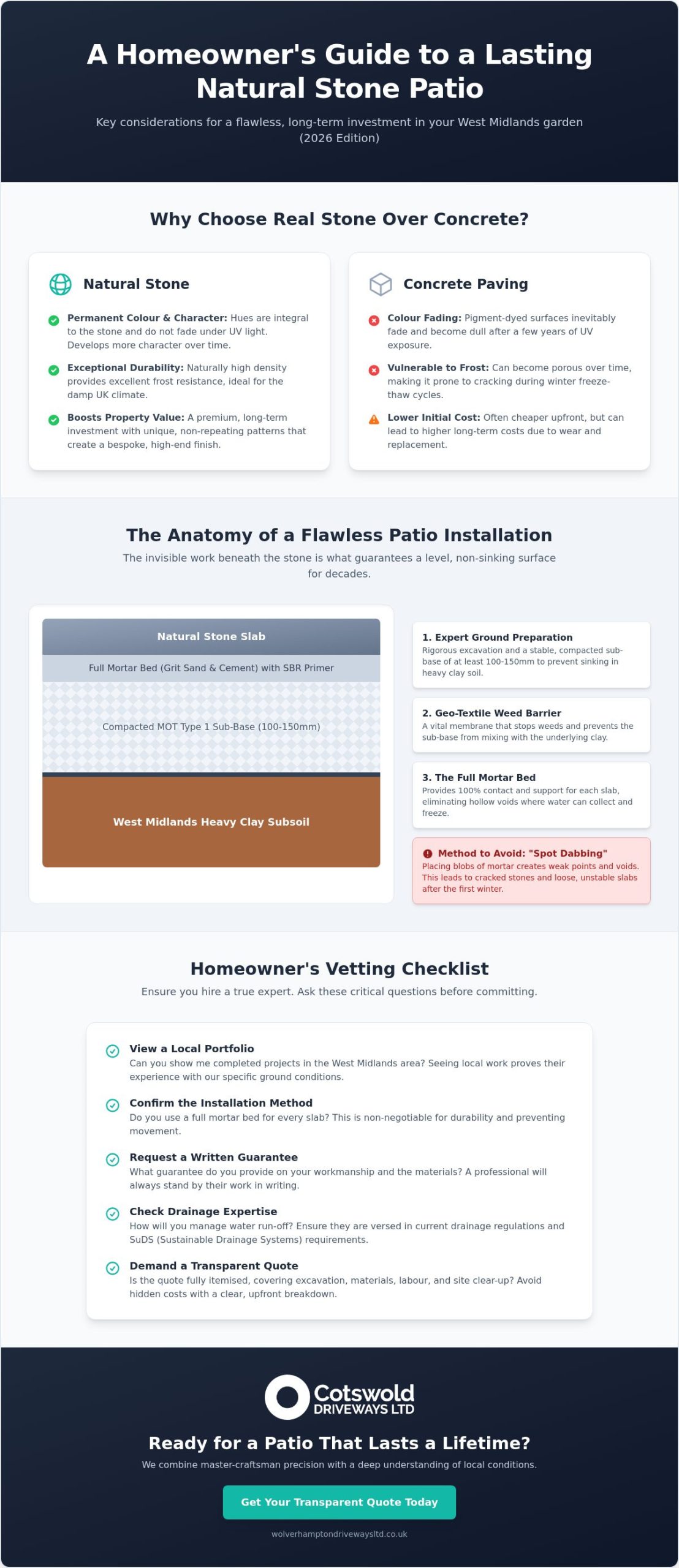
Vetting Your Natural Stone Patio Installers: A Homeowner’s Checklist
Finding the right natural stone patio installers is about more than just picking the first name you see on a search page. It’s about protecting your home and your hard-earned money. You should always ask to see a portfolio of recent work. Specifically, look for natural stone projects rather than just basic block paving. Stone requires a different level of craftsmanship and technical knowledge. A reputable local firm will carry full public liability insurance and provide written guarantees for their workmanship. This gives you peace of mind that if anything goes wrong, you aren’t left footing the bill for repairs.
Be wary of certain red flags. If a contractor says they can start tomorrow, ask yourself why they aren’t busy during the peak landscaping season. Reliable experts usually have a lead time because their skills are in high demand. Similarly, avoid anyone who insists on “cash only” payments. You need a clear paper trail and a formal contract to protect your interests. Comparing quotes is also a vital step. Don’t just look at the bottom line. Ensure you’re comparing “like-for-like” in terms of sub-base depth, material quality, and whether they’re using a full mortar bed or cheaper, unreliable methods.
Essential Questions to Ask
You can tell a lot about a builder’s expertise by the way they answer technical questions. Use this short list to separate the masters from the amateurs:
- “Do you use a full mortar bed or spot dabs?” The only correct answer is a full mortar bed. As we discussed earlier, spot dabbing leads to hollow voids, rocking slabs, and eventual cracking.
- “How do you handle drainage and run-off?” They should mention a 1:80 fall and, if necessary, integrated drainage channels or soakaways to manage heavy West Midlands rainfall.
- “Can I speak to a client from two years ago?” A patio usually looks great the day it’s finished. A reference from two years ago proves the sub-base was installed correctly and hasn’t sunk or shifted.
Understanding the Quote
A professional quote should be transparent and detailed. Verify if waste removal, such as skip hire, and the initial ground preparation are included in the final price. These costs can add up quickly if they aren’t accounted for upfront. You should also check if the stone being used is “calibrated.” Calibrated stone has been processed to a consistent thickness, which makes it faster to lay. Uncalibrated stone is often cheaper to buy but requires significantly more labour time to install correctly. For more details on what to expect from a high-quality local service, you can read our guide to Professional Patio Installation in Walsall.
Taking the time to vet your contractor properly ensures you get a stunning result that lasts for decades. If you’re ready to transform your garden with a team that values quality and transparency, request a free, no-obligation quote from us today.
The Wolverhampton Driveways Ltd Approach to Natural Stone
At Wolverhampton Driveways Ltd, we take our reputation as leading natural stone patio installers seriously. Our 2026 commitment is built on professional, high-quality workmanship that respects both your property and your budget. We aren’t interested in cutting corners or using “quick-fix” methods that fail after a single winter. Instead, we provide a reliable, straight-talking service that West Midlands homeowners can depend on. As fully insured and licensed local specialists, we take pride in every project we complete across Wolverhampton, Telford, Cannock, and Dudley.
We understand that a new patio is a significant investment. You want a team that is punctual, hardworking, and easy to communicate with. That is why we maintain a “no-nonsense” work ethic from the moment we arrive on-site. We don’t use high-pressure sales tactics or hide costs in complex contracts. You get a clear, transparent process and a final result that adds genuine value to your home. Our goal is to be the stress-free partner you need to transform your outdoor living space into something truly special.
Our Proven Installation Process
Every project begins with a methodical site survey and design phase. We assess your garden’s specific levels and drainage needs, ensuring the technical foundation is perfect before a single stone is laid. Building on the technical essentials mentioned earlier, we only use high-grade MOT Type 1 sub-bases and premium jointing compounds. These materials are essential for creating a stable platform that resists the shifting nature of our local clay soils. We handle the heavy lifting, the excavation, and the technical gradients so you don’t have to worry about a thing.
Our expertise extends beyond the back garden. Many of our clients realise that a stunning new patio deserves an equally impressive entrance. We have the equipment and skill to integrate your new garden space with expert tarmac driveways for a total property makeover. This joined-up approach ensures a consistent aesthetic across your entire home whilst improving overall kerb appeal. We manage the entire timeline, including skip hire and waste removal, so the process remains efficient and tidy.
Start Your Garden Transformation
Seeing is believing. We encourage all our potential clients to view our local gallery of completed natural stone projects. You’ll see the variety of textures and colours we’ve installed, from riven Indian sandstone to sleek, modern limestone. These real-world examples demonstrate the level of detail and care our natural stone patio installers bring to every job. We treat your garden as if it were our own, ensuring the final site clear-up is thorough and your new space is ready to use immediately.
If you’re ready to move away from “cowboy” builders and work with a team of seasoned professionals, we’re here to help. We offer a free, no-obligation site survey to discuss your ideas and provide a detailed plan. We’ll listen to your requirements and offer honest, practical advice on the best materials for your specific garden aspect. Take the first step toward a stunning, level, and durable outdoor space today. Contact Wolverhampton Driveways Ltd for your free natural stone patio quote and let’s get your project started.
Ready to Transform Your West Midlands Garden?
Investing in a natural stone patio is about more than just aesthetics. It is about creating a durable, level space that stands up to the West Midlands weather and the specific challenges of our local clay soil. You now know that a solid sub-base and a full mortar bed are non-negotiable for a long-lasting finish. You also have the tools to choose between the natural grip of sandstone or the sleek, modern look of limestone. Each choice you make now determines how much you will enjoy your garden in the years ahead.
Choosing expert natural stone patio installers is the final piece of the puzzle. At Wolverhampton Driveways Ltd, we have been serving homeowners in Wolverhampton, Telford, and Dudley for over a decade. Our fully insured and licensed team works to the Red Dot standard of design and installation, ensuring your project is handled with master-craftsman precision. We take the stress out of the process, from the first measurement to the final site clear-up. Your peace of mind is our priority.
Book your free natural stone patio survey today to start your project. We look forward to helping you build a garden space you can be proud of for years to come.
Frequently Asked Questions
How long does a natural stone patio typically last?
A professionally installed natural stone patio can easily last 30 years or more. Its longevity depends almost entirely on the quality of the groundworks and the sub-base preparation. Because natural stone is incredibly dense and doesn’t fade under UV light, it remains structurally sound and visually appealing for decades. Choosing experienced natural stone patio installers ensures the foundation is built to support the stone for its entire lifespan.
Does natural stone paving get slippery when wet?
Natural stone with a riven or textured surface, such as Indian sandstone, provides excellent natural grip even when it’s raining. Some smoother stones like honed limestone or certain slates can become more slippery, but this is easily managed. We often apply specialist sealants with anti-slip additives to these smoother materials. This maintains the sleek aesthetic whilst ensuring the surface remains safe for your family throughout the year.
Do I need planning permission for a new natural stone patio?
Most patio projects fall under “permitted development” and don’t require formal planning permission. However, if you’re paving a front garden larger than five square metres, you must use a permeable surface or provide drainage to a permeable area. You should also ensure the finished height is at least 150mm below your home’s damp-proof course. If your property is listed or in a conservation area, it’s always best to check with your local council first.
How much maintenance does a sandstone patio require?
Sandstone is a low-maintenance material that only requires a basic clean once or twice a year. A simple wash with a stiff brush and soapy water is usually enough to remove seasonal grime. We recommend sealing your sandstone every few years to protect against algae and stubborn stains, especially in shaded parts of the garden. This small effort keeps the natural colours vibrant and prevents the stone from looking weathered or tired.
Can natural stone be laid over an existing concrete patio?
Whilst it’s technically possible to lay stone over concrete, we generally don’t recommend it. The existing concrete must be perfectly level and free from any cracks or movement, which is rare in older gardens. Adding another layer of stone also raises the ground level, which can create issues with your damp-proof course or cause water to drain toward your house. A full excavation and a fresh MOT sub-base is always the most reliable approach for natural stone patio installers to take.
What is the best time of year to install a new patio in the West Midlands?
Spring and autumn are the best seasons for installation because the temperatures are mild and the ground is easier to work with. Summer is also fine, though we have to be careful that the mortar doesn’t dry out too quickly in direct heat. Winter is the most challenging time due to frost and heavy rainfall, which can delay the groundworks. We plan our projects carefully to ensure the weather doesn’t compromise the quality of the final installation.
How do I prevent weeds from growing between my patio slabs?
The best way to prevent weeds is to use professional jointing compounds rather than traditional sand and cement mortar. Weeds don’t actually grow through the stone; they grow from seeds that land in the gaps. Modern polymeric jointing compounds create a solid but flexible barrier that stops seeds from taking root. When combined with a geo-textile membrane under the sub-base, this keeps your patio looking tidy and weed-free for years to come.