
A clean driveway can still need attention if its paving is sinking. For driveway maintenance tips in the UK, a useful starting point is a deeper clean every 6 to 12 months, with weekly sweeping and monthly attention to stains and early weeds. The right schedule depends on the surface and how exposed it is to shade, trees and debris.
It’s easy to focus on moss or marks, but loose, rocking or sunken blocks can signal a problem beneath the surface. These driveway maintenance tips for UK homes explain how often different surfaces benefit from cleaning, how to manage weeds and block-paving joints, and which signs may mean repairs are needed. Lifting and levelling sunken blocks properly matters: cleaning alone won’t fix an uneven surface or recurring movement.
Key Takeaways
- Match the cleaning method to your driveway surface, and avoid forceful washing that can disturb block-paving joints.
- Keep moss and weeds under control with surface-appropriate treatments, following product instructions when using garden chemicals.
- After weeds are removed from block paving, replace any jointing sand that has been lost to help keep the blocks stable.
- Sunken blocks may need to be lifted so the layer beneath can be levelled before the paving is put back in place.
1. How Often Should You Clean a Driveway?
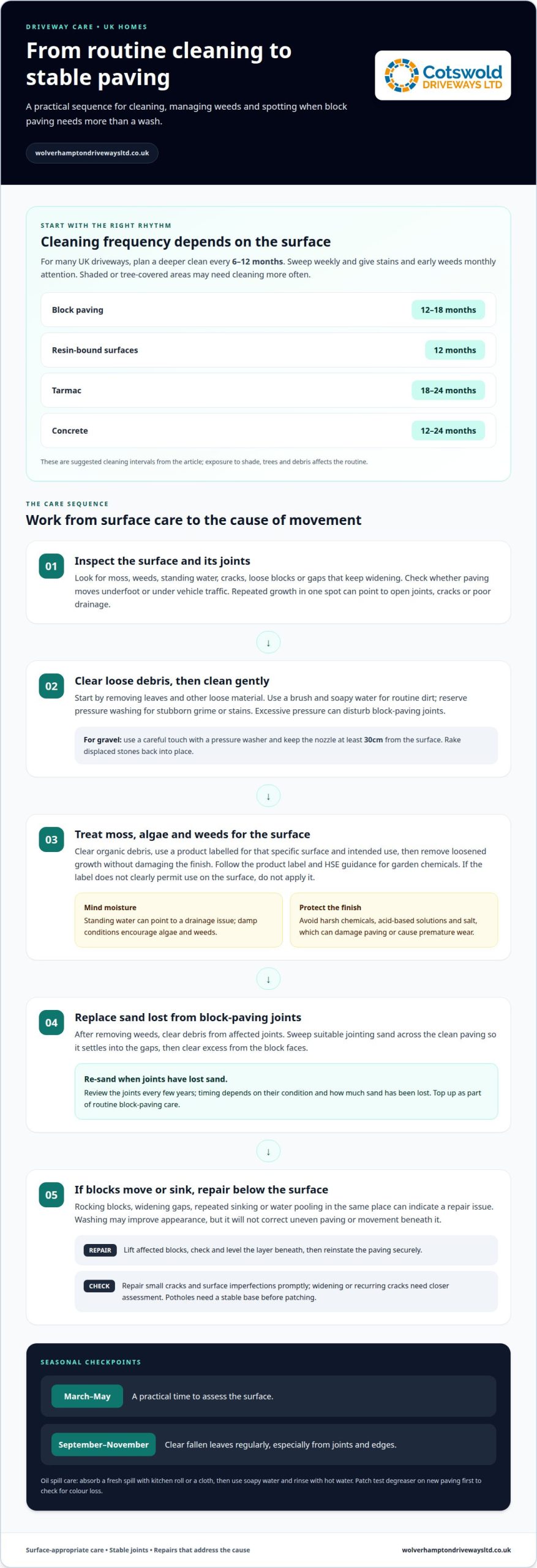
A deeper clean every 6 to 12 months suits many UK driveways. Between cleans, professionals recommend weekly sweeping and monthly attention to stains and early weeds. Shaded or tree-covered surfaces may need more frequent cleaning because leaves and damp debris collect there. The right routine also depends on the paving: block paving may need cleaning every 12–18 months, resin-bound surfaces every 12 months, tarmac every 18–24 months and concrete every 12–24 months.
Cleaning starts with removing loose debris, then choosing the least intensive method that suits the surface. A brush and soapy water can handle routine dirt; pressure washing is usually reserved for stubborn grime or stains. On block paving, excessive pressure can disturb the joints. For gravel, a pressure washer needs a careful touch, with the nozzle at least 30cm from the surface. Professionals avoid harsh chemicals, acid-based solutions and salt, which can damage paving or cause premature wear. If a product label doesn’t clearly allow use on that surface, they don’t use it.
No cleaner is automatically safe for pets, plants and drains. Choose a driveway-safe product labelled for your specific surface and intended use, and follow its directions. Use weedkiller in line with the current product label and HSE guidance for garden chemicals. To treat oil stains, absorb fresh spills with kitchen roll or a cloth, then use soapy water and rinse with hot water. Patch test degreaser on new paving first to check for colour loss.
Spring, from March to May, is a practical time to assess the surface; fallen leaves should be cleared regularly in autumn, from September to November. UK runoff and chemical questions call for careful handling: professionals manage wash water and follow product directions rather than directing chemicals or debris indiscriminately into drains. The cost of professional driveway cleaning and sealing depends on the surface, its condition and the work required; a price is given after a quote request.
2. Weed and moss control
Moss and algae thrive where damp leaves and soil collect on paving. Poor drainage can encourage weeds and leave standing water through winter. When water freezes, repeated temperature changes can contribute to surface damage. Moss and algae also make wet paving more slippery. A professional treatment begins by identifying where growth is concentrated, such as shaded concrete, paving joints or a damp edge.
Removing visible growth is only part of the job. Clear organic debris, treat affected areas with a product suitable for the surface, then remove loosened growth without damaging the finish. Follow the product label and HSE guidance for garden chemicals. If the label does not clearly permit use on that surface, do not apply the product. This is especially important on older paving, where an unsuitable treatment may affect its colour or finish.
On gravel, weed control also means managing stone movement. Stones can spread beyond the driveway, leaving thin patches where weeds may take hold. Landscape fabric beneath gravel can help limit weed growth and erosion, while raking redistributes displaced stones. For widespread weeds on a UK gravel driveway, use a pet-safe, eco-friendly weedkiller on a dry day, following its label instructions.
Prevention depends on managing moisture and debris as well as treating growth. Clear leaves from joints and edges, then check whether standing water points to a drainage issue. Improving poor drainage can reduce the damp conditions that encourage algae and weeds. Sealing can help stabilise block-paving jointing sand and reduce weed growth, but it does not replace removing existing plants or addressing water flow.
Repeated growth in the same area can signal a deeper maintenance issue, such as open joints, cracks or poor drainage. A professional can distinguish between surface growth and weeds rooted in paving gaps, then choose a suitable treatment and removal method. For help assessing recurring growth alongside the paving’s condition, explore professional driveway care.
3. Weeding and re-sanding block paving joints
Weeds in block paving usually start in jointing material, cracks or edges where organic matter gathers. Clear growth from affected joints, remove debris and check whether the paving moves underfoot or under vehicle traffic. The distinction matters: weeds in otherwise firm joints need different attention from loose blocks or gaps that keep widening. Seasonal checks can also catch fresh growth before roots spread further.
After weeding, replace any jointing sand removed with the plants. Sweep suitable sand across the clean paving so it settles into the joints, then clear excess from the block faces. Sand can settle or wash away over time, so top up the joints as part of routine block-paving care. Re-sanding every few years can help maintain stability; timing depends on joint condition and how much sand has been lost.
How often should you re-sand and seal block paving in the UK? Re-sand when joints have lost sand, and plan to review them every few years. Sealing can help stabilise jointing sand and reduce weed growth, but the paving must be ready first. Sealing damp blocks can leave whitening or patchy areas, so a professional assesses the surface before applying a finish.
Repairs should address the cause, not just cover the symptom. For loose paving, lift the affected blocks, check the bedding beneath and reinstate them securely. Repair small cracks and surface imperfections promptly; widening or recurring cracks need closer assessment. Potholes also require a stable base before patching. With gravel, rake displaced stones back into place and add fresh material to thin patches if needed. These checks help distinguish routine joint maintenance from a repair to the paving base.
4. Professional repair of sunken block paving
A sunken patch of block paving is more than an appearance problem. Rocking blocks, widening gaps and repeated sinking suggest the surface may need repair. Water that repeatedly pools in the same place can also signal an issue. Washing away debris may make the paving look cleaner, but it will not correct uneven blocks or movement below them.
A professional repair begins with assessing the affected area and its surrounding joints. The specialist removes and sets aside the sunken blocks, then levels the area beneath before reinstating them. This reveals what needs attention under the paving rather than simply filling gaps at the surface. The sub-base, drainage, edge restraints and slope all affect how a driveway performs.
After the blocks are reinstated, they should be stable and aligned with the surrounding surface. Loose or damaged blocks may also need attention, especially where gaps have spread. Consider how water moves across the driveway: improving drainage can help prevent standing water from damaging the surface, particularly when it freezes in winter.
Clean after completing repairs, not instead of them. Excessive pressure washing can disturb block-paving joints, so use a suitable approach once the blocks have been reset. Pay particular attention to garden edges or the driveway entrance if movement or debris has affected the paving there. Repeated sinking calls for investigation beneath the blocks, not another surface wash.
If your blocks are rocking or sinking again, arrange professional block-paving repairs.
Wolverhampton Driveways: Driveway Cleaning & Repairs
Wolverhampton Driveways provides Driveway Cleaning & Repairs for homeowners dealing with stubborn stains, recurring weeds, loose paving or sunken blocks. Turn to the team when routine cleaning no longer improves the surface, or when movement and standing water suggest repairs are needed. The right approach depends on the driveway material and its condition: block paving may need attention to its joints, while tarmac and resin-bound surfaces need care suited to their finish.
Professional assessment helps distinguish a surface-cleaning job from a repair beneath the paving. Wolverhampton Driveways also works with Tarmac Driveways, Block Paving and Resin Bound Driveways, making it easier to discuss the material and the maintenance issue together. Share what you’ve noticed, such as recurring stains, weeds between blocks or an uneven area, so the work can address the problem rather than just its appearance.
Contact Wolverhampton Driveways to discuss your driveway cleaning or repair.
Keep your driveway in good condition with a clear next step
A useful maintenance plan should suit how you use your driveway, not just how it looks on a dry day. Note where wear repeatedly appears and what changes after rain or regular vehicle use. These details help a professional understand the pattern and discuss practical next steps. The right timing for care depends on the surface’s condition and exposure to weather, so an older driveway may need a different routine.
Use these driveway maintenance tips for UK homes as a starting point, then act when cleaning alone will not resolve the issue. A professional can assess the work needed and help you decide what to address first. Describing the affected area clearly makes the conversation more useful, whether you’re considering maintenance or repairs.
Ready to discuss your driveway? Contact Wolverhampton Driveways Ltd and take the next step with confidence.
Frequently Asked Questions
How Often Should You Clean a Driveway?
A practical set of driveway maintenance tips UK homeowners can follow starts with a deeper clean every 6 to 12 months, adjusting for the surface and its surroundings. A driveway beneath trees may collect leaves and organic debris sooner than an exposed one. After heavy rain, note recurring pools or new stains; these can signal issues that cleaning alone won’t resolve. Adapt the routine as the surface condition changes.
How do professionals look after a new driveway?
Match early care for a new driveway to its surface and installation stage. Avoid vigorous cleaning during the first month; sweeping is gentler. Newly installed block paving can settle over a few weeks, so avoid heavy traffic during this period. This is particularly important if a vehicle would repeatedly use the same area before the paving has settled.
What makes a driveway low maintenance?
A low-maintenance driveway combines a suitable surface with sound preparation and drainage. Resin-bound paving is porous, allowing rainwater to drain through, and can be maintained with regular sweeping and occasional power washing. The base still matters: poor preparation can undermine stability or drainage, whatever the surface. Consider vehicle use and whether fallen leaves or shade will affect upkeep.
How often should you clean and maintain a driveway in the UK?
For driveway maintenance tips UK homeowners can apply throughout the year, base cleaning frequency on the material rather than one fixed schedule. Block paving generally benefits from a deeper clean every 12–18 months, resin-bound paving every 12 months, tarmac every 18–24 months and concrete every 12–24 months. Shaded or tree-covered areas may need more frequent attention. Inspections can reveal pooling or widening cracks between cleans.
What are the best professional ways to remove weeds, moss and algae from a driveway?
The right approach depends on where growth is rooted and which surface it affects. A professional can distinguish growth in block-paving joints from moss across a broad paved area, then choose a suitable treatment and removal method. Garden chemicals should be used according to their product labels and HSE guidance. For widespread weeds on a gravel driveway, a pet-safe, eco-friendly weedkiller can be applied on a dry day.
How do professionals clean block paving, gravel, tarmac and concrete driveways?
Choose a cleaning method based on the material, its condition and the type of soiling. Take care around block-paving joints; use a gentler approach on gravel to avoid displacing stones. Resin-bound paving lets rainwater drain through its porous surface. Tarmac can soften slightly in very hot weather, so consider its condition when cleaning. A surface-specific assessment helps prevent using the same method on every driveway.