
Good driveway care involves more than making the surface look clean. For driveway restoration in Telford, jet washing removes dirt and contaminated jointing sand. Sealant is often applied afterwards to make weed growth less likely than on an unsealed driveway. If you’re paving over a front garden in England with an impermeable surface larger than five square metres, planning permission is required from Telford & Wrekin Council.
It’s understandable to want a clear idea of what your driveway or patio needs before committing to work. This guide explains how routine care, cleaning and repairs can help, what affects a restoration quote, and what to look for in guarantees and warranties.
You’ll also find practical guidance on tarmac restoration, including how to assess the surface and understand the work involved. From maintenance to quotation details, the aim is to help you make a sound decision for your Telford property.
Key Takeaways
- Learn how cleaning and sealing can help maintain a driveway, and what routine care may help discourage weeds.
- See which project details shape a quotation, so you can compare the work included rather than focusing on the surface alone.
- Understand what to consider when assessing tarmac damage and deciding whether restoration or more extensive work is appropriate.
- Know what to look for in a guarantee or warranty, including its coverage, exclusions and the steps for making a claim.
- For an impermeable front-garden surface larger than five square metres in England, planning permission is required from Telford & Wrekin Council.
Driveway and patio maintenance
A practical maintenance routine starts with identifying the surface and the problem. Check for loose paving blocks, cracked tarmac, algae, weeds, standing water and joints losing sand. A small patch of growth between blocks needs a different response from water pooling beside a patio. Note where each issue appears, then photograph it after rain or cleaning. This record can help distinguish a recurring fault from surface dirt.
Jet washing removes dirt and contaminated sand by directing high-pressure water at the surface. Clear leaves and loose debris first, then work methodically across the driveway or patio. Pay attention to block-paving joints: washing can remove jointing sand, so inspect them afterwards and replace any lost material. Avoid concentrating the spray in one spot, particularly around fragile edges or damaged areas.
Sealant is often applied shortly after jet washing. It can make weed growth less likely than on an unsealed driveway, but it doesn’t replace regular sweeping or removing established weeds. Follow the product’s application instructions and let the surface dry as directed. Sealing damp paving, for example, can prevent an even finish, so check the weather and surface conditions before starting.
Keep drainage in the maintenance routine. Remove leaves from channels and gullies, and watch how water moves across the driveway and patio during rainfall. Water that repeatedly collects in the same place can point to a fall, outlet or surface issue rather than a cleaning problem. A customer review dated 11 November 2024 describes drainage issues being rectified on a driveway and patio, illustrating why water flow matters alongside appearance.
Are planning permission or drainage rules relevant to driveway work in Telford? Yes. According to Telford & Wrekin Council, paving over a front garden in England with an impermeable surface larger than five square metres requires planning permission. Requirements can also depend on the driveway’s size and type, so consider permeability and water run-off when planning changes.
For routine care, follow a simple sequence: sweep away debris, clear drainage points, inspect joints and edges, then deal with stains or growth using a method suited to the material. After cleaning, check whether jointing sand needs replenishing before applying sealant. On a patio, move planters and outdoor furniture before washing, then check for water trapped beneath them. These steps can reveal wear early and keep maintenance focused on the actual problem.
Driveway costs and quotations
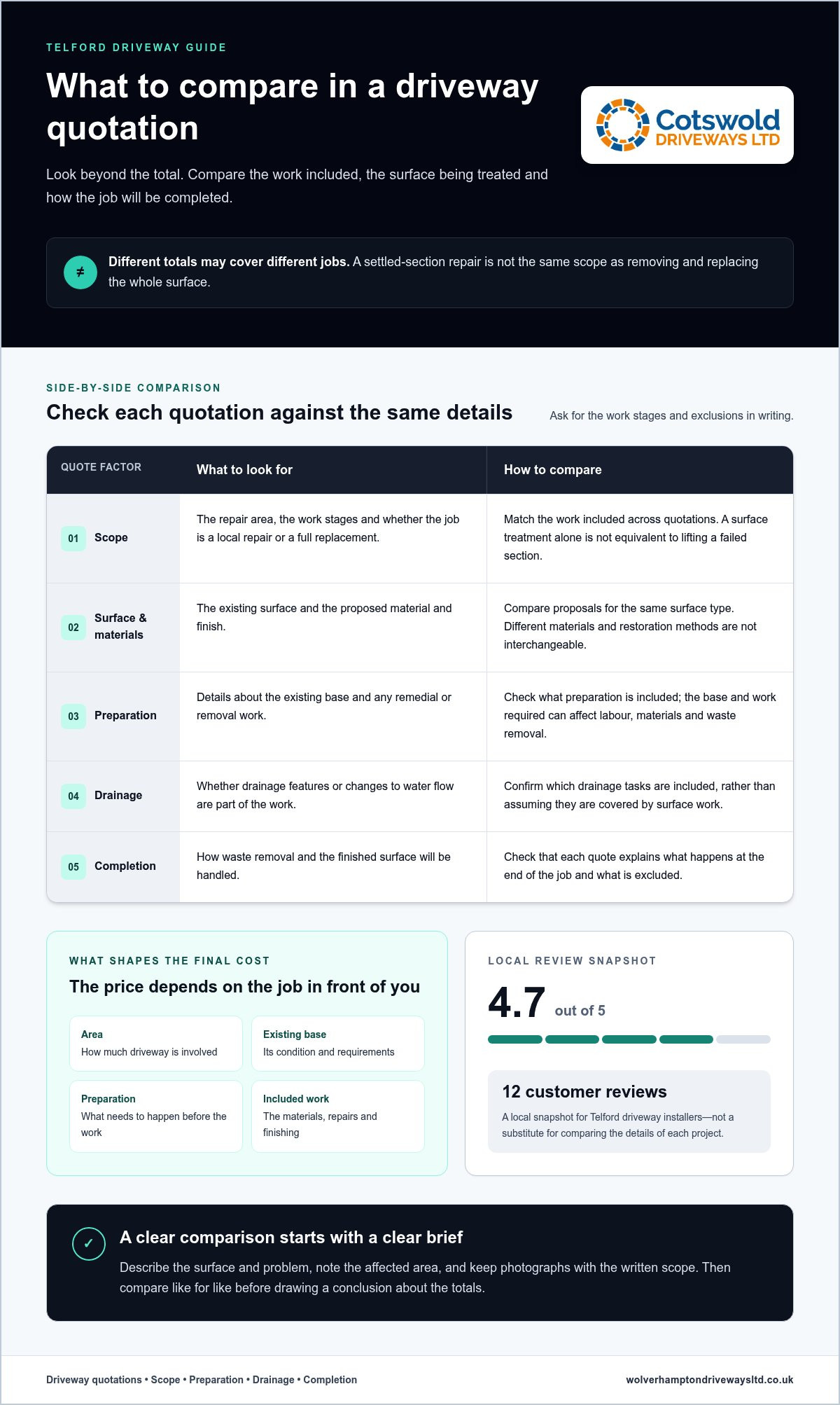
A useful quote starts with a clear description of the work, not just the driveway’s overall size. Note the surface, damaged or worn areas, access constraints, and whether the job includes drainage or edging. Repairing a settled section, for example, differs from removing and replacing the whole surface. These details affect labour, materials, preparation and waste removal, so they should be clear in the written quotation.
Treat that as context for concrete only, not as a direct estimate for another surface or restoration method. The final cost depends on the area, existing base, preparation required and work included. Requesting a quote is the way to get a price tailored to those factors.
Compare quotations for the same scope of work. Check whether each one describes the existing surface, preparation, repairs, new materials, drainage, waste removal and finishing. If one quote includes lifting a failed section and another covers only surface treatment, the totals don’t represent the same job. Ask for the work stages and exclusions in writing so you can see what each amount covers.
- Scope: Match the repair area and work stages across each quotation.
- Materials: Check that the proposed surface and finish are described clearly.
- Preparation: Look for details about the existing base and any remedial work.
- Drainage: See whether changes to water flow or drainage features are included.
- Completion: Check how waste removal and the finished surface are handled.
How can you find reviews and compare driveway restoration quotes in Telford? Read customer feedback for examples of similar work, then compare each written quote against the same checklist. Telford driveway installers are rated 4.7 out of 5 based on 12 customer reviews, a useful local snapshot rather than a substitute for checking project details.
Before accepting a quotation, make sure the written scope reflects the surface and problem you described. Keep a copy alongside any photographs of the affected area. For a more focused comparison, set out the repair area and surface type before discussing driveway restoration work; this helps keep the conversation centred on the job you need.
These are different surface types, so compare each quote with the material and work proposed rather than treating one rate as interchangeable with another.
Ask the installer to explain how labour and materials are itemised in the quotation, and whether preparation or removal work changes the scope. If proposals differ substantially, compare the surface, area and stages described before drawing a conclusion. A clear breakdown makes it easier to judge whether the quotes cover comparable work and what still needs clarification.
Tarmac and asphalt restoration
Tarmac restoration starts with diagnosing the surface, not simply covering every mark. The right approach depends on whether damage is local or widespread, and whether the base remains sound.
Restorable driveway surfaces
Block paving, tarmac and resin can all be considered for restoration, but each needs a surface-specific assessment. Look for loose or sunken blocks, cracks and worn patches in tarmac, or damage and discolouration in resin.
For block paving, check whether movement affects a few blocks or a larger area. With tarmac, note whether cracks are isolated or spread across the driveway. On resin, distinguish surface dirt from damaged material. These details help establish whether cleaning, local repairs or more extensive work suits the condition.
For example, a few uneven blocks may be lifted and reset, while a broad area of failed tarmac calls for closer inspection of the surface beneath. A damaged resin patch also needs attention to its edges and surrounding finish, not just the visible mark.
Restoration or replacement
Restoration targets specific faults or renews a surface that remains suitable for repair. Replacement removes the existing driveway and creates a new surface, which may be more appropriate when damage is widespread or the underlying base has failed.
Compare the extent of cracking, sinking, loose sections and recurring water problems. A small, isolated defect can call for a different approach from repeated damage across the whole driveway. Ask what preparation and repairs each option involves, and how the proposed work addresses the cause rather than just the visible symptom.
For instance, filling a crack without investigating why it appeared may leave the underlying issue unresolved. If blocks keep shifting across a wide section, resetting one block may not resolve the broader movement. The condition of the base, drainage and edges helps distinguish a local repair from a replacement project.
Driveway restoration steps
Restoration usually follows a clear sequence: assess the surface, prepare the work area, carry out repairs, then finish and inspect the result. For tarmac, record cracks, potholes, worn areas and edges during the inspection before choosing a repair method.
Use these steps to understand the work being proposed:
- Inspect: Mark each defect and note where water collects or the surface moves.
- Prepare: Clear loose material and establish which areas need repair or removal.
- Repair: Treat damaged sections using a method suited to the surface and fault.
- Finish: Check joins, edges and the transition to paths, thresholds or road access.
- Review: Walk the driveway and confirm the repaired areas sit consistently with the surrounding surface.
For example, assess a tarmac repair at its joins as well as across the patched area. On block paving, check that replaced blocks sit evenly beside their neighbours. This step-by-step approach makes the scope easier to understand and gives you specific points to discuss in a restoration proposal.
Driveway guarantees and warranties
A guarantee or warranty is useful only when its written terms explain which work and defects it covers. For a Telford driveway, read the document alongside the quotation and completion details. Check whether protection applies to workmanship, materials, or both. A promise covering materials alone may not cover an installation fault, such as a poorly finished edge or uneven section.
Look for the coverage period, when it begins, and how to report a problem. The terms should explain whether you need to contact the installer in writing, include photographs, or allow an inspection. Keep the quotation, warranty document, invoices and project photographs together. If a crack appears later, these records help identify the surface, work completed and installation date.
Read exclusions as carefully as the main coverage. For example, terms may distinguish a workmanship fault from damage caused by heavy use, impact or neglected maintenance. Check whether cleaning, sealing or other care is required to keep the cover valid. If the warranty specifies maintenance, make sure the required steps are clear and practical for your driveway.
How long does driveway restoration take, and how long do the results last? A typical residential driveway installation in Telford takes between 3 and 5 working days; restoration time depends on the repair scope and surface condition. Properly installed block-paved driveways can last well beyond 50 years, though that figure should not be treated as a warranty term.
Surface life and warranty length are different measures. A long-lasting finish does not automatically mean a guarantee covers every defect for the same period. Block paving, for instance, may remain usable for decades, while warranty terms may focus on particular installation or material issues. Check the document for the exact duration and remedy covered, rather than relying on general claims about lifespan.
Before accepting the paperwork, use this short checklist:
- Covered work: Confirm whether the document covers repairs, installation, materials or specific defects.
- Time period: Find the start date, end date and any separate periods for different work.
- Exclusions: Note how maintenance, misuse, impact and drainage issues are treated.
- Claims: Record the required contact method, evidence and inspection process.
- Remedy: Check whether an accepted claim leads to repair, replacement or another stated action.
Keep a dated record of routine care, including cleaning or resealing, and take photographs of any emerging fault. If the surface changes after heavy rain, for example, note where water collects and when you first noticed it. Clear records help connect the issue to the warranty terms and make the next steps easier to follow.
Which driveway restoration companies serve Telford and nearby areas?
Telford homeowners can find driveway and landscaping contractors serving the town and surrounding areas. Their backgrounds vary: one listed landscaping contractor reports more than 30 years of experience, another says it has installed driveways and patios across Telford since 1997, and a driveway company reports over 29 years serving Telford and the wider borough. These claims offer context, but experience alone doesn’t describe the work proposed for your property.
Look for a clear link between the contractor’s work and your project. A tarmac repair, a block-paving refurbishment and a patio with drainage issues call for different preparation and skills. Customer feedback can help you understand how completed jobs were handled. For example, reviews dated 15 December 2025 describe a tarmac driveway extension, a fence and gate, and refurbishment of an existing blockwork driveway. A review dated 16 April 2025 describes paving a driveway and pathway.
Ratings are another useful reference, provided you consider the number of reviews alongside the score. Telford driveway installers are rated 4.7 out of 5 based on 12 customer reviews. That figure is a local snapshot, not a guarantee of the outcome for an individual project. Read comments for details that relate to your needs, such as the finished surface, communication, tidiness or how a specific issue was addressed.
Compare the proposed work in writing. A useful scope identifies the surface, affected areas, preparation, repairs, drainage considerations and finishing. For instance, a quote for a tarmac driveway extension should explain how it joins the existing surface. A block-paving refurbishment should describe which areas will be lifted or repaired. These details help you understand what the work includes beyond the headline description.
- Project match: Find examples involving the same surface or type of repair.
- Written scope: Check that the proposed stages and affected areas are clear.
- Review context: Read dated feedback alongside the rating and review count.
- Local relevance: Look for experience specifically connected with Telford or its wider borough.
One review dated 5 October 2026 describes a driveway project completed over two days and notes that the team cleaned up as it worked. A review dated 11 November 2024 describes drainage issues being rectified on a driveway and patio. Such examples show the practical details homeowners may value, from site tidiness to resolving water problems. Use them to identify what matters most in your own project and describe those priorities clearly.
If you’re ready to discuss the surface and work involved, arrange a driveway restoration discussion as the next step.
Wolverhampton Driveways: Tarmac Driveways
Wolverhampton Driveways Ltd is a practical next step if your driveway needs tarmac restoration, cleaning or repair. Its Tarmac Driveways and Driveway Cleaning & Repairs services address worn surfaces, local damage and upkeep. If your existing surface is unsuitable for repair, Block Paving and Resin Bound Driveways are also options to consider.
Before discussing the work, note the areas needing attention, the surface condition and any drainage concerns. This helps focus the conversation on whether targeted repairs or a different driveway surface better suits your property. A clear description of the problem is a useful starting point.
For advice on your driveway project, contact Wolverhampton Driveways Ltd.
Make your next driveway decision with confidence
The most useful next step is to match the work to your existing surface. Decide whether you want to preserve and repair it or explore a different finish, then describe what matters most for your home. That gives your driveway restoration in Telford a clear starting point, focused on practical needs rather than a quick cosmetic fix.
Wolverhampton Driveways Ltd offers Tarmac Driveways, Block Paving and Resin Bound Driveways. The right option depends on your property, existing surface and preferred finish. A straightforward conversation can help you outline the project and understand the next step, without committing before you’re ready.
Contact Wolverhampton Driveways Ltd today to discuss your driveway plans. A well-considered choice can help you move forward with a surface that suits your home and how you use it.
Frequently Asked Questions
What does driveway restoration in Telford involve?
Driveway restoration in Telford involves work suited to the surface and its condition, from cleaning and local repairs to renewing damaged sections. A driveway with a sound base but stained paving, for example, may need a different approach from one with recurring movement or broken edges. The work should address the cause of visible defects, not simply improve the surface’s appearance. Tarmac, block paving and resin each require suitable materials and methods.
How much does driveway restoration cost in Telford?
The price depends on the individual project and is provided after a quote request. Key factors include the driveway’s area, surface type, access, base condition and extent of repair or replacement. A small repair in an accessible area differs from work involving extensive preparation or removal. Wolverhampton Driveways Ltd provides free, no-commitment quotes, so you can review the proposed scope before deciding how to proceed.
What are the costs of cleaning, repairing, and sealing a driveway in Telford?
Cleaning, repairs and sealing have different cost drivers, so ask for each task to be described separately in the quote. Cleaning depends on the surface and level of dirt; repairs depend on the location and extent of damage. Sealing, if included in the planned work, depends on the surface and preparation required. For example, loose block-paving joints may need attention alongside cleaning, changing the work involved.
What risks, guarantees, and insurance should I check before hiring a driveway contractor?
Focus on site risks and the written scope: unclear drainage arrangements, potential damage to adjoining areas, and uncertainty over who handles waste. Wolverhampton Driveways Ltd is fully insured and licensed, and provides a comprehensive quality guarantee covering workmanship and materials. Issues arising within the guarantee period are rectified at no additional cost. Read the guarantee’s terms to understand what it covers and how to report a problem.