
A natural lawn can be a tough choice for a garden used by dogs, particularly when muddy ground and worn patches become a regular problem. For Cannock households, hardwearing artificial grass for dogs can suit busy gardens where children and pets share the space; a 25 mm pile is a practical option for heavy dog use.
It’s understandable to want a lawn that stays usable without constant mowing or muddy paws coming indoors. The right artificial grass can provide a consistent surface, but good drainage and sensible upkeep matter too, especially where dogs regularly go to the toilet.
This guide explains who is most likely to benefit, how drainage and rinsing help manage urine odour, and what to consider when comparing artificial grass with natural grass. You’ll also learn how pile height and fibre strength affect everyday wear, so you can judge whether artificial grass suits your garden and your dog’s routine.
Key Takeaways
- Consider how often your dog uses the garden and whether children share the space when deciding if artificial turf suits your household.
- Good drainage, regular rinsing and clearing waste help keep pet-use areas cleaner and manage urine odour.
- Choose pile height and fibre strength with your dog’s activity in mind, as busy areas need turf that can cope with repeated use.
- Weigh the lower mowing and watering needs of artificial turf against the natural feel and seasonal upkeep of a grass lawn.
Who Benefits Most from Artificial Grass?
Artificial grass can suit households in Cannock, Wolverhampton, Telford and Dudley whose dogs repeatedly use the same lawn routes. Natural grass may struggle to recover from constant pressure, leaving bare or muddy patches where dogs run. Synthetic turf can also suit gardens shared by children and pets, especially when a consistent surface matters through busy seasons.
For mixed family use, a 35 mm pile is one option. Fibre material and pile height both matter when dogs use particular areas heavily. Nylon artificial grass is suggested at 20-35 mm, while shorter turf can be more practical in a dog run. Pet-friendly grass should use non-toxic materials; a realistic appearance can help it sit naturally within the garden.
Preparation is essential for dog-proof installation. First, remove the existing lawn and prepare a stable base. A compacted MOT Type 1 sub-base is typically installed 50-100 mm deep, followed by a sharp sand levelling layer, permeable membrane and turf with free-draining backing. Each layer supports the surface and helps water pass through.
DIY installation requires careful measuring, cutting, joining and securing the edges. A simple rectangular garden is easier to lay than one with curved borders, steps or several obstacles. In Cannock and across the wider West Midlands, garden shape, access and ground conditions all affect the work involved.
Installation cost depends on lawn size, ground preparation, access and chosen material; the price is provided after a quote request. As a timescale example, a 60 m² lawn typically takes two installers two days. This gives you a useful planning guide, while the actual work depends on the garden’s layout and preparation needs.
Drainage and urine odour prevention
In Cannock, effective drainage depends on both the turf backing and the prepared garden base. Artificial grass doesn’t remove the need to consider drainage: the installation should manage water without encouraging pooling or unwanted runoff.
Sub-Base Preparation
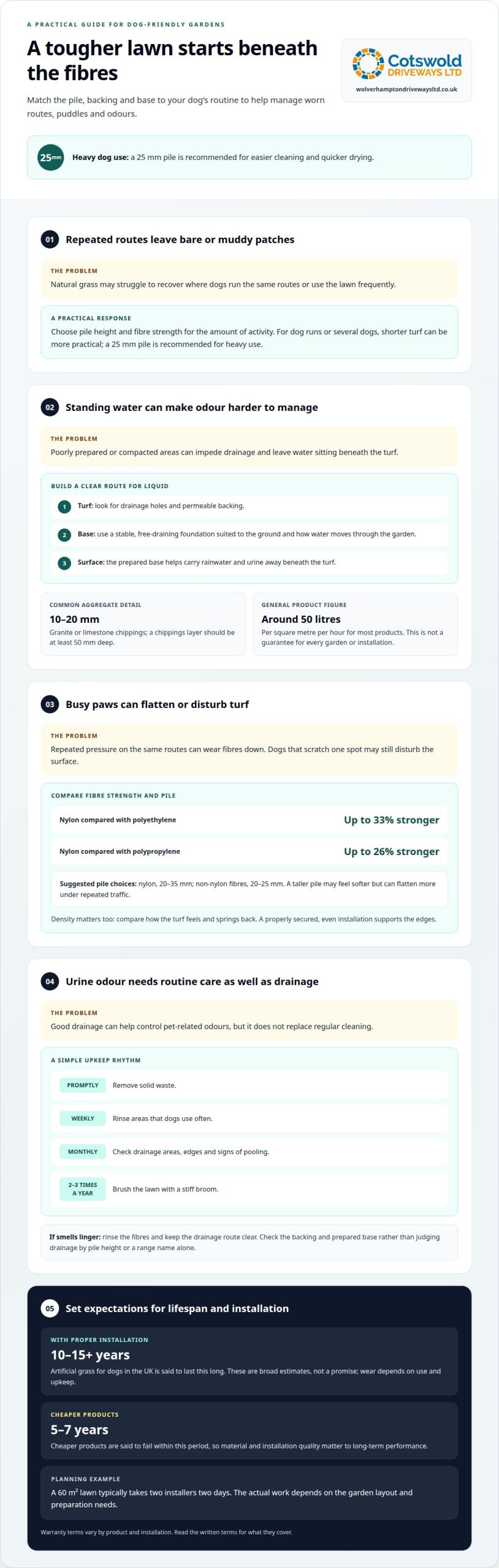
A stable, free-draining foundation gives rainwater and urine a route beneath the surface. A compacted aggregate base is commonly used, with granite or limestone chippings sized 10-20 mm; a chippings layer should be at least 50 mm deep. The right preparation depends on the ground and how water moves through the garden. Poorly prepared or compacted areas can impede drainage and leave water sitting below the turf.
Pet-Friendly Grass Drainage
Dog owners should look beyond the visible fibres and consider the backing. Drainage holes allow liquid to pass through, while a permeable backing and prepared base help carry it away. Most artificial grass products can drain around 50 litres per square metre per hour. This is a general product figure, not a guarantee of the drainage rate for every garden or installation.
Good drainage helps prevent puddles and can help control pet-related odours, but routine care still matters. Remove solid waste promptly, then rinse high-use areas regularly. A weekly rinse is recommended for spaces dogs use often. Check drainage areas monthly for signs of pooling. If urine smells linger, rinsing the fibres and keeping the drainage route clear are practical first steps.
A range name or pile height alone doesn’t establish how quickly turf drains. For example, the Diablo Evolve pile measures 35 mm including its backing, but that measurement doesn’t give a drainage rate. Look at the backing’s drainage holes and how it works with the prepared base. If you’re planning artificial grass installation, these details help match the surface to your garden’s use.
Artificial grass durability and resistance to flattening
Dogs put repeated pressure on the same routes, so fibre strength, pile choice and installation all affect how the surface wears. The best fit depends on whether your garden sees occasional play or daily running.
Resistance to Paws and Digging
Hard-wearing artificial grass is designed for frequent use, but no surface is indestructible. Strong fibres can help resist wear from paws and busy play, while an even, properly secured installation supports the turf at its edges. Dogs that repeatedly scratch one spot may still disturb the surface, so consider where they dig and run when planning the layout.
Nylon fibres can be up to 33% stronger than polyethylene fibres and up to 26% stronger than polypropylene fibres. That makes fibre material a useful comparison point for owners choosing friendly artificial grass for a high-use garden.
Lifespan and Durability
Artificial grass for dogs in the UK is said to last 10-15+ years with proper installation. Cheaper products are said to fail within 5-7 years, so the initial material and installation quality matter to long-term performance. These are broad lifespan estimates, not a promise for every garden; wear depends on use and upkeep.
Warranty terms vary by product and installation, so there is no single warranty period to assume. Read the written terms for what they cover. For maintenance, remove solid waste weekly, rinse busy areas, and brush fibres occasionally. Brush the lawn with a stiff broom two to three times a year, and inspect edges and drainage monthly.
Pile Height and Density
For heavy dog use, a 25 mm pile is recommended for easier cleaning and quicker drying. Nylon options are suggested at 20-35 mm, while 20-25 mm is suggested for fibres that aren’t nylon. A shorter pile can suit dog runs or several dogs; a taller pile may feel softer but can flatten more under repeated traffic.
Density matters alongside height: a full-looking surface needs enough fibre support to recover after paws press it down. Compare how the turf feels and springs back rather than choosing by appearance alone. The right combination of fibres and pile can make a well-used garden more practical.
Artificial turf versus natural grass for dogs
The choice depends on how your dog uses the garden and how much lawn care you want. In the UK, natural lawns can be muddy for 6+ months of the year. Repeated running can also leave worn patches because grass may struggle to recover from constant pressure. For dogs that follow the same route across the lawn, this can mean recurring damage.
An artificial lawn avoids mowing and watering, which can suit owners looking for less routine work. Lawn mowing can take 2-3 hours each week. Synthetic turf also provides a consistent surface through muddy weather, though it still needs waste removal, brushing and occasional rinsing. For dog owners, these tasks matter: rinsing helps wash away urine residue and manage ammonia-like smells, rather than making odour control automatic.
Natural grass may suit you better if you value a living lawn and accept seasonal maintenance. It can recover from ordinary use, but repeated paw traffic, digging and toilet spots can leave bare areas. Artificial grass removes the need for mowing, but it won’t behave exactly like soil and living grass. Think about whether your dog runs, rests or digs in particular spots before deciding which surface suits your garden.
Fleas and ticks can find it harder to live among artificial grass blades, but synthetic turf doesn’t guarantee their total elimination. A realistic appearance alone doesn’t make a surface durable either. Consider pile height, fibre strength, drainage and how often your dog uses the garden. A shorter, firm pile may be more practical for a busy run, while other households may prefer a softer feel.
The clearest takeaway is to match the lawn to your dog’s habits, not appearance alone. If you’re weighing up an artificial lawn for a well-used garden, discuss artificial grass for your garden as part of your landscaping plans.
Wolverhampton Driveways: Artificial Grass
Wolverhampton Driveways Ltd installs artificial grass for homeowners planning a more practical garden surface for dogs and family use. If you’re weighing up turf type, drainage and how the finished lawn will suit your outdoor space, discuss the project and its installation requirements with the team.
The right approach depends on your garden’s shape, existing surface and how your dog uses it. Sharing these details helps establish what preparation the work involves and which choices suit your priorities. Wolverhampton Driveways Ltd also installs block paving, resin driveways and tarmac driveways when a wider outdoor improvement is part of your plans.
For help planning artificial grass in your garden, contact Wolverhampton Driveways Ltd.
Plan a garden that works for your household
Choosing hard-wearing artificial grass for dogs in Cannock is also a chance to think about how the whole garden functions. Consider where your dog enters, plays and rests, and how people move between the lawn, patio and home. A clear plan helps the new surface feel like part of the garden, rather than an isolated change.
If you’re planning wider outdoor improvements, Wolverhampton Driveways also installs block paving, resin driveways and tarmac driveways. These options can help shape connected areas around the lawn, depending on your plans for the space.
Share your garden goals and discuss the next step with Wolverhampton Driveways. Contact Wolverhampton Driveways today to talk through your artificial grass project and make a practical plan for your home.
Frequently Asked Questions
Need Fake Grass Cannock Today?
Wolverhampton Driveways Ltd installs artificial grass in residential gardens in Cannock. Installation timing depends on the garden and the work involved. When planning a project, describe the lawn’s shape, access and intended use, such as a dog run or shared family garden. These details provide a useful starting point for discussing the work.
How do I clean up after my pets?
Remove solid waste promptly, then rinse the affected area so urine residue can pass through the turf. For example, thoroughly rinse your dog’s regular toilet spot after cleaning. If odour remains, a pet-safe enzyme cleaner can help break down residue. Follow the product instructions, then brush the fibres to help the surface look even again.
Which artificial grass is most hardwearing for dogs in Cannock?
For hardwearing artificial grass for dogs in Cannock, consider fibre material alongside pile height. Nylon fibres can be up to 33% stronger than polyethylene and up to 26% stronger than polypropylene. A 25 mm pile is suggested for heavy dog use, including dog runs, because shorter turf can be easier to clean. Match the choice to your dog’s activity and the garden’s main use.
How much does dog-friendly artificial grass cost per square metre in Cannock?
The cost depends on the lawn’s dimensions, the ground preparation required, garden access and the turf material selected. These factors affect the work and materials involved, so a single per-square-metre figure won’t reflect every Cannock project. Wolverhampton Driveways Ltd provides free quotes. Sharing your garden’s size and any difficult access points helps the team prepare a project-specific quotation.
Which artificial grass installers serve Cannock and what do they charge?
Wolverhampton Driveways Ltd serves Cannock and installs artificial grass for residential gardens. The cost depends on the project, including the lawn area, site preparation and chosen material. Request a free quote based on your garden rather than assuming a standard rate. Details such as steps, narrow entrances or an irregular lawn shape help describe the work involved and support a relevant estimate.
What base and drainage are needed for artificial grass in a garden used by dogs?
A dog-use lawn needs a stable, free-draining base beneath turf with drainage holes in its backing. The build-up can include compacted MOT Type 1, a sharp sand levelling layer and a permeable membrane. Ground conditions and existing water movement affect preparation. For example, a low area that already holds rain needs particular attention so water can drain rather than collect under the surface.