
Yes, resin driveways can become icy in freezing weather, but a properly installed, permeable surface helps water drain away and reduces the likelihood of sheets of ice forming. Four practical winter care for resin driveways steps can help: clear leaves and debris, manage ice carefully, protect the surface from heavy loads and spills, and keep drainage clear.
It’s understandable to worry about slipping or damaging the surface when frost, snow and wet leaves arrive. A clean resin driveway offers good grip in wet weather, but moss, algae and debris can make it slippery, so regular care matters. This guide explains how to clear snow without damaging the resin and what to consider when using de-icers. It also covers spills, pressure from parked vehicles and drainage areas that may need attention. The aim is straightforward: help you keep your driveway safer and in good condition through a typical UK winter.
Key Takeaways
- Resin surfaces can still become icy in freezing weather, so clear snow carefully and remove wet leaves before they build up.
- Choose gentle cleaning methods and suitable ice treatments to help protect the resin and maintain grip.
- Reduce the risk of marks by managing prolonged heavy loads and cleaning spills promptly.
- Keep drainage routes clear and pay attention to shaded spots where frost and standing water may linger.
1. Removing leaves and debris
Wet leaves hold moisture against resin and can encourage moss or algae. They also hide the permeable surface, making slippery patches harder to spot. Sweep leaves away regularly, especially after windy weather or when trees shed heavily. Use a soft outdoor broom, clearing the edges, corners and areas around parked cars. Promptly removing debris helps reduce staining and keeps the aggregate visible.
When it snows, choose a plastic shovel or stiff broom rather than a metal spade. Metal edges can scrape or chip resin-bound surfaces, particularly if pressed down hard. Gently push snow towards the driveway edge, keeping the shovel blade clear of the surface where possible. Avoid dragging grit, branches or other debris along with the snow, as these can scratch the finish.
A simple snow-clearing routine can prevent deep accumulation and reduce the need to use force. After snowfall, remove manageable layers before they compact or become difficult to shift. Clear the main parking and walking areas first, then sweep remaining snow from the edges. This measured approach is gentler than tackling a thick, packed layer all at once.
Professional snow removal can be useful where access is difficult or snowfall builds up. Experienced operators can select equipment and techniques suited to resin, while specialised equipment can help limit surface damage. Snow ploughing should be handled carefully: a blade set too low may catch the aggregate or resin. For a small domestic driveway, a plastic shovel or broom usually gives you more control.
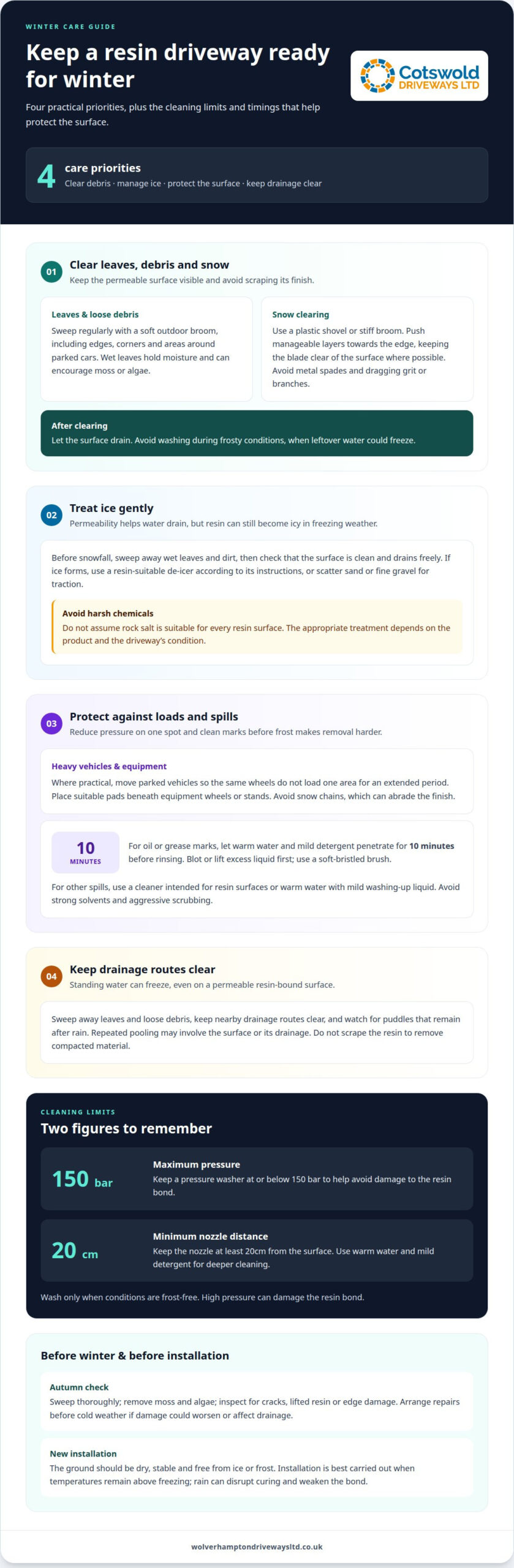
After clearing, leave the surface to drain and avoid washing it during frosty conditions, when leftover water could freeze. If deeper cleaning is needed, keep a pressure washer’s setting at or below 150 bar and its nozzle at least 20cm from the surface. These steps help remove winter grime without directing excessive force at the resin.
2. Do Resin Driveways Get Icy?
Yes. Any outdoor surface, including resin, can become icy in freezing weather. Resin-bound surfacing is permeable, so water drains through rather than sitting on top, reducing the likelihood of sheets of ice forming. Before snowfall, sweep away wet leaves and dirt, then check that the surface is clean and drains freely. These checks are a practical part of winter care for resin driveways.
An autumn clean gives you time to spot moss, algae, loose areas or edge damage before winter weather sets in. Sweep the driveway thoroughly, remove moss and algae, and inspect for cracks or lifted resin. Arrange repairs before the cold season if damage could worsen or affect drainage. Regularly removing leaves also helps reduce staining and slippery patches.
If ice forms, use a resin-suitable de-icer according to its instructions, or scatter sand or fine gravel for traction. Avoid harsh chemicals, and don’t assume rock salt is suitable for every resin surface. The right treatment depends on the product and the driveway’s condition. This careful approach supports winter care for resin driveways without relying on harsh treatments.
Clean oil or fuel spills promptly with a cleaner intended for resin surfaces, or with warm water and mild washing-up liquid. Use a soft-bristled brush. For tyre marks, try warm water and mild detergent before attempting anything more abrasive. Avoid strong solvents and aggressive scrubbing, which may mark or damage the surface.
During and after winter, remove loose dirt with a broom and wash the surface only when conditions are frost-free. For deeper cleaning, use warm water and mild detergent with a low pressure-washer setting. Keep pressure at or below 150 bar and the nozzle at least 20cm from the surface; high pressure can damage the resin bond. Maintenance or repair costs depend on the driveway’s condition and the work required, and are provided after a quote request. For help with winter cleaning or damage, explore driveway cleaning and repairs.
3. Protecting the surface from heavy loads and spills
Heavy vehicles and equipment can leave indentations if they remain in one place during freezing weather. Where practical, move parked vehicles so the same wheels aren’t loading one area for an extended period. For equipment, place suitable pads beneath wheels or stands to spread the pressure. Avoid using snow chains on resin-bound surfaces, as they can abrade the finish. Managing loads this way is a useful part of winter care for resin driveways.
Deal with oil, fuel and other spills promptly. Blot or lift excess liquid first, then clean the mark using a resin-surface cleaner or warm water with mild washing-up liquid. A soft-bristled brush helps work the cleaner in without scraping the aggregate. For an oil or grease mark, allow warm water and mild detergent to penetrate for 10 minutes before rinsing. Don’t leave a spill until after frost, as cold conditions can make cleaning more difficult.
Standing water needs attention because it can freeze on the surface. Keep nearby drainage routes clear and watch for puddles that remain after rain. If water repeatedly collects in one place, the cause may involve the surface or its drainage, not just winter temperatures. Sweeping away leaves and loose debris helps prevent blockages, but don’t scrape the resin to remove compacted material.
A coating should be intended for resin surfaces and applied according to its instructions, rather than using a general-purpose product. For a new installation, preparation matters just as much: the ground should be dry, stable and free from ice or frost. Resin-bound installation is best carried out when temperatures remain above freezing, because cold slows curing. Rain during installation can disrupt curing and weaken the bond, so both ground conditions and weather affect the finished surface. Careful preparation and sensible upkeep help protect the strength and finish of a driveway through winter.
4. Improving drainage to reduce freeze damage
Resin-bound surfacing is permeable, allowing rainwater to drain through instead of remaining on top. This can reduce the likelihood of broad ice sheets, but blocked drainage can still leave water standing. Keep channels, gullies and downpipes beside the driveway clear of leaves and grit. After heavy rain, check whether water drains away or collects in the same place.
Pooling water deserves attention before freezing weather. Water trapped around or beneath the surface can contribute to freeze-thaw movement or cracking. Clear visible debris from drainage points and sweep away loose leaves before they compact. Don’t force sharp tools into the aggregate or drainage openings, as this may disturb the surface. A plastic shovel can shift snow without a metal edge scraping the resin.
Some areas need closer monitoring through winter. Check shaded sections, north-facing areas, spots beneath trees, slopes and the bottoms of ramps for frost or lingering water. These locations receive less warmth or may hold runoff, so look for recurring puddles after rain. If water continues to collect despite clear channels, the drainage layout or surface may need attention.
After severe weather, inspect the driveway for cracks, chips or lifted resin. Look closely where water has pooled and along the edges, where movement may be easier to spot. If you find damage, arrange a professional assessment promptly rather than leaving exposed areas through further freezing conditions. Timely repairs can address the affected area before the problem worsens.
When installing a resin driveway, drainage and a stable base matter alongside the aggregate finish. A suitable base allows water to move through the permeable surface, while poor drainage can leave moisture where freezing affects the structure. Avoid washing during frosty conditions, since leftover water may freeze. If persistent pooling or winter damage needs attention, arrange a driveway assessment to identify practical repair options.
Wolverhampton Driveways: Resin Bound Driveways
Wolverhampton Driveways Ltd installs Resin Bound Driveways and provides Driveway Cleaning & Repairs for existing surfaces that need attention. If winter weather has revealed cracks, loose areas or persistent pooling, an assessment can help identify the issue and the suitable next steps. For a surface that needs replacing, Tarmac Driveways and Block Paving are also available. The company serves Wolverhampton and the wider West Midlands, including Telford, Cannock and Dudley.
Good winter upkeep can reduce debris build-up, but it can’t correct underlying damage or drainage problems. A driveway specialist can help when marks remain after cleaning, damage is visible or water repeatedly collects in one area. Contact Wolverhampton Driveways Ltd for a free, no-commitment quote and advice about the work your driveway may need.
Plan your next step for a sound driveway
Winter is a useful time to decide whether your driveway needs routine attention or a more substantial change. If the surface has persistent damage or no longer suits how you use your home, consider the options that fit your property and priorities. Wolverhampton Driveways Ltd offers Resin Bound Driveways, Tarmac Driveways and Block Paving for projects in Wolverhampton, Telford, Cannock and Dudley.
For an existing resin surface, an assessment can help clarify whether cleaning, repair or replacement is the practical next step. The decision depends on the driveway’s condition and the work required, rather than the season alone. Keep the surface in mind as winter progresses, and address visible issues that need more than routine care.
To discuss your driveway and possible next steps, contact Wolverhampton Driveways today. A clear plan can make it easier to move towards a surface that works for your home.
Frequently Asked Questions
Do Resin Driveways Get Icy?
Yes. Resin driveways can become icy when temperatures fall below freezing, particularly where water lingers in shaded spots or at the bottom of a slope. A permeable surface can help water drain through, but it cannot prevent every icy patch. In Wolverhampton, Telford, Cannock and Dudley, watch areas that stay damp after rain and take extra care when walking across them.
Will snow and ice affect my driveway guarantee?
Normal winter weather won’t affect the quality guarantee on a properly installed resin driveway. The surface still needs sensible care: damage caused by unsuitable clearing methods or neglected problems is different from ordinary frost. Keep a record of cracks, chips or lifted areas you notice after severe weather, and arrange an assessment if the damage appears to be spreading.
How should you prepare a resin driveway for winter in the UK?
Before winter, clear accumulated dirt and leaves, remove moss or algae, and inspect the edges for loose areas. Check that drainage channels, gullies and downpipes are clear, then note any puddles that remain after rain. This autumn check helps distinguish a cleaning issue from recurring drainage or repair needs. Avoid installation when frost, heavy rain or waterlogged ground affects the site.
Can you use salt or grit on a resin-bound driveway?
For traction, sand or fine gravel is a practical alternative to salt. If using a de-icer, choose one suitable for resin surfaces and follow its directions. Avoid harsh chemicals, which may damage the resin. Apply material sparingly and sweep it away after icy conditions pass, so loose grit doesn’t remain on the driveway or collect near drainage points.
How should you remove snow and ice from a resin driveway without damaging it?
Clear snow gently with a plastic shovel or stiff broom, working in manageable layers instead of forcing compacted snow from the surface. Avoid metal edges and don’t chip at bonded ice, as this can scrape or damage the resin. For remaining ice, use a resin-suitable de-icer or sand for grip. Never wash the driveway during frosty conditions, because leftover water can freeze.
Can you use a snow shovel or snow blower on a resin driveway?
A plastic snow shovel is suitable when used carefully; avoid metal blades and heavy downward pressure. A stiff broom is another option for light snow. Snow blowers vary, so don’t assume a machine is gentle on resin. Use equipment suited to resin surfaces and operate it carefully. For deep snow or difficult access, professional removal can help limit the risk of surface damage.