
The strongest jet is not the safest way to clear moss from tarmac. For moss removal from a tarmac drive in Dudley, brush small patches with a stiff brush or use a suitable moss remover and brush away the dead growth. If you pressure wash, use the lowest effective setting to avoid damaging the surface.
A quick clean is appealing, especially when damp, shaded patches make a drive look untidy and feel slippery underfoot. The best method depends on how much moss has grown and how firmly it has taken hold, so start gently and use more treatment only if needed.
This guide covers preparing the area, removing moss by hand, applying a moss treatment and using light pressure washing carefully. It also explains how to choose a method and reduce the damp, shade and debris that can encourage moss, weeds and algae to return.
Key Takeaways
- Use a stiff brush for small patches, and keep any pressure washer on its lowest effective setting to help protect the tarmac.
- Apply moss remover on a dry day, test a small area first and follow the product instructions before brushing away dead growth.
- Choose your approach according to the size and spread of the moss; stubborn or extensive growth may call for professional driveway cleaning.
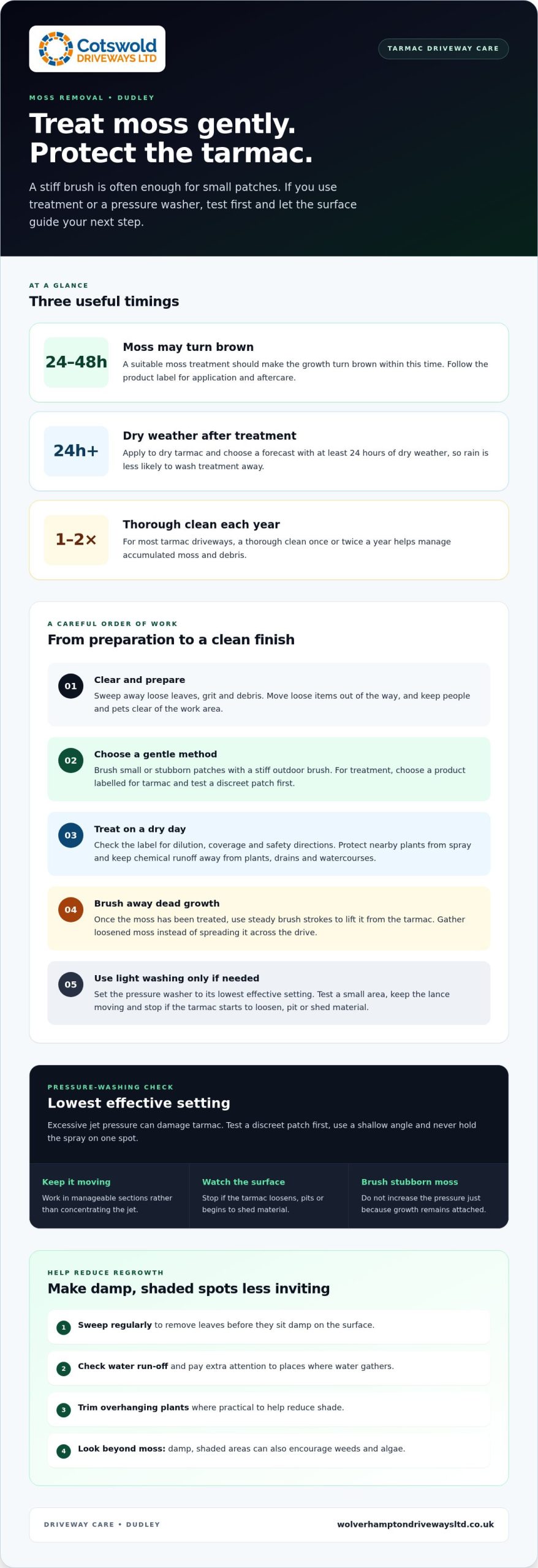
- Reduce the conditions moss favours by sweeping regularly, improving water run-off and trimming back overhanging plants where practical.
- Look out for weeds and algae as well as moss, since damp, shaded areas can encourage more than one type of growth.
Can I pressure wash a tarmac driveway?
Yes, but set the pressure washer to its lowest effective setting. Excessive jet pressure can damage tarmac, so test a small area first and work carefully. Bleach and weedkillers can harm nearby plants if splashed or carried by runoff. Choose a moss product labelled for tarmac, follow its directions and protect plants from spray.
- Prepare the area. Sweep away loose leaves and debris before cleaning to prevent grit being driven across the surface. Move lightweight furniture, pots and other loose items out of the way. Arrange help with bulky items you cannot move safely, and keep people and pets clear of the work area.
- Use gentle pressure on tarmac. Set the washer to its lowest effective pressure and test a discreet patch before cleaning the rest of the drive. Keep the lance moving rather than holding the jet on one spot. Stop if the surface starts to break up or loosen, and use a stiff brush on stubborn patches.
- Clean block paving with care. Dirt and moss can collect between blocks, so direct the wash across the surface instead of forcing the jet into the joints. Strong pressure may dislodge jointing material. Once the paving is completely dry, brush kiln-dried sand into the joints to replenish it.
- Adjust your approach for concrete and patios. Concrete differs from tarmac, so do not assume the same pressure setting suits both. Start gently, test a small section and keep the nozzle moving to avoid uneven marks. For a patio, clear furniture and pots first, then wash debris towards a suitable drainage point.
- Consider the area and condition when budgeting. Cleaning costs depend on the drive’s size, the amount of moss and debris, the surface condition and access for equipment. Wolverhampton Driveways Ltd provides a free, no-commitment quotation based on the work involved.
- Plan regular cleaning. For most tarmac driveways, a thorough clean once or twice a year helps manage accumulated moss and debris. Sweep between cleans to remove leaves before they sit damp on the surface. Check shaded corners and areas where water gathers, as these often need attention first.
Removing dead moss with a brush or light pressure wash
After treatment has killed the moss, remove it carefully with a stiff brush or light pressure washing. Follow the product label for leftover moss remover and wash-water, and keep chemical runoff away from plants, drains and watercourses.
-
Brush away dead moss
Start with a stiff outdoor brush and use steady strokes across the affected patch to lift dead growth from the tarmac. Gather loosened moss as you go instead of spreading it across the drive. Afterwards, check for remaining green growth, loose aggregate or cracks. Avoid scraping damaged areas, as vigorous brushing could worsen the surface.
-
Use a light pressure wash
If brushing leaves moss behind, try a light wash while keeping the pressure washer moving. Hold the jet at a shallow angle, begin on a discreet patch and watch how the tarmac responds. Do not concentrate the spray on one spot or direct it into cracks. Stop if the surface loosens, pits or sheds material.
- Clear the debris before washing. Sweep away brushed moss, leaves and grit, then check where the water will flow. This prevents loose debris being pushed into corners or across clean sections. Move vehicles and loose items out of the spray area, and direct the wash away from doors and planted borders.
- Work in manageable sections. Clean a small area at a time so you can see whether treatment and brushing have removed the growth. Rinse each section gently before moving on. If moss remains firmly attached, brush again rather than increasing pressure; a stronger jet can damage tarmac even when the moss is stubborn.
- Take extra care with coloured concrete. Protect the finish by adjusting the pressure and using a neutral cleaner suitable for the surface. Test a hidden area first, keep the nozzle moving and compare the cleaned patch with the surrounding colour before continuing. Avoid harsh, concentrated washing that could leave visible differences.
- Manage runoff and check the finish. Don’t let treated wash-water run into garden beds, ponds or surface drains. Follow the moss remover’s label for disposal of unused product and any specific cleanup instructions. Once the drive has dried, inspect it in daylight for missed patches, surface damage or uneven colour. A professional driveway cleaning and repairs service can help where moss covers a broad area or the tarmac looks damaged.
Applying moss remover with a sprayer or watering can
- Choose a product labelled for tarmac. Check the container instructions before buying or applying a moss killer, because products can differ in dilution, coverage and aftercare. A suitable treatment should make moss turn brown within 24-48 hours. Don’t assume a product for lawns or patios is appropriate for a tarmac drive; follow its stated surface uses and safety directions.
- Test a small patch first. Apply the product to a discreet area of tarmac and leave it for the time directed on the label. Check for changes to the surface before treating the whole drive. The trial also shows how the moss responds, helping you judge whether the treatment is reaching the growth rather than running off.
- Pick a dry day with a clear forecast. Apply moss treatment when the tarmac is dry, so the surface can absorb it instead of rain washing it away. Choose a period when dry weather is expected for at least 24 hours. Check the forecast before mixing the product, and postpone application if rain is likely during that window.
- Apply evenly with a sprayer or watering can. Choose the applicator that suits the patch: a sprayer gives control over narrow strips, while a watering can cover a broader area. Follow the label for dilution and application rate. Work methodically across the moss without flooding the tarmac or allowing excess solution to run towards plants.
- Protect nearby planting and follow the label. Shield garden borders from spray and runoff, and keep children and pets away for the period stated on the product. Do not mix moss remover with bleach, vinegar or other cleaners. Chemicals can react when combined, creating hazards or damaging the surface and surrounding plants.
- Let the treatment work before clearing the moss. Watch for the treated growth turning brown within 24-48 hours, then remove dead moss with a stiff brush or light pressure washing. Don’t increase the dose or reapply early if the moss hasn’t changed colour. Check the product directions for the correct waiting period and any instructions for rinsing or disposal.
As an alternative, a diluted bleach treatment uses one part household bleach with four parts water; leave it on mossy tarmac for 10-15 minutes before scrubbing. Test a small patch for a day or two.
Choosing a moss removal method by situation
The best moss remover for a UK tarmac drive is a product labelled as suitable for tarmac and applied exactly as directed. Brushing may be enough for small patches; choose a treatment based on the amount of moss and the surface condition.
- Brush a small, loose patch. If moss covers only a small area and lifts easily, start with a stiff brush. Sweep up the loosened growth and inspect the tarmac for remaining moss. If it is firmly attached, use a suitable treatment rather than scrubbing harder and risking surface damage.
- Use a suitable moss remover for wider growth. For a larger or denser patch, select a product whose label names tarmac as an appropriate surface. Apply it on a dry day, following the stated dilution and coverage instructions. A suitable moss-killing product should turn moss brown within 24-48 hours, after which you can brush away the dead growth.
- Try vinegar only on a small patch. A vinegar treatment uses equal parts white vinegar and water. Wet the moss, leave it for around 15 minutes, then scrub and clear away the loosened material. This option takes repeated effort: repeat the treatment and scrubbing every day for around a week. Avoid spraying it onto nearby plants.
- Choose bicarbonate of soda for a localised patch. Apply it directly to the moss and leave it overnight or longer for thicker growth. With baking soda, wait a few days before brushing away the dead moss. Keep the powder focused on the patch instead of spreading it over the whole drive or nearby planting.
- Use boiling water carefully on a small area. Pour it directly onto the moss, leave it for a few minutes, then scrub the patch. This method suits isolated growth, not a broad covering that would require repeated pours. Handle hot water carefully and keep it away from people, pets and plants.
- Match the timing to moss growth. Spring or autumn are recommended for treatment because moss is actively growing then. Summer heat and lack of moisture can weaken moss, but dormancy can make many treatments largely ineffective. For widespread growth or damaged tarmac, avoid aggressive DIY scrubbing or pressure washing.
Moss, weeds and algae on Dudley driveways
In Dudley, moss is most likely on tarmac during autumn, winter and early spring. Damp shade and poor drainage also encourage growth, so lasting control means addressing these conditions as well as clearing the surface.
- Look for what’s growing and where. Check shaded edges, the base of walls and places where rainwater lingers. Moss often forms a soft green layer, while algae can leave a slippery film and weeds may root in cracks or joints. Identifying the affected areas helps you decide whether to brush, treat or investigate drainage.
- Remove leaves and organic debris monthly. A monthly sweep helps prevent moss taking hold on tarmac. Clear leaves from corners and beneath parked vehicles, where damp debris can go unnoticed. Regular sweeping also makes fresh growth easier to spot before it spreads across more of the drive.
- Watch how water moves across the drive. After rain, note any areas where water collects instead of running off. Improving drainage reduces surface moisture and the conditions that encourage moss. Clear debris from the water’s path, and pay particular attention to low spots that stay damp after the rest of the tarmac has dried.
- Let more daylight reach shaded tarmac. Where practical, trim overhanging trees or bushes so natural light can reach the driveway. Less shade helps the surface dry after wet weather, making conditions less favourable for moss. Clear branches and cuttings from the drive, as fallen leaves can hold moisture against the tarmac. For homeowners seeking practical advice on pruning and caring for surrounding plants, michelleinthemeadow.com offers helpful gardening guides and tutorials.
- Treat moss, weeds and algae according to the surface. Brush small moss patches from tarmac and use a suitable treatment for larger growth. In block paving, weeds can take hold between blocks; targeted weedkiller applied to the joints can kill roots and help prevent regrowth. Keep treatments away from nearby plants and follow the label.
- Review the drive after seasonal changes. Check again after autumn leaf fall and through early spring, when moss is more likely to appear. If damp patches persist despite clearing debris and improving run-off, the surface or drainage may need attention. For established growth across the driveway, arrange help with driveway cleaning and repairs.
Wolverhampton Driveways: Tarmac Driveways
Wolverhampton Driveways provides driveway cleaning and repairs for wide areas of moss, persistent growth or damaged tarmac. The service can address surface problems as well as clean a tired drive. If cleaning will not resolve the underlying condition, the company also installs tarmac driveways, block paving and resin driveways.
For isolated moss patches on sound tarmac, the careful DIY methods in this guide may be all you need. For widespread growth, persistent surface issues or a driveway that needs more than cleaning, discuss the work with a local specialist.
Contact Wolverhampton Driveways to discuss driveway cleaning, repairs or a tarmac driveway project.
Choose the right next step for your driveway
A clean drive is also an opportunity to consider whether the surface still suits your home. If recurring moss draws attention to worn or uneven areas, decide whether maintenance or a longer-term surface change makes more sense. The right choice depends on the existing drive’s condition, its drainage and how you use the space.
For moss removal from a tarmac drive in Dudley, start with the least aggressive method that suits the growth. If the tarmac needs more than routine care, Wolverhampton Driveways can discuss cleaning and repairs or a new surface. Options include tarmac driveways, block paving and resin driveways, with different finishes to consider for your property.
Share what you’ve noticed, such as recurring growth, poor drainage or visible surface wear, so the conversation can focus on the practical issue. Contact Wolverhampton Driveways for advice and take a considered next step for your drive.
Frequently Asked Questions
Quick Answer: How Do You Remove Moss From a Tarmac Driveway?
For moss removal from a tarmac drive in Dudley, brush away small patches or use a product labelled for tarmac, then clear the dead growth. If washing, use low pressure and keep the spray moving to protect the surface. Check for cracks or loose material first, as these areas need gentler handling. Collect loosened moss instead of leaving it on the drive.
Why does moss keep coming back on my driveway?
Moss returns when the conditions that supported it remain. A shaded corner beneath a hedge, a low spot that stays wet or leaves left on the drive can all keep the surface damp. After cleaning, note where growth reappears and address the cause: clear organic debris, allow more light where practical and improve water run-off. These steps tackle the conditions, not just the visible moss.
Does vinegar kill moss on tarmac?
Vinegar may help with small moss patches, but it can take repeated treatment and scrubbing. Use equal parts white vinegar and water, test a discreet patch first, then scrub after the solution has soaked in. Keep it off nearby plants and prevent runoff into garden beds. For established growth across a broad area, choose a product labelled for tarmac.
What’s the best time of year to kill moss on a driveway?
Spring and autumn are suitable times to treat moss because it’s actively growing. Pick a dry day and check that dry weather is expected for at least 24 hours, so rain doesn’t wash the treatment away. Summer heat may weaken moss, but dormant growth can respond poorly to treatments. If moss is spreading, don’t wait for a particular season to remove loose debris and assess the affected areas.
When Is Moss Most Likely To Grow?
Moss is most likely to grow on tarmac during autumn, winter and early spring, when damp conditions can persist. Shaded sections beside walls or beneath trees often stay moist longer than exposed parts of the drive. Poor drainage can also leave patches wet after rain. Look for early growth in these places, especially after wet weather, and clear leaves before they hold moisture against the surface.
How to remove moss from a tarmac driveway safely
For moss removal from a tarmac drive in Dudley, choose a method suited to the amount of growth and the surface condition. Brush small areas; for treatment, use a product labelled for tarmac and follow its instructions. Keep people and pets away for the stated period, protect nearby plants from spray and manage runoff carefully. Avoid forceful washing on fragile or damaged sections.
Does pressure washing damage tarmac driveways?
Yes. Excessive pressure from a jet washer may damage tarmac. If you use one, select the lowest effective setting, test an inconspicuous area and keep the spray moving. Stop if the surface begins to pit, loosen or shed material. Use a brush on fragile patches. The aim is to remove residue without stripping or disturbing the surface.
How much does professional moss removal cost in Dudley?
The cost depends on the affected area, how established the moss is, the surface condition and access for cleaning equipment. Wolverhampton Driveways Ltd offers driveway cleaning and repairs with a free, no-commitment quotation. Sharing whether growth covers the whole drive or appears in isolated patches helps clarify the work involved, so you can consider the quote against your driveway’s condition and needs.