
Sealing can help inhibit weeds in block paving, but it won’t stop them permanently. For the best result, remove existing weeds, clean the surface, refill the joints with sand and let the paving dry fully before applying sealer. If you’re learning how to stop weeds growing through block paving, focus on the joints as well as the visible growth.
Weeds in paving gaps can be stubborn, and sealing over them won’t solve the problem. This guide explains how to remove weeds by hand, what to expect from boiling water or household vinegar, and how to prepare paving before sealing. You’ll also learn how sealer may help reduce regrowth, why filled joints matter and what simple upkeep can keep your driveway tidy.
Key Takeaways
- Use a weeding knife when the joints are damp, working carefully to lever out roots and limit regrowth.
- Boiling water and household vinegar affect visible growth, but deep-rooted weeds may return.
- Refill eroded joints with sand before sealing, and make sure the paving is completely dry.
- Look beyond weeds if they keep returning alongside sinking or cracked blocks, as this can point to a problem with the paving base or installation.
Should You Seal Block Paving To Stop Weeds?
Sealing can help inhibit weeds, but it won’t stop them permanently. Pressure washing can strip jointing sand and leave gaps. To limit moss and algae, sweep away organic debris and standing water. If you’re considering how to stop weeds growing through block paving, prepare the joints before applying sealer.
-
Understand weed growth in paving joints
Before choosing a treatment, inspect the joints for wind-blown seeds, organic debris and missing sand. Seeds can settle in gaps where debris and moisture help them establish, particularly when surrounding lawns and borders are prone to spreading weeds—an issue professional teams like Yardworx Lawn & Landscape regularly address through routine grounds care. Look for fine sediment between blocks, especially where water collects. Sealing won’t remove existing growth, so clear weeds and prepare the surface first. This is a key step in how to stop weeds growing through block paving.
-
Maintain and refill paving joints
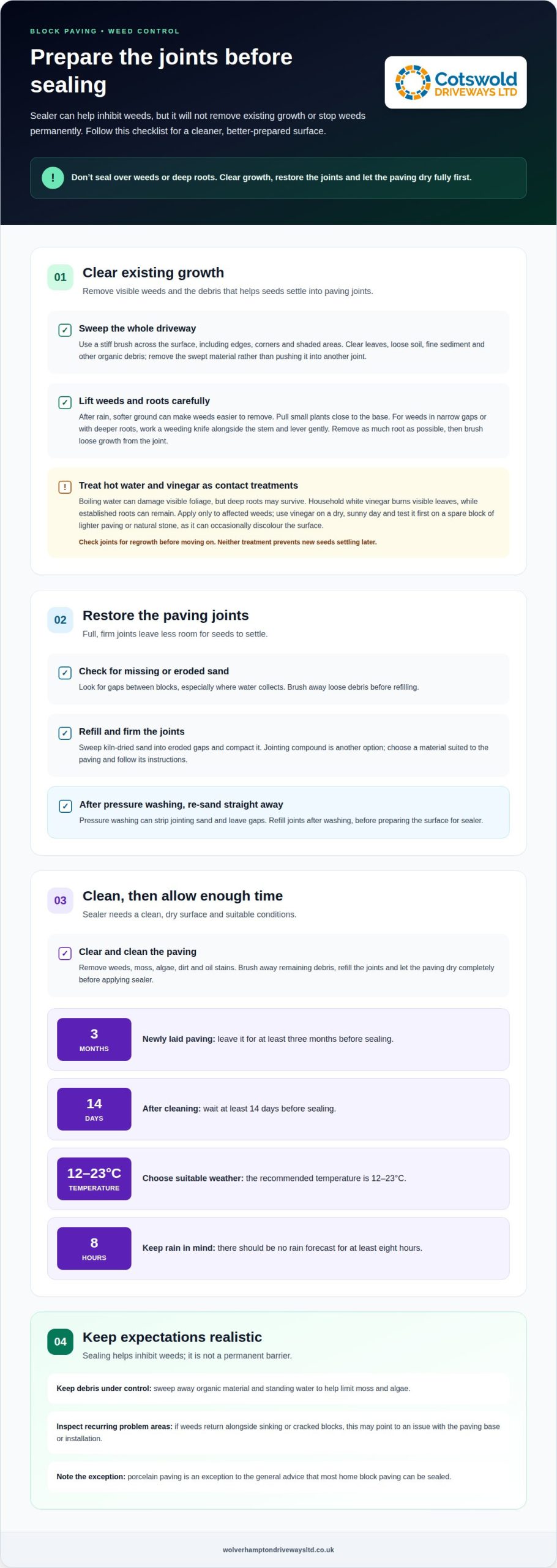
Brush away loose debris and check whether the joints are still filled. Where sand has eroded or washed out, sweep kiln-dried sand into the gaps and compact it. Full, firm joints leave less room for seeds to settle. Jointing compound is another option: choose material suited to the paving and follow its instructions. After pressure washing, re-sand the joints straight away.
- Remove weeds with a knife. Work after rain, when the ground is softer, and run a weeding knife along each affected joint. Use its hooked end to lever out the plant, taking care to remove as much root as possible. Brush the joint afterwards to clear loosened growth. Keep salt to a small, isolated patch away from planting. Apply it sparingly, never before forecast rain, as it may leave joints needing re-sanding.
- Prepare before sealing. Clear weeds, moss, algae, dirt and oil stains, then brush away remaining debris. Let the paving dry completely and refill joints before applying sealer. Leave newly laid paving for at least three months before sealing, and wait at least 14 days after cleaning. Choose suitable weather: the recommended temperature is 12-23°C, with no rain forecast for at least eight hours. Porcelain paving is an exception to the general advice that most home block paving can be sealed.
Removing existing weeds before sealing
Remove every visible weed before sealing, as sealer won’t clear existing growth. UK Government explains that chemical treatments affect green weeds present at application, while new weeds can grow afterwards.
-
Sweep away seeds and debris
Start by sweeping the whole driveway with a stiff brush, including edges and corners. Clear leaves, loose soil and other organic debris where wind-blown seeds can settle. Pay particular attention to shaded areas and joints beside borders, where damp material may collect. Transport Scotland describes siding out as a way to break up hardened weeds and unwanted material across paved areas.
Remove the swept material rather than pushing it into another joint. A clean surface makes small seedlings easier to spot before they become established. Sweep each section again after clearing it, so loose seeds and debris don’t spread back across the paving.
-
Remove weeds by hand
Work along each joint and pull out small weeds by hand, gripping close to the base. Softer ground after rain can make it easier to lift the roots. For plants lodged in narrow gaps, slide a weeding knife beside the stem and lever carefully to remove the root without damaging the block’s colour or edge.
Collect pulled weeds and clear loosened material from the surface. Don’t leave seed heads or rooted weeds on the paving, where they could shed seeds or settle back into a joint. Check each gap before moving on, especially around larger plants that may hide another stem.
-
Deal with deep-rooted weeds
For a dandelion or another deep-rooted weed, loosen the joint around its base with a weeding knife and lift the root gradually. Pulling only the leaves can leave the root behind, allowing fresh growth. If the root won’t come out cleanly, repeatedly cutting off the top growth can weaken the plant over time.
Avoid sealing over stubborn roots or green growth. Remove remaining debris, then check for loose or missing jointing sand. Once the weeds are cleared, clean the paving and allow it to dry fully before sealing.
Boiling water and vinegar treatments
These methods can clear visible growth before sealing, but they may not remove every deep root. Treat only the affected cracks, then check whether weeds return.
- Pour boiling water directly onto small weeds. Heat destroys foliage on contact, making this a straightforward option for growth in narrow joints. Aim carefully at the weed rather than splashing nearby plants. Take care when carrying and pouring hot water. Once the foliage has died, remove it and check the joint for remaining roots. Deep-rooted weeds may grow back because boiling water doesn’t reliably kill their underground roots.
- Use household white vinegar as a contact treatment. Apply it directly to the weed on a dry, sunny day, keeping it on the foliage and away from surrounding plants. Vinegar burns visible leaves, but established root systems can survive. A dandelion or another persistent weed may grow back, so check the joint again and remove any regrowth before preparing the surface for sealer.
- Test vinegar before treating lighter paving. Apply a small amount to a spare block of lighter-coloured paving or natural stone first. The acid can occasionally cause discolouration, so check the test area before treating visible cracks. Avoid applying vinegar across the whole driveway: a targeted approach limits contact with paving and nearby planting. Don’t use it as a substitute for removing established roots.
- Choose the treatment to suit the weed and paving. Boiling water can help with isolated growth when you can pour accurately. Vinegar offers a contact treatment on a dry, sunny day, but test it first on lighter paving or natural stone. Neither method prevents new seeds settling later. Remove treated foliage and loose debris, then check the joint again before cleaning and sealing. These treatments can help remove weeds, but they won’t improve the sealer’s ability to block future growth if joints remain open.
How block paving sealers help inhibit weeds
Sealer adds protection after weeds are removed and the paving is prepared. It can help inhibit regrowth, but it won’t permanently prevent weeds or replace sound, filled joints. If you’re wondering how to stop weeds growing through block paving, treat sealing as one part of the job.
- Think of sealer as a barrier, not a weed killer. Apply it to clean, dry paving after clearing existing growth and filling the joints. This extra layer can help inhibit weeds around the joints, but it won’t kill roots left underneath. Seeds can still land on the surface and take hold in organic debris.
- Check the joints before applying sealer. Look for gaps, loose sand and exposed areas where seeds could settle. Refill eroded joints with suitable jointing material first. Sealer won’t replace missing material, and wind-blown seeds often establish in the joints.
- Keep the surface clear afterwards. Weeds may still appear on a sealed driveway if dirt collects on the surface or jointing material becomes displaced. Sweep away organic debris and watch for fresh growth around edges and cracks. Standing water and fine sediment can also create conditions where weeds thrive.
- Make sealing part of ongoing care. Combine it with sound joints and regular sweeping rather than relying on a one-off treatment. If weeds repeatedly return alongside sinking or cracked blocks, the paving base or installation may need attention. For help preparing the surface, arrange driveway paving support. This practical approach helps answer how to stop weeds growing through block paving without treating sealer as a permanent fix.
Wolverhampton Driveways Ltd: Block Paving
Wolverhampton Driveways Ltd can help when recurring weeds point to worn joints, loose blocks or a driveway needing more than routine weeding. Its block paving and driveway cleaning and repairs services address practical paving needs, from maintaining the surface to dealing with visible wear. If weeds return alongside sinking or cracked blocks, the paving itself may need attention.
If you’re unsure whether your driveway needs cleaning, repairs or broader block paving work, consider the condition of its joints and surface. Contact Wolverhampton Driveways Ltd to discuss your block paving and the next step for your driveway.
Plan the right next step for your driveway
A tidy finish starts with choosing an approach that suits the paving’s condition. If weeds keep returning, look beyond the visible growth and consider whether the joints or blocks need attention. Sealing can support a well-prepared surface, but works best as part of ongoing care, not as a substitute for it.
For a practical assessment of your options, Wolverhampton Driveways works with block paving, tarmac driveways and resin bound driveways. The right choice depends on what your driveway needs, whether that means maintaining its current surface or considering a different finish. A clear conversation can help you decide what to tackle next.
For advice on your driveway, contact Wolverhampton Driveways. A sound plan can make outdoor upkeep more manageable and help you move forward with confidence.
Frequently Asked Questions
Do I need to get rid of weeds on hard surfaces?
Removing weeds from paving is a practical way to keep joints clear and reduce unwanted growth. The RHS recommends alternative control methods for weeds on hard surfaces. For example, pull out a small dandelion before it becomes established, then clear loose material from the gap. Regular sweeping also removes organic debris where seeds may settle.
Should I use weedkiller?
For weeds on hard surfaces, the RHS recommends alternative control methods rather than weedkiller. If you choose a chemical treatment, follow its product label and apply it only to the intended area. Choose a dry day, keep it away from drains, pets and children, and allow the label’s no-rain period. Weedkiller affects green growth present during treatment, so new seedlings can still appear.
Which weeds grow on paths and patios?
Annual grasses and dandelions are common weeds in paving joints. Small seedlings may appear in cracks, while established plants can develop roots that are harder to remove. Moss and algae also commonly appear on paving, particularly where dampness and fine sediment collect, although they aren’t weeds. Identifying the growth helps you choose a suitable removal method. For broader outdoor living areas, protecting paved ground from continuous rain and organic debris can also make upkeep simpler; for instance, specialists offering patio cover installation Lafayette LA highlight how structural covers keep paved surfaces sheltered from excessive moisture and debris over time.
Why do weeds grow through block paving joints?
Seeds often arrive on the wind and settle in joints containing organic debris or fine sediment. If the gaps also hold moisture, seedlings can establish between the blocks. Missing or eroded jointing material leaves more room for seeds to settle. Weeds may look as if they’re growing through paving, but often start in the joints rather than pushing up from beneath the blocks.
Does polymeric or kiln-dried jointing sand prevent weeds?
Neither material guarantees weed-free paving. Keeping joints filled with compacted kiln-dried sand or a suitable polymeric jointing compound leaves less room for seeds to settle. The key is maintaining full joints: gaps can collect seeds, debris and moisture. If sand washes out, refill the affected areas. Sealing can add protection once the joints and surface are properly prepared.
How do I clean and re-sand block paving joints step by step?
Clean and refill the joints in sequence, taking care not to remove sound paving material.
- Remove weeds, moss, algae and loose debris.
- If pressure washing, make sure the blocks can withstand it, as the jet can strip jointing sand.
- Let the paving dry completely, then clear loose sand from the joints to a depth of 5-10 mm.
- Brush new kiln-dried sand into every joint and compact it before sealing.