
The most stylish transformation for your home’s exterior in 2026 isn’t a complex stone pattern, but the understated elegance of modern grey tarmac driveways. It’s a common worry that tarmac might make your property look like a stretch of the local high street, cold and overly industrial. However, the latest mid-grey and charcoal finishes offer a refined, stone-like aesthetic that perfectly complements rendered facades and contemporary architecture. When installed with the right eye for detail, it provides a sleek, high-end finish that stands out for all the right reasons.
We understand that choosing the right shade can feel a bit overwhelming, especially when you’re concerned about long-term fading or stubborn stains. This guide is designed to give you total peace of mind. You’ll discover how to style your entrance with professional block paving borders, understand the latest drainage requirements to keep your project compliant, and learn the best ways to keep your surface looking fresh for years. We’re here to show you how a durable, low-maintenance driveway can become your home’s best feature, adding genuine kerb appeal and value without the stress of constant upkeep.
Key Takeaways
- Learn why modern grey tarmac driveways are replacing traditional black asphalt as the premium choice for contemporary homes and rendered properties.
- Understand how different aggregate sizes and specialist binders create a spectrum of shades, from bright silver grey to deep, sophisticated charcoal.
- Discover the long-term practical benefits of this durable material, which offers a lifespan of over 20 years with very little maintenance required.
- See how framing your driveway with contrasting block paving borders can transform a functional surface into a high-end architectural feature.
- Find out why professional installation is essential for achieving a smooth, consistent finish that avoids the look of a public road.
The Rise of Grey Tarmac: A Modern Alternative to Traditional Black
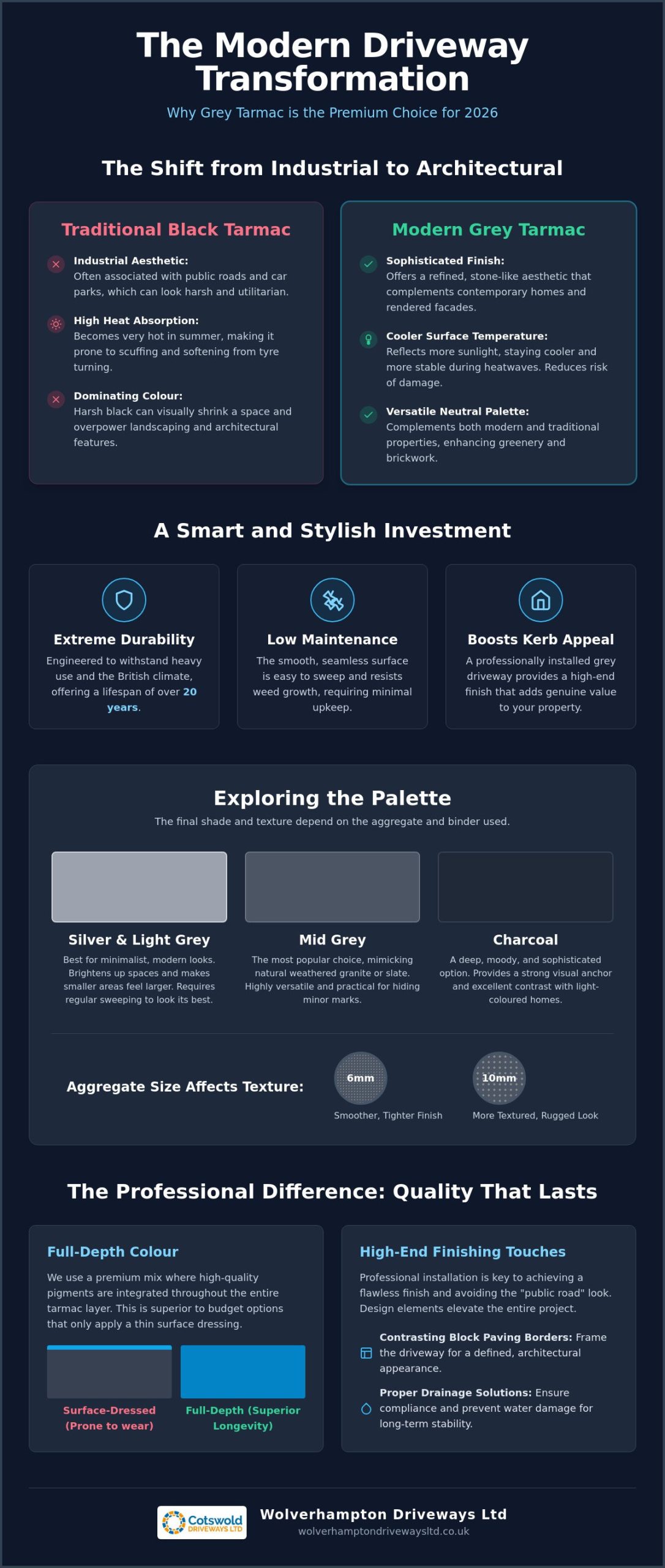
For decades, tarmac was viewed as a purely functional choice. It was the dark, utilitarian surface of motorways and car parks. But the landscape of British home design has shifted. Homeowners are now looking for materials that offer the durability of traditional paving but with a much more sophisticated aesthetic. This has led to the massive surge in popularity for grey tarmac driveways. It is a move away from the “public highway” look toward an architectural style that feels intentional and high-end.
The psychological appeal of grey is significant. Unlike harsh black, which can dominate a front garden, grey tones feel grounded and permanent. They mimic the natural appearance of weathered granite or slate. This creates a neutral, stone-like entrance that feels like an extension of the home rather than just a parking space. In 2026, the trend is all about subtle luxury, and a muted grey surface provides exactly that.
What Exactly is Coloured Tarmacadam?
Technically, the material we often call tarmac is a form of asphalt concrete. Standard black tarmac uses bitumen as a binder, which is naturally dark and oily. Grey tarmac is produced using clear or translucent binders. These clear binders allow the natural colour of the specific stone aggregates to show through. We then add high-quality pigments to the mix to ensure a consistent, lasting shade across the entire surface.
It is important to distinguish between surface-dressed grey and full-depth coloured asphalt. Some budget options only apply a thin layer of colour on top. However, for a driveway that stands the test of time, a full-depth mix is superior. At Wolverhampton Driveways Ltd, we prioritise using high-quality pigments and premium aggregates. This ensures that the colour remains vibrant even as the surface wears naturally over the years.
Why Homeowners are Choosing Grey Over Black in 2026
Current design trends are heavily influenced by “Scandi” and “Modern Industrial” styles. These aesthetics favour clean lines and neutral palettes. Grey provides a much softer contrast against modern white render or traditional red brickwork. It doesn’t fight for attention. Instead, it complements your landscaping and makes your greenery look more vibrant. It’s a versatile choice that works just as well for a contemporary new build as it does for a renovated Victorian semi.
There is also a very practical reason for this shift. Black surfaces absorb a vast amount of solar heat. On a scorching summer day, traditional black tarmac can become soft and susceptible to “scuffing” from car tyres. Grey tarmac reflects more sunlight and stays significantly cooler. This makes the surface more stable during heatwaves and reduces the risk of unsightly power-steering marks or indentations. It is a smarter, more resilient investment for the modern British climate.
Exploring the Palette: From Silver Grey to Charcoal Tarmacadam
Choosing the right shade for your driveway is about more than just personal preference. It is about how the material reacts to light, weather, and the surrounding architecture. When we talk about grey tarmac driveways, we are looking at a spectrum that ranges from bright, airy silvers to deep, moody charcoals. Each shade has its own personality and practical considerations that can completely change the look of your home.
The texture of the surface also plays a huge role in how we perceive the colour. A 6mm aggregate creates a tighter, smoother finish that often looks more uniform and “solid” in tone. In contrast, a 10mm aggregate provides more depth and texture. The larger stones create tiny shadows across the surface, which can make the overall appearance look slightly darker and more rugged. It is also worth remembering that all grey tarmac will darken significantly when it rains. A light grey surface can transform into a rich slate tone during a typical British downpour.
Silver and Light Grey: The Contemporary Choice
Silver and light grey tones are the go-to for homeowners wanting a minimalist, modern look. These shades work exceptionally well with white or off-white renders and help small driveway spaces feel much larger by reflecting more natural light. Whilst they look incredibly premium, they do require a bit more attention. Light surfaces can show organic growth or mud more easily than darker tones, so regular sweeping is a must to keep that “just installed” look. Recent academic studies, such as this Performance Evaluation of Colored Asphalt, highlight how these specialised mixes maintain their structural integrity whilst providing these unique aesthetic finishes.
Mid-Grey and Flint Tones: The All-Rounder
If you live in a traditional 1930s semi-detached home or a red-brick property, mid-grey is often the most balanced choice. It offers enough contrast to make the house stand out without being too bold. Flint-based aggregates are particularly popular here because they add a natural, speckled texture that mimics traditional stone. Pairing a mid-grey surface with a charcoal block paving border creates a framed, professional look that instantly boosts kerb appeal. If you aren’t sure which shade suits your brickwork, you can always ask us for a sample to see how the tones look against your property in different lights.
Charcoal and Slate: Sophisticated and Practical
For those who want a sleek finish but prioritise low maintenance, charcoal and slate are the top contenders. These are the closest alternatives to traditional black tarmac but they lack the oily, blueish sheen of standard bitumen. Instead, you get a sophisticated matte finish that is excellent at hiding tyre marks and everyday debris. These darker tones create a striking, bold contrast against light-coloured masonry or pale stone walls, giving your home a very deliberate and designed feel.
Performance and Practicality: Why Grey Tarmac is a Smart Investment
Investing in a new driveway is a significant decision for any homeowner. You want a surface that looks fantastic on day one, but it also needs to stand up to decades of daily use. When we install grey tarmac driveways, we are providing a solution designed to last 20 years or more with very little maintenance. It is one of the most cost-effective ways to achieve a high-end look. Whilst resin-bound or premium block paving can be beautiful, they often come with a much higher price tag per square metre. Tarmac offers that same modern, architectural feel at a much more accessible price point.
A common worry we hear is that the grey colour might fade or look “patchy” over time. This is largely a myth based on older technology. Modern tarmacadam uses UV-stable binders that are specifically engineered to resist the bleaching effects of the sun. This ensures your chosen shade, whether it is a light silver or a deep charcoal, remains consistent and vibrant for years. Beyond the looks, the material is naturally slip-resistant. The textured aggregate provides excellent grip for both tyres and foot traffic, which is a vital safety feature during our notoriously damp British winters.
Durability in the West Midlands Climate
Our local weather in areas like Stafford, Telford, and the surrounding regions can be particularly punishing. The constant cycle of freezing and thawing during the winter can cause inferior driveway surfaces to crack or heave. The secret to longevity lies in the preparation of the sub-base. A driveway is only as good as the ground it sits on. We use our deep knowledge of tarmac driveways wolverhampton to ensure every foundation is excavated and compacted to professional standards. This prevent sinking and ensures the surface remains perfectly level, regardless of how many times the temperature drops below zero. Homeowners in the area can also explore our dedicated resource on tarmac driveways Stafford to understand how these same high standards apply across the wider region.
Permeability and Drainage (SuDS Compliance)
In 2026, managing surface water is more important than ever. Under current SuDS (Sustainable Urban Drainage Systems) regulations, you must ensure that water from your driveway doesn’t overwhelm the public sewer system. If your new surface is over five square metres, you’ll need a drainage plan. We often recommend porous asphalt options that allow water to soak through the surface naturally. If you prefer a traditional dense mix, we install integrated drainage channels and soakaways. Expert site levelling is the final piece of the puzzle. It prevents “ponding,” where water collects in puddles, ensuring your entrance stays dry and safe even after a heavy downpour.
Design and Kerb Appeal: How to Style Your Grey Driveway
Styling is the secret to making a driveway look like a deliberate design choice rather than a functional afterthought. A plain expanse of material can often feel unfinished or overly industrial. By “framing” the area with contrasting materials, you create a sense of structure and luxury that elevates the entire property. When planning grey tarmac driveways, it’s vital to think about how the surface interacts with the rest of your home’s exterior.
Consider your home’s existing features as your starting point. Anthracite grey has become the standard for modern front doors and window frames across the UK. Choosing a charcoal tarmac shade creates a cohesive, ultra-modern look that ties the whole property together; many homeowners choose to coordinate this with premium window and door installations from View Glazing to achieve a truly seamless exterior aesthetic. You can soften these harder lines with well-placed soft landscaping. Low-level box hedging or ornamental grasses provide a vibrant green contrast that makes the grey tones pop. Adding recessed LED lighting along the perimeter also ensures your entrance looks just as sophisticated at night as it does during the day.
Complementing Local Architecture: From Dudley to Cannock
Every area has its own architectural character, and your driveway should respect that. In Dudley and Cannock, you’ll find many red-brick Victorian and Edwardian properties. These homes benefit from a mid-grey surface that doesn’t clash with the warm tones of the brickwork. For those living on modern new-build estates in Telford, a deep charcoal finish is often the favourite choice. It mirrors the contemporary styling of the neighbourhood perfectly. If you own a darker stone cottage in rural Staffordshire, a silver grey surface can brighten the entire frontage, making a traditionally “heavy” building feel much more welcoming and open.
The Power of Edging: Block Paving and Cobbles
Edging is the most important design element for any professional project. It provides the “border” that keeps the tarmac contained and prevents the edges from looking ragged over time. A charcoal block border is the perfect partner for a mid-grey drive. It provides a crisp, clean line that defines the space and adds a touch of craftsmanship. You might also consider granite sets for a more rustic, textured perimeter that feels incredibly solid. You can explore our range of block paving wolverhampton for inspiration on how to combine these materials for a high-end finish.
Ready to transform your home’s entrance with a design that lasts? You can contact our friendly team today for a professional consultation and a free, no-obligation quote on your new driveway project.
Professional Installation and Longevity: The Wolverhampton Driveways Approach
The success of grey tarmac driveways depends entirely on the skill of the team behind the machinery. Whilst a standard black driveway is relatively forgiving, coloured finishes require a much higher level of precision. We never recommend DIY tarmac installation for coloured projects. Achieving a uniform shade across a large area requires heavy-duty rollers and a deep understanding of material cooling rates. Without professional equipment, you risk ending up with a “patchy” finish or visible seams where one batch of material met the next.
Our process at Wolverhampton Driveways Ltd is designed to be transparent and stress-free. It starts with a thorough site survey and a free, no-nonsense quote. Once we begin, we focus on the foundation. We excavate the area to a professional depth, ensuring the sub-base is perfectly compacted to prevent any future sinking. The actual laying of the grey tarmac is a time-sensitive operation. We monitor the temperature of the mix constantly. If the material cools too quickly before it is rolled, the surface won’t knit together properly, leading to premature wear. Our master-craftsmen work efficiently to ensure a seamless, glass-smooth finish every time.
What to Look for in a Tarmac Company
Choosing the right contractor is about finding someone you can trust on your property. You should always ensure your chosen team is fully insured and licensed for works in the West Midlands. A “straight-talking” local contractor will be honest about what is possible for your specific ground conditions rather than just telling you what you want to hear. We always encourage homeowners to look at local examples of our work. When searching for tarmac companies near me, prioritising a business with a solid community reputation will always give you the best peace of mind.
Maintenance Tips for Grey Surfaces
Keeping your new driveway looking fresh is simpler than you might think. Because light grey and silver tones can show organic debris or mud more clearly than black, a regular sweep with a stiff brush is your best friend. For deeper cleans, a gentle pressure wash is usually all that is needed. Avoid using harsh acidic chemicals, as these can sometimes react with the specialised binders used in coloured asphalt. If you do experience an oil leak from a vehicle, it is vital to act quickly with an absorbent material to prevent staining. For more detailed advice on long-term care or fixing minor scuffs, you can refer to our guide on tarmac driveway repairs. With the right care, your grey driveway will remain a stunning feature of your home for decades.
Transform Your Home’s Entrance for 2026
Selecting a new driveway is about more than just finding a place to park your car. It’s about creating a lasting first impression that reflects your personal style. As we’ve explored, grey tarmac driveways offer a sophisticated, stone-like aesthetic that traditional black asphalt simply can’t match. By choosing the right shade and pairing it with high-quality block paving borders, you can achieve a high-end look that’s both durable and incredibly low maintenance.
Success depends on getting the foundations right. Our team of fully insured and licensed local specialists brings expert craftsmanship to every project across Wolverhampton, Telford, and the wider West Midlands. We focus on modern 2026 design trends to ensure your home stays ahead of the curve whilst maintaining its value for decades to come. It’s a smart investment that balances practical performance with genuine architectural beauty.
Are you ready to see how a modern grey surface could transform your property? Request Your Free Grey Tarmac Driveway Quote Today and let our experienced team help you design the perfect entrance. We’re here to help you bring your vision to life with a professional, stress-free installation.
Frequently Asked Questions
Is grey tarmac more expensive than standard black tarmac?
Grey tarmac is generally more expensive than standard black tarmac because it requires specialised clear binders and premium stone aggregates. These materials are more costly to produce than the standard bitumen used for public roads. Whilst the initial investment is higher, the modern aesthetic and increased kerb appeal often provide a better return on property value for homeowners.
Does grey tarmac fade in the sun over time?
Modern grey tarmac driveways don’t suffer from significant fading thanks to the use of advanced UV-stable binders. These specialised binders are designed to resist the bleaching effects of the sun, keeping your chosen shade consistent for years. It’s a significant improvement over older coloured asphalts that often looked patchy after just a few summers of exposure.
Will tyre marks show up more on a light grey driveway?
Tyre marks can be more visible on light grey surfaces compared to darker charcoal or black finishes. This is simply due to the higher contrast between the rubber and the pale stone. If you’re concerned about scuffing, we often recommend mid-grey or charcoal shades, as these are much more forgiving and hide everyday debris effectively whilst maintaining a premium look.
Do I need planning permission for a new grey tarmac driveway?
You generally don’t need planning permission if your driveway directs surface water to a permeable area like a lawn or soakaway. However, if the area is over 5 square metres and uses non-permeable material without adequate drainage, you will need to apply. We always ensure our installations are SuDS compliant to help you avoid any legal or environmental issues.
How long does it take to install a grey tarmac driveway?
A typical installation for grey tarmac driveways usually takes between 2 and 4 days to complete from start to finish. This timeframe includes the initial excavation, the installation of a solid sub-base, and the final laying of the material. Larger or more complex projects with intricate block paving borders might take slightly longer to ensure every detail is perfect.
Can you lay grey tarmac over an existing concrete driveway?
It is possible to lay tarmac over concrete, but only if the existing surface is in excellent structural condition. Any cracks or movement in the old concrete will eventually reflect through to the new surface, causing it to fail. In most cases, we recommend a full excavation to build a proper foundation that guarantees the longevity of your investment.
Is grey tarmac permeable for rainwater drainage?
Standard dense tarmac is not naturally permeable, but we can install porous asphalt options specifically designed for drainage. These mixes allow water to pass through the surface and into the ground below. If you prefer a traditional finish, we integrate professional drainage channels and soakaways to manage rainwater and prevent puddles from forming on your new drive.
How do I clean a grey tarmac driveway without damaging the colour?
The best way to clean your driveway is with a stiff brush and a gentle pressure wash. You should avoid using harsh acidic chemicals or petrol-based cleaners, as these can break down the binders and damage the colour consistency. For oil spills, act quickly with an absorbent powder to prevent the stain from setting into the stone aggregates and becoming permanent.