
The patio that looks best in a photograph may not be the one that works best in your garden. Choosing patio builders in Wolverhampton means looking beyond attractive paving: the surface, layout and groundwork all need to suit how you’ll use the space.
Perhaps you want somewhere to eat with family, a clear route through the garden or a practical spot to sit and unwind. Before settling on a design, consider how the patio will meet the house, where rainwater will flow and what the ground needs to support regular use.
This guide compares common patio surfaces and shows how to plan a layout around your garden and household. It also covers site preparation, installation and what to include in a project brief. Wolverhampton Driveways Ltd installs patios tailored to each garden, with a fully insured and licensed team serving Wolverhampton and the wider West Midlands, including Telford, Cannock and Dudley. Use the practical checks below to clarify your plans and take the next step with a clearer picture of the project.
Key Takeaways
- Start with how you’ll use the patio, then allow room for furniture, movement and access to the rest of the garden.
- Check the garden’s levels, door thresholds, existing features and water flow before settling on a layout.
- Compare natural stone, porcelain and concrete paving by appearance, upkeep and how each may suit your household.
- Give groundwork and drainage proper attention. They are part of planning a usable patio, not details to leave until the paving is chosen.
- When comparing patio builders in Wolverhampton, share your intended use, preferred surface, site conditions and access so the quote reflects the project.
Patio Builders in Wolverhampton: Start with the Garden You Want to Use
A patio should work for everyday life, not just look attractive from the kitchen window. Before choosing paving, picture a normal afternoon in your garden. Will you eat outside, relax with a book, make room for children to play or move between the house and lawn? Your answers will help define the space you need and give patio builders in Wolverhampton a useful brief.
Consider the garden as a whole, too. Its shape, changes in ground level, door thresholds and access to the work area can all affect where the patio sits and how it connects to the rest of the space. A good plan balances your intended use with the appearance you want and the upkeep you’re prepared to manage.
What will you use your Wolverhampton patio for?
List your main activities before deciding on the patio’s size or shape. For outdoor dining, allow room for the table and chairs, space to pull chairs out and a route around them. For a seating area, think about how people will move between seats. In a family garden, make sure furniture won’t block the route across the patio.
Plan around the doors as well. People should be able to move between the house and seating without weaving around furniture. If you want separate eating and relaxing areas, their position can create a natural distinction. Extra levels or complicated shapes aren’t always needed to make a garden feel organised.
Which parts of the garden should the patio connect?
Trace the route from the house to the garden entrance, lawn, planting and other features you want to keep. A patio is often more practical when it sits alongside a natural route, rather than making people cross the seating area to reach another part of the garden. Consider the view from indoors, too. The patio should feel like a considered extension of the home from both sides of the doors.
For more ideas about arranging outdoor areas, explore this garden patio design guide. For general background on the feature and its history, What is a patio? offers an overview. Your own garden’s shape and routines should guide the final plan.
Before discussing the project, note the details that will affect the layout:
- Use: List the activities the patio needs to support.
- Furniture: Note the pieces you own or expect to use.
- Movement: Mark doorways, entrances and routes that should stay clear.
- Garden conditions: Point out level changes, thresholds and features you want to keep.
- Access: Consider how the installation area can be reached.
These notes give the design a practical starting point. Wolverhampton Driveways Ltd installs patios tailored to your garden and intended use, bringing everyday needs, appearance and practical upkeep into one plan.
How to Assess Patio Design, Space and Drainage Before Choosing
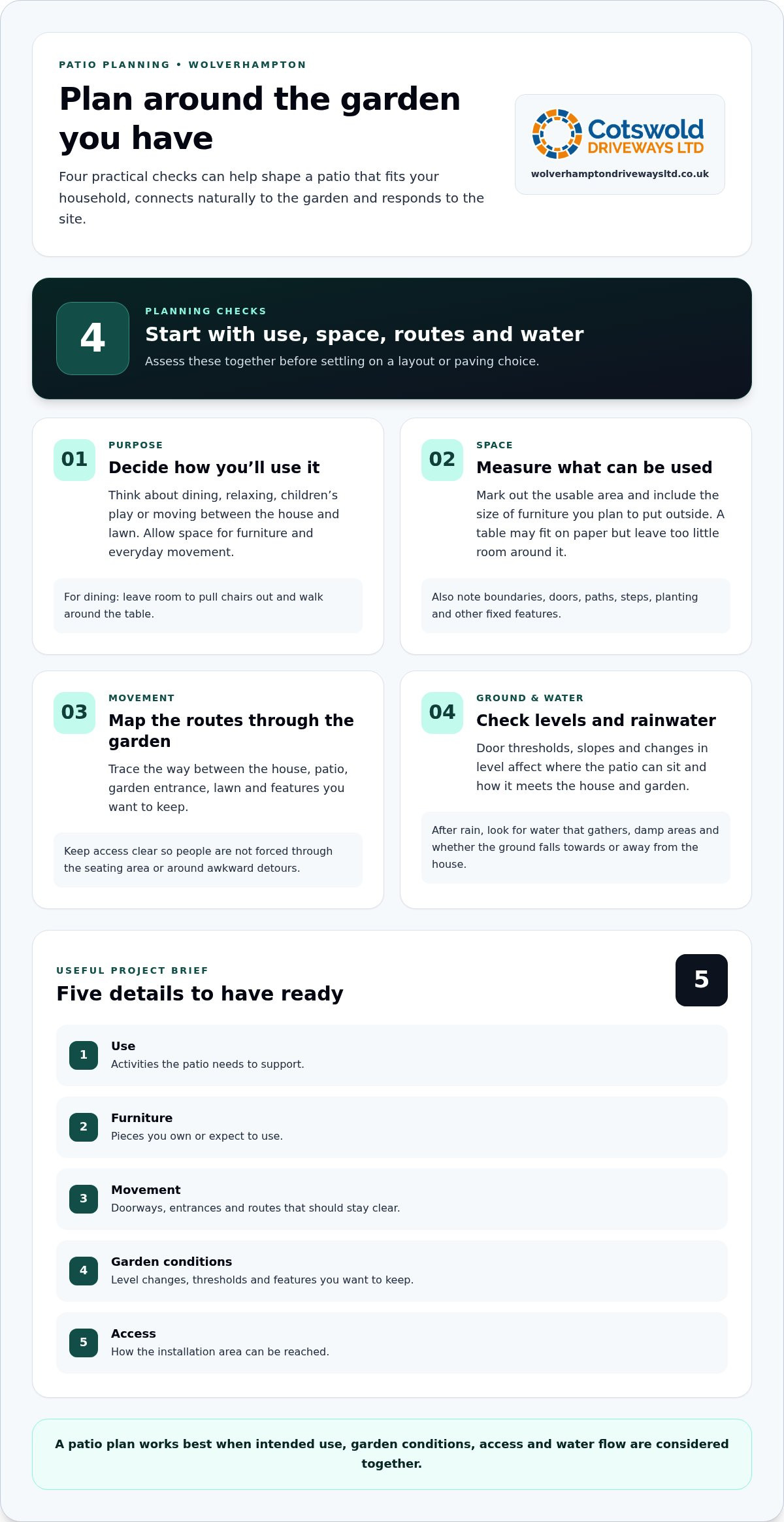
Start with the garden you have, rather than a standard shape copied from a picture. Work through four points: decide how you’ll use the space, measure the usable area, map the routes people need and consider where rainwater currently flows. This gives patio builders in Wolverhampton a clearer picture of the site and keeps design choices grounded in your property’s conditions.
Note the garden’s levels, door thresholds, established planting and any features you want to retain. These can affect the patio’s position and how it meets the house or surrounding garden. The design should respond to these details rather than force the garden into a generic template. For wider ideas about how outdoor spaces feel connected and balanced, Michigan State University Extension explains Principles of good patio design.
How do you plan patio size and access?
Measure the area you could use, then mark doors, paths, boundaries and fixed features such as steps or planting. Include the dimensions of furniture you plan to put outside. A table may fit on paper but leave too little room to pull out chairs or walk past. Marking its footprint on the ground can reveal the problem before you settle on a layout.
Trace the routes between the house, patio and remaining garden. Think about everyday tasks, such as carrying food outside or walking to a shed. A layout that looks spacious from indoors should still leave a clear, comfortable way through it.
Why should drainage and levels be considered early?
Rainwater needs a route that avoids collecting beside the house or across a main walking area. Existing levels, slopes and door thresholds affect how the patio can meet the property and surrounding garden. Because these conditions differ from site to site, consider drainage as part of the design rather than leaving it until later.
If possible, walk the garden after rain. Note where water gathers, which areas stay damp and whether the ground falls towards or away from the house. These observations make the layout discussion more specific, while a site-based assessment addresses the conditions of the garden itself.
Before settling on a plan, use this quick check:
- Use: Is there room for the activities and furniture you have in mind?
- Access: Can people move between doors, paths and garden features without awkward detours?
- Levels: Have you noted changes in height, thresholds and features that may affect the position?
- Water: Have you identified where rainwater collects and how the proposed layout responds?
Bring these notes to Wolverhampton Driveways Ltd. The team tailors patio installations to the garden and intended use, and a free quote gives you a practical next step towards a clear project plan. You can discuss your patio project with the local team.
Compare Patio Surfaces by Look, Maintenance and Garden Use
Your choice of surface affects more than colour. Texture, the appearance of joints and how the paving sits beside the house, planting and boundaries all shape the finished garden. Compare materials against the way you’ll use the patio and the upkeep you’re comfortable with, rather than choosing a popular look in isolation. The differences below are general; the result will also depend on the particular surface and garden.
Which paving style suits your garden and home?
Natural stone tends to have a varied appearance, with differences in colour and surface character that can complement established planting or traditional property details. Porcelain and concrete paving can offer a more uniform effect, which may suit a simpler, contemporary scheme. The finished look also depends on colour, texture, joint appearance and how the paving sits alongside lawn or borders.
| Paving category | Appearance | Upkeep considerations | Practical fit |
|---|---|---|---|
| Natural stone | Distinctive, with natural variation in tone and texture. | Consider how its surface and joints may collect dirt or organic matter in your garden. | May suit a setting where a less uniform, natural look works with the house and planting. |
| Porcelain | Often presents a more consistent, clean-lined appearance. | Think about routine cleaning and how the chosen finish looks in changing outdoor conditions. | Can work well in a planned, coordinated scheme with a more contemporary feel. |
| Concrete paving | Available as a broad category with different colours, textures and visual effects. | Upkeep depends on the surface, joints, exposure and how the patio is used. | A practical option to consider across a range of garden styles and layouts. |
Use the table as a starting point, then picture each category beside your home’s brickwork, doors, fencing and planting. A surface that looks appealing on its own may feel out of place against the rest of the garden. If you’re planning the boundary at the same time, this garden fencing guide can help you consider how fencing and patio choices work together.
How should maintenance influence your patio choice?
Be realistic about the care you’re prepared to give the patio. Cleaning needs vary with the surface, its joints, how exposed the area is and how often it is used. Fallen leaves, mud from the lawn and marks from outdoor dining can all affect routine care. Don’t assume any surface will stay clean without attention.
As you compare options, consider where dirt is likely to come from, how often you’ll use the space and whether you prefer a varied or consistent appearance. A useful discussion with patio builders in Wolverhampton connects those preferences to the garden itself. Wolverhampton Driveways Ltd tailors patio projects to each property and intended use, helping you weigh appearance against practical upkeep.
What to Expect During Patio Preparation and Installation
Patio installation moves from agreeing the design and work area to preparing the site and laying the paving. Knowing the main stages helps you plan around access, garden belongings and the temporary disruption of work outside your home. The details depend on the garden, so the plan should account for ground conditions, levels and intended use rather than assume every project is the same.
Before work begins, move outdoor furniture, pots and other belongings away from the agreed area where possible. Consider how the team will reach the garden and whether paths or gates need to remain clear. Discussing these points early helps organise the work area and protect features you want to retain.
What happens before the paving is laid?
The agreed work area is cleared and prepared for the patio. As preparation progresses, the site’s levels, existing conditions and the planned route for surface water are considered in relation to the layout. Discuss any features that affect the work area or need to remain in place from the outset.
The site may need to be adjusted to suit the design before the paving is laid. The precise work depends on the garden, so excavation depth, base details and timing are specific to the project rather than fixed figures to assume in advance.
Sound preparation supports a stable, usable paved surface. A stable base helps provide a consistent surface for walking and everyday use. Rushing past this stage can undermine the result, so give the groundwork as much attention as the paving chosen for the visible finish.
How does careful finishing affect the result?
Once the area is prepared, paving is laid to the agreed design. Check for consistent alignment, neat edges and a finish that follows the planned layout. These details help the patio feel considered, particularly where paving meets a wall, path, lawn or retained garden feature.
Finishing also means leaving the work area orderly and making the completed space easy to understand and use. A clear project sequence helps you follow what is happening at each stage without assuming every installation has the same timescale.
Keep the agreed scope and practical details clear as the project moves from planning to paving. Wolverhampton Driveways Ltd installs patios tailored to the garden and intended use. To discuss your plans, request a free patio quote from the local team. As patio builders in Wolverhampton, the team also serves homeowners across the wider West Midlands, including Telford, Cannock and Dudley.
Choosing Patio Builders in Wolverhampton and Getting a Clear Quote
A useful quote starts with a clear picture of the job. The more accurately you describe your plans, the easier it is to understand what the proposed work covers and how it relates to your garden. When choosing patio builders in Wolverhampton, connect your preferred layout and surface with the practical conditions on site.
Look beyond a broad description of the finished patio. The agreed scope should reflect the work area, access, ground conditions and preparation, as well as the paving and layout you’ve discussed. This gives you a clearer basis for understanding the project and quote, without comparing figures that may cover different work.
What information helps shape a patio quote?
Describe how you plan to use the patio and where you’d like it to sit. Share approximate dimensions, your preferred look and any existing features you want to retain. Include practical site details, such as the route into the garden and anything that could affect access to the work area. This helps shape a quote around the actual property rather than a general assumption.
Use this brief as a starting point:
- Intended use: Note the main activities the patio should accommodate.
- Layout: Indicate where it should sit and how it should connect to the house and garden.
- Surface preference: Describe the look or paving category you have in mind.
- Site details: Give approximate dimensions and flag levels, thresholds or features that may affect the work.
- Access: Explain how the garden can be reached and whether the route has restrictions.
When reviewing a quote, check that it matches the scope you discussed and the conditions of your garden. If the surface, layout or work area changes, the basis of the quote may change too. A clear shared understanding helps keep expectations aligned.
How Wolverhampton Driveways Ltd helps move the project forward
Wolverhampton Driveways Ltd installs patios tailored to each homeowner’s garden and intended use. The team is fully insured and licensed, and provides a local service in Wolverhampton and across the wider West Midlands, including Cannock, Stafford, Telford, Rugeley, Walsall, Penkridge and Dudley. A free quote gives you a practical next step based on the project you have in mind.
Before getting in touch, gather your notes on use, layout, surface preference and access. You don’t need every detail settled; a clear starting brief helps explain what matters and where you’d like the patio to go. Request a free quote from Wolverhampton Driveways Ltd to discuss your patio project.
Turn Your Patio Idea into a Clear First Step
A garden project is easier to plan when one priority guides the decisions: perhaps a comfortable dining spot, a quieter place to unwind or a better connection between the house and garden. Keep that purpose in mind as you prepare a practical brief. It gives patio builders in Wolverhampton a useful starting point and helps make the finished space work for your household.
You don’t need every detail settled before taking the next step. A rough sketch, a few notes about how you use the garden and an idea of the look you prefer are enough to begin. Wolverhampton Driveways Ltd’s team is fully insured and licensed, with local service across Wolverhampton and the wider West Midlands, including Telford, Cannock and Dudley. A free quote gives you the chance to discuss your plans and how they could suit your garden.
Request a free patio quote and take the first step towards a garden you’ll enjoy using.
Frequently Asked Questions
How do I choose patio builders in Wolverhampton?
Choose patio builders in Wolverhampton who shape the plan around your garden and explain the work clearly. Look for a written scope that covers the intended layout and preparation, not just the visible paving. Wolverhampton Driveways Ltd plans patio installations around how each household wants to use its garden, connecting the design with the practical work from the outset.
What should a patio quote include?
A useful patio quote should set out the agreed work area, paving choice, preparation and installation work, along with any relevant waste removal and VAT. It should reflect the actual garden rather than assume every site is alike. Check that the description matches your brief, including features to retain or restricted access, so you can understand what the quoted project covers.
Which patio surface is easiest to maintain?
Porcelain is often chosen for its consistent appearance and straightforward routine cleaning, but no paving surface is maintenance-free. Leaves, soil, food spills and the condition of the joints can all affect upkeep. Natural stone varies more, so its care may depend on the particular surface. Consider the patio’s exposure and how you’ll use it before deciding which cleaning routine feels manageable.
Does a new patio need drainage?
Yes, water flow should be considered in the patio plan. Rainwater needs a route that avoids collecting beside the house or across a frequently used area. Existing slopes, ground levels and nearby thresholds affect what may work in each garden. If you’ve noticed puddles or persistently damp areas after rain, point them out during planning so they can be considered in the site layout.
How long does patio installation take?
There isn’t one reliable installation duration for every patio. The time depends on the agreed work, the size and condition of the area, access to the garden and how much preparation is needed before paving can be laid. A straightforward site and a garden requiring more groundwork are different projects. Discuss the schedule in relation to the specific scope, rather than assuming it will match another installation.
Can a patio be installed in a small garden?
Yes, a patio can be planned for a small garden. Make the available area work without blocking access or leaving too little room for other activities. For example, a compact seating area may suit the space better than separate dining and lounging zones. Furniture sized for the footprint can also help keep routes through the garden clear.
Do I need planning permission for a patio in the UK?
In most cases, a patio in a rear garden doesn’t need planning permission. It may be needed if the patio is raised more than 300mm above ground level. For a front garden, permission may be required for an impermeable surface over 5m² that doesn’t drain to a lawn, border or soakaway. Check the rules relevant to your property before work begins, especially if the design changes ground levels or drainage.