
A compact garden can feel transformed without a complete redesign. For patio design for a small garden in Cannock, the project scope depends on the paved area, paving choice, ground preparation and features such as seating, walling or lighting. These details shape the layout and the quotation.
Before deciding how to use your garden, it helps to understand how materials and layout affect the result. This guide covers practical ways to make room for seating without crowding a compact patio, and how to plan around relaxing, entertaining or spending time outdoors. Focus first on the changes that will make the space work better for you.
Key Takeaways
- Use patio walling as extra seating, and consider furniture that suits the shape of your space to keep the layout practical.
- Compare paving by appearance and maintenance needs, then use the direction and pattern of slabs to influence how spacious the patio feels.
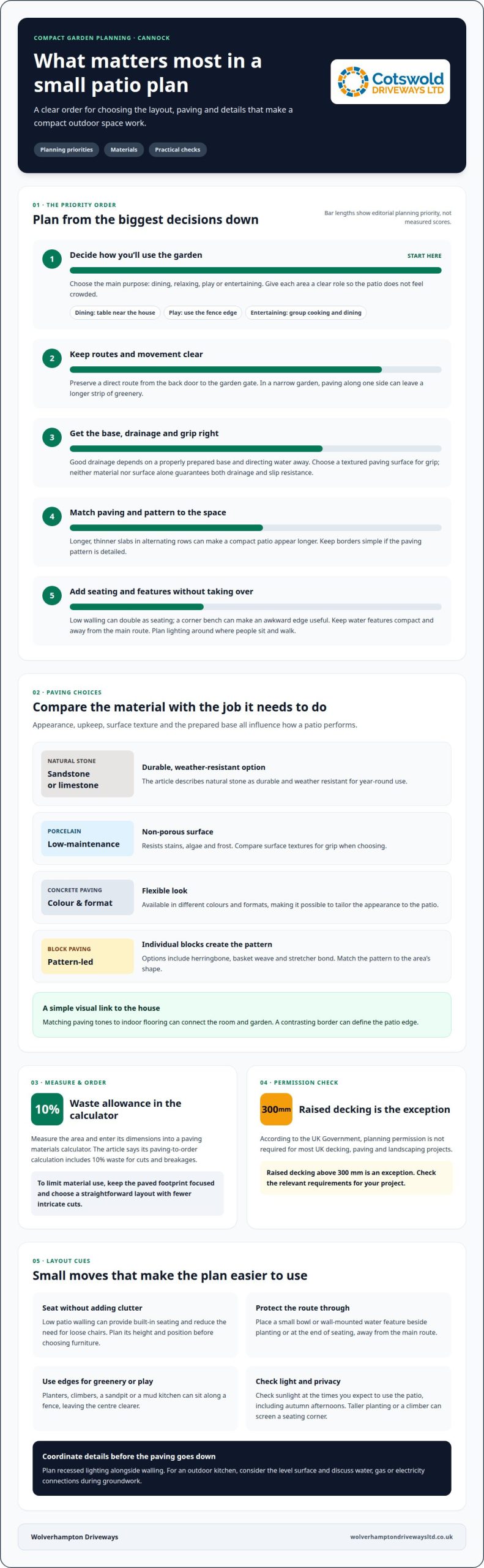
- Plan the garden around its main use, such as relaxing, dining or play; according to the UK Government, planning permission is not required for most UK decking, paving and landscaping projects, but raised decking above 300 mm is an exception.
- Small gardens can combine paving with planters, greenery and distinct areas for different activities without making the layout feel crowded.
1. Adding seating and lighting with patio walling
In a narrow courtyard, low patio walling can define the paved area and provide built-in seating. This can reduce the need for loose chairs and leave more room to move between the house and garden. Plan the wall before choosing furniture, so its height and position suit how you’ll use the patio. A corner bench can make an awkward edge useful without obstructing a walkway.
When choosing a patio installer in Cannock, look for examples of completed work and reviews that describe specific details, such as communication, workmanship and how the finished space was left. Wolverhampton Driveways Ltd serves Cannock and the wider West Midlands, including Wolverhampton, Telford and Dudley. Its free, no-commitment quotation gives you a chance to discuss your project and get advice on materials and design.
Walling can also shape your lighting plan. Recessed lights create a defined glow beside seating without taking up space with separate lamps. First decide where people will sit and walk, then position lighting to make those areas easy to use after dark. Plan fittings and wiring alongside the wall design, rather than leaving them as an afterthought.
A water feature can add movement and a focal point, but its footprint matters in a compact garden. A small bowl or wall-mounted feature takes up less patio space than a large freestanding structure. Place it beside planting or at the end of a seating area, away from the main route through the garden. Combining water, greenery and lighting in one corner gives the spot purpose without filling every edge with separate features.
Keep the palette restrained. Pair simple grey walling with leafy planting and warm-toned lighting, for example, then choose furniture that follows the patio’s shape. A consistent scheme helps each addition feel considered rather than competing for attention.
2. Natural stone, porcelain, concrete and block paving
A patio design for a small garden in Cannock should balance appearance, upkeep and how paving handles local weather. Natural stone, such as sandstone or limestone, offers durability and weather resistance for year-round use. Porcelain has a non-porous surface that resists stains, algae and frost, making it a practical low-maintenance choice. Compare surface textures for grip, and consider how the patio will be used. Good drainage depends on the prepared base and directing water away.
Concrete paving comes in different colours and formats, while block paving uses individual blocks to create patterns such as herringbone, basket weave and stretcher bond. Longer, thinner slabs laid in alternating rows can make a compact space appear longer. If you choose a detailed pattern, keep borders simple so the design feels interesting rather than busy.
Decorative gravel can soften the edge of paving and add colour and texture. It needs less maintenance than grass, while stepping stones create a gradual transition between gravel, lawn and patio. These elements can also divide areas without a built boundary.
Matching paving tones to indoor flooring can visually link a room and garden. For patio design for a small garden in Cannock, a similar colour palette can make the outdoor area feel connected to the house, while a contrasting border can define the patio edge.
Before ordering, measure the area and enter its dimensions into a paving materials calculator. Its paving-to-order calculation includes 10% waste for cuts and breakages. To limit material use without compromising durability, keep the paved footprint focused and choose a straightforward layout with fewer intricate cuts. For a practical block paving patio design, match the pattern to the area’s shape.
Choose paving with a textured surface for grip, and make sure the base is properly prepared with water directed away. There is no single paving material that guarantees both good drainage and slip resistance; the surface and groundwork both matter.
3. Planning a small garden around how it will be used
Start by deciding how you’ll use the outdoor space: for dining, relaxing, play or entertaining. If quiet relaxation is the focus, garden wellness specialists such as Simply Saunas demonstrate how outdoor areas can be shaped into personal retreats. For family use, a raised sandpit or mud kitchen can sit along a fence, leaving the centre clear. If dining is the priority, position the table near the house and keep a direct route from the door. A compact patio works best when each area has a clear purpose.
Plan access, sunlight and privacy together. Keep the route from the back door to the garden gate clear, then place seating where it gets the sunlight you prefer. Where overhead cover is needed without cluttering the patio floor with bulky parasol bases, tailored solutions from sailshadesdirect.co.uk can provide bespoke shade. A climber on the fence or taller planting can screen a seating corner without blocking the whole garden. Check the light at the times you expect to use the patio, including autumn afternoons, before settling on the layout.
For most UK decking, paving and landscaping projects, planning permission is not required, but raised decking above 300mm is an exception, according to the UK Government. An outdoor kitchen also needs early thought: a level patio surface helps keep units and appliances stable. Discuss water, gas or electricity connections with a professional during the groundwork stage, before paving covers the routes.
If entertaining is the priority, group cooking and dining areas so guests can move between them without crossing the main access route. For a small play area, place the sandpit or mud kitchen beside the fence, then use pots to add greenery elsewhere. Position patio fire pits carefully, away from buildings, fencing and planting. In a smoke control area, consider local guidance and speak with your council and neighbours before installation.
4. Examples of compact garden transformations
For a small garden, a good patio layout keeps a clear route and gives seating a defined place. A simple rectangle beside the house can fit chairs and a table, with planting along the edges. In a narrow garden, paving to one side can preserve a longer strip of greenery. Choose the shape to suit how you’ll use the space, not just the dimensions of the slabs.
A compact garden design by Tabi Jackson Gee uses a sofa, table and chairs for relaxing and entertaining, with climbers softening the fence behind them. The same approach can work in a Cannock garden: group the main seating together, then add a container or flower-filled planter for colour. Keep the route through the patio open so furniture doesn’t make the space awkward to cross.
A mirror can create a greater sense of space in a courtyard by reflecting light and greenery. Place it against a simple fence or wall, where it adds depth without competing with planting. A 15-square-metre garden can also combine play space, seating, pots for fruit and vegetables, and an apple tree. Give each use its own area, so the layout feels organised rather than crowded.
For a more dramatic transformation, Bryan O’Sullivan designed a terraced house with a sunken garden terrace and living wall. A change in level can define a separate outdoor area, while vertical planting adds greenery without using much ground space. A compact apple tree, including one trained against a wall, brings another layer of interest. To shape a patio around your garden, discuss your patio layout.
Wolverhampton Driveways: Patios
Wolverhampton Driveways Ltd installs patios for homeowners ready to turn a compact garden plan into a finished outdoor space. Once you’ve decided how to use the area, where seating will go and which paving style suits your home, a patio can bring those choices together in a practical layout, with room to move and space for features such as planting or dining.
If you’re still weighing up materials or the shape of the paved area, those decisions can guide the project discussion. For a small Cannock garden, a clear idea of your priorities helps keep the design focused on what matters most. To discuss a patio for your garden, contact Wolverhampton Driveways Ltd.
Take the next step towards your garden plan
A patio design for a small garden in Cannock takes shape when you turn ideas into clear priorities. Decide what matters most: an easy route outdoors, a dedicated place to sit or paving that ties the garden to your home. These choices give the project a practical starting point and keep the finished space focused on how you’ll use it.
Wolverhampton Driveways Ltd installs patios, block paving, tarmac driveways and resin driveways. If you’re considering how paving could work in your garden, discuss the space and the result you’re aiming for with the team. A free, no-commitment quotation and advice on materials and design can help turn inspiration into a clear plan.
Contact Wolverhampton Driveways today to discuss your patio project and take the next step with confidence.
Frequently Asked Questions
How Much Does It Cost To Transform A Small Garden?
The difference reflects the project scope: a redesign may combine paving, drainage, planting and lighting, while a smaller makeover may refresh existing features. DIY improvements can cost less, depending on the materials and how much work you take on.
How do you design a small garden?
Start by noting fixed features such as doors, steps, drains and existing trees, then plan clear routes around them. Choose the garden’s main purpose, such as dining or play, and give that activity the most useful space. A simple sketch can show where furniture, storage and planting will fit before work begins, helping you avoid blocked access and awkward, unused corners.
How do you make a small garden look nice?
Use a small, consistent colour palette across paving, pots and outdoor accessories, then add contrast with foliage or flowers. Group containers rather than scattering them, and vary plant heights to add depth without filling every surface. Keep everyday items, such as tools and children’s toys, in one storage spot. A tidier view can make the garden feel more considered and pleasant to use.
How much does a small patio cost to install in Cannock?
The quotation depends on the patio’s size, paving material, access, ground preparation and details such as edging or steps. Wolverhampton Driveways Ltd provides free, no-commitment quotations based on your project details. A compact, straightforward paved area has different requirements from one needing substantial groundwork or a more intricate finish, so the design and scope shape the price.
How can patio design make a small garden look larger?
Keep the main paved area visually simple and avoid dividing it into several small zones. A restrained palette across the patio and nearby boundaries helps the eye move through the garden, while planting at the edges can frame the space without closing it in. Choose furniture that leaves a clear sightline from the house to the far end, rather than placing bulky items across the centre.
Do patio projects in Cannock need planning permission or building regulations approval?
For most UK decking, paving and landscaping projects, planning permission is not required, but raised decking above 300 mm is an exception, according to the UK Government. That planning permission rule does not by itself settle building regulations. Whether building regulations approval is relevant depends on what is being built and how the work is designed, so consider that separately when defining the project.