
A surface that looks water-friendly can still leave rain with nowhere useful to go. Choosing permeable paving solutions Dudley homeowners can rely on means looking beyond the finish: the ground beneath, the sub-base and the route for excess water all play a part.
If you’re concerned about puddles or rainwater flowing towards your home, it’s reasonable to consider whether a permeable surface will help. It may manage runoff, but it isn’t automatically a complete drainage system. The right design depends on your property, ground conditions and where water can go.
This guide explains how permeable paving works, what to assess at your Dudley home and how materials, preparation and maintenance affect the result. It also covers the limits of these systems and planning considerations. Wolverhampton Driveways Ltd serves Dudley and the wider West Midlands, including Wolverhampton, Telford and Cannock. Its services include block paving, resin driveways, tarmac driveways and other outdoor projects, with free, no-commitment quotations and unbiased advice on materials and design.
Key Takeaways
- Permeable paving relies on the surface, bedding layer and sub-base working together. The visible material alone doesn’t determine how water drains.
- Compare block paving, resin driveways and other surfaces by drainage design, vehicle use, appearance, maintenance and the conditions at your property.
- For permeable paving solutions Dudley homeowners should assess the slope, ground, boundaries and nearby buildings before settling on a design.
- Map where rainwater currently flows and consider how the proposed base will store or direct it. Permeable paving isn’t automatically a complete drainage system.
- Wolverhampton Driveways Ltd serves Dudley with Block Paving, Resin Driveways, Tarmac Driveways, Driveway Cleaning & Repairs and Patios, alongside material advice and free, no-commitment quotations.
What do permeable paving solutions mean for a Dudley property?
Rainwater pooling on a drive can be frustrating, especially if runoff travels towards the house or collects beside a boundary. A surface may look open or porous, but its appearance alone doesn’t show how it manages water. For permeable paving solutions Dudley homeowners need to consider the layers beneath the finish as well as the surface itself.
Permeable paving is a designed surface-and-sub-base arrangement that lets rainwater pass through the paving and into a prepared layer below. Water may pass through the paving material or through gaps between units. Beneath it, bedding and sub-base materials create space for water to move into and be held temporarily. The Permeable Paving Overview explains the main approaches, but the right design for a home depends on how the whole site can manage water.
Passing through the surface is only one part of the job. Water must also be stored, soak into suitable ground or reach a properly designed outlet. If the ground takes water slowly, or the system fills during heavy rainfall, the design needs to account for what happens next. Permeable paving can help manage runoff, but it shouldn’t be treated as a guarantee against flooding or as a complete drainage solution by itself. In cases where surface water connects to wider property infrastructure, industry specialists like A&V Drain Corp. illustrate how professional sewer repairs and drain maintenance manage heavy subterranean water flow.
How does permeable paving differ from a conventional hard surface?
A conventional impermeable surface sheds most rainwater across its top, so runoff needs a suitable route away from the paved area. In a permeable system, water passes through the surface and into the layers below, reducing how much immediately flows across the top. The joints, surface material and sub-base all matter. Tight joints or an unsuitable base can affect how well water moves through the system.
Names alone don’t settle the question. Block paving can be laid with permeable joints and a suitable base, but not every block-paved drive is designed that way. Resin-bound paving can also be designed to let water through, yet different finishes and underlying constructions can perform differently. Check the complete build-up and water route rather than assuming a material label guarantees permeability.
Why do Dudley site conditions matter?
Every property has its own layout. A drive’s slope, the position of the house and boundaries, existing drainage and the intended route for water can all influence the design. Water should not simply be redirected towards a building or neighbouring land. Noting where it currently pools or flows gives you a clearer starting point for planning a change.
Ground conditions matter too. Soil that absorbs water readily may allow infiltration, whilst denser or less permeable ground can slow it down. Conditions vary between properties, so Dudley’s location alone cannot determine how a particular site will drain. The practical question is whether the surface, sub-base and ground can work together, or whether the design needs another managed route for excess water.
How does a permeable paving system manage water beneath the surface?
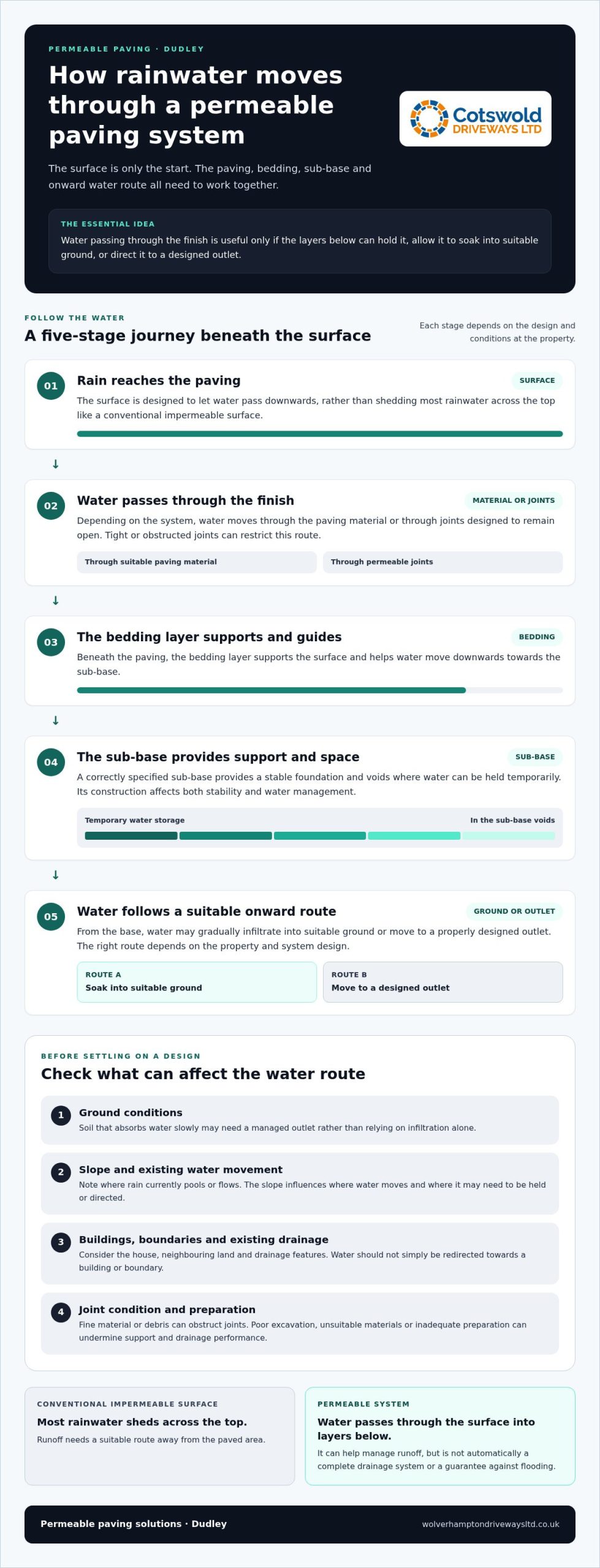
Water management happens in layers. Rain first reaches a surface designed to let it pass through, either through suitable material or through gaps between paving units. It then moves into a bedding layer and the sub-base below. These layers need to work together: water entering the surface is only useful if there’s space and a suitable route for it further down.
A permeable finish alone does not determine drainage performance; the surface, joints, bedding, sub-base and water’s onward route all play a part. The base can provide temporary storage, holding water in its voids before it gradually infiltrates into the ground or moves to a designed outlet. The suitable route depends on the property and system design.
What roles do the surface, joints and sub-base play?
The surface controls how rain gets below ground. In some systems, water passes through the paving material; in others, it drains through joints designed to remain open. The bedding layer supports the paving and helps water move downwards. Beneath it, a correctly specified sub-base provides a stable foundation and space for temporary water storage. Its construction details vary with the material, site and design.
That difference matters in a real project. Two drives may use similar-looking blocks, but their joint material and the layers beneath can give them different drainage behaviour. A permeable design must balance water movement with the support needed for everyday use. The sub-base isn’t simply a deeper version of an ordinary paving foundation: its specification and installation affect both stability and water management.
What can limit water infiltration?
Ground that absorbs water slowly may not accept water from the base quickly, so the design may need a managed outlet rather than relying on infiltration alone. A slope also affects where water moves and where it may need to be held or directed. Existing hard surfaces, drainage features, nearby buildings and boundaries all form part of the picture.
Joints can become obstructed by fine material or debris, restricting the route water uses to pass through the surface. Poor excavation, unsuitable materials or inadequate preparation can also undermine the paving’s support and drainage performance. A product name or headline capacity figure cannot tell you how a system will behave at a particular home. Unless a figure is backed by clear testing conditions and design information, don’t treat it as a promise for your drive.
For a homeowner comparing permeable paving solutions Dudley, useful questions include: where will water enter, where can the base store it, and what happens when the ground cannot absorb it quickly? These are project-specific questions that can’t be answered from the finish alone.
If you’re considering a driveway or paving project, you can discuss the intended water-flow route alongside material and design choices with Wolverhampton Driveways Ltd’s paving team. The company serves Dudley and offers free, no-commitment quotations.
How should Dudley homeowners compare permeable paving options?
Start with how the drive needs to work, not just which finish catches your eye. A surface must suit the vehicles using it, the space available and the way rainwater can be managed across the property. For permeable paving solutions Dudley, compare complete designs: a material name alone doesn’t establish how water will drain.
Which questions help match a surface to your property?
Consider the vehicles that will use the drive, how they enter and turn, and whether the existing surface has uneven or damaged areas. Then decide what colour, texture and overall look you prefer. Keep that visual choice separate from drainage: the layers beneath the finish and the planned water route need to suit the site.
Walk the area after rain if you can. Note where water collects, which way the surface slopes and whether there’s a suitable route for water to be managed within the property. These observations help frame the design discussion, rather than assuming a preferred finish will solve every drainage concern.
How do resin, block paving and tarmac fit the comparison?
Wolverhampton Driveways Ltd offers Resin Driveways, Block Paving and Tarmac Driveways. Compare these options for appearance and intended use, but don’t assume that every example of a material is permeable. The exact surface, joints where relevant, base construction and drainage plan determine whether a proposed build-up is suitable.
| What to compare | Resin driveways | Block paving | Tarmac driveways |
|---|---|---|---|
| Drainage design | Check the specified surface and base; the material name alone doesn’t establish permeability. | Consider how the joints and layers below are designed to manage water. | Establish how runoff will be directed or managed; don’t assume the finish is permeable. |
| Vehicle use | Consider the expected vehicles and the full construction beneath the surface. | Match the paving and supporting layers to access and vehicle use. | Consider access, vehicle use and the prepared base together. |
| Appearance and upkeep | Compare the look you want with the maintenance guidance for the chosen specification. | Consider the pattern and how joints will be maintained. | Consider the finish you prefer and how you’ll care for the surface. |
| Site suitability | Assess slope, existing surfaces and the water route. | Consider the layout, boundaries and drainage design. | Check how the site’s levels and runoff will be handled. |
Resin driveways are durable, resistant to cracking and suitable for heavy traffic. They can be customised by colour and design, with maintenance involving regular sweeping and occasional power washing. Proper base preparation is essential for stability and drainage. Block paving offers a wide range of colours and patterns and can last for decades with proper care. Maintenance includes re-sanding the joints and occasional cleaning to help prevent weed growth. Newly installed block paving typically settles over a few weeks, so avoid heavy traffic during this period. Tarmac is designed to withstand varied weather, including heavy rain and freezing temperatures, and is recyclable. For further detail, see this West Midlands resin driveway guide and the Wolverhampton block paving guide. Compare each finish with your property’s drainage needs and intended use.
What should you check before planning permeable paving in Dudley?
A good plan starts with the site, not a preferred paving finish. Before comparing designs, note how water behaves now and what lies around the area you want to pave. Slope, ground conditions, boundaries and nearby buildings can all affect how water should be managed. Use this checklist to organise the key questions before discussing permeable paving solutions in Dudley.
- Map the water flow. Note where rainwater pools, which way it runs and whether it approaches the house, a boundary or an existing drain. Sketch the drive and mark visible drainage points to make the current route easier to discuss.
- Assess the site. Record existing paving, changes in level, nearby buildings and boundaries. Consider how the area is used and whether access or vehicle movements affect the layout. Ground conditions and the space available for the base need project-specific assessment.
- Review the design. Consider how the proposed surface, bedding and sub-base will work together, and where water can go after entering the system. The design should account for the site’s levels and ground, rather than relying on the surface alone.
- Confirm requirements. Check current Dudley Metropolitan Borough Council planning guidance for your proposal. Verify any relevant drainage, SuDS or Building Regulations requirements with the appropriate official sources before work begins.
What site details should you assess first?
Look for practical clues: paving that holds puddles, water marks near walls, the direction of the slope and the position of existing drains. Note whether the proposed work will replace an existing surface or change levels. These details help explain the problem, but they don’t establish how quickly the ground will absorb water. Base preparation and ground conditions need assessment for the individual project.
Permeable paving alone shouldn’t be assumed to resolve an existing drainage issue. If water currently collects near a building or crosses towards a neighbour, the design needs to consider the cause and a suitable onward route. When underground pipework or gullies are suspect, consulting specialists such as T.M. Drainage can help identify blockages or structural faults before groundworks begin. Avoid directing runoff somewhere it could create a new problem.
Which local planning and drainage checks should you make?
Planning rules can depend on the work and the property, so don’t rely on a blanket statement that permission is always required or never needed. Consult the latest Dudley council guidance and, where the answer isn’t clear, seek advice from the relevant planning authority. Apply the same care to technical requirements: check current official guidance for any SuDS or Building Regulations provisions that may apply.
Environment Agency information can help explain wider flood-risk matters, but it isn’t a substitute for assessing your property or resolving a specific planning question. Requirements and guidance can change, so check current sources before making decisions.
Once you’ve gathered these details, view Wolverhampton Driveways Ltd’s paving services. The company’s unbiased material and design advice can help you discuss your intended outcome alongside the driveway or paving options for your Dudley property.
Plan a Dudley paving project with Wolverhampton Driveways Ltd
Choosing paving is easier when the conversation starts with how you use the space and what you want to improve. Wolverhampton Driveways Ltd serves Dudley and the wider West Midlands, including Wolverhampton, Telford and Cannock. Its services include Resin Driveways, Block Paving, Tarmac Driveways, Driveway Cleaning & Repairs and Patios. The right direction depends on your property, priorities and the design needed for the site.
Permeable paving solutions in Dudley call for care in describing what a surface can do. A material name by itself doesn’t confirm how the full installation will manage water, so include your drainage concerns as well as your preferred finish. Wolverhampton Driveways Ltd offers unbiased material and design advice, helping you compare options without treating every resin, block-paved or tarmac surface as permeable.
What can you discuss during a paving quotation?
Bring a clear picture of the project. Explain where rainwater currently pools or runs, describe the driveway or patio layout, and say how the area is used, such as for parking, access or outdoor seating. Mention any existing surface problems and what you’d like the finished space to look like. These details help shape a practical conversation about the work and its design.
A free, no-commitment quotation gives you a straightforward way to discuss the project and consider relevant service options. Material advice can help you weigh up appearance, use and maintenance, whilst design advice can relate those preferences to your property’s layout. If you’re comparing finishes, this Tarmac Driveways Wolverhampton homeowner guide offers further information about tarmac as a surface option.
Wolverhampton Driveways Ltd is fully insured and licensed to operate in the local area. Homeowners can also read its five-star testimonials on Checkatrade, Facebook and Google. The company provides a comprehensive quality guarantee on workmanship and materials, and rectifies issues within the guarantee period at no additional cost.
How can you take the next step in Dudley?
Before arranging a quotation, note your main concern, the areas where water collects and the outcome you want from the finished paving. You don’t need to arrive with a technical drainage design. A clear description of the property and intended use is a useful starting point for discussing suitable materials and project details.
If you’re planning paving in Dudley, explore Wolverhampton Driveways Ltd’s paving options and prepare to discuss your property, priorities and preferred finish.
Turn your paving plans into a clear next step
The most useful starting point is a clear brief, not a commitment to a particular finish. Decide what matters most to you: a practical entrance, a refreshed look, easier upkeep or a better-planned approach to rainwater. These priorities give your project direction whilst leaving room to consider what suits the property.
For permeable paving solutions Dudley homeowners can plan with confidence, keep the intended result realistic and specific to the site. A paving choice should fit how you use the space and how the design is intended to handle water. That way, the conversation can focus on a considered project rather than a surface label or a promise no system can make.
When you’re ready to explore the options, request a free, no-commitment quote for your Dudley paving project from Wolverhampton Driveways Ltd. Call 01902 276 379 to discuss your priorities and paving options with the team.
Frequently Asked Questions
Does permeable paving need planning permission in Dudley?
It depends on the property and the proposed work, so there isn’t a reliable universal yes or no. Check Dudley Metropolitan Borough Council’s current planning guidance before committing, and seek clarification if your proposal’s status is unclear. Planning permission is separate from technical drainage design: even if permission isn’t required, the paving still needs a suitable plan for managing surface water. Verify any relevant rules using current official guidance.
Will permeable paving stop flooding or all standing water?
No paving surface can be treated as a guaranteed way to prevent flooding or every puddle. Performance depends on the full design, the ground, upkeep and where water can flow after it enters the paving. For permeable paving solutions Dudley homeowners should consider, a property with recurring waterlogging needs a site-specific assessment. For example, pooling beside a wall may have a different cause from water collecting at the bottom of a sloping drive.
Is resin-bound paving always permeable?
No. “Resin-bound” describes a type of finish, but the name alone doesn’t confirm that the complete construction is designed to let water pass through. The material specification, installation, base and drainage plan all matter. If you’re comparing resin with another surface, look for clarity about the proposed build-up and water route, rather than relying on the finish description. Different specifications can perform differently, even when their appearance is similar.
Can permeable paving be laid over an existing driveway?
It depends on the old surface, its condition, existing levels and what the new design needs beneath it. Covering an impermeable driveway doesn’t automatically make the finished surface permeable: water still needs a suitable route through the construction and onward from the base. Block paving can be laid over an existing driveway when its condition permits, but the surface and proposed design need assessing. Look for signs of movement, cracking or poor drainage before deciding how to proceed.
How do you maintain permeable paving?
Follow the care instructions for the specific surface and system. Clear leaves, soil and loose debris from the paving and any designed drainage routes, especially where material collects in joints or low spots. Block paving needs re-sanding of the joints and occasional cleaning to help prevent weed growth. Resin driveways need regular sweeping and occasional power washing. Avoid assuming one cleaning method suits every finish. Regular visual checks can help you spot changes in water passage.
Can permeable paving support cars and heavier vehicles?
Suitability depends on the vehicles expected to use the area and the construction beneath the visible surface. A design for a household car may not automatically suit heavier or more frequent vehicle use. When considering a finish, factor in the vehicles, access pattern and any turning or parking areas that will take extra use. The paving and prepared base should be considered together; the surface type alone doesn’t establish its load suitability.
What happens if the joints or surface become clogged?
Leaves, soil and fine debris can restrict water passage through some paving systems. The right response depends on the surface and how it was built, so follow its care guidance rather than applying a universal cleaning method. Check whether water is still passing through as expected, and clear ordinary loose debris where appropriate. If blockage persists or drainage changes, an assessment of the system can help identify whether cleaning or another repair is needed.