
A fresh tarmac driveway needs time to settle before it can take normal use. For protecting a new tarmac driveway, allow 24-48 hours after installation before driving on it, and keep heavy vehicles off for 5-7 days. Those first few days matter: turning the steering while stationary, parking heavy vehicles for long periods or spilling fuel can mark or damage the surface.
It’s natural to want to use a new driveway straight away, especially when the work is finished and the surface looks ready. A little patience, followed by careful everyday use, helps prevent avoidable marks and wear.
This guide covers when to drive and park on new tarmac, how to deal with spills and winter conditions, and when to consider optional sealcoating. These practical steps can help you care for the surface through changing British weather.
Key Takeaways
- Wait 24-48 hours before driving on new tarmac, and keep heavy vehicles off it for 5-7 days.
- Keep petrol, diesel and harsh chemicals away from the surface, and avoid using rock salt to de-ice it.
- Clear snow carefully with a soft plastic or rubber-bladed shovel, and use sand for extra grip on ice.
- Leave at least 30 days after resurfacing before applying sealant.
1. Avoiding harsh chemicals and de-icing salts
Petrol, diesel and harsh chemicals can break down the binders that hold tarmac together. Keep fuel cans, paint thinners and vehicle fluids away from the surface, and deal with spills promptly. These substances can penetrate the material, leaving stains and weakening the finish. Protecting the surface helps preserve its appearance and appeal, while reducing the risk of cracks and other damage.
For routine cleaning, sweep away leaves and loose debris with a stiff broom, then rinse with water at low pressure. A powerful jet washer can loosen surface material, so avoid directing a strong spray at the tarmac. This approach removes dirt without harsh cleaners and helps prevent leaves from staining the surface or encouraging moss growth.
To limit oil, petrol and tyre marks, keep fuel and oil off the driveway and clean spills promptly. Soak up oil with sand or sawdust, then clean any remaining stain with a mild degreaser. Avoid harsh chemical cleaners, which can damage the binder. When parking, keep the wheels moving as you turn instead of twisting them sharply in one spot.
Stationary wheel turns can scuff tarmac, particularly when a car is manoeuvred in a tight space. Turn the steering gradually while the vehicle rolls, instead of sharply changing direction with the wheels still. If you need to reposition a car, move forward or reverse before turning the steering again. This reduces tyre friction in one concentrated area.
Take care with de-icing salts. Avoid rock salt on tarmac because it can damage the asphalt. If grit salt is needed in cold weather, use it sparingly rather than spreading a heavy layer over the drive. Clear away any remaining grit when conditions improve, and don’t use strong household chemicals instead.
Regular sweeping and low-pressure rinsing are practical ways to maintain a new tarmac driveway. Remove fallen leaves before they become compacted, and deal with fuel or oil spots as soon as they appear. These habits help keep the surface clean and limit stains, scuffs and avoidable damage.
2. Allowing a new tarmac driveway to dry before use
A newly laid tarmac driveway is generally safe to drive on within 24-48 hours. Keep heavy vehicles off it for 5-7 days after installation. These stages allow for light car use before heavier loads are introduced. Protecting a new tarmac driveway starts with following this waiting period and avoiding prolonged parking by heavy vehicles or machinery.
In the early days, keep the surface clear of debris and avoid dragging bins or equipment across it. Limit journeys to essential trips at first, rather than repeated manoeuvring or prolonged parking. Once driving is allowed, move carefully and avoid putting heavy loads near vulnerable edges. These steps reduce concentrated pressure on the surface.
There’s no single best sealant for every UK driveway. Coal-tar-free acrylic sealant has a typical recoat interval of 3-4 years, whilst polymer-modified sealant has a typical interval of 5-7 years. Sealing is optional, not essential for every new drive. It can add a protective coating, but that coating requires suitable preparation and periodic recoating. After resurfacing, wait at least 30 days before applying sealant.
Planning rules depend on the proposed work and setting, while any guarantee follows its written terms. Neither creates a universal sealing timetable. Sealcoating costs vary with driveway area, surface condition, preparation and application. Protecting a new tarmac driveway also means choosing sealant only when the surface and conditions are suitable.
For DIY application, clear debris and prepare the surface as the product directs. Apply sealant only in dry weather above 10°C, follow its instructions for protective equipment, and keep people off the coating until it is ready for use. For a new surface, explore driveway project options as part of planning the work.
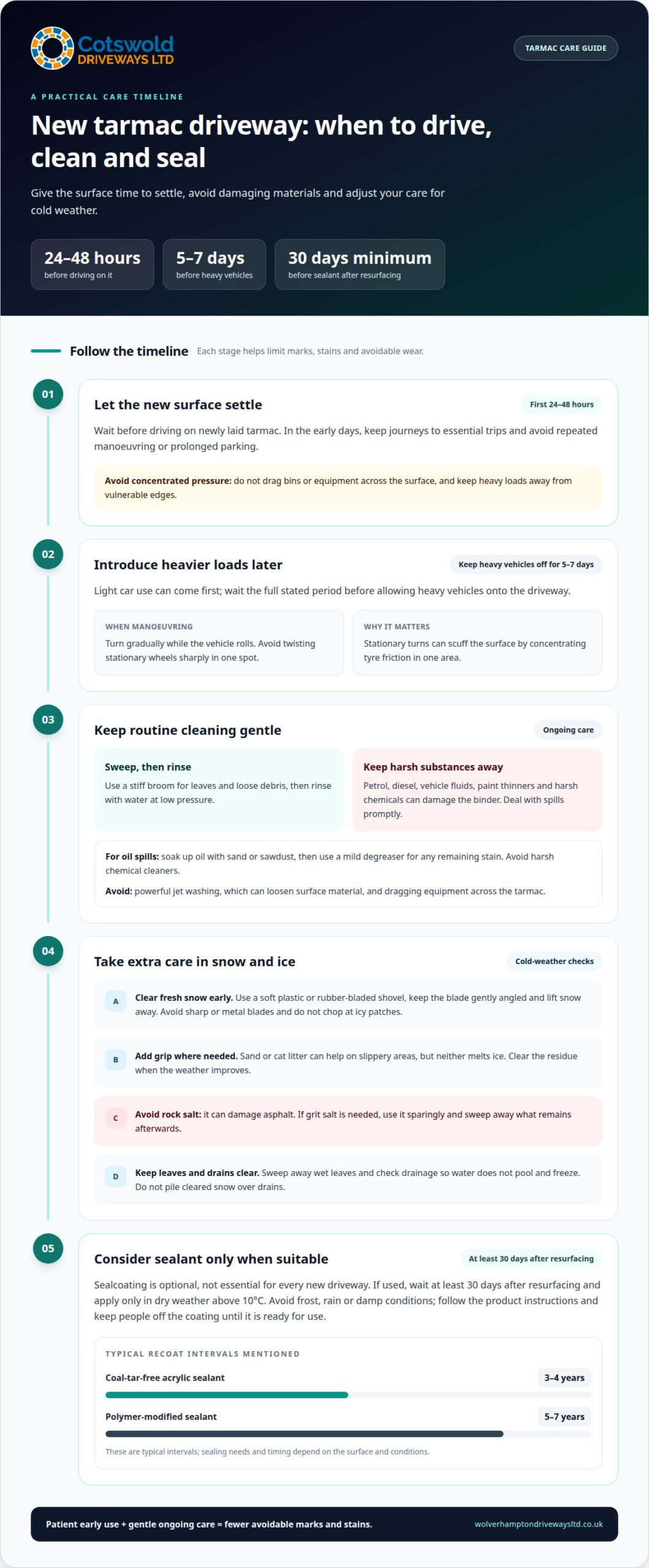
3. Cold-weather and snow precautions
Clear fresh snow before vehicles compress it into a dense layer. Compacted snow is harder to remove and can contribute to longer-term surface damage. Work carefully across the driveway, rather than striking the tarmac with a sharp shovel. A soft plastic or rubber-bladed snow shovel can shift loose snow while reducing the risk of dents, pits and marks.
Metal shovel blades can scratch or mark tarmac, especially when their edges are sharp or pointed. Keep the blade angled gently and avoid scraping hard against the surface. Clear snow soon after it falls, using steady strokes and lifting it away rather than chopping at icy patches. This helps stop compacted snow building up through winter.
For grip on ice, spread sand or cat litter over slippery areas. Neither material melts ice, so remove the residue when the weather improves. Avoid rock salt, which can damage asphalt. If you use grit salt in cold weather, apply it sparingly and clear away any leftover material afterwards.
Wet leaves create another winter hazard. Sweep them away before they become slippery or compact on the driveway. Compacted leaves can trap water, which may damage tarmac if it freezes. Check nearby drainage in cold weather too, and clear leaves or debris that could cause water to pool and freeze.
Drive carefully during icy conditions. Clear loose snow from your route first, then use sand where tyres need extra traction. Don’t pile cleared snow over drains, as blocked drainage can lead to standing water. After a thaw, sweep away sand, cat litter and debris to leave the surface clear.
Sealing belongs in dry weather, with temperatures above 10°C. Avoid applying sealant during frost, rain or damp conditions, when the surface cannot stay dry. Wait for suitable weather before starting; a dry, mild spell is the practical choice for sealing tarmac.
During cold spells, check traction materials, leaf buildup and drainage again. Even small accumulations can create slippery areas or allow water to pool and freeze.
4. How long before a new tarmac driveway can be sealed?
After resurfacing, wait at least 30 days before applying sealant. This interval gives the newly laid surface time before it receives an additional coating. Sealing earlier than this can mean coating a surface that has not had the recommended waiting period. Keep the date of resurfacing in mind when planning the work.
Timing also depends on the weather. Apply tarmac sealant only in dry conditions above 10°C. Rain or a damp surface can interfere with application, so choose a dry spell and check the temperature before starting. If conditions change, wait rather than applying sealant to wet tarmac or in colder weather.
Before sealing, sweep away leaves and loose debris, then inspect the surface for cracks, potholes and areas where water gathers. Check that nearby drainage is clear, since pooled water can contribute to erosion and cracking. Address surface problems before applying a coating; sealant is not a substitute for repairs.
Sealcoating is generally recommended every 3-5 years for UK tarmac driveways, but the surface condition matters too. Seasonal inspections can reveal whether the finish remains even and intact or needs attention. A sound, clean surface provides a clearer basis for deciding whether a new coat is due. Follow the sealant’s instructions for preparation and application, as products can have different requirements.
Sealing is a maintenance option, not a reason to rush work on fresh tarmac. Keep the 30-day waiting period, suitable temperature and dry conditions in view, then assess the surface before applying a coating. Discuss your tarmac driveway if you’re planning a new surface or considering repairs.
Between sealing jobs, respond promptly to spills and winter conditions. Soak up oil spilled on a tarmac driveway before cleaning, using materials such as sand or sawdust.
Clearing snow soon after it falls and doing so carefully can help limit long-term driveway damage. Compacted snow is more likely to cause long-term damage to a driveway than loose snow, so frequent clearing can limit damage over the winter season.
Wolverhampton Driveways: Tarmac Driveways
Wolverhampton Driveways Ltd installs tarmac driveways for homeowners planning a new surface or replacing a worn drive. A well-planned installation gives you a sound starting point for ongoing care, from managing everyday use to preparing for winter weather.
If your existing tarmac is stained or showing wear, driveway cleaning and repairs can address specific surface problems. Wolverhampton Driveways Ltd also installs block paving and resin driveways for homeowners considering alternatives. The right choice depends on your property, how you use the drive and the finish you want.
To discuss a new tarmac driveway or work on an existing one, contact Wolverhampton Driveways Ltd.
Make your next driveway decision with confidence
Driveway care is easier to manage when it suits the way you use your home. Consider what matters most in your outdoor space, from everyday parking to the look of the approach to your property. This gives you a practical starting point when planning changes or addressing wear on an existing surface.
For protecting a new tarmac driveway, match the surface and its upkeep to your household’s needs. Consider access, parking habits and the finish you want, then discuss the project before deciding what work is right. Clear plans help you set realistic expectations and choose a driveway that suits your property.
If you’re ready to talk through your plans, get in touch with Wolverhampton Driveways Ltd. A straightforward conversation can help you take the next step with confidence.
Frequently Asked Questions
How long should new tarmac cure before driving or parking on it in the UK?
Allow 24-48 hours after laying before driving a car onto new tarmac, and keep heavy vehicles off for 5-7 days. If you need access during that first week, plan where vehicles will be parked so heavier loads don’t sit on the new surface. For example, avoid leaving a delivery vehicle or trailer in one spot during this period.
What should you avoid doing on fresh tarmac, such as turning wheels or parking heavy vehicles?
Avoid turning stationary wheels, sharp turns in place and prolonged parking by heavy vehicles. These actions concentrate pressure or friction in one area and can scuff or deform fresh tarmac. Manoeuvre slowly while the vehicle is moving, and keep machinery, trailers and other heavy loads off the drive while the surface settles. In hot weather, avoid placing jacks or stands directly on the tarmac.
What is the best sealant for a tarmac driveway in the UK?
There’s no single best sealant for every UK driveway. Coal-tar-free acrylic sealant typically has a 3-4-year recoat interval, while polymer-modified sealant typically has a 5-7-year interval.