
The finish is determined before the mixture reaches the ground. To understand what resin bound surfacing is, start with how it’s made: natural stone aggregate and clear resin are mixed together, then trowelled onto a prepared base. Small gaps between the stones allow water to pass through the surface.
Resin bound and resin bonded surfacing are easy to confuse, but the two methods produce different results. For resin bonded surfacing, resin is spread over the base and aggregate is scattered on top, creating a more textured finish. The mix, stone size and installation method all affect how the finished surface looks and performs.
This guide explains the difference in straightforward terms. You’ll learn how aggregate choices shape the appearance, how each method is laid, and what to consider when choosing a finish for your driveway or path. A clear comparison and practical decision guide will help you understand the options before planning a surfacing project.
Key Takeaways
- Understand how the right permeable sub-base helps a resin-bound surface manage water and meet SuDS requirements.
- Spot the key difference: resin-bound surfacing mixes aggregate with resin, while resin-bonded surfacing scatters aggregate over a resin-coated base.
- See how aggregate size and layering affect the texture, appearance and finish underfoot.
- Use the installation method and the condition of the existing base to help decide which surface best suits your driveway or path.
What is Resin Bound?
Resin-bound surfacing combines natural stone aggregate with clear, UV-stable polyurethane resin. The materials are mixed before being spread and smoothed over a prepared base, creating a firm, seamless outdoor surface. Small gaps between the stones make the finished layer permeable.
Permeability and SuDS compliance
SuDS means Sustainable Urban Drainage Systems. A resin-bound surface is described as SuDS compliant when it sits on an appropriate permeable sub-base, allowing water to drain through the complete system. The porous surface alone is not enough: an unsuitable base won’t provide the same drainage route.
For a front-garden project larger than 5 square metres, a fully permeable surface can avoid the need to apply for planning approval. This is not a blanket rule for every driveway design; the surface and sub-base both affect whether the system is permeable.
Drainage and permeable surfacing
Unlike an impermeable sealed surface such as tarmac, resin-bound paving lets rainwater pass between the aggregate and into the ground beneath. This can help prevent standing water and reduce flood risk in urban and rural settings. Effective drainage depends on water being able to pass through the base, not just the visible stone layer.
Cracking or loose stones can occur if the base moves or the aggregate and resin aren’t mixed and laid properly. A stable, suitable base and an even finish help reduce these problems. If damage appears, address the affected area before loose stones spread.
| Surface option | Water behaviour | SuDS point |
|---|---|---|
| Resin bound | Water passes through aggregate gaps | SuDS compliant with an appropriate permeable sub-base |
| Sealed tarmac | Water runs across the surface | Not permeable through the surface |
Choose resin bound when you want water to drain through the surface and base rather than run across a sealed finish.
Resin bound can be used for UK driveways, paths and patios. Its permeable, seamless finish is an advantage, but drainage depends on a suitable sub-base. Movement or poor installation can also lead to cracking or loose stones.
Differences between resin bound and resin bonded surfacing
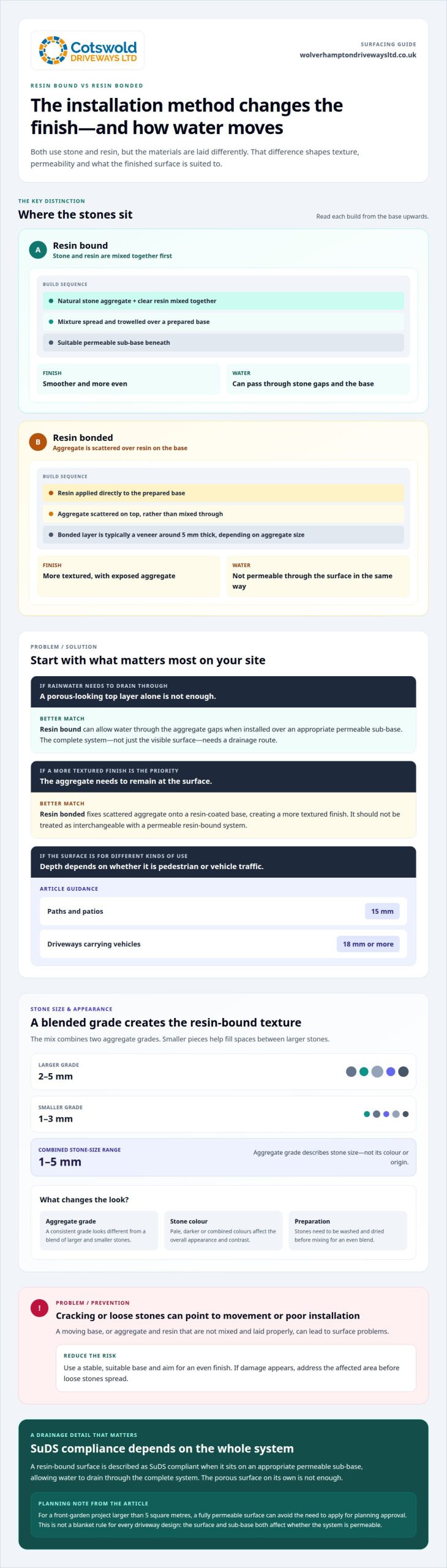
The key difference is the installation method: one mixes stones with resin, while the other fixes aggregate onto a resin-coated base. This affects the finish, how the surface performs and whether water can pass through it.
Resin bound surfacing
For resin-bound paving, aggregate and resin are blended before the mixture is spread and trowelled onto the base. Because the stones are held throughout the layer, the surface looks smoother and more even than resin bonded surfacing. Gaps between the aggregate allow water through, so the system can support sustainable urban drainage when installed over a suitable permeable sub-base.
This mixing method also allows installers to combine aggregate grades, creating a consistent stone texture rather than a loose layer on top.
Resin bonded surfacing
For resin bonded surfacing, installers apply resin directly to the prepared base, then scatter aggregate over it. The stones sit at the surface rather than being mixed through the resin. This creates a more textured finish, and the surface is not permeable in the same way as resin bound paving.
A bonded layer is typically a veneer around 5 mm thick, depending on aggregate size. It uses a different installation sequence and should not be treated as interchangeable with a permeable resin-bound system.
| Criterion | Resin bound | Resin bonded |
|---|---|---|
| Installation | Aggregate mixed with resin, then trowelled | Resin applied first, aggregate scattered on top |
| Finish | Smoother, even surface | More textured surface |
| Water movement | Permeable with a suitable sub-base | Not permeable through the surface in the same way |
When comparing resin-bound and resin-bonded paving, first decide whether drainage or surface texture matters more. A driveway designed to let rainwater drain through needs an appropriate resin-bound system and base. A bonded finish, by contrast, prioritises exposed aggregate texture.
If a smooth, permeable finish suits your plans, explore resin bound driveway options as a practical next step.
Resin bonded aggregate size and finish
Resin-bound surfacing uses natural stone aggregate and clear, UV-stable polyurethane resin. The aggregate grade, layer depth and chosen colours all shape the finished appearance.
Aggregate sizes and system thickness
A resin-bound mix combines aggregate grades sized 2-5 mm and 1-3 mm. Together, these create a typical stone size range of 1-5 mm, with smaller pieces helping fill spaces between larger stones. The selected grades affect the surface texture and the way the stones sit together after trowelling.
Depth depends on the intended use. Pedestrian paths and patios may be laid at 15 mm, whilst driveways carrying vehicles are recommended at 18 mm or more. These measurements help distinguish a pedestrian surface from one designed to take vehicle traffic.
Stone aggregate types and materials
The core materials are natural stone aggregate and clear, UV-stable polyurethane resin. Aggregate grade refers to stone size, not its colour or origin. The stones need to be washed and dried before mixing so they combine evenly with the resin.
Colour choices influence the overall finish. Pale stones look different from darker ones, while combining colours can add contrast. The final effect also depends on aggregate size: a consistent grade creates a different visual texture from a blend of larger and smaller stones.
To choose a design, compare the colour and stone texture in the actual mix, then consider how they will look beside your property’s brickwork, concrete or garden. A coordinated choice can help the paving feel connected to its surroundings without changing the installation system, with landscaping specialists such as Award-Winning Paving noting that aligning new hard surfacing with adjacent lawn and garden areas creates a truly balanced outdoor space.
Depth is a practical consideration separate from colour. A footpath and a driveway carrying vehicles have different depth recommendations, so the build-up should suit the intended use. Aggregate selection shapes the appearance; system thickness addresses the demands placed on the paving.
How resin-bound surfacing is made
The finished surface depends on three connected elements: a suitable base, a well-mixed resin-and-aggregate blend, and careful trowelling. Each affects the final appearance and how water drains through the completed system.
An existing tarmac or concrete base may be suitable if it is structurally sound, level and drains correctly. An uneven or unstable base can affect the finished layer. For a permeable installation, the sub-base must also allow water to pass into the ground.
The installation then follows a clear sequence:
- Prepare and assess the base, including its level and drainage.
- Combine the resin and washed, dried aggregate in a forced action mixer.
- Spread the mixed material over the prepared area.
- Trowel the mixture to create a smooth, even finish.
Mixing matters. In resin bound surfacing, aggregate is blended throughout the resin before application. This differs from resin bonded work, where resin is applied first and stones are scattered over the top. The mixed method creates a consistent layer rather than a surface veneer.
Weather affects installation: work needs dry conditions, and temperatures must not fall below zero. When conditions are suitable, a specialist such as Deluxe Resin Services may complete the installation in a few days. The method can be used for outdoor areas such as driveways, paths and patios.
For a driveway carrying vehicles, the aggregate layer is recommended at 18 mm or more. Paths and patios may use a 15 mm depth. The intended use therefore guides the build-up, while the base condition and drainage determine whether the complete system performs as intended.
The key takeaway is that a smooth finish starts with preparation, not just the visible gravel. Check the base, drainage route, aggregate mix and trowelled layer as one system. To plan the right build-up for your outdoor surface, discuss your resin surfacing project.
Wolverhampton Driveways: Tarmac Driveways
Wolverhampton Driveways can help you turn the surfacing comparison into a practical choice for your property. If a resin-bound finish suits your plans, its Resin Bound Driveways service provides a route from choosing the surface to planning the driveway work.
Resin isn’t the only option. Tarmac Driveways and Block Paving offer different finishes, while Driveway Cleaning & Repairs can address an existing surface that needs attention rather than replacement. The right next step depends on your priorities, including appearance, drainage and the condition of your current driveway.
For a new driveway, compare surfaces against how you use the space and the finish you want. For an older driveway, consider whether repairs could address the problem. Visit wolverhamptondrivewaysltd.co.uk to contact Wolverhampton Driveways and discuss your project.
Choose a surface that suits your next step
Understanding what resin bound surfacing is gives you a clear starting point, but the best choice also depends on how you want your driveway to look and perform day to day. Consider your preferred finish, how you use the space, and whether you’re planning a new surface or improving an existing one.
Wolverhampton Driveways can help you consider practical options for your project in Wolverhampton, Telford, Cannock or Dudley, including Resin Bound Driveways, Tarmac Driveways and Block Paving. Each offers a different finish, so start with what matters most for your property.
If you’re ready to discuss your plans, contact Wolverhampton Driveways. A straightforward conversation can help you take the next step with a clearer idea of the surface that fits your home. Start planning when you’re ready.
Frequently Asked Questions
How does a resin bonded system work?
A resin bonded system fixes exposed aggregate to a resin-coated base. The installer spreads resin first, then distributes stone over it, leaving a textured layer on top rather than stones mixed throughout. This method creates a different appearance and drainage behaviour from resin bound surfacing. Choose it for its visible grit texture, not to let water drain through the surface.
How easy is it to take care of the surface?
Routine care is straightforward: sweep away leaves and loose dirt, then power wash occasionally to lift embedded grime. In shaded areas, cleaning every few months can help limit moss growth. Clear debris from edges and drainage routes so water can move away freely, and don’t let dirt build up around borders, where it can obscure the finish.
How long does it take to install?
A residential resin-bound installation commonly takes one to two days, while the surface generally cures within a day. These are separate stages: installation includes preparing and laying the surfacing, while curing is the time before normal use. Weather and the condition of the existing base affect the work. For a Wolverhampton driveway, access and preparation also shape the installation schedule.
What is resin surfacing?
Resin surfacing is a paving finish made by combining aggregate with resin or fixing aggregate onto resin. These methods, called resin bound and resin bonded, create distinct textures and drainage characteristics. Resin surfacing can be used outdoors on driveways, paths and patios. The intended use and condition of the base help determine which system is suitable.
What is resin bound surfacing and how is it made?
Resin-bound surfacing is a paving system in which aggregate and resin are mixed before laying. A forced-action mixer combines washed, dried stone with clear polyurethane resin; installers then spread and trowel the blend into place. The even mixture creates a consistent surface rather than a top dressing. A sound base that drains correctly is essential to support the finished layer.
How does resin bound surfacing compare with resin bonded surfacing?
Resin bound paving has aggregate mixed through the resin, while resin bonded paving has stones scattered onto resin already spread over the base. The first creates a more even finish and can let water through when paired with a suitable permeable sub-base. The bonded option leaves exposed aggregate and a more textured feel. Choose according to your project’s finish and drainage requirements.