
A silver-grey porcelain patio in Dudley can give a garden a light, balanced look without choosing a stark white finish. One listed Silver Grey Granite option measures 900 x 600 x 20 mm, while a silver matt outdoor porcelain tile is rated R11 for slip resistance. The right choice depends on the shade and finish that suit your space, as well as the surface you need underfoot.
It’s easy to focus on colour first, but thickness and slip rating matter too. This guide explains how to compare grey porcelain for patios, paths and landscaped areas, what those specifications mean, and what to consider when looking at delivery around Dudley.
You’ll also find practical pointers for choosing a slab format and matching the paving to your garden, helping you make an informed choice before planning the installation.
Key Takeaways
- Match the grey tone and slab format to your patio, paths and wider garden layout.
- Use thickness and slip rating to compare outdoor porcelain options for the way you’ll use the space.
- Weigh porcelain against natural stone and concrete by considering appearance, upkeep and the finish you prefer.
- Understand how the paving choice and installation approach shape the finished patio before planning the project.
Porcelain paving suitability for patios and paths
Porcelain paving suits patios, walkways and garden spaces. For a new patio in Dudley, plan the layout and drainage before setting levels. Design the surface to prevent pooling and manage runoff as part of the installation. Assess drainage alongside the patio’s position and size, based on the proposed work and site.
Start with the garden’s shape and sunlight. In a compact garden, larger-format grey porcelain can create a more open feel, while smaller slabs may suit narrow paths and awkward corners. In a sunny space, compare samples outdoors at different times, as light can change how silver-grey and anthracite look. Anthracite creates stronger contrast with pale walls and planting, making it a practical choice for contemporary patios.
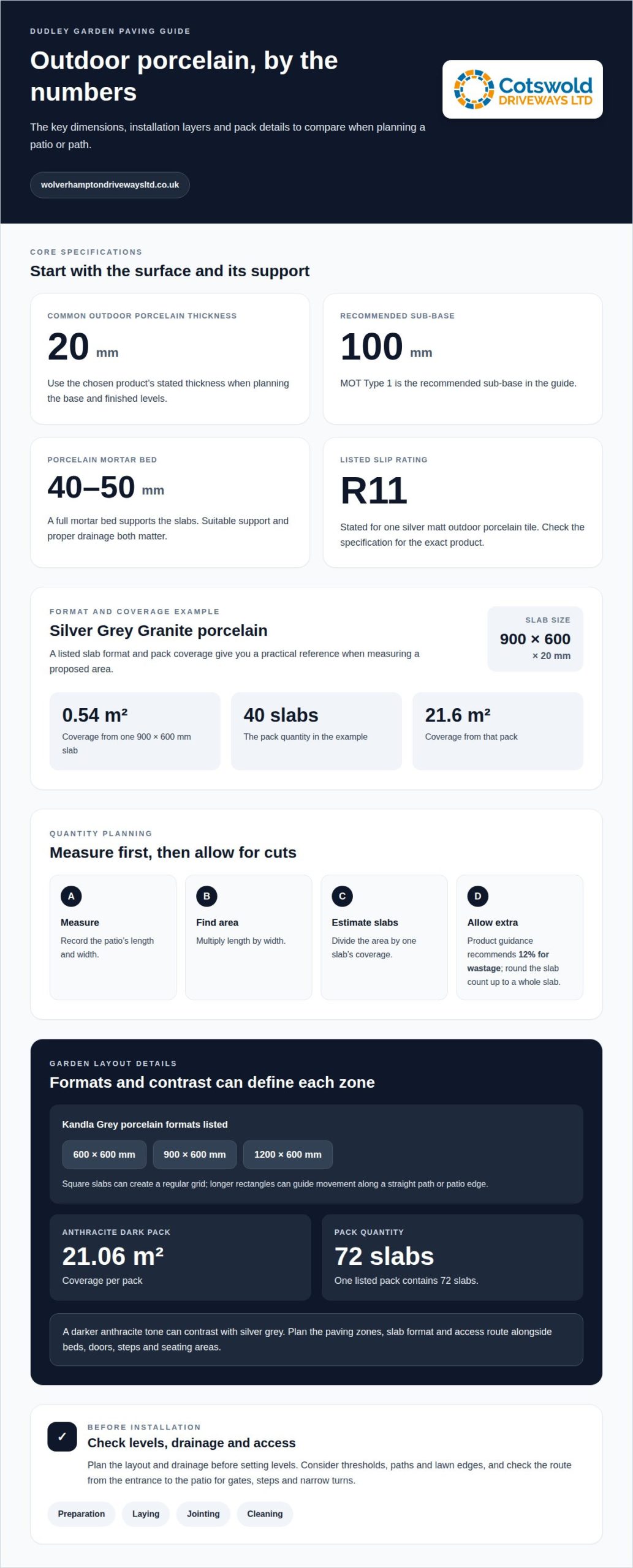
Installation needs a stable base and a suitable laying method. The recommended sub-base is 100mm of MOT Type 1, with porcelain laid on a 40-50mm mortar bed. A full mortar bed supports the slabs, while proper drainage helps water move away from the finished surface. Keep these stages in mind when reading installation guides: preparation, laying, jointing and cleaning each affect the result.
To calculate slab quantities, measure the patio’s length and width, then multiply them for its area. Divide that area by the coverage of one slab, then allow for cuts and breakages. The product guidance recommends adding 12% for wastage. For example, 900 x 600mm Silver Grey Granite slabs each cover 0.54m²; a pack of 40 covers 21.6m². Round the required slab count up to a whole slab.
Plan delivery around the measured quantity and garden access. Narrow entrances, steps and the paving’s position can affect how materials reach the work area. Before installation, check the route from the front entrance to the patio and keep the paving guide handy for dimensions and laying instructions.
Outdoor porcelain thickness and slip rating
Check thickness, slab dimensions and the stated slip rating together. These details help you compare outdoor porcelain for your patio and its intended use.
Recommended Patio Slab Thickness
A common outdoor porcelain specification is 20 mm thick. Silver Grey Granite Porcelain Paving Slabs, for example, are listed at 900 x 600 x 20 mm. Use the product’s stated thickness when planning the base and finished levels. Check that the specification is for outdoor paving, rather than assuming an indoor tile will suit a patio.
Thickness is only one part of the decision, not a substitute for correct installation. Paving needs suitable, even support beneath it. Consider how the patio meets door thresholds, paths and lawn edges. These transitions affect the finished height and help you plan a neat layout without awkward changes in level.
Tile Size and Thickness
Compare the slab’s length and width with its thickness. A 900 x 600 mm format creates a different joint pattern from smaller tiles, while the 20 mm thickness affects the planned finished level. Larger slabs can mean fewer joints across an open patio; smaller formats can be easier to arrange around curves or tight corners.
Measure the patio before choosing a format. Sketch its edges, steps and fixed features, then consider where cuts will fall. For instance, a 900 x 600 mm slab may suit a broad, rectangular area, but a narrow path could need more careful positioning to avoid small edge pieces.
Check the slip rating on the outdoor product specification. One silver matt outdoor porcelain tile is listed as R11. Treat that rating as a useful comparison when reviewing options, alongside the surface finish and where the paving will sit. Select a product intended for outdoor use, and follow its installation guidance for the chosen location.
Before ordering, confirm the stated dimensions and rating match the exact tile you’ve chosen. If you’re planning a patio project, review patio options as part of deciding how the finished space should work.
Garden slabs for patios, pathways and landscaped areas in Dudley
For a Dudley garden, choose slabs according to their purpose. A patio needs a comfortable, coherent surface, while a pathway needs a clear route through planting. Silver-grey tones can connect both areas, while different formats distinguish each zone. Sketch the garden boundaries before comparing paving options, including beds, doors, steps and seating areas.
Kandla Grey porcelain is listed in 600 x 600, 900 x 600 and 1200 x 600 formats. Square slabs can create a regular grid in a compact courtyard. Longer rectangles can guide movement along a straight path or patio edge. Keep one format across connected areas for continuity. Alternatively, use another format to define a separate seating space.
Anthracite Dark porcelain gives a deeper contrast beside silver grey. One pack covers 21.06 m² and contains 72 slabs. That option can help define a contemporary feature area against lighter paving. For example, use a darker tone beside a sheltered seating space—ideal if you plan to incorporate an eye-catching focal point from Decor Fires—then carry silver grey along the main route. A simple colour plan keeps the garden visually connected.
Before arranging delivery for a Dudley project, map the access route. Mark gates, steps, narrow turns and the planned drop-off point. Measure the route from the entrance to the garden and compare it with the chosen slab format. This helps you plan handling and identify obstacles before work begins. Keep the layout sketch with your paving details.
For landscaped areas, plan the paving edges alongside planting beds. A straight edge can frame a rectangular patio, while a path can curve around an existing feature. Use the same grey tone to connect these areas, or change the format to mark where the route ends. Choose the layout first, then match the slab size and shade to each garden zone.
How does silver grey porcelain paving compare with natural stone and concrete slabs?
Compare materials by appearance, maintenance and garden style. Silver-grey porcelain has a consistent colour across its slabs. Natural stone has individual markings, so neighbouring pieces can vary. Concrete slabs offer a straightforward option for defined layouts. Compare samples beside your home, as daylight and nearby brickwork affect how each surface looks.
Porcelain suits a neat, contemporary finish. Silver Grey Granite Porcelain Paving Slabs measure 900 x 600 x 20 mm, giving a clear rectangular format. Kandla Grey porcelain is also listed in 600 x 600, 900 x 600 and 1200 x 600 sizes. Those formats let you compare a regular grid with longer lines before settling on a pattern.
Natural stone may suit gardens where varied texture feels at home. Compare the colour and markings across several pieces, not just one slab. Concrete can work for a simple patio scheme, particularly when a consistent layout matters more than stone-like variation. View samples beside existing paths, planting and walls to see how they work in your garden.
Think about care as well as appearance. Porcelain sealing is optional; it can improve longevity, colour retention and ease of maintenance. Natural stone and concrete have their own care needs, so compare the product guidance before choosing. When maintaining or reviving stone and tiled surfaces across residential or commercial properties, specialists such as Restore-A-Floor provide tailored restoration and floor care solutions. Porcelain paving can last more than 25 years, making the installation method and ongoing surface care important parts of the decision.
For a Dudley garden, write down your priorities first: colour consistency, natural variation, or a simple slab layout. Then compare sample tones in the patio’s actual light, and check the size against the space. A silver-grey finish can sit between pale stone and darker concrete visually. To discuss a patio layout, plan your paving project.
Wolverhampton Driveways: Tarmac Driveways
Wolverhampton Driveways Ltd can help if your patio plans also include a driveway or entrance. Its tarmac driveways provide a defined, practical surface for vehicle access. The team also offers block paving and resin bound driveways for a different finish.
Plan the areas together so they work well as a whole. For example, a silver-grey patio beside a driveway can look considered when the boundary, access route and overall layout are planned together. Driveway cleaning and repairs are available for existing driveways that need attention rather than replacement. These services address driveway needs, while patio planning focuses on the garden.
If your project includes driveway work alongside your outdoor plans, contact Wolverhampton Driveways Ltd to discuss the work, or visit Wolverhampton Driveways Ltd online.
Take the next step towards your patio
Your next step is to turn the paving choice into a garden plan. Mark the patio’s edges, the route to the house and any areas you want to keep open. This sketch helps you see how the surface will connect with planting, seating and existing paths.
For a silver grey porcelain patio in Dudley, consider how the space looks in changing daylight and whether nearby features should blend in or stand apart. Keep the design practical: clear walking routes and carefully planned edges make the patio easier to use every day.
If driveway work is part of a wider improvement, plan the materials and layout together so the entrance and garden feel connected. Discuss the project scope and the surface that suits your home before deciding how to proceed.
Ready to talk through your plans? Contact Wolverhampton Driveways Ltd. A clear starting point can help you shape an outdoor space you’ll enjoy.
Frequently Asked Questions
Where can I buy silver grey porcelain patio slabs in Dudley?
For a silver-grey porcelain patio in Dudley, choose slabs and plan the installation with the garden in mind. Compare the product’s shade, dimensions, thickness and coverage before ordering. Wolverhampton Driveways Ltd offers patio work, making the company a local option for installation. Keep product details and delivery arrangements together as you plan the project.
What sizes, thicknesses, finishes and slip ratings are available for silver grey porcelain patio tiles?
Examples include Silver Grey Granite slabs at 900 x 600 x 20 mm, and Kandla Grey formats at 600 x 600, 900 x 600 and 1200 x 600. A Sandrock Silver Matt outdoor tile is listed with an R11 rating. Compare the finish in your garden’s light, and check the precise product specification before choosing a size or slip rating.
What are the delivery costs and lead times for porcelain paving in Dudley?
Delivery charges and lead times depend on the order and delivery arrangements. The quantity, stock position, distance to Dudley and access to the drop-off point can all affect planning. Measure the route from the delivery point to the garden, including gates and steps. Keep the slab coverage and total quantity to hand when arranging delivery to help plan the order accurately.
What base, adhesive and grout are needed to lay outdoor porcelain paving?
Outdoor porcelain needs a prepared, stable base, a full mortar bed and suitable drainage. The installation guidance gives a 100 mm MOT Type 1 sub-base and a 40-50 mm mortar bed. Use exterior jointing material compatible with porcelain, following its product instructions. Plan the falls and drainage before laying, then check the finished joints are suitable for the paving and outdoor conditions.
Can porcelain patio paving be installed as a DIY project, and what are the installation steps?
DIY installation is possible if you can prepare the base and place slabs precisely. First mark the area and finished levels, then excavate and prepare the sub-base. Set drainage falls before laying. Spread a full mortar bed, position each slab carefully and keep joints consistent. Finish with compatible exterior grout, then clean away residue as directed by the product instructions.
How should silver grey porcelain paving be cleaned and maintained, and what are common risks such as staining or slipping?
Regular sweeping removes grit and garden debris before it marks the surface. Wash with water and a cleaner suitable for porcelain, following the product directions. Sealing is optional and can help retain colour and ease maintenance. Leaves, dirt and algae can affect grip when damp, so clear organic debris and keep drainage working. Take extra care on wet paving, particularly along paths.