
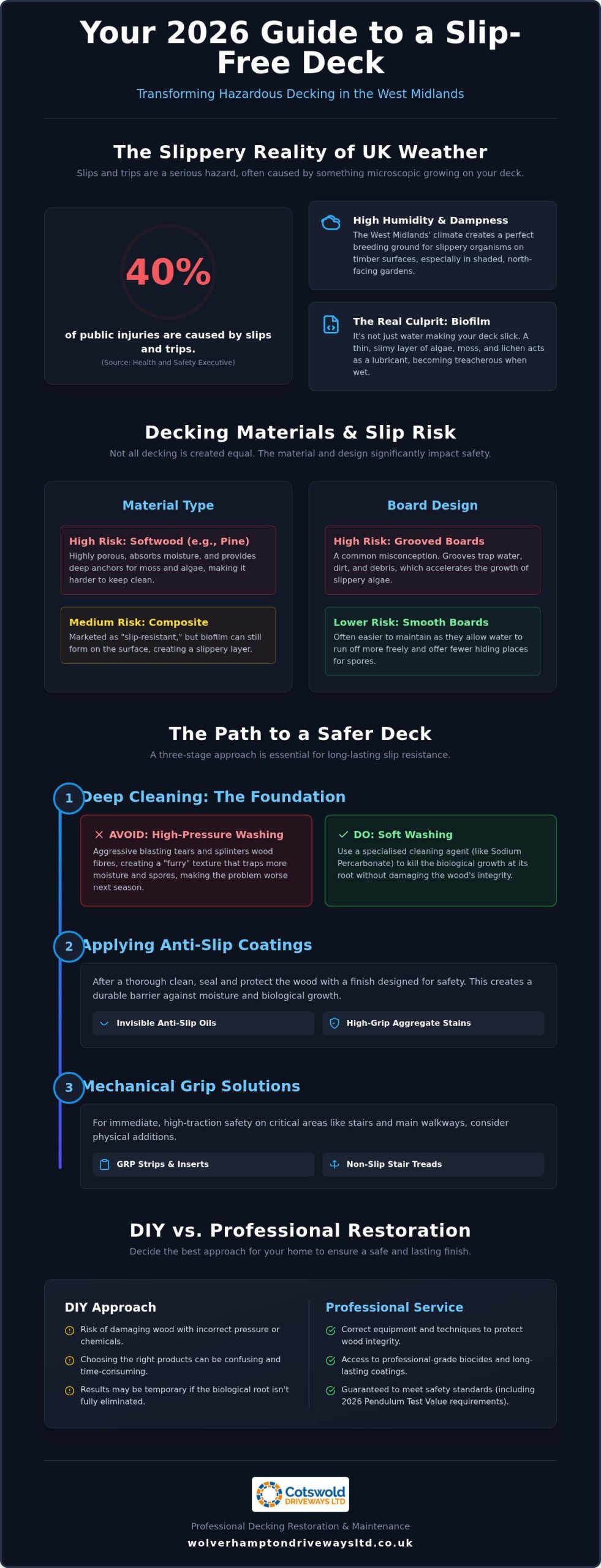
Slips and trips account for over 40% of injuries to the public according to the Health and Safety Executive, and in our damp climate, a mossy timber deck is often the prime culprit. If you’ve spent the last few winters watching your garden become a treacherous no-go zone due to green algae, you aren’t alone. Finding an effective slippery decking treatment West Midlands families can rely on is about more than just appearance; it’s about the peace of mind that comes from knowing your elderly guests and children are safe on their feet.
We understand the frustration of owning a garden that stays off-limits for six months of the year. You deserve a solution that survives the local weather without requiring constant, back-breaking maintenance. This 2026 guide explains how to transform hazardous boards into a slip-resistant retreat while protecting the wood’s integrity. We will preview the latest safety standards, including the Pendulum Test Value requirements for 2026, and offer practical advice on whether to attempt a DIY fix or hire a local specialist to guarantee a professional finish.
Key Takeaways
- Identify why local humidity levels cause rapid algae growth and how to treat the biological root of the problem.
- Learn why soft washing is the safest slippery decking treatment West Midlands homeowners can choose to avoid the splintering caused by high-pressure cleaners.
- Evaluate the best anti-slip coatings for your specific deck type, including invisible oils and high-grip stains.
- Explore mechanical options like GRP inserts that provide immediate traction on stairs and high-traffic walkways.
- Decide whether to tackle the restoration yourself or hire a local expert to ensure your garden meets 2026 safety standards.
Why Decking Becomes Perilously Slippery in the West Midlands
Living in the West Midlands means dealing with a specific set of environmental factors that turn garden decks into ice rinks. Our region often experiences high humidity levels and a lack of direct winter sun, especially in built-up areas like Dudley or Wolverhampton. This combination creates a perfect breeding ground for microscopic organisms. Whilst many homeowners believe that water alone makes their deck dangerous, the real hazard is often a biological “biofilm” that coats the surface.
Rainfall occurs on average eight or more months per year across the UK. In the West Midlands, this persistent dampness settles into the pores and crevices of your timber. Without adequate sunlight to dry the boards, moss, lichen, and algae spores thrive. North-facing gardens are particularly susceptible because they rarely receive the warmth needed to evaporate surface moisture, allowing these organisms to colonise the wood throughout the colder months.
The Role of Algae and Biofilm
Algae and biofilm are the primary reasons you might need a professional slippery decking treatment West Midlands service. These microorganisms create a thin, slimy layer that acts as a lubricant. When it rains, this layer becomes incredibly slick. Simply rinsing the deck with a garden hose won’t solve the problem. Water only hydrates the organisms, making them even more dangerous. To truly make a deck safe, you have to kill the spores at their root rather than just washing away the visible “green haze” that appears in autumn.
Timber vs. Composite Slippage
The material of your deck significantly influences how quickly it becomes hazardous. Softwoods like pine are very porous, meaning they absorb moisture and provide deep anchors for moss and algae. This makes them much harder to keep clean than hardwoods. Even composite decking, which is often marketed as “slip-resistant” or “rot-proof,” isn’t immune. While the boards themselves don’t rot, the same biological film can grow on top of the plastic-wood blend.
The design of the board also plays a part. Many people assume grooved or ribbed boards provide better grip. In reality, these grooves often trap standing water, dirt, and debris, which accelerates the growth of slippery algae. Smooth boards are frequently easier to maintain because they allow water to run off more freely and don’t provide the same “trenches” for spores to hide in. Choosing the right slippery decking treatment West Midlands homeowners use depends on understanding these material differences.
Essential Cleaning: The First Stage of Slippery Decking Treatment
Before applying any slippery decking treatment West Midlands gardens require a deep, restorative clean. Many homeowners reach for a high-pressure washer immediately, but aggressive blasting often does more harm than good. It tears the delicate wood fibres, creating a “furry” texture that actually traps more moisture and spores. This makes the deck even more prone to algae growth in the following season. A thorough, chemical-based clean is the most effective slippery decking treatment West Midlands residents can use to prepare for a safe winter.
Professional cleaning involves a methodical approach to ensure the surface is sanitised without being damaged:
- Clear all furniture and pots to ensure total surface access.
- Remove loose debris and leaves that trap moisture against the boards.
- Apply a specialised cleaning agent that targets the biological root of the slime.
- Allow the solution to dwell, ensuring it penetrates deep into the grain.
Safety is paramount during this process. Wear protective gloves and goggles to guard against splashes. If you have border plants or a pond, cover them or pre-soak the surrounding soil to dilute any runoff. If your deck is particularly overgrown or hazardous, our team at Wolverhampton Driveways Ltd can provide a professional soft wash to restore its original look safely.
Choosing the Right Cleaning Agent
Sodium Percarbonate, often called oxygen bleach, is a popular choice because it breaks down into water and oxygen. It’s safer for pets and plants than traditional chlorine-based cleaners. However, for heavily neglected decks in damp spots like Cannock or Dudley, a stronger professional-grade solution might be necessary to kill stubborn lichen. Always test a small, inconspicuous patch first to ensure the chemical doesn’t discolour your timber or composite material.
Professional Cleaning Techniques
The secret to a professional finish is the rinse. Keep the nozzle at a 45-degree angle to the wood and move in long, steady strokes along the grain. This prevents the “furring” mentioned earlier and ensures a uniform finish. Soft washing is the industry standard for 2026, prioritising low-pressure chemical application to sanitise surfaces without causing structural damage to timber.
Comparing Anti-Slip Coatings and Chemical Treatments
Once the boards are clean and dry, the next step in a comprehensive slippery decking treatment West Midlands project is choosing a protective coating. Unlike standard wood oils, anti-slip products contain microscopic aggregates or textures that provide essential friction underfoot. These treatments are specifically designed to withstand the heavy foot traffic and damp conditions common in local towns like Telford or Wolverhampton. Choosing the right product depends on the age of your deck and the level of maintenance you are prepared to undertake.
Anti-Slip Oils vs. Gritty Paints
Clear anti-slip oils are ideal if you want to preserve the natural grain and character of your timber. These products penetrate deep into the wood whilst leaving a textured finish that is barely visible to the eye. They are a popular choice for newer softwood or hardwood decks where the aesthetic of the wood is a priority. Because they don’t form a thick film, they are less likely to peel or flake over time.
Solid-colour anti-slip paints or stains are often the better choice for older structures that have seen better days. If your deck has significant staining or minor surface damage, a solid colour can refresh the entire look of your garden. These coatings provide superior UV protection, which helps prevent the wood from drying out and cracking during the summer months. However, they do require more maintenance over time, as the solid film can eventually wear thin in high-traffic areas. For heavy-duty use in family gardens or commercial settings, we often recommend high-build gritty stains for their superior durability and grip.
Application Best Practices
The durability of any slippery decking treatment West Midlands homeowners apply depends heavily on the weather conditions during application. You must ensure the timber has a moisture content below 20% before you begin. If the wood is too damp, the oil or paint won’t bond properly, leading to premature failure. This is why it is vital to monitor local humidity levels closely before starting any professional application.
- Apply two thin coats rather than one thick layer to ensure even coverage and better adhesion.
- Use a high-quality brush or roller to work the product into the grooves and end grains.
- Avoid treating your deck in direct midday sun, as the product may dry too quickly and fail to penetrate.
- Allow at least 24 to 48 hours of dry weather before allowing any foot traffic or replacing furniture.
Following these steps ensures that the anti-slip particles are evenly distributed and firmly anchored to the wood. Rushing the drying process or applying treatments in the damp West Midlands autumn can result in a patchy finish that won’t last through the winter.
Mechanical Solutions: Grip Strips and Non-Slip Inserts
Sometimes, even the best chemical coatings aren’t enough for high-risk areas. If your garden features steep ramps or frequently used steps, a mechanical slippery decking treatment West Midlands residents trust might be the best option. These physical additions provide permanent, high-friction surfaces that don’t rely on the absorption of oils or the bond of a paint film. They are particularly effective in the shadows of large trees or north-facing walls where biological growth is most aggressive and persistent.
Retrofitting your existing boards with Glass Reinforced Plastic (GRP) strips is a pragmatic alternative to a full deck replacement. Whilst a new hardwood deck installation can cost between £110 and £130 per square metre, adding grip strips allows you to extend the life of your current structure for a fraction of the price. It’s a sensible choice for homeowners who want immediate safety without the disruption of a complete garden overhaul. These strips are a versatile slippery decking treatment West Midlands homeowners often overlook when planning their garden maintenance.
GRP Anti-Slip Strips
GRP strips are incredibly durable and resistant to the West Midlands’ fluctuating temperatures. To install them correctly, you should always pre-drill the strips to avoid splitting the timber boards underneath. You can choose high-visibility yellow for safety on steps or subtle brown tones that blend seamlessly with your wood grain. These are a favourite for homeowners in Telford and Dudley who need to make garden ramps accessible for elderly guests. If you are unsure about the best layout for your space, our team at Wolverhampton Driveways Ltd can help you design a safe, compliant walkway.
Non-Slip Infill and Cleats
For a more discreet look, resin-bound aggregate inserts are an excellent solution for grooved decking. This involves filling the existing grooves of your boards with a mixture of resin and fine stone grit. This creates a flush surface that looks like a natural part of the wood design whilst providing a Pendulum Test Value (PTV) of 36 or higher, meeting modern safety recommendations. Unlike coatings, these inserts require very little maintenance beyond a quick brush to remove trapped dirt. They are ideal for high-end garden designs where aesthetics are just as important as safety underfoot.
Professional Decking Restoration and Maintenance in the West Midlands
Wolverhampton Driveways Ltd focuses on restoring hazardous garden structures to their former glory. A professional slippery decking treatment West Midlands service is more than a surface-level fix. It involves a detailed check of your deck’s health. We look for loose boards, failing fixings, and deep-seated biological growth that standard cleaning often leaves behind. Our maintenance contracts offer local homeowners long-term peace of mind. You won’t have to worry about the first frost or autumn rain turning your garden into a danger zone. These contracts include scheduled inspections and top-up treatments, which are much more cost-effective than a total rebuild after years of neglect.
We often find that safety is best achieved through a holistic approach. We can integrate your anti-slip needs with a broader garden patio design Wolverhampton plan to ensure your entire garden is both beautiful and secure. If your timber boards are past their prime, we provide expert composite decking installation West Midlands families trust for a low-slip, rot-proof future. This material is particularly effective in our damp climate because it doesn’t absorb water like traditional softwood.
When to Call the Professionals
Identifying structural rot early is essential. If your boards feel spongy or show signs of fungal growth, surface treatments might be a waste of money. Professionals have the expert equipment needed for large-scale decking cleaning in Stafford, ensuring a uniform finish that DIY attempts often miss. We use industrial-grade soft washing tools to kill spores at the root without damaging the wood’s delicate fibres. This results in a cleaner, safer surface that lasts significantly longer than a standard scrub. Our team ensures that every corner of your deck receives the same level of care, preventing the patchy look that occurs with domestic pressure washers.
Total Garden Safety Integration
A safe home requires a consistent approach across all outdoor surfaces. You should consider linking your decking maintenance to our driveway cleaning Stafford service to ensure your entire property is slip-free. Safe transitions between patios, fences, and decked areas prevent trips and falls where different materials meet. Our team is dedicated to providing high-quality workmanship that stands up to the West Midlands climate. Contact us for a free quote on slippery decking treatment West Midlands homeowners can rely on in Wolverhampton and secure your outdoor space for 2026.
Secure Your Garden for the Seasons Ahead
Managing a hazardous deck is about biological control rather than just surface cleaning. By moving away from aggressive pressure washing and adopting soft-wash techniques, you protect your timber’s integrity while eliminating the algae that causes slips. Whether you choose a high-friction oil to maintain the wood’s character or install GRP strips for immediate safety on steps, the right slippery decking treatment West Midlands homeowners invest in today will prevent accidents tomorrow.
Wolverhampton Driveways Ltd is here to help you navigate these choices. As fully insured local contractors specialising in professional driveway and deck restoration, we understand the unique challenges of the West Midlands climate. We proudly serve residents across Wolverhampton, Dudley, Telford, and Cannock, providing high-quality workmanship that lasts. Don’t let a mossy deck keep you indoors this winter. Request a free quote for professional decking treatment from Wolverhampton Driveways Ltd and reclaim your outdoor space. We look forward to helping you create a safe, beautiful garden that your family can enjoy all year round.
Frequently Asked Questions
Is it better to use anti-slip paint or oil on my decking?
Anti-slip oil is often the best choice for new timber because it preserves the natural grain amongst your garden’s greenery whilst providing an invisible grip. If your deck is older or has visible stains, an anti-slip paint or solid stain offers a fresh look and stronger UV protection. Both options are effective, but oils are generally easier to maintain as they don’t peel or flake over time.
Can I use a pressure washer to fix a slippery deck?
You can use a pressure washer, but you must be extremely careful not to damage the timber fibres. Blasting the wood at high pressure often causes “furring,” which creates a rough surface that actually traps more algae and moisture. A better approach is “soft washing,” which uses lower pressure combined with specialised cleaning agents to kill spores at the root without harming the structure of your boards.
How often should I apply a slippery decking treatment in the West Midlands?
Most homeowners should apply a slippery decking treatment West Midlands gardens require every one to two years. If your deck is north-facing or heavily shaded by trees in areas like Dudley or Cannock, you might need an annual top-up. Regular maintenance prevents the biological biofilm from becoming established. Keeping the surface clear of leaves and debris throughout the autumn will also help your treatment survive the damp winter.
Will anti-slip treatments ruin the look of my natural wood deck?
Modern anti-slip oils are designed to be almost invisible once they have dried into the grain. They don’t leave a thick, plastic-like film, so the natural character of your oak or redwood remains the star of the show. While some products might slightly deepen the timber’s tone, they won’t ruin the look. It is always a sensible idea to test a small patch first to ensure you’re happy with the final appearance.
Are there any natural ways to stop decking from being slippery?
Regular brushing with a stiff broom is the most effective natural way to prevent slime buildup. You can also use a mixture of white vinegar and warm water to kill surface algae, though this isn’t a long-term solution. Ensuring your garden has good drainage and trimming back overhanging bushes to let in more sunlight will naturally reduce the damp conditions that moss and lichen love to call home in our local climate.
What is the best way to remove green algae from my deck permanently?
There is no way to remove algae permanently in the UK’s damp climate, but a professional-grade soft wash is the most effective long-term solution. This process uses oxygen-based cleaners to sanitise the wood and kill microscopic spores. Following this with a high-quality slippery decking treatment West Midlands specialists recommend will create a surface that resists new growth. Consistent annual cleaning is the only way to keep the green haze away for good.
Can I make my composite decking less slippery?
Yes, composite decking can be made safer through regular cleaning and the use of specific non-slip products. While composite doesn’t rot, it still develops a slippery biofilm on the surface when wet. You can apply specialised anti-slip coatings designed for plastic-wood blends or install GRP grip strips in high-traffic areas. These mechanical solutions are particularly helpful on composite steps, which can become quite slick when frost or heavy rain hits.
How much does professional decking restoration cost in Wolverhampton?
Professional restoration costs depend on the size of your outdoor space and the current condition of the boards. Factors such as the amount of algae removal required and your choice of anti-slip coatings or mechanical strips will influence the final investment. Because every garden in Wolverhampton is different, we recommend a site visit to assess the structural integrity of the wood. This ensures you receive a clear, accurate price tailored to your project.