
A tarmac driveway can be a good idea if you want a practical surface that handles regular vehicle use. A new driveway can last 15 to 25 years, depending on the quality of the installation, maintenance, traffic and weather. Its foundation matters too, as a sound base helps the finished surface perform well.
It’s understandable to want a driveway that handles daily parking and Britain’s changing weather without constant attention. Is a tarmac driveway a good idea? It can be a practical choice for regular use by multiple cars, and it withstands rain, freezing temperatures and varied weather. In extremely high heat, however, tarmac can soften slightly.
This guide covers tarmac’s durability, suitability for different vehicle use and performance in wet, cold and hot weather. It also explains the trade-offs in appearance and maintenance to help you decide whether it suits your home.
Key Takeaways
- Understand why ground preparation and the condition of the underlying foundation affect how long a tarmac driveway performs.
- Work out whether your driveway’s layout, drainage and expected traffic suit tarmac and your vehicles.
- Compare tarmac with resin-bound surfacing, block paving and concrete to weigh practical benefits against design choice.
- Learn how changing UK weather can affect the surface and what routine care can help keep it in good condition.
How Long Will a New Tarmac Driveway Last?
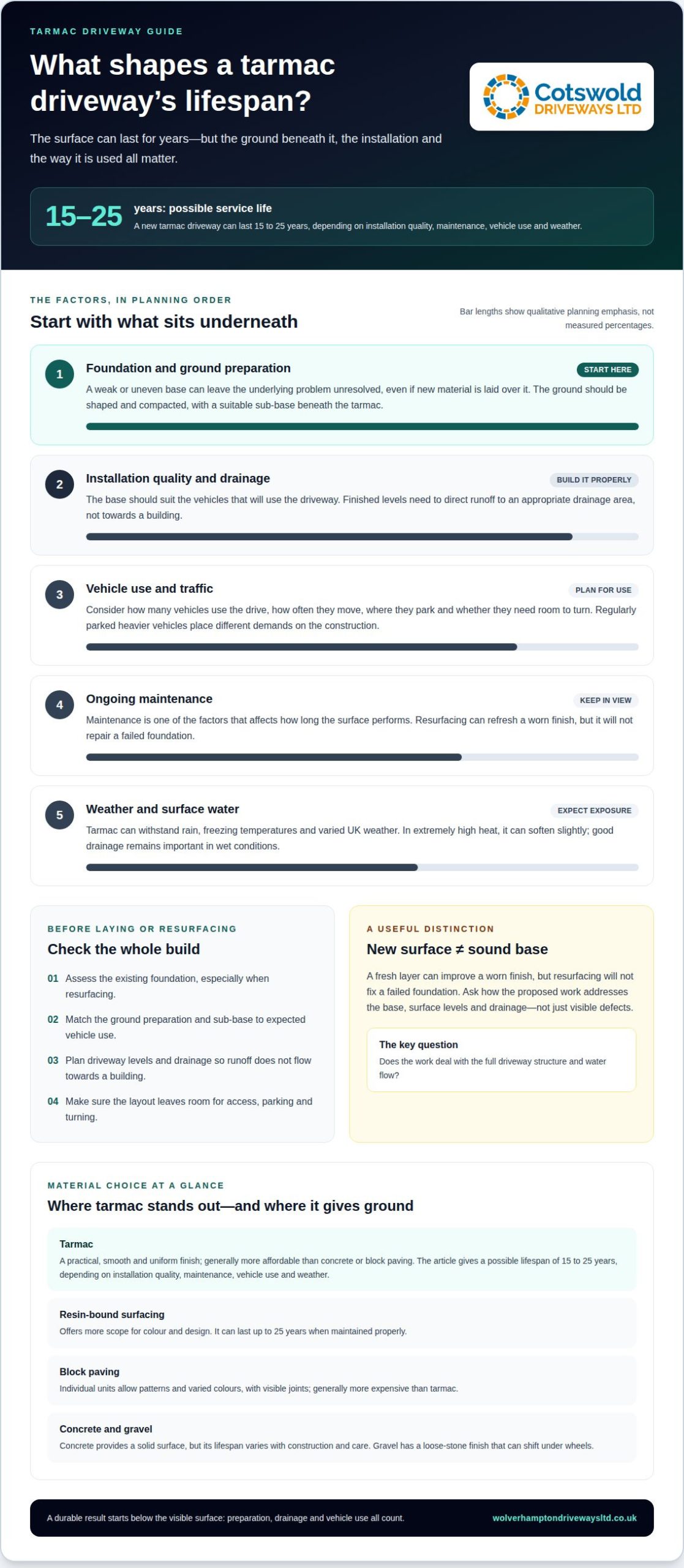
A well-built tarmac surface can serve a home for many years, but its lifespan depends on what lies underneath. A new driveway can last 15 to 25 years, depending on installation quality, maintenance, vehicle use and weather. If you’re deciding whether a tarmac driveway is a good idea, start with the ground preparation: laying new material over a weak or uneven base can leave the underlying problem unresolved. The foundation needs assessing, especially when resurfacing.
A new driveway needs a stable base suited to the vehicles that will use it. The ground must be shaped and compacted, with a suitable sub-base beneath the tarmac. Drainage is also essential: finished levels should direct runoff to an appropriate drainage area, not towards a building.
Planning permission and SuDS rules for a UK driveway depend on the project and how surface water is managed. Tarmac is generally quick to install, and its material dries and hardens quickly once laid.
The price depends on the area, access, existing ground, drainage and preparation, and is given after a quote request. A clear installation scope should explain how the base, surface levels and drainage will be handled. Those details help show whether the work addresses the whole driveway, rather than simply covering visible defects. If you’re still weighing whether a tarmac driveway is a good idea, consider how your vehicles will use it and the maintenance it will need. Installation quality, vehicle use and ongoing care all influence how long the surface performs before major repairs are needed. A reputable installer explains the proposed preparation, drainage and finish in clear terms.
Tarmac driveway suitability and expected vehicle use
Tarmac suits driveways used regularly by multiple cars and can withstand heavy weight. Whether it fits your home depends on the ground, drainage, driveway dimensions and expected traffic.
Durability under frequent vehicle use
Durability under frequent use means coping with repeated vehicle movements over time. This matters if household cars arrive and leave throughout the day, rather than staying in one place. Tarmac’s smooth, continuous finish makes access straightforward for several vehicles, but performance still depends on construction and maintenance. Resurfacing can refresh a worn finish, but it will not fix a failed foundation.
Vehicle weight and tarmac performance
Vehicle weight affects the load on a driveway, particularly when a vehicle remains parked in the same spot. If you regularly park a heavier vehicle, the construction needs to suit that use. Tarmac can withstand heavy weight, but suitability also depends on the ground below and the driveway’s dimensions. A narrow layout, for example, may make turning difficult even if the surface can handle the vehicle.
Consider the full pattern of use: how many vehicles you have, how often they move, where they park and whether they need room to turn. A family parking several cars has different access needs from a household with one car that stays in one space. These details help determine whether the surface and layout will work together.
Tarmac can be an affordable, practical addition where straightforward access matters more than a wide choice of decorative finishes. It may be less suitable if your priority is intricate patterns or a highly varied appearance. The right option depends on balancing everyday traffic, available space and the look you want. For a project shaped around those needs, explore tarmac driveway options.
Comparison with resin, block paving and concrete
Tarmac is generally more affordable than concrete or block paving, and provides a smooth, uniform surface without individual joints. Compared with resin-bound surfacing, block paving and gravel, it offers fewer design choices. The right fit depends on your priorities.
Tarmac creates a continuous surface for a straightforward finish. Block paving uses individual units, allowing patterns and varied colours but creating visible joints. Resin-bound surfacing also offers more scope for colour and design. Gravel has a loose-stone finish rather than tarmac’s firm, uniform feel.
Cost is one practical difference: tarmac is typically less expensive than concrete or block paving. It may suit a broad area where a consistent finish is the priority, while block paving can appeal if decorative paving matters more. Consider both the look you want and how the material will suit your home.
For lifespan, tarmac can last 15 to 25 years, depending on installation quality, maintenance, vehicle use and weather. A resin-bound driveway can last up to 25 years when maintained properly. Concrete’s lifespan varies with its construction and care, so there isn’t a single direct figure that applies to every driveway. Cracking and settlement can affect concrete—issues frequently addressed by concrete repair specialists such as Foundation Werks—while tarmac’s smooth finish avoids the joints found between block paving units.
Gravel is a different proposition: its loose surface can shift under wheels, whereas tarmac stays continuous. Tarmac is also reusable and recyclable compared with concrete and most other materials. Those differences may matter if you’re weighing appearance, upkeep and material reuse alongside cost.
Choose tarmac for a practical, consistent finish. Consider block paving or resin-bound surfacing if decorative choices matter more. Concrete offers another solid surface, though maintaining its appearance often involves specialised pressure washing from exterior cleaners like Ehrman’s Power Wash to tackle stubborn stains and grime, while gravel provides a loose alternative. Comparing these features helps clarify whether function, appearance or material choice should guide your decision.
Effects of UK weather and freeze-thaw cycles
Tarmac is designed to withstand varied weather, including heavy rain and freezing temperatures, making it a practical surface for the UK climate. Its performance still depends on drainage, maintenance and how the driveway is used.
Weather resistance in the UK
Weather resistance means the surface can cope with ordinary exposure to rain, snow and temperature changes. That matters for a home driveway, where wet conditions can leave standing water if the levels or drainage are poor. Tarmac’s smooth finish can help minimise snow and ice accumulation in winter. It is described as skid-resistant, but winter conditions still call for care when walking or driving.
Freeze-thaw effects
Freeze-thaw cycles occur when moisture freezes and then thaws, repeatedly exposing the surface to changing conditions. Water collecting in cracks or low areas can contribute to surface wear as temperatures shift. Effective drainage helps prevent persistent pooling, while prompt attention to small defects can stop them developing into larger repairs. A sound surface and base support reliable use through seasonal changes.
In extremely high temperatures, tarmac can soften slightly. This does not mean that every warm day will damage the driveway: the concern is extreme heat. Vehicle use also affects performance, so a driveway regularly used by heavier vehicles needs a suitable foundation and a surface kept in good condition.
After installation is completed, keep drainage routes clear and watch for pooling, cracks or areas that appear to be changing. These signs can help identify where water is lingering or the surface needs attention. Regular care, including periodic resealing and small repairs, helps preserve the finish through wet winters and hot spells. The exact maintenance needs depend on the driveway’s condition and exposure.
If weather has left your surface worn or damaged, explore driveway cleaning and repairs for help restoring its condition.
Wolverhampton Driveways: Tarmac Driveways
Wolverhampton Driveways Ltd can help if you’ve decided a tarmac surface suits your home, vehicles and preferred finish. Its Tarmac Driveways service is a practical next step for homeowners planning a new driveway or replacing an existing surface.
If your tarmac driveway needs attention, Driveway Cleaning & Repairs may be more suitable than full replacement. For a different look, Block Paving and Resin Driveways offer alternative surface choices. The right option depends on the appearance and everyday use you want from your outdoor space.
Share what you need for your driveway and contact Wolverhampton Driveways Ltd to discuss the work.
Choose the surface that suits your home
Deciding whether a tarmac driveway is a good idea starts with what matters most: practical everyday use, a particular appearance, or a balance of both. Think about how you use the space and the finish you want when you arrive home. That gives you a clear starting point for choosing the right option.
Wolverhampton Driveways Ltd installs Tarmac Driveways, Block Paving and Resin Driveways across Wolverhampton and the wider West Midlands, including Telford, Cannock and Dudley. Its free, no-commitment quote and unbiased advice on material selection and design can help you choose a finish that suits your property.
Take the next step at your own pace. Contact Wolverhampton Driveways Ltd to discuss your driveway and the surface you have in mind. A well-chosen finish can make coming home feel that little bit better.
Frequently Asked Questions
What Makes Tarmac a Long-Lasting Choice?
A stable foundation, effective drainage and sound installation all help a tarmac surface perform well. Tarmac suits regular driveway use and is recyclable. For example, a driveway that sheds rainwater properly is less likely to have persistent pooling. Ongoing care matters too: addressing small defects early can help prevent more extensive surface damage.
What are the pros and cons of a tarmac driveway in the UK?
For homeowners asking, “Is a tarmac driveway a good idea?”, it can be a practical choice if a smooth, consistent finish matters more than decorative patterns. Tarmac is generally more affordable than concrete or block paving, but offers fewer design options than block paving or resin-bound surfacing. It can also soften slightly in extremely high temperatures, so weigh these trade-offs against your preferred appearance and site conditions.
How much does a tarmac driveway cost per m² in the UK?
The work involved depends on the project, not a single rate that suits every driveway. The area, access, removal of an existing surface, ground preparation and drainage can all affect the installation. Poor ground or drainage may call for more preparation than a straightforward replacement. Wolverhampton Driveways Ltd provides free, no-commitment quotes for project-specific advice.
How long does a tarmac driveway last, and what maintenance does it need?
A new tarmac driveway can last 15 to 25 years, depending on installation, maintenance, vehicle use and weather. To help preserve its condition, arrange periodic resealing every few years and deal with small repairs as they arise. Sealcoating is optional, not an automatic requirement. If the surface is deteriorating, the condition of the underlying foundation helps determine whether resurfacing is suitable.
What are common problems with tarmac driveways and how can they be repaired?
Cracks, potholes and standing water are common signs that a tarmac driveway needs attention. If you’re wondering, “Is a tarmac driveway a good idea?” despite existing damage, the cause matters: local repairs may suit isolated defects, while wider wear may call for resurfacing. If the foundation has failed, laying a new surface alone may not solve the problem. The repair approach should account for both drainage and the base.
How do I choose a reputable tarmac driveway installer in the UK?
Choose an installer who clearly explains the proposed ground preparation, foundation, surface levels, drainage and finish. A clear scope should show how the work will address the whole driveway.