
Could a smaller driveway actually be your home’s best feature? Most homeowners assume a tight parking space is a limitation they just have to live with, but the right paving for small driveways can make even a single-car frontage feel generous. We know how frustrating it is when your entrance feels cramped or cluttered, especially when you’re also worrying about tricky drainage in a confined area. It’s a common headache for many across the West Midlands, where terraced and semi-detached homes often have limited outdoor room.
This guide shows you how to maximise every square inch of your property. You’ll learn the smartest material choices for 2026, from resin bound surfaces to modern block paving, and how to avoid busy patterns that make a space feel smaller. We’ll also explain the latest SuDS regulations to ensure your new front garden is both legal and functional. By the end, you’ll have a clear plan for a clean, low-maintenance frontage that could add up to 10% to your property’s value.
Key Takeaways
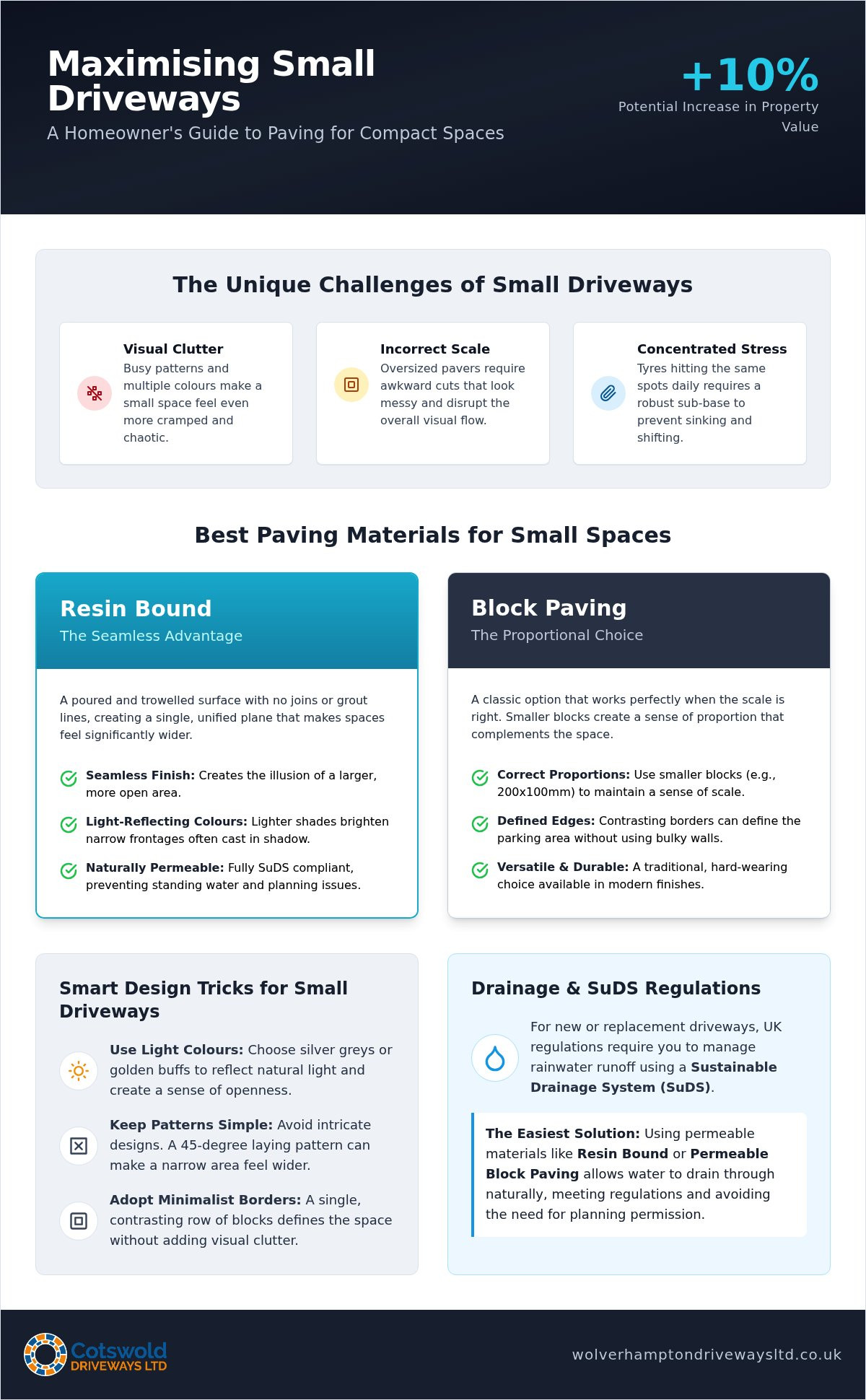
- Opt for materials like resin bound or small-format blocks to maintain a sense of scale and avoid a cramped appearance.
- Learn why seamless resin finishes are the smartest choice for paving for small driveways, offering a clean look that makes narrow frontages feel wider.
- Use clever design tricks, including light-reflecting colours and 45-degree laying patterns, to create the illusion of extra space.
- Ensure your project meets the latest 2026 SuDS regulations to manage drainage effectively and avoid the need for planning permission.
- Understand why expert installation is vital for high-traffic, tight spaces to guarantee a finish that boosts curb appeal and property value.
The Unique Challenges of Paving for Small Driveways
Planning a small driveway is often more difficult than designing a large, sprawling expanse. When you have limited square footage, every single choice carries more weight. In Wolverhampton, where terraced and semi-detached houses are common, your frontage is the first thing people see. It’s your home’s handshake and the core of its kerb appeal. Because space is at a premium, poor planning leads to a cramped look that can actually devalue your property. You aren’t just laying a surface; you’re trying to balance functional parking with a welcoming entrance.
Many homeowners fall into the trap of choosing oversized pavers. Large slabs might look great in a showroom, but on a narrow plot, they often require awkward cuts that look messy and unfinished. Similarly, overly complex borders can box in the area, making it feel smaller than it actually is. The best paving for small driveways focuses on clean lines and a sense of openness. It’s about creating a seamless transition from the road to your front door without making the space feel like an afterthought.
The “Busy” Factor: Avoiding Visual Clutter
Visual noise is the enemy of small spaces. If you use multiple colours or intricate patterns, the eye gets distracted. This makes the driveway feel cluttered and claustrophobic. We always suggest a minimalist approach to material selection. A single, consistent material helps the eye move across the surface without interruption. This simple design trick makes the area feel much larger. Our straight-talking advice is usually to keep it simple; it looks more professional and often saves you money on complex material combinations that don’t add real value.
Weight-Bearing Realities for Tight Spaces
Small driveways face unique physical stresses. Unlike a large sweep where a car might park in different spots, a compact space sees tyres hitting the exact same points every day. This concentrated wear can lead to sinking or shifting if the installation isn’t perfect. Tight-turning circles also put lateral pressure on the stones. To prevent issues, we focus on a rock-solid sub-base and high-quality paving for small driveways that can handle these forces. Using modern permeable paving solutions is also vital. These systems manage surface water whilst providing the structural integrity needed for daily use. A professional installation ensures your driveway stays level and looks sharp for years, even in the tightest West Midlands frontages.
Best Paving Materials for Small Driveway Spaces
Choosing the right material is the most significant decision you’ll make when planning a new entrance. For a large estate, you might get away with almost any stone, but paving for small driveways requires a more strategic eye. You need a surface that looks intentional, not just a patch of stone where a car happens to sit. In 2026, homeowners are moving away from heavy, dark materials in favour of finishes that reflect light and create a sense of openness.
Resin Bound: The Seamless Advantage
Resin is often the gold standard for compact spaces. Because it is poured and hand-trowelled, there are no joins, grout lines, or gaps. This lack of visual interruption is a massive benefit for resin bound driveways west midlands homeowners. It creates a single, unified plane that draws the eye across the full width of the plot, making it feel significantly more spacious than a segmented surface would.
We often recommend lighter shades like silver greys or golden buffs for these projects. These colours reflect natural light, which is crucial for narrow frontages that might be shadowed by the house or neighbouring walls. Beyond looks, resin is naturally porous. It aligns perfectly with government guidance on permeable surfacing, ensuring you don’t have to worry about standing water or planning hurdles in urban Wolverhampton plots.
Block Paving: Scale and Proportion
If you prefer a traditional look, block paving is a fantastic option, provided you get the scale right. A common mistake is using massive slabs that dwarf a small car. Instead, block paving installers wolverhampton typically suggest smaller, 200x100mm blocks. These smaller units create a sense of proportion that fits the environment perfectly.
Borders are another secret weapon for small drives. A contrasting row of bricks can define the parking area without the need for physical walls or fences that take up valuable centimetres. While concrete blocks offer a modern, sharp finish, clay blocks provide incredible colour longevity for high-use drives. Both are durable; the key is the laying pattern. We’ll cover how these patterns change your perspective in the next section.
For those seeking a clean-lined, cost-effective solution, tarmac remains a reliable choice. Modern tarmac provides a smooth, dark backdrop that makes your home’s brickwork pop. Concrete pavers also offer a middle ground, combining the durability of stone with a wide range of contemporary styles. If you aren’t sure which material fits your budget, our team can provide a free quote for your Wolverhampton home.
Design Tricks to Make a Small Driveway Look Larger
Optical illusions aren’t just for magicians. When it comes to paving for small driveways, how you lay the material is just as important as what you choose. Most homeowners think a driveway is just a functional square, but clever design can trick the eye into seeing more width and length than actually exists. By focusing on flow and light, we can turn a cramped car spot into a premium frontage that looks and feels much larger.
Choosing the Right Colour Palette
Colour choice is your first tool for opening up a space. Dark tarmac or charcoal blocks often feel “heavy” and absorb light, which makes a narrow space feel even tighter. In 2026, we’re seeing a major shift towards silver-grey and light granite finishes. These lighter tones reflect sunlight and brighten up the entrance. It’s best to co-ordinate these with your home’s existing brickwork. A cohesive look prevents the driveway from feeling like an isolated patch of stone and makes the whole frontage feel like one unified area.
Pattern Play: Directing the Eye
The direction of your paving blocks changes your perspective. Laying blocks at a 45-degree angle to the house draws the eye to the widest points of the plot, creating a sense of width. If you want to create the illusion of length, a Stretcher Bond pattern running towards the door works wonders. We generally advise against “picture framing” with heavy, dark borders. This creates a hard stop for the eye, effectively cutting a small space into even smaller segments. Instead, use simple edgings that maintain clean, sharp lines without boxing you in.
For a truly professional finish, consider the “Infinity” effect. This involves using similar materials for your driveway and your garden path. If you’ve recently invested in garden patio design wolverhampton projects, matching the driveway to the rear paving creates a seamless flow around the whole property. This continuity suggests the space is larger than it is because there are no visual breaks between the front and back of the house.
Finally, think about how the space looks after dark. Integrated lighting is a fantastic way to define boundaries without taking up any physical room. Recessed LEDs can be set directly into the paving for small driveways, guiding you into the parking spot whilst highlighting the texture of the stone. It’s a modern, “no-nonsense” way to add safety and style without cluttering the area with bulky bollards or posts.
Drainage and Regulations for Small Frontages
Small driveways often face the toughest challenges when it comes to water management. Because the area is compact, even a moderate downpour can lead to pooling if the surface isn’t designed correctly. In 2026, the standards for paving for small driveways are stricter than ever. The British Standard for modular permeable pavements was recently updated to BS 7533-103:2026, reflecting a growing need to handle intense rainfall. For a homeowner, this isn’t just technical jargon; it’s about protecting your house from damp and ensuring your new frontage is legal.
SuDS, or Sustainable Drainage Systems, are designed to mimic natural drainage. Instead of water rushing into the street and overwhelming public sewers, it should soak into the ground where it falls. On a small plot, you don’t have much room for complex soakaways. This makes the choice of material vital. Resin bound surfaces and permeable block paving are excellent solutions because they allow water to pass straight through into a prepared sub-base. Professional installation is essential here; if the levels aren’t perfect, water can migrate towards your home’s foundations, leading to costly rising damp issues.
Planning Permission for Small Driveways
If your new or replacement driveway covers more than five square metres, you must follow the “5-square-metre rule.” Planning permission is generally not required if you use a permeable surface or ensure the water drains to a lawn or border within your property. However, if you use an impermeable material that drains onto the public road, you’ll need council approval. Local authorities in Wolverhampton and Dudley are increasingly vigilant about this. In fact, thousands of enforcement notices are issued across the UK every year for non-compliant driveways. Working with a specialist contractor gives you the peace of mind that your project meets every local regulation.
Maintenance for Compact Areas
Small expanses require a keen eye for detail. Because the area is limited, a single weed or a patch of moss can ruin the entire look of your frontage. Keeping your lines clean and sharp is the best way to maintain that premium kerb appeal. If your surface has started to look a little tired or stained, our expert driveway cleaning stafford service can restore the original finish. Catching minor sinkage or cracks early is also important; in a small space, structural issues become obvious very quickly.
Don’t risk a fine or a flooded front door by guessing the requirements. Our team can help you choose the right paving for small driveways to ensure full compliance and a perfect finish. Contact Wolverhampton Driveways Ltd for a free local quote today.
Professional Paving Installation in Wolverhampton
DIY paving for small driveways might seem like a manageable project on paper. However, the physical reality of working in a confined space is much more demanding than most homeowners realise. Small areas require surgical precision with levels and stone cuts. If the sub-base is slightly off, the concentrated weight of a vehicle in a tight spot will cause the surface to shift or sink within months. We’ve seen many self-build attempts where poor drainage has led to water pooling against the house walls, causing long-term damage. Choosing a professional installation gives you the peace of mind that the job is done once and done right.
At Wolverhampton Driveways Ltd, we pride ourselves on being more than just contractors. We’re local master-craftsmen who understand the specific housing stock in the West Midlands. Whether you’re in a Victorian terrace in Dudley or a semi-detached in Cannock, we know how to handle tight frontages. Our approach is built on years of experience and a commitment to quality that stands the test of time. We’re fully insured and licensed, providing a reliable service that our local community trusts.
The Local Master-Craftsman Advantage
Our commitment to straight-talking advice means we won’t suggest a material that isn’t right for your specific plot. We prioritise durability and drainage in every project, ensuring your new surface meets all legal standards. We also understand that residential streets in Wolverhampton and the surrounding areas can be busy. Because of this, we organise our work to minimise disruption to you and your neighbours. We’re punctual, tidy, and transparent about our timelines, making the entire process as stress-free as possible for our clients.
Start Your Driveway Transformation
Your home deserves an entrance that works as hard as you do. A bespoke design doesn’t just provide a place to park; it transforms your property’s entire frontage and adds genuine value. You can view our extensive portfolio of tarmac driveways wolverhampton and high-quality block paving to see the level of finish we achieve for our local clients. We take pride in every joint, every trowel stroke, and every satisfied homeowner.
When you contact us for a free site survey, we’ll visit your property to assess the levels, drainage needs, and space constraints. We’ll listen to your ideas and provide a clear, no-obligation quote based on honest local rates. It’s the first step towards a low-maintenance, high-impact paving for small driveways solution that lasts for decades. Book your free site survey today and let’s maximise your home’s curb appeal together.
Transform Your Home’s Entrance Today
Upgrading your frontage is about more than just finding a place to park. It’s an opportunity to completely change how your home feels from the pavement. By choosing the right paving for small driveways, you can turn a cramped, dark space into a bright and functional asset. Remember that light-reflecting colours and smart laying patterns are your best tools for creating the illusion of extra width. Most importantly, ensure your project stays on the right side of 2026 drainage regulations to protect your property and its long-term value.
We take pride in our reputation as reliable local master-craftsmen. As fully insured and licensed West Midlands specialists, we bring expert local knowledge of Wolverhampton and Dudley housing to every job. Our team follows a “no-nonsense” approach, focusing on high-quality workmanship and honest, dependable service. You don’t have to settle for a driveway that feels like an afterthought.
Get your free, no-obligation small driveway quote from Wolverhampton Driveways Ltd. Your perfect frontage is well within reach.
Frequently Asked Questions
What is the best paving for a very small driveway?
Resin bound is often considered the best paving for small driveways because its seamless finish removes visual clutter. Without grout lines or joins, the eye travels across the surface without interruption, making the area feel significantly wider. Small-format block paving is another excellent choice, as it keeps the proportions in check. Avoid large slabs, as they often require awkward cuts in tight spaces, which can look unfinished and cramped.
Do I need planning permission for a small driveway in Wolverhampton?
You generally don’t need planning permission if your driveway uses a permeable surface or drains water into a lawn or border. However, if the area is larger than five square metres and uses an impermeable material that drains onto the public highway, you’ll likely need council approval. Local authorities in Wolverhampton and Dudley strictly follow SuDS regulations to prevent urban flooding. We always recommend checking current 2026 guidelines before starting any work.
Which driveway colour makes a small space look bigger?
Lighter shades like silver-grey, golden buff, and light granite are the most effective for opening up a compact frontage. These colours reflect natural light, which brightens shadowed areas and creates an airy, spacious feel. Darker materials like charcoal or black tarmac can sometimes feel heavy or “closed in” on a narrow plot. Matching the paving colour to your home’s brickwork also helps create a unified look that makes the whole entrance appear larger.
Is resin bound paving better than block paving for small areas?
Resin bound is often superior for visual space because it provides a completely flat, join-free surface. This “infinity” effect is perfect for making narrow West Midlands frontages feel more generous. Block paving is a fantastic, durable alternative, but it requires a more careful approach to pattern and scale. If you choose block paving, we suggest using smaller units and simple laying patterns to avoid making the driveway look too busy or cluttered.
How much does it cost to pave a small driveway in the West Midlands?
Costs for a new driveway in the West Midlands vary significantly based on the material you choose and the amount of ground preparation required. Generally, gravel is the most budget-friendly option, whilst resin bound and high-quality block paving sit at the higher end of the scale due to the materials and labour involved. We provide free, no-obligation quotes for homeowners across Wolverhampton, Cannock, and Dudley to give you an accurate figure for your specific project.
Can I pave my entire front garden without drainage?
Legally, you cannot pave over your entire front garden with impermeable materials without a proper drainage solution. Current SuDS regulations mandate that any new surface over five square metres must be permeable or directed to a soakaway on your own land. Failing to comply can result in enforcement notices from your local council. Using permeable paving for small driveways ensures you stay within the law whilst protecting your home from surface water runoff.
How long does it take to install paving on a small driveway?
A professional installation typically takes between three and five working days, though this depends on the material and the condition of the existing ground. Preparation is the most time-consuming part, as we must excavate the area and install a solid, weight-bearing sub-base. Once the foundation is ready, laying the actual surface, such as resin or block paving, is often completed within a day or two. We always aim to minimise disruption on residential streets.
What is the most low-maintenance paving for a small drive?
Resin bound and tarmac are the most low-maintenance options for small drives. Because resin is a solid, seamless surface, there are no cracks or gaps where weeds can take root. Tarmac is similarly durable and only requires occasional sweeping. Whilst block paving is incredibly hard-wearing, it does require periodic re-sanding and cleaning to keep the joints free from moss. For any material, a professional clean every few years will keep your frontage looking brand new.