
Did you know that a single hairline crack in your driveway can lead to a total structural failure if it’s left through just one Cannock winter? It’s a common sight across Staffordshire. What starts as a small gap quickly becomes a breeding ground for stubborn weeds and damaging frost heave. You’re likely looking at your driveway and wondering if cracked tarmac repair Cannock specialists can save the surface, or if you’re facing the massive expense of a full replacement. We understand that uncertainty. It’s frustrating to see your home’s kerb appeal slip away while worrying about the integrity of your sub-base.
The good news is that a professional restoration is often far more affordable and effective than a complete overhaul. We’ve put together this 2026 guide to give you total peace of mind. You’ll learn how to identify different types of damage, understand when a simple patch is enough, and discover how to prevent water from ruining your driveway. We’ll walk you through the most reliable repair methods and help you find an experienced local master-craftsman to ensure your driveway stays smooth, safe, and durable for years to come.
Key Takeaways
- Use the “Coin Test” to quickly determine if your driveway damage is a minor surface issue or a deeper structural failure requiring expert attention.
- Learn how professional cracked tarmac repair Cannock techniques, such as vertical edge cutting, create a far more durable bond than standard DIY patches.
- Stop the cycle of water ingress and frost heave by identifying “crocodile” cracking patterns before they compromise your entire sub-base.
- Protect your investment by avoiding harmful maintenance habits, like using rock salt, which can cause significant surface fretting during the West Midlands winter.
- Get honest, straight-talking guidance on whether your tarmac can be restored to its former glory or if a full resurfacing is the most sensible path forward.
Why is your tarmac cracking? Understanding the causes
Tarmac is a remarkably resilient material, but it isn’t invincible. Most homeowners in Staffordshire see cracks appearing and assume it’s simply a matter of age. While time plays its part, the science behind the failure is more specific. Tarmac, technically known as Asphalt concrete, relies on a flexible bitumen binder to hold stone aggregates together. When this binder loses its elasticity, the entire structure begins to fail.
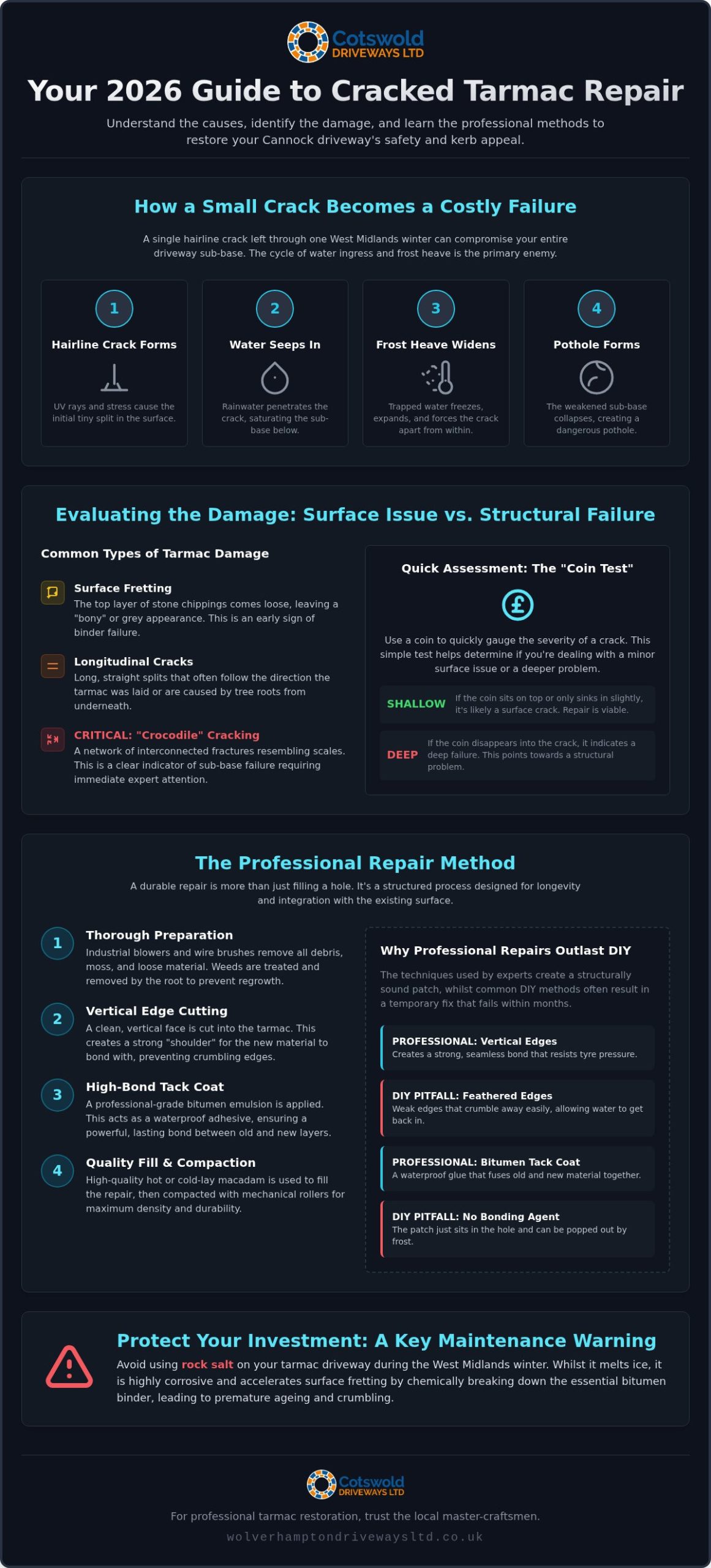
Water is the primary enemy of any driveway in the West Midlands. It seeps into the tiniest fractures. When the temperature drops, that moisture freezes and expands, physically pushing the tarmac apart. This cycle, known as frost heave, weakens the bond between the stones. Over time, the internal pressure creates larger gaps, eventually making professional cracked tarmac repair Cannock services a necessity to prevent the driveway from crumbling away entirely.
External pressures also take a toll. Heavy vehicles often cause the most stress at the edges of a driveway, where the lateral support is at its weakest. If you regularly park a heavy van or SUV near the verge, you’ll likely see the tarmac “spreading” or splitting. This is often worsened by oxidation. UV rays from the sun evaporate the essential oils in the bitumen, leaving the surface brittle and prone to snapping rather than flexing under weight.
Common types of tarmac damage in Cannock
You might notice surface fretting first. This occurs when the top layer of stone chippings starts to come loose, leaving the driveway looking “bony” or grey. It’s a sign that the binder is failing. You may also see longitudinal cracks. These long, straight splits often follow the direction the tarmac was originally laid or are triggered by roots from nearby trees pushing up from beneath. If these issues aren’t sealed, they inevitably lead to potholes. A pothole is the final stage of neglect, where the sub-base has been saturated and washed away.
When a crack becomes a structural problem
It’s vital to distinguish between a surface blemish and a deep failure. If you spot a network of interconnected fractures that look like scales, you’re looking at “alligator” or “crocodile” cracking. This is a clear indicator of sub-base failure. At this stage, the foundation can no longer support the surface. Ignoring a tiny 5mm crack is a gamble that rarely pays off. In our experience, it doesn’t take long for a small gap to expand into a 50cm pothole. Investing in cracked tarmac repair Cannock early is the only way to save yourself the significant cost of a full resurface.
Step-by-Step: How professional cracked tarmac repair is performed
Every professional cracked tarmac repair Cannock project begins with thorough preparation. We don’t just sweep the surface; we use industrial blowers and wire brushes to remove every trace of moss, dirt, and loose aggregate. If weeds have taken root, they must be treated and removed from the root to prevent them from pushing back through the new material in the future.
Next comes the edge cutting. Unlike DIY patches that often feather out at the edges, we cut a clean, vertical face into the existing tarmac. This creates a “shoulder” for the new material to butt against, providing structural support and preventing the edges from crumbling under tyre pressure. It ensures the patch is integrated into the driveway rather than just sitting on top of it.
Once the area is clean and cut, we apply a tack coat. According to the FHWA Pothole Repair Manual of Practice, using the correct bonding agent is the difference between a temporary fix and a semi-permanent restoration. We use a high-bond bitumen emulsion that acts as a waterproof adhesive, ensuring the new macadam sticks firmly to the old driveway.
The importance of the tack coat
The tack coat is the essential moisture barrier for any repair. While DIY hardware store pots often contain thin, water-based sealants, we use professional-grade bitumen emulsion. It’s the “glue” that prevents water from seeping between the old and new layers. Without this seal, the next frost will simply pop the repair right out of the ground.
For the fill, we use high-quality macadam. Depending on the size of the repair, this might be hot-lay material for maximum durability or a high-performance cold-lay for smaller patches. We then use mechanical rollers to compact the material. Compaction is vital because it removes air pockets and ensures the repair is as dense and strong as the original surface.
Achieving a level finish
A common mistake in amateur repairs is leaving a “hump” or a “hollow”. A hump is a trip hazard, while a hollow creates a puddle that leads to further water damage. We use straight edges to ensure the repair is perfectly flush with the surrounding surface. Once compacted, the tarmac needs time to cure. We usually advise keeping vehicles off the area for at least 24 hours to let the binder set firmly. If you aren’t sure whether your driveway is a candidate for this process, you can always ask for a professional assessment of your driveway cleaning & repairs options.
Evaluating the damage: Surface cracks vs structural failure
Before you commit to cracked tarmac repair Cannock, you need to know if you’re fixing the problem or just hiding it. We take a straight-talking approach to every driveway we inspect. Sometimes, a simple patch is all that’s required to restore safety and kerb appeal. Other times, the damage is a symptom of a deeper foundation failure. Understanding the difference now can save you thousands of pounds in the long run.
You can perform a basic assessment yourself using the “Coin Test”. Take a 20p coin and try to place it inside the crack. If the gap is narrower than the coin, it’s likely a surface-level fracture. If the coin disappears or the crack is wider than 15mm, the damage has probably reached the sub-base. At this depth, water has already started to wash away the foundation. This is when you must decide between targeted driveway cleaning and repairs or a more extensive solution.
The financial reality is simple. Patching is cost-effective for isolated issues. However, if you’re chasing new cracks every few months, you’re throwing good money after bad. When the cost of multiple professional repairs begins to approach the price of a fresh overlay, we’ll always advise you to consider resurfacing. It provides a uniform, durable finish that resets the clock on your driveway’s lifespan.
When a repair is the right choice
A professional cracked tarmac repair Cannock is the perfect solution for isolated damage. If your driveway is generally firm but has a few hairline fractures or a minor depression where a heavy vehicle once sat, a patch is ideal. These are “non-progressive” issues that don’t indicate a total collapse. We use high-quality restorers to blend the new patch into your original surface, ensuring the repair is as discreet as possible while maintaining a smooth, safe finish.
Signs you need a full tarmac resurface
If cracking covers more than 30% of your driveway, a repair is no longer a viable long-term fix. You should also look for “rutting” or significant sinking in the areas where you park your car. This suggests the sub-base can no longer support the weight. In these cases, we recommend exploring our options for expert tarmac driveways in Wolverhampton and the surrounding areas. A full resurface ensures your home remains safe and looks its best for years to come.
Maintaining your repaired driveway in the Cannock climate
The West Midlands weather can be particularly unforgiving on tarmac surfaces. In Cannock, we experience a significant number of frost-thaw cycles every winter. This process is the silent killer of driveways. Water trapped in the pores of the tarmac freezes and expands, which puts immense pressure on the internal structure. If you’ve recently invested in cracked tarmac repair Cannock, protecting that repair from the local elements is the only way to ensure it lasts for the next decade.
One of the biggest mistakes homeowners make is using rock salt to clear ice. While it’s effective for safety, the chemicals in traditional grit can be devastating for tarmac. Salt accelerates surface fretting, which is when the bitumen binder breaks down and the stone chippings begin to flake away. We always recommend using plain sand or specialist non-corrosive de-icers to manage winter weather without compromising the integrity of your driveway.
Regular cleaning is just as vital. Moss and lichen aren’t just unsightly; they act like tiny crowbars. Their roots dig into the surface and physically pry open small fractures. By keeping the surface clear of organic growth, you prevent these biological “wedges” from turning a hairline crack into a structural problem. A simple sweep and an occasional wash with a gentle detergent will go a long way.
Seasonal care for Cannock homeowners
- Autumn: Clear wet leaves regularly. Decaying organic matter releases acids that can soften the bitumen binder, making the surface more vulnerable to heavy vehicle weight.
- Winter: Avoid heavy-duty snow shovels with metal edges. These can catch on the edges of a repair and rip the material out. Use plastic shovels and stick to sand for traction.
- Spring: Conduct a thorough inspection. After the final freeze has passed, check the edges of your cracked tarmac repair Cannock to ensure no new water ingress has occurred.
Long-term protection strategies
If your driveway is starting to look grey and “bony,” it’s time for a professional restorer. Avoid cheap “black paint” products from high-street shops. These are often just cosmetic and don’t contain the bitumen required to actually strengthen the surface. A professional-grade sealer replaces the oils lost to the sun and weather. UV protection prevents the bitumen from losing its natural oils, which keeps the tarmac flexible and stops it from becoming brittle and prone to snapping. Sealing also creates a barrier against oil leaks and petrol spills, which can dissolve tarmac on contact. For peace of mind and lasting results, you can book a professional driveway maintenance quote to protect your investment.
Professional tarmac restoration services in Cannock
Choosing a contractor for cracked tarmac repair Cannock shouldn’t be a gamble. At Wolverhampton Driveways Ltd, we’ve built our reputation on being the reliable local master-craftsman. We understand Cannock’s geography, from the varying soil types near the Chase to the specific drainage patterns in the town centre. This local expertise allows us to assess exactly why your driveway is failing and provide a solution that actually lasts. We don’t believe in quick fixes that wash away after the first frost. Instead, we offer the straight-talking advice you need to make an informed decision about your home. If a repair is viable, we’ll tell you. If a full resurface is safer, we’ll explain why.
Our restoration process goes far beyond structural patching. We combine expert repairs with professional industrial cleaning and high-grade bitumen restoration. This dual approach doesn’t just fix the cracks; it returns the entire surface to a “like-new” appearance that boosts your home’s kerb appeal. We are fully insured and licensed, giving you total peace of mind that the work is being handled by seasoned professionals who take pride in their craft. If you find that your tarmac is beyond saving or you simply fancy a change of style, you might want to see our block paving installers in Wolverhampton for a durable alternative.
Our repair and cleaning process
We believe in a methodical approach to every project. First, we clear the area of all debris and organic growth. Then, we perform the structural repairs we’ve discussed in earlier sections, ensuring every patch is level and compacted. Once the repairs are set, we can apply professional-grade sealants that penetrate the surface to replenish lost oils. This process creates a uniform finish that masks the repair and protects the entire driveway from future water ingress. It’s an efficient way to get a premium result without the disruption of a full construction project.
Book your Cannock site survey today
We know that cost is a major concern for any homeowner. That’s why we provide transparent pricing with no hidden extras or unexpected surprises once the work begins. When we visit your property for a site survey, we’ll give you a clear, honest breakdown of the work required. There’s no hard sell here. We value our West Midlands reputation and treat every project as if it were our own home. Our team is punctual, hardworking, and easy to communicate with throughout the entire process. We handle everything from the initial cleaning to the final mechanical compaction, ensuring a stress-free experience for you.
Booking a survey is the first step toward a safer, smoother driveway. Our local team is ready to help you extend the life of your surface and prevent further structural damage. We offer free, no-obligation quotes that are tailored to your specific needs. Don’t let a small crack turn into a costly pothole this winter. Get in touch with us today to arrange your cracked tarmac repair Cannock site visit and see how our master-craftsmen can transform your driveway.
Secure Your Cannock Driveway for the Years Ahead
Dealing with driveway damage doesn’t have to be a source of constant stress for your household. By understanding the difference between simple surface-level fractures and serious structural failure, you can make the most cost-effective choice for your property. Whether you’ve performed the “Coin Test” yourself or noticed the first signs of surface fretting, early intervention is always the best way to avoid the massive expense of a full replacement. A professional cracked tarmac repair Cannock service ensures that moisture is permanently locked out and the integrity of your sub-base is preserved against the harsh Staffordshire winters.
Our team at Wolverhampton Driveways Ltd brings years of hands-on expertise in tackling specific West Midlands climate challenges. We take pride in offering no-nonsense, professional advice and the peace of mind that comes with being fully insured and licensed local contractors. We don’t believe in temporary patches that fail after one frost; we believe in high-quality restoration that stands the test of time. Take the first step toward a smooth, safe, and attractive driveway today. Request your free cracked tarmac repair quote in Cannock today and let us help you protect your home’s investment with a finish you can be proud of.
Frequently Asked Questions
How much does cracked tarmac repair cost in Cannock?
Professional repair costs vary based on the depth of the fractures and the total area requiring restoration. While small DIY tubes might seem cheaper upfront, a professional cracked tarmac repair Cannock service provides a permanent seal that prevents the need for a full driveway replacement later. We provide free, no-obligation site surveys to give you an accurate, transparent price based on your specific driveway conditions and the materials required.
Can I repair tarmac cracks myself with a DIY kit?
You can use retail kits for minor hairline fractures, but they often lack the structural bonding strength of professional bitumen emulsion. These off-the-shelf products usually sit on the surface rather than penetrating the structure, which means they often pop out after the first winter freeze. For a repair that actually lasts, industrial-grade materials and mechanical compaction are required to ensure a waterproof and durable bond that survives the elements.
How long does a tarmac repair last before it needs doing again?
A professionally executed repair can last between 5 and 10 years depending on the condition of your original sub-base. If the foundation is stable and you maintain the area by clearing moss and organic debris, the patch should remain intact for a significant portion of the driveway’s remaining lifespan. Regular professional sealing every few years will further extend the life of both the repair and the original tarmac surface.
Will the repaired patch match the colour of my old driveway?
A new tarmac patch will initially be much darker and blacker than your existing, weathered driveway. This is a natural result of the fresh bitumen oils which haven’t yet been oxidised by the sun. Over several months, the patch will fade to a lighter grey, blending more naturally with the original surface. For an immediate uniform look, we often recommend applying a professional tarmac restorer over the entire driveway.
What is the best time of year to repair a tarmac driveway in the West Midlands?
The ideal time for cracked tarmac repair Cannock projects is between April and September when the weather is consistently warmer and drier. Tarmac needs heat to remain workable during installation and dry conditions to ensure the tack coat bonds correctly to the existing surface. While we can perform repairs in colder months using specialist materials, the summer months provide the most reliable conditions for a perfect finish.
Can you repair tarmac that has been damaged by tree roots?
We can repair root damage, but the root itself must be addressed first to prevent the tarmac from cracking again. Simply patching over a growing root is a temporary fix; the pressure will inevitably split the new material. Our process involves carefully cutting back the affected area, treating or removing the offending root, and then reinstating the sub-base and surface for a permanent, level solution that won’t shift.
Is it better to repair or resurface a driveway with multiple cracks?
If cracks cover more than 30% of your driveway or if you have widespread “alligator” cracking, resurfacing is usually the better long-term investment. Patching multiple isolated cracks is fine for a few years, but widespread failure suggests the sub-base is no longer supporting the weight of your vehicles. We take a straight-talking approach and will always tell you honestly if a repair is no longer a viable or safe option.
How soon can I drive on my tarmac after it has been repaired?
You can usually walk on a repaired patch within a few hours, but we recommend waiting at least 24 hours before driving a vehicle over it. In particularly warm weather, the bitumen stays soft for longer and can be scuffed by power steering if you turn your wheels while stationary. Giving the material a full day to cure ensures the compaction remains tight and the surface stays perfectly flush and level.