
Is your driveway a structural asset, or is it slowly becoming a slip hazard covered in weeds and algae? Many homeowners across the West Midlands find that a simple jet wash isn’t enough to stop the inevitable fade of tarmac or the persistent green growth between paving blocks. Without the right protection, our damp winters quickly turn a smart entrance into a maintenance headache. Professional driveway sealing and cleaning is about more than just a quick tidy; it’s a structural investment that shields your property against the harsh freeze-thaw cycles that lead to cracks and frost heave.
We understand how frustrating it is to watch your kerb appeal disappear as the colours dull and the joints fail. You want a home that looks its best without spending every weekend scrubbing the ground. This guide will show you how to professionally restore your driveway to a “brand new” finish and significantly reduce your maintenance workload for the next three to five years. We’ll walk you through the essential repair techniques, the latest 2026 sealant technologies, and how to choose the right protection for your specific surface type to ensure your investment stays protected.
Key Takeaways
- Learn why jet washing alone can weaken your driveway’s structure and how a two-stage restoration process ensures lasting results.
- Discover which sealants are best suited for the West Midlands climate to prevent slippery algae and fading colours on tarmac or resin surfaces.
- Investing in professional driveway sealing and cleaning prevents persistent weed growth in block paving joints and protects against structural frost heave.
- Understand the critical importance of a dry weather window and what to expect during a professional restoration project.
- Gain practical advice on maintaining your driveway’s kerb appeal to extend the life of your sealant for up to five years.
Why Your Driveway Needs More Than Just a Jet Wash
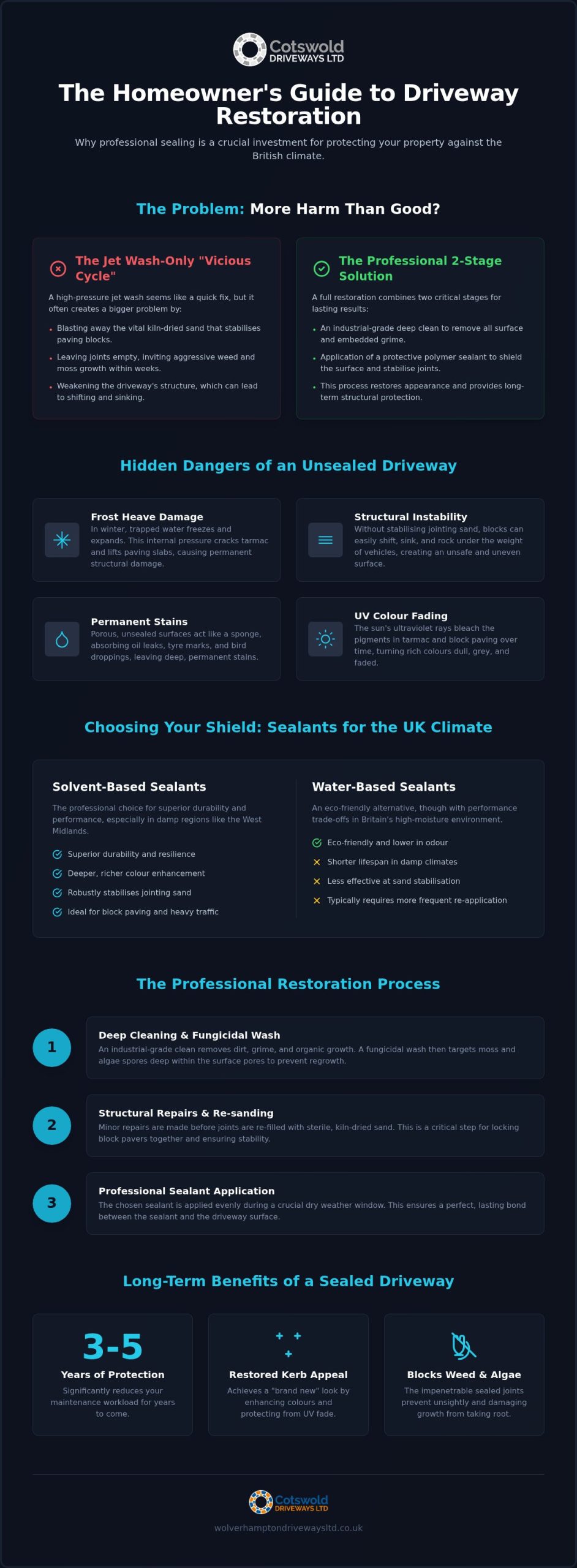
Many homeowners believe that a quick blast with a pressure washer is all it takes to keep an entrance looking sharp. It’s a common mistake. In reality, professional driveway sealing and cleaning is a two-stage restoration process that combines a deep, industrial-grade clean with a vital protective layer. If you only focus on the cleaning, you’re often doing more harm than good. A high-pressure jet wash removes surface grime, but it also blasts away the essential kiln-dried sand that keeps block paving stable. This creates a “vicious cycle” where the joints are left empty, inviting even more aggressive weed growth and moss to take root within weeks.
We define driveway sealing as the application of a polymer-based barrier to prevent substrate erosion. This protective shield is the only way to stop water from soaking into the porous surface of your stone or tarmac. Water is the primary cause of driveway failure; once it gets underneath the surface, it begins to rot the foundations. To understand the technical foundations of this process, The Science of Pavement Sealing provides a detailed look at how these coatings act as a sacrificial barrier against the elements.
The Hidden Risks of Unsealed Surfaces
When you leave your driveway unsealed, you’re leaving it vulnerable to structural instability. Without jointing sand, blocks can shift and sink under the weight of a vehicle. In the West Midlands, we frequently see the damage caused by “frost heave.” This occurs when trapped water expands as it freezes, creating internal pressure that cracks tarmac and lifts paving slabs. Furthermore, unsealed surfaces act like a sponge for stains. Oil leaks, bird droppings, and tyre tannins soak deep into the material, leaving permanent marks that no amount of scrubbing can fix.
Aesthetics vs. Longevity: Finding the Balance
A professional restoration doesn’t just protect the structure; it transforms the appearance of your home. Quality sealants act as a UV filter, stopping the sun from bleaching the deep blacks out of your tarmac or the warm reds from your block paving. By sealing the surface, you’re also making it much harder for algae and lichen to bond. This significantly reduces the frequency of driveway sealing and cleaning cycles in the future. You’ll spend less time fighting weeds and more time enjoying a driveway that looks as fresh as the day it was first laid.
The Science of Sealing: Protecting Against the West Midlands Climate
The West Midlands weather is notoriously tough on hard landscaping. In areas like Wolverhampton and Telford, we face high humidity and frequent rainfall, which keeps surfaces damp for long periods. This moisture is the primary enemy of your driveway’s structural integrity. Choosing the right sealant isn’t just about the finish; it’s about understanding how the chemical bond interacts with the material whilst allowing it to “breathe.” If a sealant traps moisture beneath the surface, it can cause the material to cloud or spall during a hard frost. A successful driveway sealing and cleaning project relies on products that create a vapour-permeable barrier, letting moisture escape from the sub-base while preventing rain from entering from above.
Solvent vs. Water-Based Sealants
When we look at the options for residential properties in Dudley or Cannock, the choice usually falls between solvent-based and water-based formulas. Solvent-based sealants are often favoured for block paving because they offer superior durability and a deeper colour enhancement. They penetrate the surface more effectively, creating a robust bond that stabilises the jointing sand. Water-based options are an eco-friendly alternative with lower odour, though they typically have a shorter lifespan in the high-moisture environment of the UK. When Comparing Sealing Methods, it’s clear that the specific needs of your surface material should dictate the product choice. Solvent sealants form a harder, more resilient film that stands up better to heavy vehicle traffic over time.
Combating Moss and Algae in Damp Conditions
Our local climate is the perfect breeding ground for moss and algae. This is why many unsealed drives in Walsall and Stafford turn green within months of being cleaned. A professional driveway sealing and cleaning service always includes a pre-treatment with a fungicidal wash. This doesn’t just kill surface growth; it targets the spores deep within the pores of the stone or tarmac. Once the surface is clean and dry, we apply a sealant that makes the material “hydrophobic.” This means water beads on the surface rather than soaking in, depriving organic growth of the moisture it needs to survive.
Managing these damp conditions requires a master-craftsman’s eye for detail. If you’re concerned about the state of your driveway after a wet winter, getting a quote from Wolverhampton Driveways Ltd can help you determine the best protective path for your home. By creating a chemical barrier that rejects water whilst remaining vapour-permeable, we ensure your driveway stays structurally sound and aesthetically pleasing for years to come. This proactive approach saves you money on future repairs and keeps your home’s entrance looking its absolute best.
Comparing Sealing Methods for Block Paving, Resin, and Tarmac
A successful driveway sealing and cleaning project requires a tailored approach for every surface. You can’t treat porous tarmac the same way you treat interlocking block paving. Each material has its own vulnerabilities, from joint erosion to UV degradation. Choosing the wrong sealant doesn’t just look poor; it can actually trap moisture and accelerate the breakdown of your driveway’s foundations. We focus on matching the right chemical barrier to the specific material to ensure long-term durability.
Block Paving: Stabilising the Sand
For block paving, the priority is joint stabilisation. After a deep clean, it’s essential to replace the kiln-dried sand that was lost during the washing process. This sand provides the vital friction that keeps the blocks from shifting or “rocking” under the weight of your car. We use “solid-joint” sealants that bond the sand particles together into a hard, weather-resistant mass. This creates a firm joint that makes it almost impossible for weed seeds to take root or for ants to build nests. If your driveway has significant structural issues like sinking blocks or wide gaps, you might need a more comprehensive repair from our block paving installers wolverhampton before the sealing process begins.
Tarmac and Resin: Refreshing the Surface
Tarmac and resin require a different set of tools to stay in top condition. Tarmac is rich in bitumen oils when first laid, but these oils evaporate over time due to sun exposure, leaving the surface brittle and grey. We avoid standard acrylic sealers on tarmac as they often look like a cheap coat of paint that eventually flakes off. Instead, we use bitumen-rich restorers that soak into the material to replace lost oils. This brings back the deep black finish and restores the flexibility needed to prevent cracks. This is particularly important in towns like Walsall where heavy rainfall can quickly erode weakened tarmac.
Resin-bound surfaces are prized for being SuDS compliant, meaning they allow water to drain through the stones. Using a standard surface sealer can block these tiny pores, leading to puddles and flood risks. Instead, a specialist resin re-coat is used to refresh the stone bond and protect against UV fading without sacrificing drainage. For more on how these systems work, see our resin bound driveways west midlands guide. Finally, for natural stone patios, we prefer “impregnating” sealers. These sink into the stone to protect it from within, ensuring the material remains breathable whilst resisting stubborn stains from oil or algae.
Professional Driveway Restoration: The Step-by-Step Process
Watching a professional crew at work is very different from seeing a neighbour struggle with a domestic jet wash. A high-quality driveway sealing and cleaning project is a methodical operation that requires patience, specialised equipment, and a clear eye on the weather forecast. We don’t just turn up and start spraying; we wait for a guaranteed dry weather window. Applying sealant to a damp surface is the fastest way to ruin the finish, as trapped moisture creates a cloudy, white bloom that’s difficult to remove. Our process is designed to be transparent and efficient, ensuring your property is treated with the care it deserves.
Phase 1: Deep Cleaning and Structural Repair
The first stage is all about preparation. We start by pre-treating stubborn oil stains and heavy lichen infestations with professional-grade biocides. These chemicals break down the organic “roots” that a standard water blast misses. For the main clean, we use industrial flat surface cleaners rather than standard lances. These circular cleaners provide a consistent, even pressure that avoids the unsightly “zebra stripes” often left by DIY attempts. Most importantly, we follow the master-craftsman approach; we address structural issues like cracked blocks or failing mortar joints before the final wash. This ensures the foundation is sound before we even think about the aesthetics.
Phase 2: Preparation and Application
Once the driveway is surgically clean, we enter the drying phase. This often requires 24 to 48 hours of dry weather to ensure the pores of the material are completely free of moisture. We then apply the sealant using a “Two-Coat” standard. One layer rarely provides enough protection; the first coat acts as a primer that sinks deep into the substrate, whilst the second coat creates the durable, wear-resistant surface. Depending on the material, we may use a professional spray system for a perfectly even finish or a weighted roller to ensure the sealant is worked deep into the joints of block paving. It’s this attention to detail that separates a temporary tidy-up from a long-term restoration.
After the final coat is applied, patience is still required. Foot traffic is usually safe after three to four hours, but we advise keeping vehicles off the surface for at least 24 to 48 hours. This allows the polymer chains to fully cure and harden. If you’re ready to invest in professional driveway sealing and cleaning, you can request a free quote from our local team today. We’ll assess your driveway’s condition and plan a restoration that works with the local West Midlands forecast to ensure a flawless result.
Maintaining Your Restored Driveway: Long-Term Care and Local Expertise
After investing in professional driveway sealing and cleaning, you want that “just-finished” look to last as long as possible. Whilst the sealant does the heavy lifting by blocking water and UV rays, a little routine maintenance goes a long way. Most professional-grade sealants will protect your surface for three to five years, but the exact lifespan depends on the volume of traffic and exposure to the elements. By following a few simple steps, you can ensure your driveway remains a structural asset rather than a maintenance chore. Knowing when to call in the experts for a top-up is key to avoiding expensive long-term repairs.
Simple Aftercare Tips for Homeowners
Regular sweeping is your first line of defence. Leaves, soil, and grass clippings can break down into organic matter, providing a base for moss to grow even on a sealed surface. We recommend a quick sweep once a week to keep the surface clear. For seasonal cleaning, avoid using high-pressure jet washes. A “gentle wash” with a garden hose and a soft-bristled brush is usually all it takes to remove surface dust without risking the integrity of the sealant. If you notice oil or chemical spills, act quickly. Even though the sealant provides a protective barrier, wiping up spills immediately prevents the chemicals from sitting on the surface and potentially dulling the finish over time.
It’s helpful to know how to spot the signs that your driveway needs professional attention again. The easiest test is the “water bead” check. On a rainy day, water should sit in beads on the surface of a well-sealed driveway. If the water starts to soak in and the material looks dark and damp, the sealant is likely wearing thin. Other indicators include the return of persistent weed growth in block paving joints or a noticeable fading of the colour on tarmac surfaces. Spotting these signs early allows for a maintenance top-up before structural damage like frost heave can take hold.
Why Choose a Local Wolverhampton Specialist?
Choosing a local contractor means working with someone who understands the specific challenges of the West Midlands landscape. We know the local soil conditions and the drainage requirements necessary to keep your property compliant with SuDS regulations. As a local business, we value our community reputation. We aren’t a faceless national franchise; we’re your neighbours, and we take pride in every job we complete across Wolverhampton, Telford, and Dudley. This local accountability ensures you receive a master-craftsman’s finish every time, backed by a team that’s easy to reach and stays on-site until the job is done right.
If your driveway is starting to show its age or you want to protect a new installation against the damp West Midlands winters, our team is ready to help. You can request your free driveway cleaning and sealing quote today. We’ll provide a transparent assessment of your driveway’s condition and help you plan a restoration that keeps your home’s kerb appeal at its peak for years to come.
Protect Your Investment and Restore Your Home’s Entrance
Your driveway is the first thing people see when they visit your home. It’s also a significant financial investment that faces the brunt of the West Midlands weather every single day. Professional driveway sealing and cleaning provides a vital structural safeguard that prevents water ingress, stops frost heave, and stabilises the foundations of your paving. It’s the most effective way to ensure your entrance remains safe, weed-free, and visually striking for years to come.
By choosing a master-craftsman approach, you ensure that every crack is repaired and every joint is properly stabilised before the protective barrier is applied. Our fully insured local Wolverhampton team uses specialist equipment for all driveway types to deliver a finish that looks brand new. Expert repairs are always included in our restoration packages to give you total peace of mind. This methodical attention to detail ensures your driveway isn’t just clean, but structurally sound.
Get a Free Professional Restoration Quote today and let us help you transform your driveway into a durable, low-maintenance asset. We look forward to helping you protect your home for the next five years and beyond.
Frequently Asked Questions
How long does driveway sealing actually last in the West Midlands?
Driveway sealing usually lasts between three and five years in the West Midlands. Our local climate is particularly damp, which can put extra pressure on protective coatings. Surfaces with heavy vehicle traffic might need attention sooner than a quiet patio. We always recommend checking for water beading every winter. If water starts to soak into the material rather than sitting on top, it’s time to consider a maintenance top-up to keep the structure protected.
Can I seal my driveway myself with DIY products?
You can buy DIY sealants from local hardware stores, but the results often fall short of a professional finish. Domestic products are usually thinner and lack the high polymer content found in trade-grade sealers. Homeowners often struggle with uneven application or trapping moisture, which leads to a cloudy bloom on the surface. Without industrial-grade cleaning equipment, you might also seal in dirt and algae, making it much harder to clean properly in the future.
Will sealing my driveway make it slippery when it rains?
A professionally applied sealant shouldn’t make your driveway a slip hazard. We use specific additives in the final coat to maintain traction, especially on smooth surfaces like pattern imprinted concrete or certain natural stones. In fact, driveway sealing and cleaning often makes a surface safer by preventing the build-up of slippery green algae. By creating a hydrophobic layer, we ensure water drains away quickly rather than sitting in the pores and feeding organic growth.
What is the best time of year to clean and seal a driveway in the UK?
The best window for restoration is between April and September. We need a consistent dry weather window with temperatures ideally above 10 degrees Celsius for the sealant to cure correctly. Attempting to seal a driveway during a damp West Midlands winter is risky, as even a small amount of moisture can ruin the chemical bond. We monitor the local forecast closely to ensure your project is completed during the most stable weather conditions available.
How much does professional driveway sealing and cleaning cost in 2026?
The cost of driveway sealing and cleaning depends on several factors, including the total square metre area and the current condition of the surface. A driveway with heavy oil stains or significant structural damage will require more preparation than a well-maintained one. We provide free, personalised quotes for homeowners across Wolverhampton and Telford. This allows us to assess your specific material and provide an accurate price that includes all necessary repairs and professional-grade sealants.
Does sealing a driveway really stop weeds from growing?
Sealing is highly effective at reducing weed growth, particularly on block paving. We use specialist joint stabilisers that bond the kiln-dried sand into a hard, solid mass. This makes it extremely difficult for wind-blown seeds to find a place to take root. Whilst it doesn’t offer a 100% permanent guarantee against every single weed, it significantly reduces maintenance. You’ll no longer find yourself spending every weekend digging moss and grass out of your driveway joints.
Can you seal a driveway that is already cracked or damaged?
We can certainly restore damaged driveways, but the structural repairs must be completed before any sealant is applied. Our restoration packages include fixing cracked blocks, addressing minor tarmac holes, and re-pointing failing joints. Sealing a damaged surface without repairing it first is a mistake, as the sealant will simply trap moisture in the cracks and accelerate further decay. We take a master-craftsman approach to ensure your driveway is structurally sound before we apply the final protective layer.
How long do I need to wait before parking my car on a newly sealed drive?
You can usually walk on the surface after three to four hours, but we advise waiting at least 24 to 48 hours before parking a car on it. The polymer chains in the sealant need this time to fully cure and reach their maximum hardness. If you drive on it too soon, you risk leaving tyre marks or compromising the protective barrier. We’ll always give you a specific timeline based on the product used and the current weather conditions.