
What if you could transform your home’s entrance without ever filling out a single planning application form? For many homeowners in the West Midlands, the fear of council fines for non-compliant surfaces is a real concern, especially with urban flooding now costing England and Wales an estimated £270 million every year. Finding the right permeable driveway installers is no longer just about aesthetics; it’s about protecting your property and staying on the right side of the law. You want a driveway that looks stunning but also manages heavy rainfall naturally, rather than letting water pool against your foundations.
We understand that SuDS (Sustainable Drainage Systems) regulations can feel like a maze of technical jargon. It’s frustrating to deal with a driveway that turns into a pond every time it rains, yet the thought of navigating Wolverhampton City Council’s planning department is enough to put anyone off. This guide promises to clear the fog, showing you how to achieve a beautiful, durable finish that drains naturally and complies with 2026 legislation. We’ll explore the best materials for our local climate and explain how to find a reliable contractor who handles the entire process for you.
Key Takeaways
- Learn how to bypass the planning permission process entirely by choosing a SuDS-compliant surface for your home.
- Understand why the foundation is just as important as the top layer, including the critical role of an MOT Type 3 sub-base.
- Compare the maintenance and appearance of resin, block paving, and tarmac to find the best fit for your property.
- Discover how to vet professional permeable driveway installers by checking for essential credentials like public liability insurance and waste carrier licences.
- See how a professional installation protects your home from flooding whilst adding long-term value to your West Midlands property.
Why Choose Permeable Driveway Installers in Wolverhampton?
Living in the West Midlands means dealing with unpredictable weather. We’ve all seen how quickly a heavy downpour can turn a standard driveway into a shallow swimming pool. This happens because traditional surfaces like standard concrete or old-style tarmac are impermeable; they don’t let water through. Instead, the rain sits on top or rushes into our local sewer systems, which are already struggling under the pressure of modern urban life. It’s a growing problem that requires a smarter approach to home design.
Choosing expert permeable driveway installers ensures your home is part of the solution rather than the problem. These systems are designed around Sustainable Drainage Systems (SuDS) principles. Essentially, they mimic how natural ground works. Rainwater filters through the surface and into the soil below. This process reduces the risk of local flooding and helps maintain the natural water table. For a comprehensive overview of permeable paving and how it benefits the environment, it’s clear that moving away from “sealed” surfaces is the most responsible choice for 2026 homeowners. However, it takes professional skill to ensure the porosity remains effective over the long term.
The Legal Advantage: Bypassing Planning Permission
One of the biggest headaches for any home improvement project is dealing with the council. Since 2008, UK law has been very clear: if you plan to cover more than five square metres of your front garden with a non-porous material, you must apply for planning permission. This process is slow, costs money, and there’s no guarantee of approval. However, if you use a permeable solution, you don’t need to ask for permission at all. It’s a “permitted development” right. By working with local permeable driveway installers who understand these rules, you skip the paperwork and the application fees entirely. Councils across the West Midlands, from Wolverhampton to Dudley, actively encourage SuDS-compliant driveways because they take the strain off public infrastructure.
While home driveways often fall under permitted development, larger projects require more formal documentation. Specialists like ML Traffic Engineers UK provide the detailed transport assessments required to ensure planning success for complex sites across the country.
Protecting Your Property from Flash Flooding
Flash flooding is becoming a more frequent threat in our region. When water “ponds” on a traditional driveway, it doesn’t just look messy; it can cause structural issues. Standing water near your home’s exterior walls can seep into the foundations or cause damp problems over time; in such cases, consulting specialists like CavClear for cavity wall maintenance can be a vital step in protecting your home’s integrity. A permeable driveway eliminates the risk of surface water buildup. Because the rain drains away instantly, you won’t have to worry about stepping into deep puddles or seeing water creep towards your front door. It provides genuine peace of mind, knowing your property is engineered to handle whatever the British weather throws at it. A professional installation ensures the ground remains stable and the drainage stays clear for years to come.
The Engineering Behind a Truly Permeable Driveway
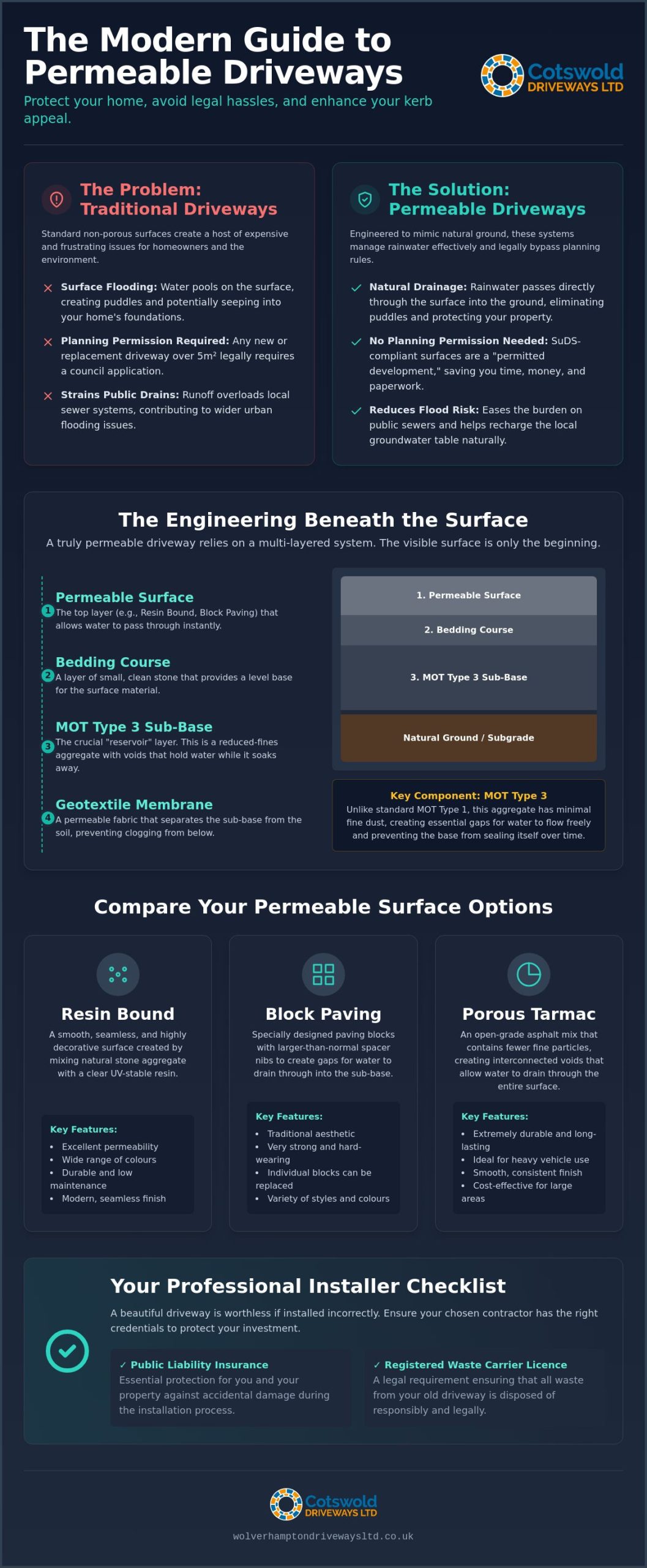
When you look at a new driveway, it’s easy to focus solely on the colour and finish. However, the surface is only half the story. A truly effective system depends on what lies beneath the ground. Without the correct engineering, even the most expensive porous material will eventually fail, leading to puddles and structural instability. Professional permeable driveway installers focus heavily on the sub-layers to ensure water has somewhere to go once it leaves the surface.
We often talk about the “reservoir effect.” This is where the layers under your driveway are designed to hold water temporarily whilst it slowly soaks back into the earth. To achieve this, we use a specific layering system that balances strength with drainage. When these systems are installed correctly, the environmental benefits of permeable pavements become clear. They don’t just stop flooding; they actually help filter out road pollutants before the water reaches the natural water table.
The Sub-Base: The Foundation of Drainage
The most critical component of your driveway isn’t the stone you see, but the aggregate you don’t. Standard driveways often use “MOT Type 1,” which contains a lot of fine dust. This dust eventually settles and creates an almost waterproof seal. For a permeable installation, we use MOT Type 3 instead. This is a “reduced-fines” aggregate, meaning the smaller particles have been removed to leave open voids. These gaps allow water to flow freely through the stone. We also calculate the depth of this base based on your local soil. In parts of Wolverhampton where clay is prominent, a deeper sub-base is often necessary to provide extra storage capacity during heavy storms.
Surface Materials and Their Porosity
There are several ways to achieve a SuDS-compliant finish, each with its own engineering requirements. You might choose resin-bound systems, which are naturally porous because the clear resin only coats the stones, leaving tiny holes for water. Alternatively, permeable block paving uses wider “nibs” or spacers between the bricks. These gaps are filled with a specific grit rather than sand, allowing water to vanish instantly. For larger areas, porous tarmac is an open-graded asphalt solution that provides a traditional look with modern drainage. If you’re unsure which material is best for your home’s layout, our team at Wolverhampton Driveways Ltd can provide a professional assessment of your site’s specific drainage needs.
To keep these layers working perfectly, we install geo-textile membranes between the soil and the sub-base. This fabric acts as a filter, preventing the soil from mixing with your clean stone whilst allowing water to pass through. It’s this attention to detail that separates experienced permeable driveway installers from general builders. Every layer must be organised to support the weight of your vehicles whilst remaining completely open to the rain.
Comparing Permeable Materials: Resin vs. Paving vs. Tarmac
Whilst the engineering of the sub-base provides the drainage, the surface material defines the character of your home. Your driveway is the first thing guests see, so balancing practical performance with kerb appeal is vital. In Wolverhampton, we see a wide variety of property styles, from Victorian terraces to sprawling modern estates. Each requires a specific approach. Professional permeable driveway installers will help you weigh up the visual impact against the long-term maintenance of each option.
Choosing the right material isn’t just about the initial look. You need to consider how it will perform over a 10-year period. Factors like weight-bearing capacity for multi-car households and how easy it is to keep the surface clear of moss or debris should influence your decision. Every material we install is fully SuDS-compliant, ensuring you never have to worry about planning permission or surface water pooling. For a detailed side-by-side analysis of the two most popular options, our guide on resin bound vs block paving covers every category that matters, from long-term maintenance to drainage compliance under the 2026 National SuDS Standards.
Resin Bound: The Premium Permeable Choice
Resin bound is currently the most popular choice for homeowners seeking a contemporary, seamless finish. It’s created by coating small decorative stones in a clear resin, which is then hand-trowelled onto the base. This creates a smooth, highly porous surface that allows water to vanish instantly. One of the biggest draws is the sheer variety of modern resin driveway colours available, allowing you to complement your home’s brickwork perfectly. Because it’s a flat, stone-free surface, it’s amongst the best options for wheelchair and pram accessibility. We use only UV-stable resins, which means your driveway won’t fade or turn yellow in the sun. To protect your investment and keep the pores functioning correctly over the years, following a structured resin driveway maintenance checklist will ensure the surface stays both beautiful and fully draining throughout its lifespan.
Permeable Block Paving: Classic and Repairable
For period properties in the West Midlands, permeable block paving remains a firm favourite. It offers a traditional aesthetic with classic patterns like herringbone or basketweave. Unlike standard paving, these blocks have wider “nibs” that create gaps for drainage. A major advantage of this system is its repairability. If you ever need to access underground utilities or a single block gets damaged, we can lift and replace individual sections without leaving a trace. It’s an incredibly durable choice that handles the weight of heavy SUVs and multiple vehicles with ease.
Porous Tarmac: Practical and Cost-Effective
If you have a very large forecourt or a long private drive, porous tarmac is often the most practical solution. It’s an open-graded asphalt that looks like traditional tarmac but contains voids that let water pass through. It’s much faster to install than hand-laid resin or individual blocks, making it a cost-effective choice for larger areas. To add a touch of bespoke style, we often integrate tarmac with block paving borders. This gives you the speed and value of tarmac with the premium finish of a paved edge. Over time, it’s a hardworking, low-maintenance surface that stands up to constant daily use.
Selecting the Right Permeable Driveway Installers
Choosing a contractor is about more than just finding the lowest price. You are inviting someone onto your property to perform a major structural change. Reliable permeable driveway installers should be open about their credentials from the very first meeting. Always ask to see proof of public liability insurance. This protects you and your property if an accident occurs during the build. You should also check for a valid waste carrier licence. This ensures all the old material being dug up is disposed of legally and responsibly at a registered site in the West Midlands.
Reputation matters in a local community. Look for reviews that specifically mention punctuality and how tidy the team left the site each day. A master-craftsman takes pride in a clean workspace. It is also vital to see examples of their previous SuDS-compliant work. Ask for addresses of local projects in Wolverhampton or Cannock so you can see how the surfaces have aged. A reputable firm will always provide a written guarantee covering both the materials and their workmanship. This gives you long-term peace of mind that your investment is protected.
Questions to Ask Your Potential Contractor
- “What sub-base material are you planning to use?” Listen for them to mention MOT Type 3. If they suggest Type 1, they aren’t installing a truly permeable system.
- “Will this installation definitely bypass the need for planning permission?” They should explain the 5-square-metre rule clearly and why their chosen material complies.
- “How do you handle edge restraints?” Proper edging ensures the surface stays stable and prevents stones or blocks from shifting over time.
Red Flags in Driveway Quotes
Be wary of a quote that seems significantly lower than others you have received. Often, this is a sign that a contractor plans to cut corners on the sub-base, perhaps by using cheaper stone that won’t drain. If an installer cannot explain exactly how the water will move through the layers, they likely lack the specialist training required for permeable systems. Always check for a physical business address and a local landline number; avoid operations that only offer a mobile contact. For a better understanding of what a professional service should cost, you can review our guide on resin driveway quotes to avoid common pricing pitfalls.
If you want the peace of mind that comes with a master-crafted installation, you can contact our expert team today for a straightforward, no-nonsense assessment of your project. We handle every stage of the process to ensure your new driveway is both beautiful and fully compliant with all local regulations.
Why Wolverhampton Driveways Ltd is the West Midlands Specialist
Choosing a team to handle your home’s exterior is a decision based on trust. We’ve built our reputation across the West Midlands by combining professional confidence with a friendly, local approach. Our team doesn’t just install surfaces; we provide engineered solutions tailored to the specific geography of our region. From the heavy clay soils often found in Cannock to the varied drainage needs in Dudley and Telford, we understand how local ground conditions affect your driveway’s longevity. We take pride in being the permeable driveway installers that neighbours recommend to one another.
Our commitment to high-quality workmanship means we never cut corners. We are a fully insured and licensed team, handling every stage of your project from the initial deep excavation to the final, precise finishing touches. You won’t have to worry about coordinating different contractors or wondering if the sub-base meets regulations. We manage the entire process, ensuring every layer is installed to the highest professional standards. This comprehensive service is designed to give you complete peace of mind whilst we transform your property.
Our Local Expertise and Reputation
We’ve spent decades serving the Wolverhampton community, honing our skills as master-craftsmen. This experience has made us the preferred choice for resin bound driveways in the West Midlands. Our clients value our straight-talking approach to project management. We don’t believe in hidden costs or complex industry jargon. Instead, we provide clear, honest advice and transparent pricing from the very start. It’s this no-nonsense work ethic that has helped us maintain our standing as a reliable local partner for hundreds of homeowners.
Ready for a Sustainable Transformation?
Securing a 2026 installation date starts with a simple conversation. We invite you to book a free, no-obligation site survey where we can assess your current drainage and discuss your design goals. During our initial visit, we’ll walk you through the best material options for your home’s style and explain exactly how we’ll ensure SuDS compliance. You’ll receive a detailed design consultation that focuses on both aesthetics and practical flood protection. If you’re ready to upgrade your home with a beautiful, durable, and legally compliant entrance, contact us today to get started. Our team is standing by to help you achieve a stress-free transformation that lasts for years.
Secure Your Home’s Future with a Sustainable Entrance
Upgrading your driveway is one of the most impactful changes you can make to your property. By choosing a SuDS-compliant solution, you protect your home from flash flooding and avoid the delays of planning permission. Whether you prefer the modern finish of resin or the classic look of block paving, the key to success lies in the engineering beneath the surface. Working with experienced permeable driveway installers ensures your investment is built on a solid MOT Type 3 foundation that will last for decades.
As SuDS compliance experts with a 5-star local reputation, we take pride in delivering results that exceed expectations. Our team is fully insured and licensed, giving you complete peace of mind throughout the entire build. We are ready to help you transform your entrance into a durable, eco-friendly asset that adds genuine value to your home and your community.
Get Your Free Permeable Driveway Quote Today
We look forward to helping you create a beautiful entrance that you’ll be proud of for years to come.
Frequently Asked Questions
Do I really not need planning permission for a permeable driveway?
You do not need planning permission for a permeable driveway of any size in your front garden. This is a national regulation in the UK designed to reduce the risk of urban flooding. As long as the surface allows water to drain through naturally, it is considered a permitted development. This saves you the cost and time involved with council applications, which is a major benefit of working with specialist permeable driveway installers.
How long does a permeable resin driveway usually last?
A professionally installed resin driveway typically lasts between 15 and 25 years. Its longevity depends on the quality of the UV-stable resin used and the structural integrity of the sub-base beneath. Because the material is flexible, it resists the cracking often seen in traditional concrete. Regular light maintenance will ensure the surface remains porous and looks fresh for its entire lifespan. Our essential resin driveway maintenance guide walks you through exactly what that routine should look like season by season.
Can a permeable driveway handle the weight of multiple heavy SUVs?
Yes, these systems are specifically engineered to support the weight of modern family vehicles, including heavy SUVs and electric cars. The strength doesn’t just come from the top layer but from the compacted MOT Type 3 stone foundation. When we organise the sub-base correctly, it provides a stable, load-bearing platform that won’t sink or rut under the pressure of daily use.
Does a permeable driveway require more maintenance than a standard one?
The maintenance requirements are very similar to traditional surfaces, though the focus is slightly different. You’ll need to sweep the drive occasionally to remove leaves and organic debris that could settle in the pores. A light power wash once or twice a year is usually enough to keep the drainage channels clear. Unlike gravel, you won’t need to rake stones back into place or top them up.
Can I convert my existing tarmac drive into a permeable one?
You cannot simply lay a permeable surface directly over old tarmac if you want a SuDS-compliant result. Traditional tarmac is impermeable, so water would just sit between the two layers with nowhere to go. To create a truly functional system, we must perform a full excavation to replace the old base with a porous aggregate. This ensures the water can reach the soil as intended.
How quickly does water drain through a permeable surface?
The drainage is almost instantaneous. Most high-quality permeable systems can handle hundreds of litres of water per minute per square metre. Even during the most intense West Midlands summer storms, you will see the rain vanish through the surface as soon as it hits. This immediate action prevents the “ponding” and runoff that often leads to local flooding issues.
Is permeable block paving more expensive than standard block paving?
The initial cost for permeable paving is slightly higher due to the specialist aggregate used for the sub-base and the specific design of the blocks. However, many homeowners find it more cost-effective overall. When you factor in the money saved on planning permission fees and the added protection against flood damage, the long-term value is often much higher than a traditional non-porous installation. If you’re still weighing up your options, our in-depth comparison of resin bound vs block paving will help you make a fully informed decision for your home.
What happens if the permeable surface gets clogged with leaves or dirt?
If fine silt or organic matter builds up over many years, the drainage speed might slow down. This is rarely a permanent problem. Most clogs are surface-level and can be easily cleared with a stiff-bristled brush or a standard garden hose. Professional permeable driveway installers can also provide a deep-cleaning service to restore full porosity if the drive hasn’t been swept for a long period.