
A high-pressure water jet might seem like the quickest solution for a dirty driveway, but using the wrong technique is often the fastest way to make your blocks sink or wobble. You want a bright, weed-free entrance to your home, yet the sight of persistent moss and stubborn oil stains can feel like a losing battle. It is completely natural to worry that a heavy-handed clean might do more harm than good to your property’s kerb appeal.
We understand that your driveway is a significant investment that deserves proper care. Our straight-talking guide teaches you exactly how to clean block paving whilst preserving its structural integrity. You will master the art of removing grime and protecting your surface for the long term. We will walk you through the essential tools, the vital importance of re-sanding, and how to identify when a DIY effort is enough versus when you need a professional touch to restore that spotless, “just laid” look.
Key Takeaways
- Learn why timing is everything and how choosing a dry day ensures your weed removal and re-sanding efforts actually last.
- Master the correct techniques for how to clean block paving with a pressure washer to avoid dislodging blocks or causing them to sink.
- Get professional tips on identifying “white fur” efflorescence and the best ways to lift stubborn oil spills without damaging the surface.
- Discover why kiln-dried sand is the only choice for restoring joint integrity and how sealing provides a long-term shield against grime.
- Recognise the clear signs that your driveway needs expert intervention to prevent permanent structural damage.
Essential Tools and Preparation for a Professional Finish
Before you grab the hose, you need a solid plan. Preparation is the difference between a patchy job and a professional finish that lasts. The most important tool in your kit isn’t even in your shed; it’s the weather forecast. You must choose a dry day. If the surface is damp, you can’t effectively remove deep-rooted weeds or re-sand the joints later. Wet sand clumps and won’t settle properly between each paving stone, leaving your driveway vulnerable to shifts and instability.
A master-craftsman relies on a specific kit to get the job done right. You’ll need a stiff-bristle broom for the initial heavy sweep and a soft-bristle brush for the final finishing touches. Don’t forget your Personal Protective Equipment (PPE). If you’re using detergents or a high-powered pressure washer, wear safety goggles and sturdy gloves. A thorough sweep is your most important first step. Removing loose debris prevents it from turning into a muddy sludge once you start the cleaning process. It’s a simple task, but skipping it makes the rest of the job twice as hard.
Selecting the Right Cleaning Solutions
Deciding how to clean block paving effectively often depends on the level of grime. For a light seasonal refresh, simple soapy water is often enough. However, if you’re dealing with stubborn black spot or lichen, you’ll need a specialist cleaner. In West Midlands gardens, where borders are often close to the driveway, choose biodegradable options to protect your plants and local wildlife. Applying a weed preventative a few days before you begin can also make the manual work much easier by killing off the root systems.
Preparing the Surface and Surroundings
Protect your delicate flower beds and lawn edges by covering them with plastic sheeting or rinsing them thoroughly with fresh water before and after the clean. This dilutes any runoff that might harm your greenery. You should also take the time to remove large weeds by hand. Getting the roots out now prevents them from reappearing just a week later. Finally, walk the length of the drive to check for loose or damaged blocks. If a block is wobbling, it’s better to fix the sub-base now rather than washing more sand out from underneath it during the clean.
Step-by-Step: How to Clean Block Paving Safely
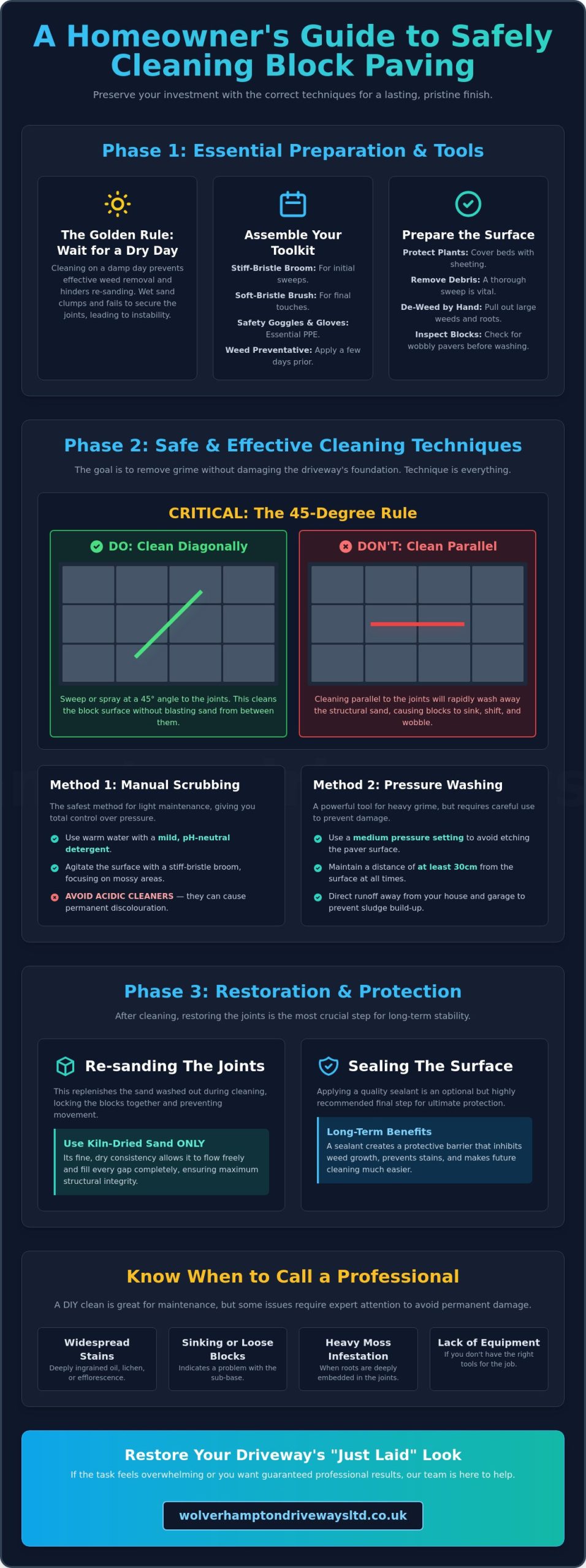
Cleaning your driveway shouldn’t be a destructive process. When learning how to clean block paving, the primary goal is to remove surface grime without disturbing the foundation of your drive. The most common mistake homeowners make is being too aggressive, which leads to loose blocks and uneven surfaces over time. To avoid this, you must master the 45-degree rule. Always move your brush or pressure washer nozzle diagonally across the joints. This technique ensures you clean the surface of the blocks without directing the full force of the water or bristles into the sand below. If you work parallel to the joints, you will quickly wash away the structural sand, causing the blocks to shift or wobble.
The Manual Scrubbing Technique
For light maintenance, a simple manual scrub is often the safest choice. Mix a bucket of warm water with a mild, non-acidic detergent. Acidic cleaners can cause permanent chemical burns and discolouration on natural stone blocks, so you should always stick to pH-neutral soaps. Use your stiff-bristle broom to agitate the surface, focusing on areas with heavy moss build-up amongst the blocks. This method is slower than using power tools, but it gives you total control over the pressure applied to each individual stone. It’s a reliable way to refresh your driveway without risking any long-term structural damage.
Mastering the Pressure Washer
If the grime is thick or lichen has taken hold, a pressure washer is a powerful ally, provided you use it with care. Keep the pressure set to a medium level; excessive force can etch the surface of the paving and make it more porous. Maintain a distance of at least 30cm from the ground at all times to protect the finish. If you have specific car spills to manage, knowing how to clean oil off concrete can help you pre-treat those areas before the main wash begins.
Be mindful of where the water goes. Direct the dirty sludge away from your garage and house walls to prevent it from settling back into the joints as you work. Managing the runoff is vital to ensure you don’t end up with a muddy mess in your drains. If the task feels overwhelming or the moss is deeply ingrained, our professional driveway cleaning & repairs team can take the hard work off your hands. Once the scrubbing is done, rinse the area with a low-pressure hose. Start from the highest point of the driveway and work your way down. This final step ensures no dirty residue remains, leaving your blocks ready for the essential restoration phase.
Tackling Stubborn Stains: Oil, Lichen, and Efflorescence
Even a perfectly executed wash can sometimes leave behind frustrating marks. When you are mastering how to clean block paving, you will eventually encounter stains that water alone cannot shift. One of the most common sights on newer driveways is efflorescence. This appears as a white, powdery residue or “white fur” on the surface of the blocks. It is not a sign of a failing driveway; it is a natural process where soluble salts react with the air. Aggressive scrubbing often makes it worse by bringing more salts to the surface. In most cases, the best approach is patience, as it usually fades over a few months. If you cannot wait, use a very mild, specialist efflorescence remover and a soft brush to avoid damaging the face of the stone.
Removing Oil and Grease
Oil spills from a car are a homeowner’s nightmare, but they don’t have to be permanent. For a fresh spill, your emergency response is vital. Don’t reach for the hose immediately, as water will only spread the oil further into the joints. Instead, use absorbent household items like cat litter, flour, or even white sand to soak up the liquid. Leave it for at least 30 minutes before sweeping it away. For older, deep-set stains, you’ll need a professional-grade degreaser. Apply the cleaner to a dry surface, let it dwell as per the instructions, and then scrub with a stiff brush. If the oil has soaked completely through the block and into the sub-base, the most effective professional solution is to carefully lift and replace the individual affected blocks to prevent the stain from “bleeding” back up.
Treating Lichen and Algae
The damp, often overcast climate in the West Midlands provides the perfect breeding ground for “Black Spot” or lichen. These hardy organisms root themselves into the pores of the paving and are famously difficult to remove with a standard pressure washer. Blasting them too hard often damages the block without actually killing the spores. We recommend using a biocide treatment. These specialist solutions work over several days to kill the lichen at the root. Once the spots turn grey or white, they are dead and can be safely rinsed away. This chemical approach is far more effective than brute force and ensures the spores don’t immediately begin to regrow in shaded areas or under overhanging trees.
Organic stains from fallen leaves or bird droppings are another common issue. Leaf tannins can leave behind stubborn brown or yellowish streaks if left to rot on the surface. A simple solution of warm, soapy water and a bit of elbow grease is usually enough to lift these if caught early. For bird droppings, always dampen the area first to soften the material before scrubbing. This prevents you from scratching the surface of your paving whilst you work to restore its original colour.
Restoration: Re-sanding and Sealing Your Driveway
Cleaning is only half the battle. If you stop once the blocks are bright, you have left your driveway in a vulnerable state. A deep clean inevitably removes the jointing sand that holds the entire structure together. Without this sand, your blocks will eventually shift, tilt, or even sink under the weight of a vehicle. Whilst learning how to clean block paving, you must treat re-sanding as a non-negotiable part of the process. It is the structural “glue” that keeps your driveway safe and level.
Timing is everything when it comes to restoration. You must wait for the “bone dry” window. This usually means waiting at least 24 to 48 hours after your initial clean, depending on the unpredictable UK weather. If there is even a hint of moisture in the joints, the sand will clump and stay on the surface rather than falling to the bottom of the gaps. If you sand too early, you’ll end up with a messy, uneven finish that fails to protect the sub-base.
The Art of Re-sanding
Use a soft-bristle brush to move the sand across the surface in multiple directions. You want every joint filled to the brim. Once you think you have finished, wait another 24 hours. The sand often settles further as the blocks settle, and a second sweep is usually required to top up the levels for maximum stability. Kiln-dried sand is a fine, moisture-free sand that flows easily into narrow joints to provide the essential lateral pressure required to keep blocks from shifting. Never use standard building sand; it is far too coarse and damp to fill the joints properly.
Protecting with Sealant
Is sealing worth the investment for your home? For most homeowners, the answer is a firm yes. A high-quality sealant acts as a shield against the elements. It suppresses weed growth by making it much harder for seeds to take root in the jointing sand. It also provides vital stain resistance, giving you a wider window of time to react to car leaks before they soak into the stone. You can choose between a matt finish, which preserves the natural look of the stone, or a gloss finish for a “wet look” that enhances the original colour of the blocks.
Be careful during the application phase. Applying sealant to a damp driveway is a recipe for disaster. It traps moisture beneath the surface, resulting in a cloudy or “milky” finish that is incredibly difficult to fix. This unsightly haze occurs when the sealant cannot bond correctly with the stone. If you want a long-lasting, professional result without the stress of timing the weather, our expert driveway cleaning & repairs service ensures your restoration is handled with master-craftsman precision.
Professional Driveway Restoration in Wolverhampton
Sometimes the broom needs to be put down. While knowing how to clean block paving is a valuable skill for any homeowner, certain driveways require more than just elbow grease. If you notice blocks that have sunk significantly, or if the moss has completely overtaken the structural sand, it is time for professional intervention. Surface cleaning is one thing, but restoring the structural integrity of a driveway requires specialist knowledge and heavy-duty equipment. We often see homeowners struggle with stubborn “black spot” lichen that simply won’t budge with domestic tools, or they find that their blocks have begun to wobble due to years of sand loss.
Commercial-grade rotary cleaners are a world apart from domestic pressure washers. These machines provide a uniform deep clean without the “striping” or messy splashing often caused by hand-held lances. They use a controlled, spinning action that lifts grime more effectively whilst protecting the surface of the stone. Beyond simple cleaning, a professional team can address sinking blocks by lifting them, re-levelling the sub-base, and reinstating them for a perfectly flat finish. This level of restoration ensures your driveway doesn’t just look better, but actually functions as it should for years to come.
Why Choose Wolverhampton Driveways Ltd?
We have built a reputation as the reliable local master-craftsmen across the West Midlands. Our team is fully insured and licensed, providing peace of mind to homeowners in Cannock, Dudley, and the surrounding areas. We take immense pride in every job. We treat your property with the same care we would our own. If your driveway has seen better days, you can request a free, no-obligation quote for a total revival. We offer a straight-talking assessment of what is needed to get your entrance looking spotless again without any hidden costs.
Our Comprehensive Maintenance Packages
A professional driveway cleaning & repairs service is about more than just aesthetics. Our packages combine deep cleaning with expert re-sanding and high-grade sealing to provide a complete restoration. This preventative care is vital. It helps you avoid the massive expense of a full driveway replacement by catching minor issues before they become structural failures. We use premium kiln-dried sand and professional sealants that are not typically available in local DIY shops. Contact our Wolverhampton team today to organise your site visit. We will help you understand the best path forward for your property, ensuring your driveway remains a bright and welcoming feature for your home.
Restore Your Driveway’s Kerb Appeal
A spotless driveway does more than just improve your home’s appearance; it protects a significant part of your property’s value. You now have the professional knowledge to tackle moss, handle stubborn oil spills, and use the 45-degree rule to keep your blocks stable. Mastering how to clean block paving is a rewarding task, but remember that the process is only complete once you’ve properly re-sanded and sealed the surface to prevent future damage. Maintaining that “just-laid” look requires patience and the right tools for the job.
When the task feels too daunting or the stains are too deep, our team is ready to step in. We are expert block paving specialists, fully insured and licensed, serving homeowners across Wolverhampton and the West Midlands. We use commercial-grade rotary cleaners that offer a level of precision and depth that standard domestic equipment just can’t reach. Our methodical approach ensures your driveway is restored safely and efficiently.
Take the stress out of your home maintenance and get a free quote for professional driveway cleaning today. We take pride in delivering a master-craftsman finish that leaves your driveway looking bright, clean, and structurally sound for years to come.
Frequently Asked Questions
Can I clean my block paving with just fairy liquid and water?
Yes, you can use washing-up liquid and warm water for light surface cleaning. It is a safe, pH-neutral option that won’t damage the stone or harm your garden borders. Simply apply the soapy mix, scrub with a stiff broom, and rinse. While it won’t kill deep-rooted lichen or remove heavy oil, it’s perfect for a quick seasonal refresh.
Will a pressure washer damage my block paving joints?
A pressure washer will only cause damage if you use the wrong angle or excessive pressure. When considering how to clean block paving with a pressure washer, always use a 45-degree angle across the joints. If you blast directly into the gaps, you will wash away the sand that keeps your driveway stable and causes blocks to wobble.
How often should I clean and re-sand my driveway?
We recommend a deep clean every two to three years, depending on the shade and traffic your driveway receives. You should check your sand levels annually. If the joints look empty, a quick top-up with kiln-dried sand prevents the blocks from shifting. Regular maintenance is much cheaper than paying for a full structural repair later on.
How do I stop weeds from growing back between the blocks?
The most effective way to stop weed growth is a combination of thorough re-sanding and high-quality sealing. This is a vital step in how to clean block paving for a long-term finish. Weeds struggle to take root in well-compacted sand, and a sealant creates a physical barrier that blocks seeds from settling in the first place.
What is the best way to remove old oil stains from my drive?
Old oil stains require a specialist degreaser to break down the grease that has soaked into the pores of the stone. Apply the cleaner to a dry surface and give it plenty of time to work before scrubbing with a stiff brush. If the oil has penetrated several centimetres deep, the only professional solution is to replace the affected blocks.
Is it better to seal block paving or leave it natural?
Sealing is almost always the better choice for long-term protection and ease of maintenance. While some homeowners prefer the natural look, an unsealed driveway is much more prone to staining, weed growth, and frost damage. A matt sealant provides the same level of protection as a gloss one without changing the original appearance of your paving.
Can I use bleach to clean my block paving?
You should avoid using household bleach on your driveway. It’s an aggressive chemical that can cause permanent discolouration on certain types of stone and will kill any nearby grass or plants. Specialist block paving cleaners are a much safer alternative. They are designed to lift grime without compromising the integrity of your driveway or your garden’s health.
What is kiln-dried sand and why do I need it?
Kiln-dried sand is a very fine, moisture-free sand used to fill the narrow gaps between your blocks. It provides the lateral pressure needed to lock the driveway together and prevent individual stones from moving under the weight of a car. Standard building sand is too damp and coarse to settle deep into the joints, leaving your driveway’s foundation weak.