
By the end of 2026, a driveway that does not manage its own water will not just be a puddle-prone eyesore; it could be a legal liability under new UK building regulations. You have probably felt the frustration of trying to decode SuDS compliance or the worry that a new installation might sink, crack, or attract a fine from the City of Wolverhampton Council. It is a lot to take in when all you really want is a durable, attractive entrance to your home that stands the test of time.
This guide cuts through the confusion to help you secure a flood-resilient finish that adds genuine value to your property. By choosing the right materials and professional permeable driveway installers, you can ensure your home meets the mandatory 2026 drainage standards whilst looking better than ever. We will break down the best porous options for our local West Midlands soil, from resin bound surfaces to block paving, and explain exactly how to stay on the right side of the law without the stress. Discover how a well-engineered driveway provides total peace of mind for years to come.
Key Takeaways
- Avoid the cost and delay of planning permission by choosing a SuDS-compliant surface that drains water naturally into the ground.
- Compare the aesthetic appeal and drainage efficiency of resin bound, block paving, and porous tarmac to choose the right material for your property.
- Learn why a professional sub-base using Type 3 MOT is the secret to preventing sinking and ensuring your driveway remains flood-resilient for decades.
- Identify how expert permeable driveway installers in Wolverhampton conduct porosity tests and site surveys to guarantee full compliance with 2026 building regulations.
- Secure your investment by checking for essential licences and insurance, protecting your home from future council fines and drainage issues.
Understanding SuDS Regulations and Planning Permission in the West Midlands
Since the implementation of Schedule 3 of the Flood and Water Management Act 2010 in early 2026, the rules for front gardens have tightened significantly. Sustainable Drainage Systems (SuDS) are no longer just a recommendation; they’re a legal requirement for most new surfacing projects across England. This legislation introduced SuDS Approving Bodies (SABs) within local authorities to oversee drainage strategies for any work that affects how water leaves a property. These systems mimic nature by soaking up rain where it falls. This reduces the heavy pressure on Wolverhampton’s Victorian sewer systems, which often struggle during West Midlands downpours. By using Permeable paving materials, you ensure water returns to the ground rather than flooding the street or overwhelming public drains.
Professional permeable driveway installers understand that this isn’t just about being eco-friendly. It’s about engineering a surface that manages high volumes of water without puddling or creating hazardous ice patches in winter. A compliant driveway uses specific layers to filter and store water safely. This approach is now the standard for any homeowner looking to upgrade their kerb appeal without a legal headache or future drainage issues.
When Do You Need Planning Permission?
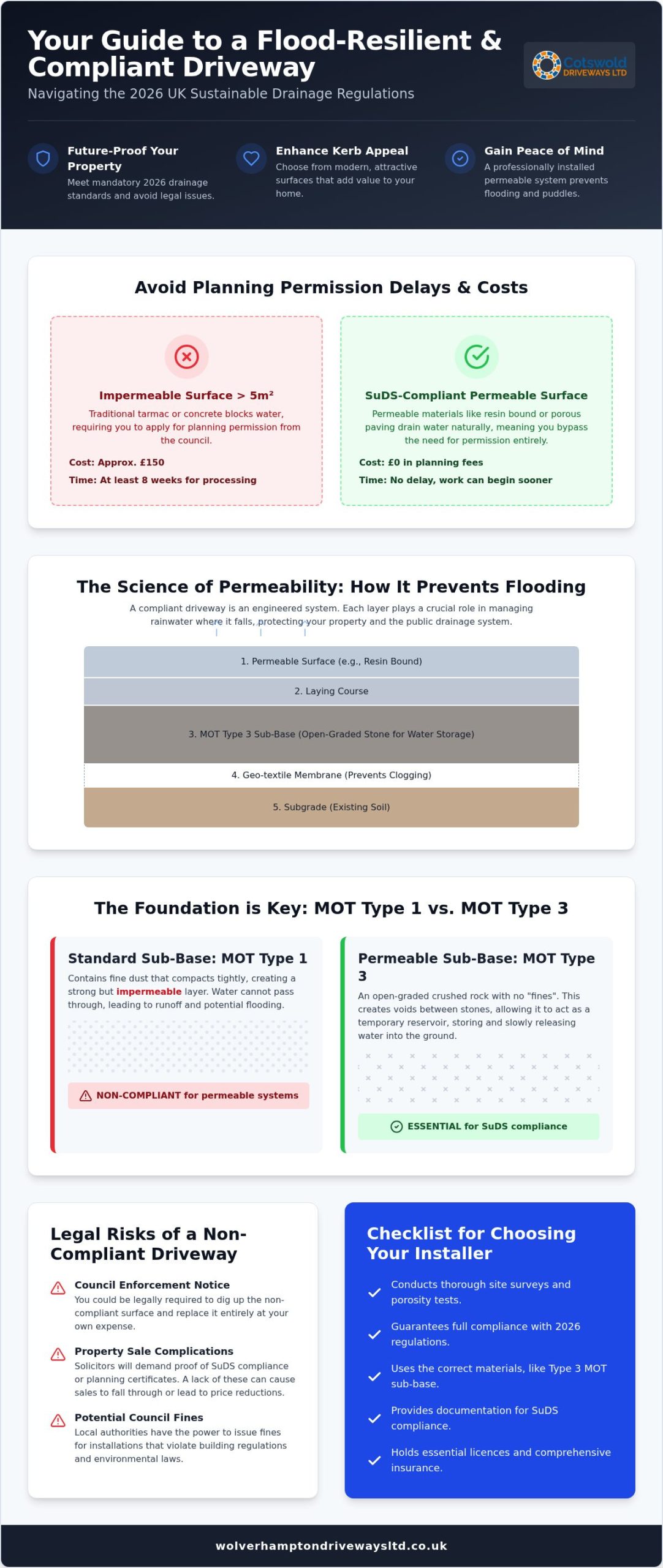
The “5-square-metre rule” is the most important thing to remember. If you’re surfacing a front garden larger than this, you must use a permeable surface. If you choose an impermeable material, like traditional tarmac, you’ll need to apply for planning permission from the City of Wolverhampton Council. This process usually costs around £150 and takes at least eight weeks to process. However, you can bypass this entirely by choosing SuDS-compliant options like resin bound or specific block paving. Whilst the rules are national, local nuances exist. For instance, Wolverhampton and Dudley both require separate applications to their respective Highways teams if you need a dropped kerb to access your new drive, regardless of the surface material.
The Legal Risks of Non-Compliance
Cutting corners can be expensive. If the council discovers a non-compliant driveway, they can issue an enforcement notice. This requires you to dig up the new surface and replace it with a compliant one at your own expense. It’s also a major red flag during property surveys. If you decide to sell your home, a solicitor will ask for proof of SuDS compliance or the relevant planning certificates. Without these, a sale can easily fall through or lead to significant price negotiations. Reliable permeable driveway installers take this weight off your shoulders by providing a solution that meets every legal standard from the very first day.
The Science of Permeability: How Modern Driveways Prevent Flooding
Understanding how a driveway handles water is the first step to a long-lasting installation. It isn’t just about the top layer you see. A truly effective system uses a “full system” approach. This includes the surface, the laying course, and the sub-base. By managing water at the source, you stop it from rushing into the street. This is what experts call “source control.” It’s the most effective way to prevent local flash flooding in our West Midlands neighbourhoods.
The Anatomy of a Permeable Sub-base
Standard driveways often use “MOT Type 1” for the foundation. This material contains fine dust that packs down tight. It’s strong, but it acts like a waterproof seal. For a SuDS-compliant project, permeable driveway installers use “Type 3 MOT” instead. This is open-graded crushed rock. It has no “fines,” meaning there are plenty of gaps between the stones to store water. We also use geo-textile membranes. These fabric layers stop soil from mixing with the clean stone, which prevents the system from clogging or sinking over time.
The depth of this sub-base depends on your local soil. In many parts of Wolverhampton, we deal with heavy clay. Clay doesn’t let water pass through quickly. Because of this, the sub-base must be deeper to act as a temporary storage tank. This ensures your project follows the UK planning permission rules by keeping all surface water on your own land. It’s a clever bit of engineering that provides peace of mind during the wettest months.
Managing Heavy Rainfall in Telford and Cannock
When a heavy downpour hits Cannock or Telford, an impermeable drive creates a river of runoff. A permeable system behaves differently. It uses “attenuation,” which simply means it holds the water and lets it soak into the ground at a natural pace. This slow release protects the environment and your home’s foundations. Without this storage capacity, the water would simply wash away into the public sewers, contributing to the very floods we want to avoid.
There’s a structural bonus to this science too. When water can’t get trapped under your driveway, you won’t suffer from “frost heave.” This is when trapped water freezes, expands, and cracks the surface. A well-drained drive stays level and looks better for much longer. If you’re unsure about your soil type, it’s worth asking professional driveway installers to perform a quick porosity test before you start your project.
Comparing Permeable Materials: Resin, Block Paving, and Porous Tarmac
Selecting the right surface material is about more than just picking a colour that matches your brickwork. Whilst the sub-base handles the heavy lifting of water storage, the surface layer determines the initial drainage rate and the long-term maintenance of your investment. Each material has its own strengths, whether you prioritise a sleek modern look or a traditional finish that can withstand heavy vehicle traffic. Experienced permeable driveway installers will always help you weigh up the initial installation costs against the expected lifespan of the surface.
Resin Bound Driveways: The Modern Choice
For homeowners seeking a seamless and highly decorative finish, resin bound driveways west midlands are often the top recommendation. This system involves mixing natural aggregates with a clear resin, creating a surface where water can flow directly through at a rate of hundreds of litres per minute. It offers 100% permeability across the entire area. We use UV-stable resins to ensure the vibrant colours don’t fade under the British sun. It’s a smooth, accessible choice that eliminates the risk of loose stones migrating into your hallway or onto the pavement.
Permeable Block Paving: Traditional Durability
If you have a busy household with multiple vehicles or heavy SUVs, block paving installers wolverhampton often suggest a permeable block system. These aren’t standard blocks. They feature larger “nibs” or spacers on the sides, creating wider gaps between each brick. These gaps are filled with a specific 6mm grit rather than sand, allowing water to vanish instantly into the sub-base. It’s incredibly durable. To keep it working perfectly, you simply need to ensure the joints stay clear of moss or debris, which is easily managed with an occasional sweep or professional clean.
Porous Tarmac: Cost-Effective Functionality
Porous tarmac is a specialised version of the tarmac driveways wolverhampton homeowners typically recognise. Unlike standard tarmac, which is dense and impermeable, the porous version is manufactured without the “fines” (the smallest particles). This leaves a network of tiny holes throughout the surface. It’s an excellent, cost-effective solution for larger West Midlands drives where speed of installation is a priority. Whilst it may lack the intricate patterns of block paving, it provides a clean, functional, and fully compliant finish that handles heavy rainfall with ease. Professional permeable driveway installers can usually complete a tarmac project quickly, making it a great option for those on a tighter schedule.
The Installation Process: What to Expect from Professional Installers
A successful permeable project relies on what happens beneath the surface. Unlike standard driveways, where a simple base often suffices, SuDS-compliant systems require a meticulous, multi-stage approach. Professional permeable driveway installers follow a strict protocol to ensure your driveway doesn’t just look good on day one, but continues to drain effectively for decades. It’s a methodical process that turns a complex engineering challenge into a stress-free home improvement. We take pride in a tidy site and a transparent workflow from start to finish.
- Step 1: Site Survey and Porosity Testing. We start by assessing your local soil type and testing how quickly water disappears into the ground to determine the required sub-base depth.
- Step 2: Excavation and “Muck Away”. We dig to a specific depth, often deeper than traditional drives, to create space for the water-storage layers. All waste is removed responsibly using professional machinery.
- Step 3: Precision Layering. We install geo-textile membranes and clean, open-graded aggregates. These layers are never “blinded” with sand, as this would block the drainage path.
- Step 4: Surface Application. Whether it’s resin or block paving, we apply the final layer with a focus on level finishes and clean, sharp edges.
- Step 5: Final Handover. We conduct a thorough quality check to ensure the system is fully compliant and ready for use.
Why Precision Matters in Permeable Projects
Poor workmanship is often hidden underground. One common mistake is “blinding” the sub-base with fine dust or sand to make it easier to level. This essentially seals the driveway, defeating the entire purpose of a permeable system. Even though these surfaces are designed to drink water, we still engineer slight falls to ensure heavy runoff is managed correctly during extreme storms. Porosity is the measure of void spaces within the aggregate layers that allows water to be stored and filtered before reaching the soil below. Getting these levels right requires the steady hand of an experienced master-craftsman.
Maintenance: Keeping Your Permeable Driveway Clear
Keeping your new surface in top condition is straightforward. A regular “brush and wash” routine is usually enough to keep resin and block surfaces looking fresh. You should avoid letting leaves or soil sit on the surface, as these can break down and clog the drainage pores over time. If you notice moss or weeds appearing in the joints of block paving, treat them with a mild weedkiller rather than digging them out. For a deeper restoration or to clear stubborn debris, you might consider professional driveway cleaning stafford services to maintain peak performance. If you’re ready to start your transformation, book your free site survey with our local experts today.
Choosing the Right Permeable Driveway Installer in Wolverhampton
Selecting the right team to handle your project is just as important as picking the right stone or colour. A permeable system is a piece of bespoke engineering that must work with the specific geology of the West Midlands. Many nationwide contractors might not appreciate the heavy clay content found in areas like Telford or Cannock, which directly impacts how deep your sub-base needs to be. Choosing local permeable driveway installers ensures you are working with professionals who understand the local planning history and the specific drainage requirements of the City of Wolverhampton Council.
Before you sign a contract, it’s vital to do your due diligence. A reliable master-craftsman will always be happy to provide proof of their credentials. You should look for the following as a minimum:
- Full Insurance and Licensing: This protects your property and the workers on-site during the excavation and installation phases.
- Local Reputation: Seek out reviews from neighbours in your immediate area. A contractor who values their community reputation is much more likely to provide a high-standard finish.
- No-Obligation Quotes: You should never feel pressured to commit. A professional will provide a clear, written estimate after a thorough site survey.
- Straight-Talking Advice: Avoid jargon-heavy sales pitches. Look for an installer who explains the “why” behind the costs and timelines.
The Wolverhampton Driveways Ltd Difference
Our team at Wolverhampton Driveways Ltd is committed to providing a stress-free experience for every homeowner. We don’t just lay surfaces; we build long-term solutions that enhance your property’s value. We prioritise SuDS compliance on every single project, ensuring you never have to worry about council fines or future drainage failures. Our local experts organise every stage of the project, from the initial “muck away” to the final quality checks. This methodical approach gives you total peace of mind that your new driveway is built to last.
Getting Your Free Quote and Project Timeline
When you are ready to start, having a few details ready will help us provide an accurate estimate. Think about the approximate size of the area, your preferred material, and any existing drainage issues you’ve noticed. We believe in transparency, which is why we offer fixed-price contracts. This means the price we quote is the price you pay, with no hidden extras appearing halfway through the build. We work efficiently to ensure your project stays on schedule, minimising disruption to your daily routine. Ready to transform your home? Contact Wolverhampton Driveways Ltd for your free quote today.
Secure Your Home’s Future with a Flood-Resilient Driveway
Investing in a permeable driveway is about more than just avoiding a council fine; it’s about protecting your property and the wider Wolverhampton community from the risks of flash flooding. By choosing the right materials and ensuring a precision-engineered sub-base, you create a beautiful entrance that handles even the heaviest British downpours without a puddle in sight. You’ve seen that SuDS compliance isn’t just a legal box to tick, but a standard that ensures your home remains valuable and saleable for years to come.
Working with experienced permeable driveway installers takes the guesswork out of the process. As fully insured and licensed local specialists, we bring expert SuDS compliance knowledge to every project we undertake across the West Midlands. We take pride in our straight-talking approach and our commitment to high-quality workmanship that stands the test of time. We’ve been serving homeowners in this region with dependable, honest service, and we’re ready to do the same for you.
Are you ready to transform your front garden into a durable, compliant masterpiece? Get Your Free Permeable Driveway Quote in Wolverhampton Today and take the first step toward total peace of mind. We look forward to helping you build a driveway you can be proud of.
Frequently Asked Questions
Do I really need a permeable driveway in Wolverhampton?
Yes, you must have a permeable surface if your new front garden driveway exceeds 5 square metres. It’s a legal requirement under SuDS regulations to prevent surface water runoff from entering public sewers. Wolverhampton Council enforces these rules to mitigate local flood risks. By using professional permeable driveway installers, you ensure your project is fully compliant, avoiding potential fines or the need to tear up non-compliant work later.
Is a permeable driveway more expensive than a traditional one?
Generally, the initial installation cost is slightly higher due to the specialised sub-base and materials required. You are investing in a deeper excavation and “Type 3” aggregates that act as a water reservoir. However, you save on the £150 planning permission fee and avoid the eight-week wait for approval. Over time, the durability and reduced risk of frost damage often make it a more cost-effective choice for West Midlands homes.
Can I turn my existing tarmac driveway into a permeable one?
You cannot simply coat existing impermeable tarmac to make it permeable. The entire system, including the sub-base, must be replaced to allow water to drain through to the soil. We would excavate your old drive and install a new SuDS-compliant foundation. Whilst it’s a bigger job than a simple overlay, it’s the only way to meet 2026 building regulations and provide a long-term drainage solution for your property.
How long does a permeable resin driveway typically last?
A high-quality resin bound surface usually lasts between 15 and 25 years when installed correctly. Its longevity depends on the quality of the UV-stable resin and the strength of the permeable sub-base beneath it. Because it allows water to pass through, it doesn’t suffer from the “freeze-thaw” cracking that often ruins traditional surfaces. Regular sweeping to prevent debris buildup will help maintain its appearance and drainage performance for many decades.
What happens if my permeable driveway gets clogged with leaves?
If organic matter like leaves or soil is left to rot, it can eventually block the pores in the surface. This reduces the drainage rate but is easily fixed. You should regularly sweep your driveway with a stiff brush and occasionally wash it down with a garden hose. For stubborn clogs, a professional jet wash can restore the porosity without damaging the structural integrity of the resin or block paving joints.
Do permeable driveways require a soakaway to be installed?
Not necessarily. A well-engineered permeable driveway acts as its own soakaway. The deep layer of open-graded stone beneath the surface stores water and allows it to infiltrate the ground naturally. In areas with very heavy clay soil, we might install additional drainage features to help the system cope with extreme storms. Our team will assess your specific ground conditions during the initial site survey to determine the most effective approach.
Can permeable block paving handle heavy SUVs and vans?
Yes, permeable block paving is incredibly robust and designed for heavy-duty use. The blocks are usually thicker than standard paving, and the specialised grit in the joints provides excellent interlock and stability. As long as the sub-base is installed to the correct depth by expert permeable driveway installers, it will comfortably support multiple family vehicles, including heavy modern SUVs and delivery vans, without sinking or shifting over time.
Is planning permission required if I use a rain garden instead?
No, rain gardens are a recognised SuDS method. If you direct the runoff from an impermeable driveway into a dedicated rain garden or border on your own land, you don’t need planning permission. The goal of the law is simply to keep surface water out of the public sewer system. However, the driveway itself must be sloped correctly to ensure all water reaches the garden area without pooling on the public pavement.