
If you’re investing your hard-earned money into a garden renovation, why settle for a surface that’s likely to stain, fade, or shift within just a few seasons? Most homeowners in our region want a garden that looks pristine year-round without spending every weekend scrubbing moss or weeding cracks. You likely want a space that feels like a seamless extension of your home, rather than a constant maintenance chore. Finding expert porcelain patio installers west midlands is the first step to ensuring your investment doesn’t fall victim to poor technical execution or shifting slabs.
This guide shows you why porcelain is the superior choice for our local climate and how professional installation ensures a lifetime of low-maintenance luxury. We’ll explain how a specialist approach turns high-performance slabs into a durable feature that significantly boosts your property’s kerb appeal. You’ll also learn about the essential 2026 installation standards, covering everything from crucial slurry priming to the latest drainage regulations that keep your patio perfectly flat and your house protected from damp issues.
Key Takeaways
- Learn why porcelain’s 0.05% moisture absorption rate makes it the most frost-resistant choice for the unpredictable West Midlands weather.
- Understand why expert porcelain patio installers west midlands use specific techniques like slurry priming to prevent slabs from lifting or cracking.
- See how porcelain compares to Indian sandstone and block paving when looking at the total cost of ownership over ten years.
- Get design tips on matching your patio to local Stafford red or Dudley blue bricks to create a stunning, high-value finish.
- Discover how to achieve a seamless transition between your home and garden by using matching large-format tiles for an indoor-outdoor flow.
Why Homeowners are Choosing Porcelain Patios in 2026
Porcelain is no longer just for high-end interior kitchens or bathrooms. It is a vitrified ceramic material, manufactured by firing refined clays at temperatures often exceeding 1,200 degrees Celsius. This extreme heat creates a process called vitrification, turning the material into a dense, glass-like solid that is incredibly tough. When you work with expert porcelain patio installers west midlands, you are choosing a product specifically engineered to withstand the elements. It’s a high-performance solution that offers a level of consistency natural stone simply cannot match.
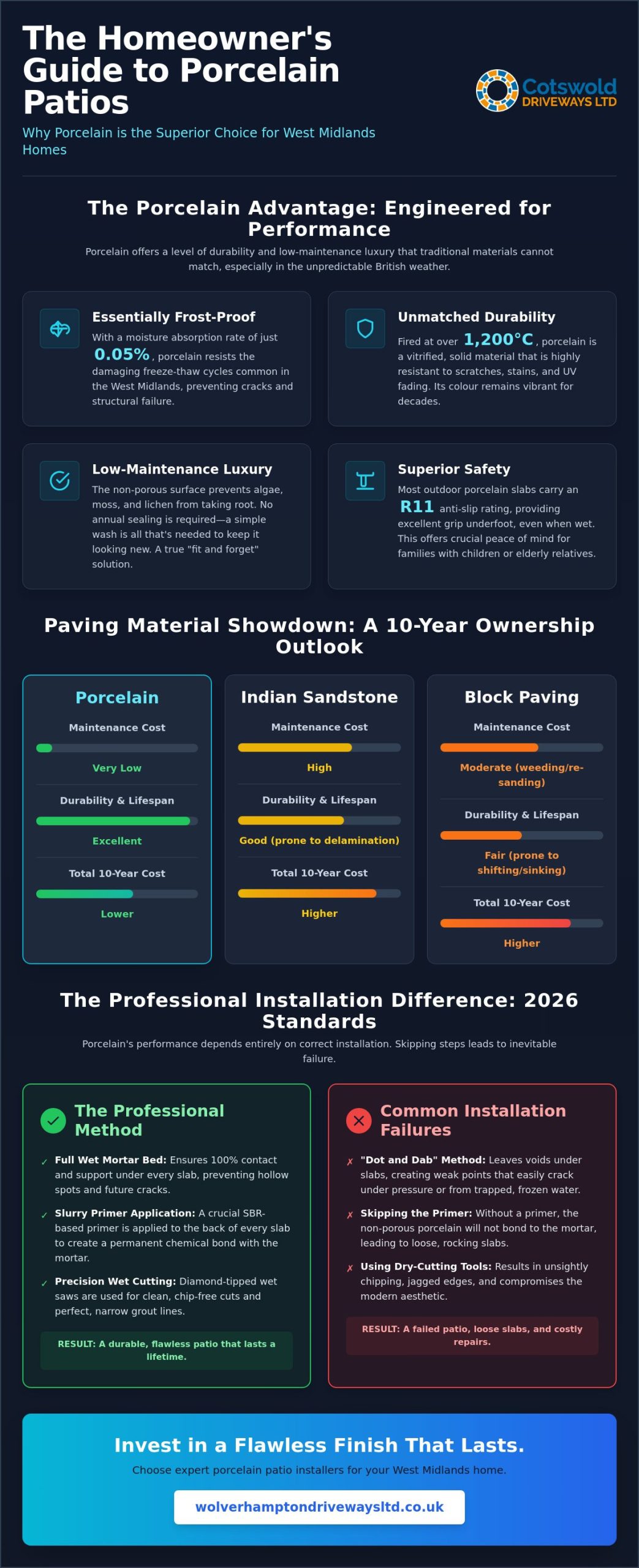
The primary reason for its surge in popularity is how it handles the West Midlands weather. Our region is known for damp winters and frequent freeze-thaw cycles. Traditional paving often absorbs water, which then expands as it freezes, leading to cracks and structural failure. Porcelain has a moisture absorption rate of just 0.05%. This near-total impermeability is one of the key technical characteristics of porcelain tiles that makes them essentially frost-proof. It means your patio remains stable and beautiful regardless of how harsh the winter gets.
Safety is another major factor for local families. Most outdoor porcelain slabs carry an R11 anti-slip rating. This texture provides excellent grip underfoot, even whilst the surface is wet. Unlike some natural stones that become dangerously slick after a rain shower, porcelain offers peace of mind for households with children or elderly residents. It’s a practical, safe choice for a hardworking family garden.
Alongside choosing slip-resistant flooring, maintaining foot health and mobility is essential for safely enjoying your garden; for professional advice and treatment, footfallpodiatry.co.uk offers specialist podiatry services.
The Durability Advantage: Frost and Fade Resistance
Natural sandstones are prone to delamination, a process where the layers of the stone physically peel or flake away over time. Porcelain is a uniform, solid block that doesn’t suffer from this structural weakness. It is also exceptionally resistant to UV rays. Whilst other materials might bleach or fade under the summer sun, porcelain’s colour remains vibrant for decades. The surface is also scratch-resistant, making it ideal for gardens with heavy patio furniture or active pets.
Low Maintenance Luxury for Busy West Midlands Families
Our damp climate often leads to a constant battle against algae, moss, and lichen. These organisms thrive in the pores of natural stone but cannot take root on a porcelain surface. Because the material is non-porous, it requires no sealing or chemical treatments to maintain its integrity. You won’t need to spend your spring weekends scrubbing away green growth. A simple jet wash or a bucket of soapy water is usually all that’s required to keep the area looking brand new. It’s a “fit and forget” solution for homeowners who value their free time; for those looking to keep their indoor carpets and floors just as spotless, The Rutland Cleaning Company offers professional cleaning services to maintain a high-end finish throughout your home.
While the initial investment for porcelain can be higher than basic concrete or block paving, the long-term cost-efficiency is clear. You won’t be paying for annual sealants, specialist cleaners, or frequent repairs. Over a ten-year period, the total cost of owning a porcelain patio is often lower than the alternatives, all whilst providing a more premium aesthetic for your home.
The Importance of Professional Porcelain Installation
Choosing the right material is only half the battle. Porcelain is a high-performance material, but it’s also unforgiving if the installation isn’t perfect. Unlike traditional concrete or stone, which can sometimes be more flexible during laying, porcelain requires a disciplined, technical approach. Many general builders might try to use the “dot and dab” method, but this leaves hollow spots under the tiles. These air gaps are weak points where the slab can crack if you place heavy furniture on it or if water gets trapped and freezes. Professional porcelain patio installers west midlands always use a full wet mortar bed to ensure every millimetre of the slab is supported.
When Comparing porcelain and other materials, the density that makes it so durable also makes it much harder to work with. You can’t just break these slabs with a hammer and chisel. We use precision diamond-tipped wet saws to achieve clean, millimetre-perfect edges. This is vital for maintaining the narrow, modern grout lines that give porcelain its signature look. It also prevents the unsightly chipping that occurs when using standard dry-cutting tools.
Why Slurry Primer is Non-Negotiable
The most common reason for patio failure is slabs coming loose or “rocking” underfoot. Because porcelain is non-porous, it won’t naturally bond to a standard mortar bed. It needs a bridge between the two materials. We apply a high-quality SBR-based slurry primer to the back of every single tile before it’s laid. This creates a permanent chemical and mechanical bond. If an installer skips this step, your tiles will eventually lift. It’s a small but critical detail that separates a master-craftsman from a cowboy. Our team treats this as a standard part of every project to give you long-term peace of mind.
Sub-Base Preparation and Drainage Solutions
Since water cannot soak through porcelain, it has to go somewhere else. We carefully calculate a minimum fall of 1:80 to ensure surface water runs away from your home and into suitable drainage. This prevents pooling and protects your property’s damp-proof course (DPC). In fact, we ensure the finished level of your patio is at least 150mm below your house’s DPC to meet 2026 building regulations. A stable sub-base is equally important. We excavate to the correct depth and use high-grade MOT Type 1 material, compacted in layers to prevent any future sinking. If you’re concerned about how your garden will handle heavy rain, talking to experienced patio specialists can help you plan the right drainage layout from the start.
We also prioritise sustainable drainage systems (SuDS) to manage runoff effectively. This is increasingly important for local council compliance and helps prevent flooding in our West Midlands communities. By integrating hidden drainage channels, we can maintain the sleek, seamless aesthetic of your patio whilst ensuring it performs perfectly during a heavy downpour.
Comparing Porcelain with Natural Stone and Concrete
When you’re planning a garden transformation, it’s easy to focus on the initial quote. However, skilled porcelain patio installers west midlands will tell you that the cheapest option often ends up being the most expensive over a ten-year period. Choosing a material is about balancing the look you want with the amount of work you’re willing to do to keep it that way. Porcelain, Indian sandstone, and block paving each offer a different set of benefits, but they perform very differently under the pressure of local weather conditions.
Total cost of ownership is where porcelain truly shines. While a concrete or natural stone patio might have a lower entry price, those materials require regular sealing, specialist chemical cleaning, and often jointing repairs. Over a decade, these costs add up. Porcelain remains virtually unchanged from the day it’s laid. It doesn’t fade, it doesn’t stain, and it doesn’t require sealing. In terms of installation timelines, porcelain is a more methodical process. Because of the precision cutting and the mandatory slurry priming we discussed earlier, a porcelain project may take a few days longer than a basic block paving job, but the result is a perfectly flat, premium finish that lasts decades.
Porcelain vs Indian Sandstone: The Real Choice
Indian sandstone is a classic choice for a rustic, traditional look. Its natural variations in texture and shade are beautiful, but they come with a catch: porosity. Sandstone is essentially a sponge. It absorbs rainwater, which brings with it algae and lichen. This leads to the green or black spots commonly seen on older patios. Porcelain is impervious, meaning spills like red wine or oil simply sit on the surface until wiped away. While sandstone colour can soften and change as the stone weathers, porcelain is UV-stable. If you prefer the look of natural materials but want the performance of modern engineering, you can find out more in our natural stone patio installers guide.
Porcelain vs Concrete Pavers
Concrete pavers are a functional, budget-friendly option, but they often lack the high-end feel of a vitrified surface. Concrete is also prone to salt efflorescence, that white powdery residue that can rise to the surface and ruin the aesthetic. Porcelain is fired at such high temperatures that these minerals are eliminated. Modern 2026 porcelain ranges now offer incredible variety, including textures that mimic wood, slate, and even limestone. With grey paving accounting for over 60% of UK patio sales this year, porcelain provides the widest range of anthracite and charcoal tones that stay deep and dark even after years of exposure to the elements.
Designing Your Perfect Outdoor Space in the West Midlands
Designing a patio isn’t just about picking a tile from a brochure. It’s about ensuring the material works in harmony with your home’s existing architecture. In our region, we see a vast amount of Stafford red and Dudley blue brickwork. A skilled team of porcelain patio installers west midlands knows how to select shades that enhance these local styles rather than clashing with them. For example, a light silver-grey porcelain provides a crisp, clean contrast to warm red bricks. Conversely, deep charcoal or anthracite tiles perfectly complement the darker, industrial feel of Dudley blue engineering bricks, creating a sophisticated and cohesive look.
One of the most significant design shifts in 2026 is the desire for a seamless “indoor-outdoor” transition. By using matching porcelain tiles inside your kitchen or garden room and continuing them onto your patio, you trick the eye into seeing one continuous space. This works particularly well with modern bifold or sliding doors. It turns your garden into a genuine extension of your living area. You can explore more about these aesthetic choices and local styling tips in our garden patio design wolverhampton pillar.
Choosing the Right Texture and Colour
Grey remains the dominant choice for West Midlands gardens. Anthracite and cool greys are a firm favourite amongst homeowners because they look modern and hide everyday garden debris well. However, we’re seeing a rise in wood-effect porcelain for those who want a warmer, more organic feel. It offers the textured beauty of timber without the rotting, staining, or maintenance issues of real wood. Regarding slab size, the 900x600mm format has overtaken the old 600x600mm standard. Larger slabs mean fewer grout lines, which makes even a compact urban garden feel much more expansive.
Integrating Patios with Other Garden Features
A patio rarely sits in isolation. It needs to work alongside your boundaries and other functional areas. Porcelain looks fantastic when paired with a professional composite decking installation. The contrast between the stone-effect tile and the wood-grain deck creates distinct, stylish zones for dining and lounging. If your garden is sloped, porcelain is perfect for creating sleek, uniform steps or facing retaining walls. We also frequently use porcelain as a clean, modern border for expert tarmac driveways in Wolverhampton, giving the front of your home a sharp, finished appearance that boosts kerb appeal.
If you’re ready to start planning your garden transformation, contact our expert local team today for a straightforward discussion about your project.
Why Choose Wolverhampton Driveways Ltd for Your Porcelain Patio?
When you’re looking for porcelain patio installers west midlands, you want more than just a competitive quote. You want the reassurance that the people working on your property are experienced, honest, and truly local. At Wolverhampton Driveways Ltd, we’ve built our reputation on being reliable master-craftsmen who value our community standing. We don’t believe in high-pressure sales tactics or confusing technical jargon. Instead, we provide a steady, straight-talking service that prioritises your peace of mind from the first phone call to the final sweep of the site.
Transparency is at the heart of how we operate. We provide clear, detailed breakdowns of the work required so you know exactly what you’re paying for. There are no hidden extras or surprise “add-ons” halfway through the project. We also understand that a garden renovation can feel disruptive to your daily life. Our team is committed to maintaining a tidy, organised site and working efficiently to keep any inconvenience to a minimum. Being a fully insured and licensed installation team means you can relax, knowing your home is in safe, professional hands.
Our Local Expertise in Wolverhampton and Beyond
We’ve spent years serving homeowners across Wolverhampton, Telford, Cannock, and Stafford. This local experience is vital because we understand the specific challenges of the regional terrain. For instance, the heavy clay soil common in many parts of the West Midlands requires a robust approach to sub-base preparation to prevent future sinking. We also take great pride in our work across Dudley and Walsall, ensuring every project meets the highest structural standards. If you’re based nearby, you might find our professional patio installation in Walsall guide helpful for understanding how we tailor our services to local needs.
Get Your Free, No-Obligation Quote Today
Starting your project shouldn’t be a stressful experience. We’ve designed a simple, straightforward process for booking a site survey. We’ll visit your home, assess the ground conditions, and listen to your vision for the space. After that, we’ll provide a clear, no-obligation quote that reflects the high-quality materials and skilled labour required for a premium porcelain finish. We’re here to help you organise every aspect of the build, ensuring a smooth transition from your old garden to a stunning new outdoor living area. If you’re ready to invest in a patio that lasts for decades, Contact our West Midlands team today to arrange your consultation.
Transform Your Garden with a Lasting Porcelain Feature
Investing in your garden is about more than just aesthetics. It’s about creating a space that works for your lifestyle without adding to your weekend to-do list. We have explored how porcelain’s technical superiority makes it the smartest choice for our local weather. You now understand why the right installation techniques are vital for a surface that doesn’t rock or crack. By choosing experienced porcelain patio installers west midlands, you ensure that every technical detail, from slurry priming to precise drainage falls, is handled with professional care.
Our team brings over 15 years of experience to every project, serving homeowners across Wolverhampton, Telford, Cannock, and Dudley. As fully insured and licensed contractors, we take pride in delivering a stress-free experience and a finish that truly transforms your home. Ready to take the next step? Book your free porcelain patio site survey today and let’s discuss how we can bring your vision to life. We look forward to helping you create an outdoor space you will be proud to share for decades to come.
Frequently Asked Questions
Is a porcelain patio slippery when wet?
Outdoor porcelain is not slippery if it has a certified R11 anti-slip rating. This rating indicates a textured surface specifically designed for external use. It provides reliable grip underfoot even during heavy rain. This makes it a much safer choice for local families than many types of natural stone that become slick when wet. You’ll find it offers peace of mind for both children and elderly residents throughout the year.
How much does a porcelain patio cost per square metre in the West Midlands?
Costs for a premium installation in our region are influenced by site access and the complexity of your garden’s layout. Factors like heavy clay soil or the need for specific drainage solutions will also play a role. We always recommend a site survey to provide a transparent, straight-talking quote tailored to your property. This ensures there are no hidden extras or surprises once the work begins on your project.
Do porcelain patios need to be sealed?
No, porcelain patios never need to be sealed. The vitrification process creates a surface so dense that it’s essentially non-porous. Unlike natural sandstone or concrete, it won’t absorb oil, wine, or rainwater. This “fit and forget” nature is why so many homeowners are switching to this material. It saves you significant time and money on specialist cleaning products and annual maintenance over the decades.
Can I lay porcelain tiles over an existing concrete patio?
You can lay porcelain over concrete, but we usually advise against it for long-term reliability. Any movement or existing cracks in the old concrete will eventually cause your new tiles to fail. Leading porcelain patio installers west midlands usually recommend a full excavation. This allows us to create a stable, fresh sub-base and ensure the drainage is perfect, protecting your investment for the long term.
How long does it take to install a porcelain patio?
Expert porcelain patio installers west midlands usually take five to ten working days to complete a project from start to finish. This timeframe varies based on the size of your garden and the amount of excavation needed. We take the time to ensure every slab is primed and laid on a full mortar bed. Skipping these technical steps leads to future problems, so we prioritise doing the job correctly over doing it quickly.
What is the best way to clean a porcelain patio after a West Midlands winter?
A simple jet wash or a bucket of soapy water is the most effective cleaning method. Since moss and lichen can’t grow into the tile, you don’t need expensive chemical treatments or hours of scrubbing. A quick clean once or twice a year is enough to maintain that premium, high-end look. It’s the ideal solution for busy families who want a beautiful garden without the constant upkeep of traditional materials.
Does porcelain paving crack in the frost?
Porcelain will not crack in the frost because it absorbs almost zero moisture. Traditional paving often fails when trapped water freezes and expands inside the stone, causing it to flake or split. Porcelain’s dense structure prevents this process entirely. It’s perfectly suited for our damp, cold West Midlands winters, staying structurally sound and looking pristine even after the harshest cold snaps or sudden temperature changes.
Is porcelain better than Indian Sandstone for UK gardens?
Porcelain is often the superior choice for those wanting a modern, low-maintenance garden. Indian sandstone is beautiful but requires regular sealing and scrubbing to stay clear of black spot algae. Porcelain offers better durability, higher safety ratings, and a consistent colour that won’t fade over time. It’s a high-performance material that stands up much better to the unpredictable UK climate than traditional natural stone options.