
Your garden should be a place for relaxation, not a weekend chore list that never ends. If you’ve ever spent a Saturday afternoon scrubbing algae off slippery concrete or pulling weeds from between cracked slabs, you know the frustration of a high-maintenance patio. Most West Midlands homeowners simply want a beautiful, safe space that looks as good in five years as it does on day one.
Choosing the right porcelain patio installers west midlands is the difference between a lifetime of luxury and a costly, sinking mistake. We understand that you want a garden that’s safe for the kids and easy on the eyes without needing a pressure washer every month. This 2026 guide will show you why premium porcelain is the ultimate low-maintenance solution for our local climate. We’ll preview the latest large-format tile trends, explain the technical standards for a frost-resistant finish, and help you find the expert craftsmanship your home deserves for a result that adds genuine property value.
Key Takeaways
- Learn why porcelain’s ultra-low moisture absorption rate makes it the most durable, frost-resistant choice for the unpredictable West Midlands climate.
- Understand the critical role of MOT Type 1 sub-bases and vitrified bonding in preventing your new patio from shifting or cracking over time.
- Discover how to vet professional porcelain patio installers west midlands to ensure your project meets the latest 2026 British Standards for safety and drainage.
- Compare the long-term value of porcelain against natural stone, focusing on R11 slip-resistance for a family-safe garden in wet weather.
- Explore how to create a seamless indoor-outdoor living space that requires minimal maintenance whilst significantly increasing your property’s market value.
Why Porcelain Patios are the Top Choice for West Midlands Homes in 2026
Homeowners across the region are moving away from the high-maintenance gardens of the past. In 2026, the focus has shifted toward creating a seamless indoor-outdoor flow. This design philosophy treats the patio as an extension of the kitchen or living room. Because of its incredible durability and sleek finish, porcelain has become the Top Choice for West Midlands Homes looking for a premium finish that stands the test of time.
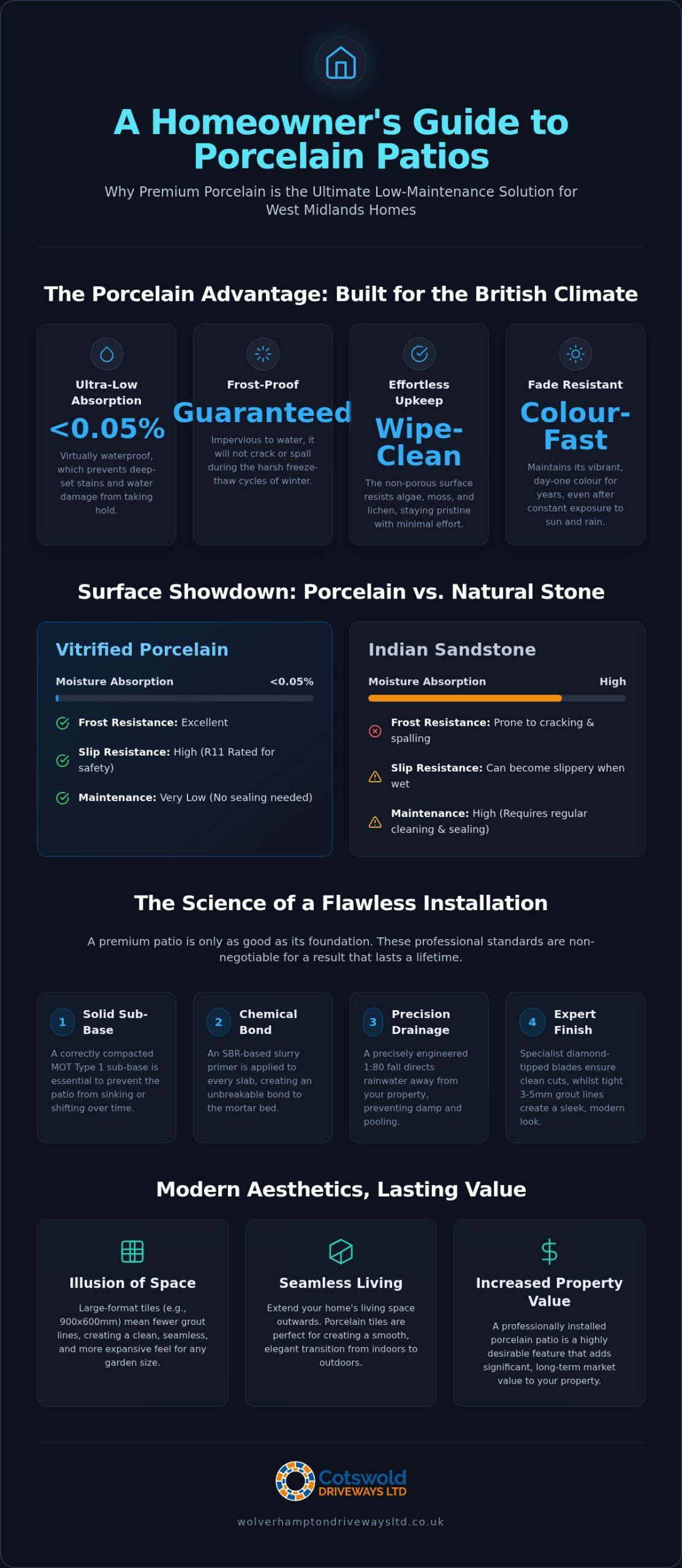
The technical superiority of porcelain is hard to ignore. Traditional paving materials like Indian Sandstone are porous and can absorb significant amounts of water. When you hire professional porcelain patio installers west midlands, they’ll explain that vitrified porcelain has a moisture absorption rate of less than 0.05%. This is a vital statistic for residents in Stafford and Telford, where harsh winter frosts are common. When water gets trapped inside a porous slab and freezes, it expands and causes the stone to crack or spall. Porcelain is naturally frost-resistant because the water simply cannot get in. While the initial cost might be higher than basic concrete slabs, the long-term value is far greater. You won’t be spending money on annual sealants or replacement slabs after a particularly cold winter.
The Rise of Modern Garden Aesthetics in Wolverhampton
In urban areas like Wolverhampton, garden space is often at a premium. Expert porcelain patio installers west midlands now frequently recommend large-format tiles, such as the popular 900x600mm size, to create an illusion of space. These larger slabs mean fewer grout lines, which results in a cleaner and more expansive look. We also see a trend in matching tile colours to local architecture. Whether you’re complementing the iconic Dudley blue bricks or the traditional Stafford red clay, the right porcelain shade can tie your entire property together. Precision is key here; the tight, 3mm grout lines required for porcelain demand a master-craftsman’s touch to ensure the lines are perfectly straight and level.
Low Maintenance Luxury for Busy Families
Life is busy, and few people want to spend their Sundays with a pressure washer. Porcelain is naturally resistant to the growth of algae, moss, and lichen. These organisms struggle to take root on the dense, non-porous surface, meaning your patio stays looking pristine for longer. Maintaining the finish is a wipe-clean reality; usually, a bit of soapy water and a brush are all you need to keep it looking new. Unlike natural stone, which can turn grey and dull over time, porcelain is exceptionally fade-resistant. Your garden will keep its vibrant colour even after years of exposure to the British sun and rain.
The Technical Science of a Lasting Porcelain Patio Installation
Vitrified porcelain is essentially a glass-like material. It is fired at extreme temperatures to create a surface so dense it refuses to absorb water. This density is its greatest strength, but it also presents a unique challenge for installers. Standard mortar won’t stick to it on its own. Expert porcelain patio installers west midlands must use specific techniques to ensure the slabs don’t just sit on the ground, but actually bond to it. Precision is also vital when cutting this material; only specialist diamond-tipped blades can handle the hardness without chipping the edges or causing unsightly cracks.
Proper drainage is another critical factor that separates a DIY job from a professional one. A precise 1:80 fall is required to direct water away from your home’s foundations. This protects your property from damp and prevents pooling on the non-porous surface. Following official guidance for a Lasting Porcelain Patio Installation ensures your project remains compliant with local environmental standards and building regulations. It’s about more than just looks; it’s about engineering a surface that manages the heavy British rainfall effectively.
Why Slurry Primer is Non-Negotiable
Think of slurry primer as a chemical bridge. Because porcelain is non-porous, it won’t naturally “grip” a standard mortar bed. We apply an SBR-based bonding slurry to the back of every slab to create a “sandwich” effect between the tile and the base. Slurry primer is the essential adhesive layer for non-porous tiles. If an installer skips this step, the slabs will likely lift within twelve months. The thermal expansion and contraction caused by our local weather will eventually pop the tiles loose if they aren’t chemically bonded. It’s a common corner cut that leads to expensive, avoidable repairs later.
Sub-Base Standards and Ground Stability
The West Midlands is known for its heavy clay soils. These soils expand when wet and shrink when dry, which can wreak havoc on a poorly prepared patio. We use MOT Type 1 as the industry standard for our sub-bases in 2026. This crushed aggregate provides a stable, load-bearing foundation that won’t shift under the weight of the porcelain. A full mortar bed is the only way to lay these slabs correctly. You might hear about “dot and dab” techniques, but these are a disaster. They leave hollow voids under the tiles where water can collect and freeze. Proper compaction and solid perimeter edging are what keep the structure together for decades. If you’re planning a project, you can view our previous West Midlands installations to see how we handle these technical challenges.
Porcelain vs. Indian Sandstone: Choosing the Right Surface
Choosing between natural stone and modern porcelain is a common dilemma for homeowners. Indian Sandstone has been a staple in British gardens for decades, prized for its natural textures and lower initial price point. However, porcelain patio installers west midlands are seeing a massive shift toward vitrified tiles in 2026. The reason is simple: longevity. While sandstone is often cheaper to install on day one, the total cost of ownership over ten years is frequently higher. Natural stone requires regular sealing to prevent water ingress and staining, whereas porcelain stays pristine with almost no professional maintenance required.
Safety is a priority in our damp climate. Slip resistance ratings are vital when choosing a surface for a family home. Most outdoor porcelain carries an R11 or R12 rating, providing a high level of grip even during a typical West Midlands downpour. This makes it a much safer choice for families with young children or elderly relatives compared to smoother natural stones that can become hazardous when algae takes hold. The Technical Science behind porcelain production ensures that its strength and low porosity are consistent across every single slab. Unlike quarried stone, which can have hidden fissures or soft spots, porcelain is engineered for uniform durability.
Maintenance and Durability Comparison
Sandstone is naturally porous. It acts like a sponge for moisture, oil, and BBQ grease. Over time, this leads to deep-set stains and the growth of black spot lichen that is notoriously difficult to remove. Many people try to fix this with aggressive pressure washing, but this can actually etch the surface of natural stone and blast out the jointing material. Porcelain is impervious to these issues. Its vitrified surface means that even a spilled glass of red wine or grease from a summer burger won’t leave a permanent mark. It’s the stress-free option for those who love entertaining but hate the clean-up.
The Aesthetic Verdict
Aesthetics often come down to the style of your property. If you own a traditional cottage, the riven texture of natural stone might suit the historic charm. However, for modern, minimalist garden makeovers, porcelain is the undisputed winner. It offers perfect colour consistency and crisp, clean lines that natural stone simply cannot match. If you prefer the classic look of bricks or cobbles for your driveway or paths to complement your new patio, you might also want to read about Expert Block Paving Installers in Wolverhampton to see how different materials can work together to transform your home’s exterior.
How to Select Reliable Porcelain Patio Installers in the West Midlands
Choosing the right team is about more than just a price tag. In towns like Cannock and Telford, local reputation is everything. You want a contractor who lives and works in the community and understands the specific challenges of our local geography. Reliable porcelain patio installers west midlands should be happy to provide local references. Ask to speak with previous clients or see a project that has survived at least two West Midlands winters. This proves their work stands up to our local soil conditions and the damp British weather without shifting or cracking.
Always verify that your contractor is fully insured. This isn’t just a formality; it’s your peace of mind if something goes wrong on-site. A professional installer will always provide a detailed written contract before work begins. This document should outline the full scope of work, including ground preparation, material specifications, and a clear timeline for the garden works. If a quote seems “too good to be true”, it almost certainly is. Low prices usually mean the installer is skipping vital technical steps, such as the chemical bonding required for non-porous tiles or the depth of the sub-base excavation.
Essential Questions for Your Paving Contractor
Before you sign anything, have a straight-talking conversation with your potential installer. Use these specific questions to gauge their technical knowledge:
- “Do you use a full mortar bed and SBR slurry primer for every single slab?”
- “How do you manage site drainage and where will the soakaways be positioned?”
- “Can I see a local porcelain project you completed at least two years ago?”
A master-craftsman will answer these questions clearly and confidently. If they hesitate or try to brush off technical details, they might not have the expertise required for a high-end porcelain finish. You need a partner who values precision as much as you do.
Red Flags: Warning Signs of Poor Workmanship
Spotting a “cowboy” builder early can save you thousands in repair costs. One of the biggest warning signs is an installer who suggests “dot and dab” or “spot bedding” methods. These shortcuts leave hollow voids under the tiles where water can collect and freeze, eventually popping the slabs loose. You should also check for proper equipment on-site. If there isn’t a heavy-duty compacting plate (wacker plate) being used during the sub-base preparation, the ground won’t be stable enough to support the porcelain. Finally, avoid anyone who gives vague answers regarding the type of grout they use. High-quality porcelain requires specific, flexible jointing compounds to handle thermal expansion.
If you’re looking for a team that values quality and transparency, request a free no-obligation quote from our local experts today.
Transform Your Garden with Wolverhampton Driveways Ltd
Wolverhampton Driveways Ltd isn’t just another landscaping firm. We pride ourselves on being the reliable local master-craftsman you can trust. Our team provides a professional, straight-talking service across the West Midlands. We don’t believe in jargon or sales pressure. Instead, we focus on high-quality workmanship and honest advice. As expert porcelain patio installers west midlands, we’ve spent years perfecting the technical demands of this premium material. We know that a patio is a significant investment for your home. That’s why we treat every project with the care and precision it deserves from the first shovel in the ground to the final jointing.
Local knowledge makes a real difference to the final finish. We understand the heavy clay soils found in Stafford and the specific drainage requirements needed in Dudley or Telford. This expertise ensures your sub-base is engineered correctly so your patio won’t shift or pool water after a harsh winter. You get total peace of mind knowing our team is fully insured and licensed. We take pride in our local reputation and value the trust our customers place in us. We’re your friendly, approachable neighbours who happen to be experts in paving, and we’re committed to delivering a result that lasts a lifetime.
Serving Wolverhampton, Dudley, and Beyond
Our roots are deep in the local community. We’ve built a reputation for being punctual, hardworking, and exceptionally easy to communicate with. Every garden is different. We offer a bespoke design approach to ensure your outdoor space reflects your lifestyle. Many homeowners now choose to integrate their porcelain patios with Resin Bound Driveways for a total home transformation. This creates a coordinated, high-end look that spans from your front entrance to your back garden, significantly boosting your property’s kerb appeal whilst providing a durable, slip-resistant surface for your family.
Get Your Free, No-Obligation Quote Today
Starting your project is a straightforward process. It begins with a simple phone call and leads to a thorough site visit. During our consultation, we’ll assess your specific ground conditions and listen to your design goals. Our pricing model is completely transparent. You won’t find any hidden extras or surprise costs added to your bill halfway through the project. We provide a clear timeline for the works, moving methodically from the initial excavation to the final reveal. Contact Wolverhampton Driveways Ltd for your porcelain patio quote today and take the first step toward a pristine, low-maintenance garden that you can enjoy all year round.
Secure Your Garden’s Future with Premium Paving
Investing in a porcelain patio is about more than just aesthetics; it’s about choosing a surface that stands up to the West Midlands weather whilst requiring almost zero upkeep. By prioritising technical details like MOT Type 1 sub-bases and vitrified bonding, you ensure your garden remains a safe, non-slip haven for years to come. We’ve seen how porcelain outperforms natural stone in both durability and long-term value, making it the smartest choice for any modern home transformation.
Finding the right porcelain patio installers west midlands is the final step to ensuring your vision is executed with master-craftsman precision. As fully insured and licensed contractors with expert local knowledge of West Midlands soil, we’re here to provide no-nonsense, professional workmanship. You can Request a Free Porcelain Patio Quote from Our Local Experts today. We look forward to helping you create a pristine outdoor space you’ll be proud of for a lifetime.
Frequently Asked Questions
How much does it cost to install a porcelain patio in the West Midlands?
Installation costs vary based on the size of the area, the current state of your garden, and the specific tiles you choose. Factors such as site access and the amount of excavation required for a stable MOT Type 1 sub-base will influence the final quote. Because every West Midlands garden has unique soil conditions, we recommend a site visit to provide an accurate, transparent estimate with no hidden extras.
Is porcelain paving slippery when it rains?
High-quality outdoor porcelain is specifically engineered to be slip-resistant, even in wet British weather. Most tiles used by professional porcelain patio installers west midlands carry an R11 or R12 rating. This means the surface has a textured finish that provides excellent grip for children and elderly family members. It is often much safer than natural stone, which can become hazardous when algae or moss begins to grow on its porous surface.
Do porcelain patios need to be sealed?
Unlike natural stone, vitrified porcelain patios don’t require sealing. The manufacturing process involves firing the clay at extreme temperatures, which creates a non-porous surface that refuses to absorb moisture, oils, or stains. This inherent density means that the colour won’t fade and liquids cannot penetrate the slab. You save time and money by avoiding the annual chemical treatments that traditional paving materials often need to stay in good condition.
Can I install a porcelain patio myself?
While DIY is possible, porcelain is one of the most challenging materials to install correctly. It requires specialist diamond-tipped blades for precision cutting and a chemical bonding slurry to ensure the slabs stick to the mortar bed. Without professional-grade tools and experience in managing a 1:80 drainage fall, you risk expensive mistakes like cracked tiles or poor water runoff. Hiring experts ensures the job is done right the first time.
How long does a professional porcelain patio installation take?
A standard professional installation usually takes between one and two weeks, though this depends on the project’s scale and complexity. The process involves significant ground preparation, including excavation and the laying of a compacted sub-base, followed by the precision laying of the tiles. We work methodically to ensure every stage is completed to the highest standard, allowing for proper curing times so your new patio remains stable for a lifetime.
What is the best way to clean a porcelain patio?
The best way to maintain your patio is with a simple mixture of warm, soapy water and a soft-bristled brush. Because porcelain is non-porous, dirt and BBQ grease sit on the surface rather than soaking in. A quick wash twice a year is usually enough to keep it looking brand new. You can use a pressure washer on a low setting if needed, but avoid aggressive chemicals that might damage the grout joints.
Do I need planning permission for a new patio in the UK?
Planning permission is not typically required for a new patio as long as you manage drainage correctly. Under UK regulations, if you are covering an area over five square metres, the surface should be permeable or water must be directed to a lawn or border to prevent runoff onto public roads. Our team ensures all installations comply with these standards, protecting your home from damp and avoiding any legal issues with local councils.
Why are my porcelain slabs lifting?
Slabs typically lift because an installer skipped the essential slurry primer or used the “dot and dab” method. Because porcelain is so dense, it cannot form a mechanical bond with standard mortar alone. It requires a chemical bridge created by an SBR bonding slurry. If your slabs were laid on “spots” of mortar rather than a full bed, hollow voids underneath will collect water, freeze, and eventually pop the tiles loose.