
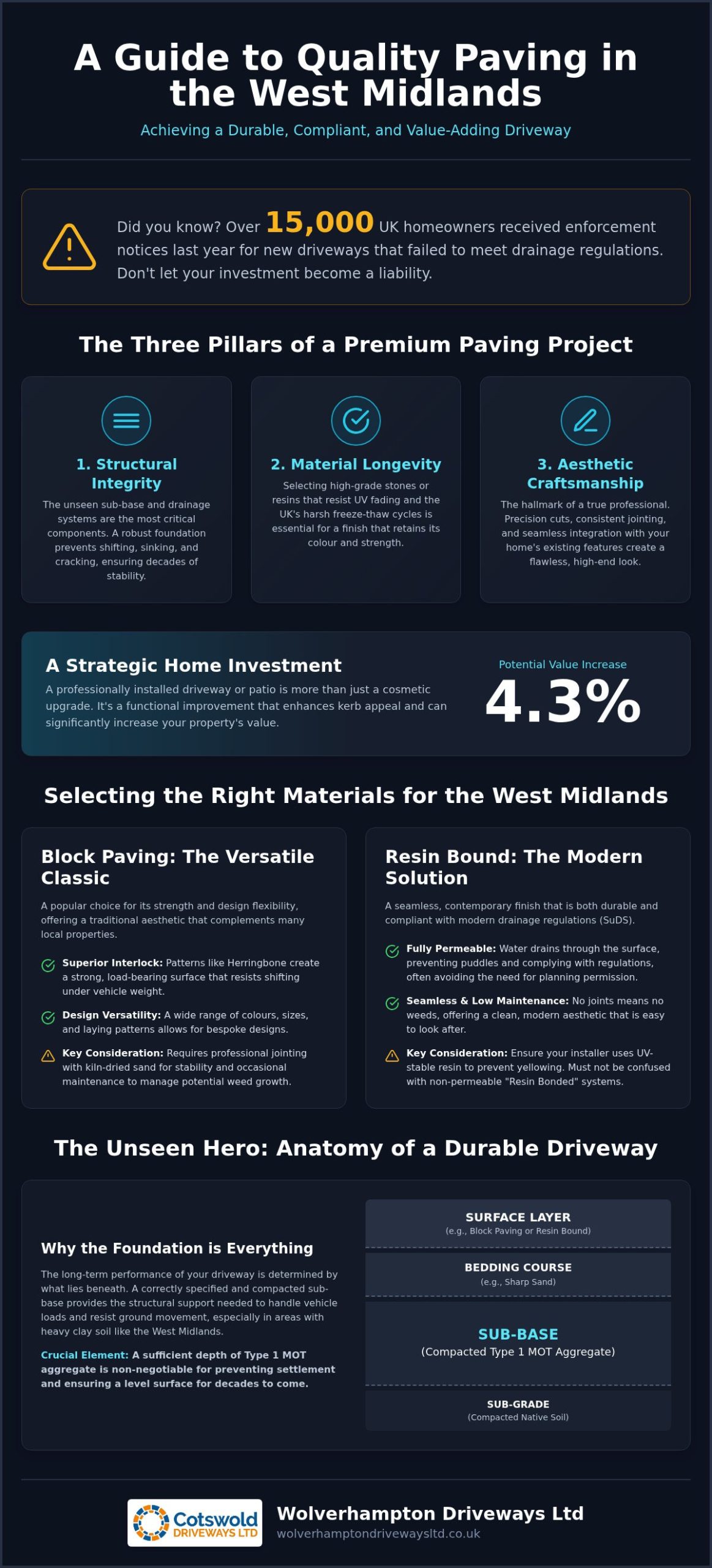
Did you know that over 15,000 UK homeowners were issued enforcement notices last year because their new driveways failed to meet drainage regulations? It’s a sobering thought for anyone planning a home improvement. You want a driveway that looks sharp and stays level, but the fear of sinking blocks or a flooded garage is enough to make any homeowner hesitate. We know you’re looking for more than a quick cosmetic fix. You need quality paving in the West Midlands that stands up to damp winters without cracking under the pressure.
This guide will show you exactly how to achieve a durable finish that lasts for decades. You’ll discover the essential standards for SuDS compliance and learn which materials, from modern resin to traditional block paving, actually suit your property’s specific needs. We’ll also explain how a professionally installed patio can increase your home’s value by approximately 4.3%. We are going to provide the straight-talking advice you need to ensure your project is a stress-free success that survives the elements whilst boosting your kerb appeal.
Key Takeaways
- Learn why a robust structural sub-base is more important than the surface finish for long-term stability and property value.
- Identify the most durable materials for quality paving west midlands homeowners should choose to withstand high humidity and rainfall.
- Understand the specific depth requirements for Type 1 MOT aggregate to ensure your driveway foundation never shifts or settles.
- Discover how to prevent common issues like white salt staining and organic growth using professional maintenance techniques.
- Use our expert checklist to vet local contractors in Dudley, Telford, and Cannock for a transparent, fixed-price project.
What Defines Quality Paving in the West Midlands?
A new driveway or patio is often the single most visible home improvement you’ll undertake. True quality isn’t just surface deep. Quality paving in the West Midlands is defined by a precise engineering process that combines high-grade materials with a structural foundation designed to last for decades. When done correctly, paving isn’t a mere expense; it’s a strategic investment that can increase your property’s value by approximately 4.3% whilst providing a functional, safe space for your family.
Cheap “shortcut” methods often ignore the technical requirements of modern life. Today’s vehicles, particularly heavy electric models, require surfaces with a high weight-bearing capacity. A “fitness for purpose” approach ensures that your driveway won’t sink or spread under the load. Avoiding these common failures requires a commitment to standards that go beyond the minimum requirements. It’s about doing the job right the first time so you don’t have to pay for repairs a few years down the line.
The Three Pillars of a Premium Paving Project
We believe every successful installation rests on three specific standards. First is structural integrity. The layers you cannot see, such as the sub-base and drainage systems, are the most important part of the build. Without a stable foundation, even the most expensive stone will eventually crack or shift. We focus on getting the ground preparation perfect before a single brick is laid.
Second is material longevity. You need stones and resins that resist UV fading and the harsh freeze-thaw cycles common in our region. Finally, there is aesthetic craftsmanship. This is the difference between “good enough” and “perfect” finishing. It shows in the precision of the cuts, the consistency of the joints, and the way the edges meet your home’s existing brickwork. It’s the hallmark of a master-craftsman who takes pride in their reputation.
Why Local Expertise Matters for West Midlands Homes
The West Midlands has a unique mix of architectural styles, from the traditional red-brick terraces of Wolverhampton to the more modern developments in Dudley and Telford. A local expert understands how to match materials to these varied aesthetics to ensure the result looks natural and deliberate. We don’t believe in a “one size fits all” approach.
Our local soil types also play a massive role in the success of your project. Heavy clay, which is common across the region, dictates the specific depth of the excavation required to prevent “heaving” or drainage issues. Using a contractor who understands regional weather patterns and soil conditions is the only way to guarantee quality paving in the West Midlands that stays beautiful and functional for the long haul.
Selecting the Right Materials for Durability and Style
Choosing the right material for quality paving in the West Midlands is about balancing visual appeal with the practical demands of your property. Whether you’re parking a heavy SUV or creating a space for summer dining, your choice dictates the lifespan of the installation. Different materials offer varying levels of permeability, strength, and maintenance requirements. Understanding these differences is the first step toward a successful home improvement project.
Block Paving: The Versatile Classic
Block paving remains a top choice for its versatility and structural strength. Patterns like 90-degree or 45-degree Herringbone aren’t just for show; they provide superior interlock that prevents blocks from shifting under vehicle tyres. For a professional finish, block paving installers in Wolverhampton will always use kiln-dried sand to fill joints. This step is non-negotiable for stability. While block paving requires occasional maintenance to prevent weed growth in the joints, a well-installed driveway can last for decades if the sub-base is correctly prepared.
Resin Bound Systems: The Modern Choice
If you prefer a seamless, contemporary look, resin bound driveways in the West Midlands are an excellent solution. It’s vital to distinguish between “resin bound” and “resin bonded” surfaces. Resin bound systems are fully permeable, allowing water to drain naturally into the ground. This helps you comply with UK government drainage regulations without needing additional planning permission. Always ensure your contractor uses UV-stable resin. This prevents the surface from yellowing or becoming brittle amongst the changing West Midlands weather, keeping the colour vibrant for years.
Natural Stone and Porcelain for Patios
For those focusing on garden patio design in Wolverhampton, material choice shifts toward foot traffic safety and aesthetics. Porcelain has become a dominant trend in 2026 due to its low water absorption (below 0.5%) and high slip resistance. Look for an R11 rating to ensure safety in wet conditions. If you prefer natural stone, Indian Sandstone or Slate offer timeless textures. When selecting a colour, consider how the stone complements the local red brick or render of your home. Grey tones often provide a sharp contrast, while buff or harvest colours create a warmer, traditional feel.
For larger areas where industrial-strength durability is the priority, high-quality tarmac remains a reliable and cost-effective option. It provides a smooth, hard-wearing surface that can be finished with decorative block edges for a more refined look. If you aren’t sure which material is right for your home, you can always request a professional site survey to discuss the best options for your specific budget and property layout.
The Importance of Precision Drainage and Sub-Base Construction
Many homeowners focus on the top layer, but the real work happens underground. For quality paving in the West Midlands, the sub-base acts as the structural skeleton of your driveway. If this layer is insufficient, your expensive blocks or resin will eventually shift, leading to unsightly ruts and cracks. It’s not just about aesthetics; it’s about building a surface that can handle the weight of modern vehicles without failing. Precision engineering at the start prevents expensive repairs later.
Poor drainage is the primary cause of paving failure. When water isn’t managed correctly, it pools on the surface or saturates the ground beneath. This leads to “puddling” and can even cause long-term structural damp in your property’s walls. In the UK, new driveways must be Sustainable Urban Drainage Systems (SuDS) compliant. This is a legal requirement designed to prevent surface water from overwhelming public sewers and causing local flooding. Getting this right isn’t optional; it’s a fundamental part of a professional installation.
Sub-Base Standards: What to Look For
A reliable sub-base starts with the correct materials and preparation. We use a geotextile membrane between the soil and the aggregate. This fabric prevents the soil from mixing with the stone whilst acting as a powerful weed suppressant from the bottom up. For residential driveways, a minimum depth of 150mm of compacted aggregate is the baseline for stability. Type 1 MOT is the industry standard for crushed carboniferous limestone, providing the load-bearing strength required for heavy cars.
Compaction is just as vital as the material itself. Using professional-grade vibrating plate compactors or rollers ensures there are no air pockets left in the stone. If the sub-base isn’t packed tight, the weight of a car will eventually do the job for you, resulting in those all-too-common sunken patches. We treat this stage with the same precision as the final finish because we know it’s the only way to guarantee quality paving in the West Midlands.
Integrated Drainage Solutions
Managing the heavy rainfall typical of our region requires a proactive approach to water flow. We follow industry best practices by calculating a precise “fall” or gradient for every project. A typical driveway requires a fall of at least 1:80 to ensure water flows naturally away from your home’s foundations. This water is then captured by Aco drains or directed into soakaways on your property.
Paving and drainage specialists are preferred over general builders for these tasks because they understand the complex interplay between surface levels and water management. We don’t just lay blocks; we create a managed environment for your property. By integrating high-capacity drainage channels and permeable sub-layers, we ensure your driveway remains dry, safe, and fully compliant with all local regulations.
Maintaining Your Paving Against the West Midlands Climate
The West Midlands is known for its persistent rainfall and high humidity, which can take a toll on any exterior surface. Because our region often sits on heavy clay soil, moisture is retained in the ground for longer periods compared to areas with sandier foundations. This constant dampness creates the perfect environment for moss, algae, and lichen to thrive. To maintain quality paving in the West Midlands, you must understand how these local environmental factors affect different materials over time.
Efflorescence is another common local issue. This white, salty staining often appears on new block paving or concrete as moisture evaporates. Whilst it’s a natural phenomenon, it can detract from your property’s kerb appeal. For stubborn stains or organic growth that won’t budge with a garden hose, professional driveway cleaning and repairs can restore the surface to its original glory. Regular maintenance is far cheaper than a full replacement.
Winter care requires a balanced approach. Rock salt is essential for safety during a Black Country frost, but it should be used with caution. It’s perfectly fine for tarmac, but excessive use on concrete paving can lead to surface scaling or “spalling” over several winters. Always sweep away excess salt once the ice has melted to protect the integrity of the finish.
Seasonal Care Checklist
- Spring: Clear away moss and algae that have taken hold during the damp winter months. A mild detergent and a stiff brush are usually enough for minor growth.
- Autumn: Remove fallen leaves promptly. If left to rot, they release tannins that can leave dark, stubborn stains on natural stone and porcelain.
- Sealing: We recommend sealing your paving every two to three years. This provides an extra layer of protection against oil spills, UV fading, and frost damage.
Repairing vs. Replacing
Identifying problems early is the key to longevity. Look out for “blown” joints where the mortar or jointing sand has washed away. This allows water to ingress into the sub-base we discussed in the previous section, which can eventually lead to sinking. If you catch these issues early, a simple repair or resurfacing is often enough. However, if the structural integrity of the sub-base is compromised, a full excavation may be necessary to ensure the driveway remains safe and level.
Don’t wait for small cracks to become major hazards. You can contact us for a professional maintenance assessment to keep your paving in peak condition all year round.
Partnering with Expert Paving Installers in Wolverhampton
Finding the right team is the final piece of the puzzle. You’ve already learned about materials and sub-bases, but the success of your project depends on the skill of the people behind the machinery. To secure quality paving in the West Midlands, you need a partner who values durability over speed. We advocate for a “straight-talking” approach. A dependable contractor provides honest advice and transparent, fixed-price quotes. This ensures there are no hidden surprises once the excavation begins.
It’s often tempting to choose the lowest bid. However, the cheapest quote frequently leads to the most expensive repairs in the future. If a price is significantly lower than others, the contractor might be skimping on the sub-base or using inferior materials. Always ask to see a local portfolio. Observing on-site professional behaviour in areas like Telford, Cannock, or Dudley will tell you everything you need to know about a team’s work ethic and commitment to quality.
The Quoting Process: What to Expect
A professional quoting process always starts with a site visit. This is essential for checking ground levels and access requirements. Without it, an accurate price is impossible to calculate. You should use the following checklist when vetting your installer:
- Site Assessment: Did they check the drainage “fall” and soil type?
- Written Contracts: Does the quote specify material grades and drainage plans?
- Structural Detail: Are they willing to discuss the specific depth of the Type 1 MOT sub-base?
- SuDS Compliance: Do they understand the legal requirements for surface water management?
Be wary of red flags, such as contractors who demand cash-only payments or those who refuse to provide a written agreement. A master-craftsman has nothing to hide and will be happy to explain every stage of the project to you.
Why Choose Wolverhampton Driveways Ltd?
Wolverhampton Driveways Ltd understands the unique challenges of local properties. We know how the regional weather and soil conditions impact the longevity of quality paving in the West Midlands. Our team is fully insured and licensed, giving you total peace of mind from the first day on-site to the final sweep-up. We are committed to delivering high-quality results that enhance your property’s value and kerb appeal. We take pride in our “no-nonsense” work ethic and our reputation as a reliable local partner.
Contact Wolverhampton Driveways Ltd today for a free, no-obligation quote on your paving project.
Transforming Your Property with Confidence
Investing in your home’s exterior is a significant decision. You now have the knowledge to distinguish a professional installation from a cut-price shortcut. Remember that the longevity of quality paving in the West Midlands depends on the structural sub-base just as much as the aesthetic finish. By prioritising robust groundworks and ensuring your project meets current drainage requirements, you’re protecting your property’s value for the long term.
Our team of fully insured and licensed contractors brings expert master-craftsman workmanship to every project across Wolverhampton, Telford, Dudley, and Cannock. We don’t believe in one-size-fits-all solutions; we offer straight-talking advice tailored to your specific needs. Whether you’re planning a durable tarmac driveway or a contemporary porcelain patio, we’re here to ensure the process is transparent and stress-free. Don’t leave your home’s kerb appeal to chance.
Get a Free Quote for Your Quality Paving Project
Your property deserves a finish that stands the test of time. We look forward to helping you create a stunning outdoor space that you’ll be proud of for years to come.
Frequently Asked Questions
Do I need planning permission for a new driveway in the West Midlands?
You don’t need planning permission if the surface is permeable or if you direct rainwater to a lawn or border to drain naturally. However, if you use an impermeable material over five square metres, you must apply for permission. This national rule applies across Wolverhampton and the wider region. If required, the application fee is currently £262 and the process usually takes between 8 and 12 weeks.
How long does a typical block paving installation take to complete?
A typical driveway installation usually takes between five and seven working days to complete. This timeline includes the initial excavation, sub-base preparation, and the final laying of the blocks. Larger or more complex projects with intricate patterns may take slightly longer. We always provide a clear schedule before we start the project. This ensures you know exactly when your property will be back to normal and ready for use.
Is resin bound paving really better than traditional tarmac?
Resin bound surfaces offer superior permeability compared to traditional tarmac, making them an excellent choice for quality paving in the West Midlands. Whilst tarmac is incredibly durable and cost-effective for large areas, resin bound systems provide a decorative, seamless finish that doesn’t require additional drainage planning. Both materials are hard-wearing, but resin is often preferred for modern homes seeking a high-end look with minimal maintenance requirements over several years.
What is the best paving material for a steep driveway?
Tarmac and block paving are generally the best options for steep gradients due to their excellent grip and structural stability. Tarmac provides a consistent, high-friction surface that handles an incline well. Block paving is also effective, provided the sub-base is reinforced to prevent any shifting. We don’t recommend loose gravel for steep slopes as the stones will inevitably migrate to the bottom, creating a maintenance headache and potential safety hazard.
Can you lay new paving over an existing concrete driveway?
We strongly advise against laying new paving directly over an existing concrete driveway. This “overlay” method often leads to failure because the new surface relies on the old concrete, which may have hidden cracks or drainage issues. A full excavation is the only way to guarantee a stable sub-base and proper SuDS compliance. Doing the job right from the start prevents the new surface from shifting or cracking prematurely.
How soon can I park my car on my new driveway after installation?
For block paving, you can usually park your car immediately after the jointing sand has been swept in. Tarmac driveways typically require at least 48 hours to cool and harden, especially during the warmer summer months. Resin bound surfaces generally need 24 to 48 hours before they can handle the weight of a vehicle. We always provide specific guidance based on the material chosen and the current local weather conditions at the time.
What is SuDS compliance and why does it matter for my home?
SuDS stands for Sustainable Urban Drainage Systems, and it’s a legal requirement for all new front driveways in the UK. The goal is to manage surface water at the source rather than letting it overwhelm public sewers. This is achieved by using permeable materials or directing runoff to soakaways. Compliance is essential for quality paving in the West Midlands to prevent local flooding and avoid potential enforcement notices from your council.
How do I prevent weeds from growing through my block paving?
Weeds don’t actually grow through the blocks; they grow from seeds that land in the joints from above. To prevent this, we use a geotextile membrane during construction and ensure joints are filled with high-quality kiln-dried sand. Regular sweeping is the most effective way to stop organic matter from accumulating. For long-term protection, applying a professional sealant every few years creates a barrier that makes it much harder for weeds to take root.