
The “tarmac vs block paving” debate is often framed as a simple choice between budget and beauty, but that is a bit of a myth. In reality, the best choice for your home in 2026 depends far more on your local drainage needs and the quality of the sub-base than the surface material itself. You want a driveway that looks brilliant on day one and stays that way for a decade. It’s frustrating to see a new installation ruined by weeds poking through or a surface that softens the moment the British summer actually arrives.
We understand that choosing a new driveway is a significant investment, and you need to get it right. This guide provides a straight-talking comparison of costs, durability, and kerb appeal to help you make an informed decision. We’ll break down the latest SUDS drainage regulations, explain how to spot a contractor who might be cutting corners, and show you exactly which material will truly add the most value to your property.
Key Takeaways
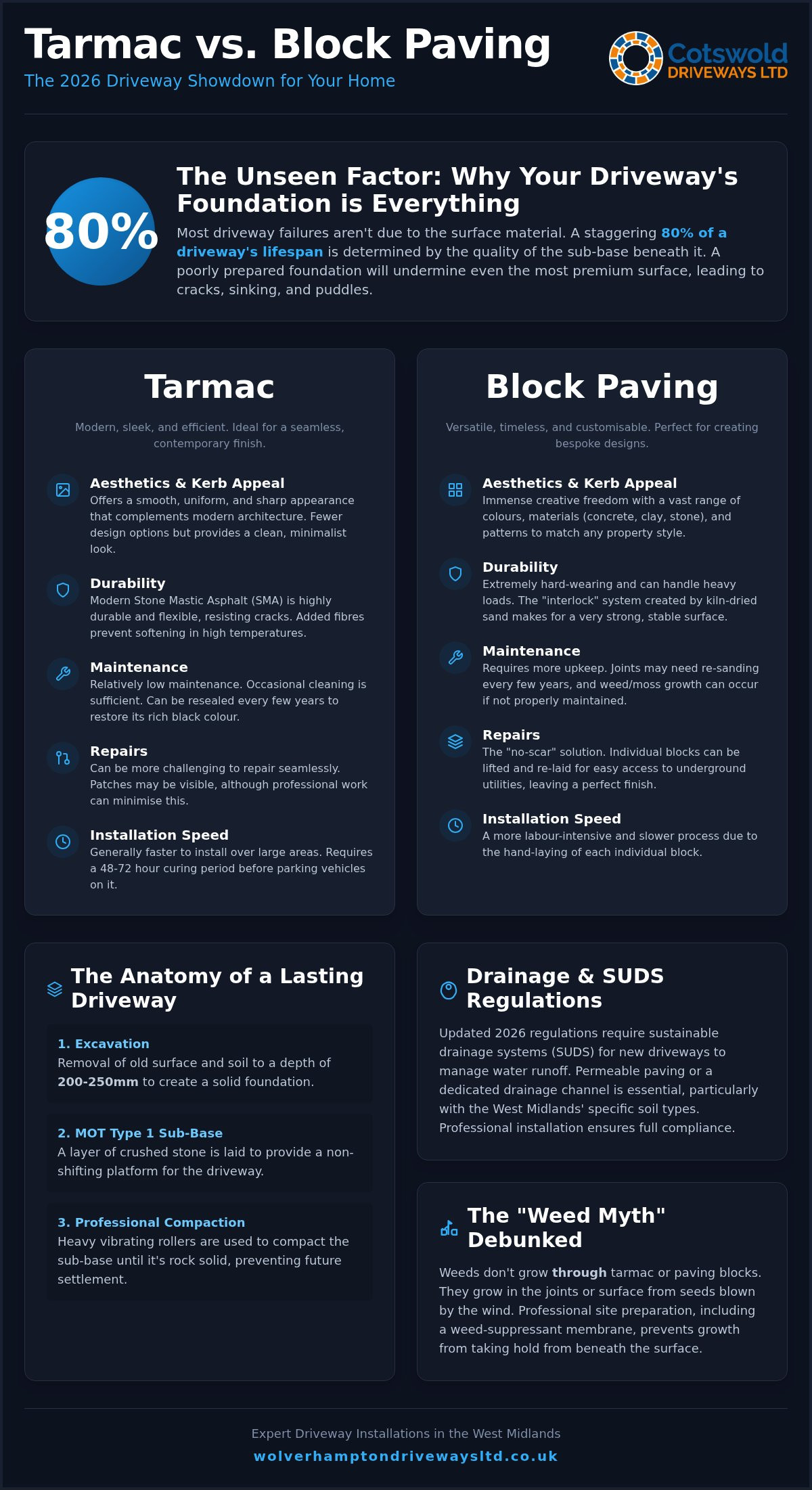
- Learn why the sub-base accounts for 80% of your driveway’s lifespan and how to ensure your contractor isn’t cutting corners during installation.
- Compare the long-term durability and maintenance requirements in our tarmac vs block paving breakdown to see which material fits your lifestyle.
- Discover the truth about the “weed myth” and how professional site preparation prevents growth from taking hold beneath the surface.
- Understand the 2026 SUDS drainage regulations and why the West Midlands’ specific soil types require a tailored approach to water management.
- Identify which surface offers the best return on investment and kerb appeal for your specific property type and budget.
Tarmac vs Block Paving: The Great Driveway Dilemma for 2026
Deciding on a new surface for your home isn’t just about picking a colour. It’s a significant financial decision that affects your property’s value for years. In 2026, we’ve noticed a clear trend amongst homeowners in the West Midlands. People are moving away from quick, cheap fixes. They want a long-term investment that stands up to the weather and looks great. Research suggests a well-installed driveway can add up to 10% to your home’s value, so the stakes are high. The tarmac vs block paving choice is usually the first hurdle you’ll face.
What is Modern Tarmacadam?
Forget what you think you know about old-fashioned tar. Modern tarmac is a sophisticated material. It uses bitumen binders instead of coal tar to create a flexible, hard-wearing surface. Most high-quality residential drives now use Stone Mastic Asphalt (SMA). This contains added fibres that give the surface extra strength and prevent it from softening during a scorching British summer. If you look into the Asphalt concrete composition, you’ll see why it’s become a favourite for those who want a sleek, seamless finish. It’s practical, it’s fast to install, and it looks incredibly sharp against modern architecture.
The Versatility of Block Paving
Block paving offers a completely different aesthetic. It’s a modular system, which means we lay individual bricks or blocks to create a pattern. This gives you immense creative freedom. You can choose from standard concrete blocks, traditional clay paviours, or even natural stone. The variety of colours and shapes means you can perfectly match your home’s existing brickwork. Beyond the looks, block paving is incredibly practical. If you ever need to access underground utilities like water pipes or internet cables, we can simply lift the blocks and relay them once the work is done. It’s a “no-scar” solution that solid surfaces just can’t match.
Both options have their merits. Your final tarmac vs block paving decision will likely depend on your budget, the size of the area, and how much time you want to spend on maintenance. Tarmac is often the go-to for larger expanses where cost-efficiency is key. Block paving is frequently the choice for those looking to maximise kerb appeal. However, neither will last if the ground beneath isn’t prepared properly. We’ll look at why the sub-base is the most critical part of the job in the next section.
Structural Integrity: Comparing the Foundations and Installation
Most homeowners focus entirely on the surface colour or pattern. That is a mistake. In our experience, 80% of a driveway’s lifespan is determined by what happens beneath the ground. If the sub-base is poor, even the most expensive surface will fail within a few years. For a standard domestic drive, we usually excavate to a depth of 200mm to 250mm to ensure there is enough room for a substantial foundation. This foundation is what prevents your driveway from sagging under the weight of a modern SUV.
The core of any professional installation is the MOT Type 1 sub-base. This is a specific blend of crushed stone that provides a solid, non-shifting platform. We use heavy vibrating rollers to compact this material until it’s rock solid. Professional compaction is the most critical step. Without it, the ground will naturally settle over time, leading to puddles and cracks. Before you start paving your front garden, you must be certain the ground is prepared to handle the load.
The Tarmac Installation Process
Tarmac is laid in two distinct layers. First, we apply a coarse base coat. This provides the structural strength of the drive. Once that’s set, we add the finer wearing course on top for a smooth, waterproof finish. Edging is vital here. We install solid concrete pin kerbs or brick borders to act as a frame. This prevents the tarmac from fraying at the edges or cracking over time. Once laid, tarmac needs time to cure. You can usually walk on it after a few hours, but we recommend waiting at least 48 to 72 hours before parking a car on it. In the tarmac vs block paving comparison, tarmac is often faster to install, but it requires this strict “no-drive” period to set properly.
The Art of Laying Block Paving
Block paving requires a slightly different approach to groundwork. Instead of laying directly onto the sub-base, we use a 30mm to 40mm layer of grit sand. This is known as the laying course. We use a process called “screeding” to level this sand perfectly. Each block is then hand-laid into your chosen pattern. The final stage is what makes the surface incredibly strong. We spread kiln-dried sand over the blocks and use a vibratory plate to shake it into the joints. This creates “interlock,” which prevents the blocks from shifting. It’s a methodical process that rewards patience with a very durable finish.
Getting the groundwork right is the only way to ensure a long-lasting result. If you’re unsure which foundation suits your land best, our team can provide a free driveway assessment to help you decide. Whether you choose tarmac or blocks, a solid foundation is non-negotiable for a driveway that stays level for decades.
Maintenance, Durability, and the Kerb Appeal Factor
A driveway isn’t just a place to park; it’s a long-term asset. When comparing tarmac vs block paving, lifespan is a major consideration. Tarmac typically lasts between 12 and 20 years, depending on the quality of the bitumen and the intensity of use. Block paving often stretches much further, with many installations looking excellent for 25 years or more. For homeowners in the West Midlands, this durability translates directly into property value. A pristine driveway can add up to 10% to your home’s market price, making the initial outlay a savvy investment.
Many people worry about weeds, but there’s a common “weed myth” to clear up. Weeds don’t actually grow through the blocks or the tarmac. Instead, seeds drop into the surface dirt or the sand between blocks and take root from the top down. Regular sweeping prevents this build-up. Repairability is where the two materials differ most. If you have a stubborn oil stain or need to fix a pipe, block paving is a dream. You simply lift the affected blocks and replace them. Tarmac is harder to patch without leaving a visible “scar,” though a full redressing can restore its look.
Long-term Maintenance Requirements
Keeping your drive in top condition doesn’t have to be a chore. Block paving requires a quick pressure wash once a year to remove moss and dirt. You’ll also need to top up the kiln-dried sand in the joints to keep them locked tight. Tarmac is even lower maintenance, though it can benefit from “redressing” with a new bitumen layer every few years to keep it flexible. Applying a driveway sealer is an optional but highly beneficial way to protect your surface from UV rays and oil spills. Whilst you’re planning these tasks, don’t forget to ensure your setup complies with the UK Sustainable Urban Drainage Systems (SUDS) regulations to avoid issues with local councils.
Aesthetics and Kerb Appeal
The visual impact of your choice is massive. Tarmac has evolved beyond basic black; you can now choose deep reds or even buff colours to suit your property. It provides a clean, understated backdrop that works well with modern new builds. Block paving, however, offers an almost infinite palette. From weathered clay for a Victorian terrace to sleek granite-style blocks for a contemporary home, the patterns are endless. You can find plenty of inspiration for your project in our guide to Expert Block Paving Installers in Wolverhampton. Whether you prefer a classic herringbone or a modern offset bond, the right pattern makes all the difference in the tarmac vs block paving aesthetic battle.
Drainage, SUDS Regulations, and Local West Midlands Planning
In 2026, managing rainwater is no longer an afterthought; it’s a legal requirement. Sustainable Urban Drainage Systems, known as SUDS, are now a mandatory part of most new developments following the implementation of Schedule 3 of the Flood and Water Management Act 2010. This means your driveway must be designed to manage surface water runoff on your own land rather than letting it pour into the public sewers. For homeowners in the West Midlands, this presents a specific challenge. Our region is famous for heavy clay soil, which acts like a sponge that’s already full. It doesn’t absorb water quickly, making professional drainage design essential to prevent puddles and local flooding.
The rules for planning permission are quite clear. If you’re surfacing a front garden larger than five square metres using impermeable materials, you must install a soakaway or a drainage system. If you ignore these regulations, you could face enforcement notices from the local council. The tarmac vs block paving choice often comes down to how you prefer to handle this water. You can either use a permeable surface that lets water through or an impermeable one that directs it to a dedicated drainage point.
Making Tarmac and Blocks SUDS Compliant
Both materials can meet modern standards through clever engineering. Permeable block paving is a popular choice; these blocks have small gaps or “pockets” that allow water to filter down into a specially prepared shingle base. For tarmac, which is naturally impermeable, we install linear drains and soakaways. These systems capture the run-off at the edge of the drive and store it underground until it can soak away naturally. Professional contractors prioritise this sub-base preparation to ensure your drive doesn’t become a swimming pool during a typical British downpour.
Local Planning Nuances in Wolverhampton and Dudley
Wolverhampton and Dudley councils have specific preferences, especially regarding highway crossovers or “dropped kerbs.” If your project involves changing the access point to the road, you’ll likely need separate approval. We often find that local authorities favour designs that reduce the burden on aging Victorian sewer pipes. You can check our detailed Expert Tarmac Driveways in Wolverhampton guide for specific drainage specs that meet these local requirements. Getting the technical details right at the start saves a lot of stress later on.
If you’re worried about how these regulations affect your specific property, we can help. You can book a professional site survey to ensure your new driveway is fully compliant with the latest 2026 drainage laws. Whether you land on the tarmac vs block paving side of the fence, our team ensures the water has somewhere to go.
The Final Verdict: Which Driveway Suits Your Home?
Choosing between these two surfaces often comes down to your priorities for the next twenty years. It’s a balance of upfront cost against long-term flexibility. There is no single “winner” in the tarmac vs block paving debate; there is only the best fit for your specific property, budget, and local soil conditions. Whilst tarmac offers a sleek, modern efficiency, block paving provides a level of customisation that can truly transform the character of a house. At Wolverhampton Driveways Ltd, we specialise in both, which means we can offer unbiased advice based on what your land actually needs.
Choose Tarmac If…
- You have a large surface area: If you’re surfacing a drive that fits four or more cars, the cost-per-metre efficiency of tarmac is hard to ignore.
- You want a seamless finish: Modern SMA asphalt provides a smooth surface that is easy to sweep and perfect if you have children who use the drive for sports or cycling.
- Speed is a priority: Tarmac is often faster to install than individual blocks, meaning less time with a skip on your lawn and more time enjoying your new drive.
Choose Block Paving If…
- You want a bespoke look: If you want to match your driveway perfectly to your house bricks or create intricate borders, blocks are the only way to go.
- You’re planning for the future: If you ever need to repair a leak under the drive or fix a single oil stain, you’ll be glad you can lift and replace individual blocks.
- You want maximum kerb appeal: For many buyers, a professionally laid block drive suggests a premium property, often resulting in a higher perceived value when it’s time to sell.
Next Steps: Getting Your Free Quote
Before you commit to any project, you need a clear, written estimate. Avoid door-to-door traders who offer “leftover tarmac” at a discount; these deals rarely include the vital sub-base preparation we’ve discussed. A professional contractor should be fully insured and happy to explain their drainage strategy. When we visit your site, we’ll check the levels of your land and the condition of the existing ground to ensure your new surface won’t sink or flood. To get started, you can Contact Wolverhampton Driveways Ltd for your free local quote today. We’ll provide a straight-talking assessment and a transparent price that helps you make the right choice for your home.
Ready to Transform Your Home’s Kerb Appeal?
Your choice in the tarmac vs block paving debate ultimately rests on your property’s specific needs and your long-term goals. Whether you prioritise the bespoke elegance of individual blocks or the clean, cost-effective efficiency of modern asphalt, the most important factor is the quality of the groundwork. A solid sub-base and strict adherence to 2026 SUDS drainage regulations ensure your investment stays level and puddle-free for years to come. Don’t leave your project to chance by hiring traders who cut corners on the foundations.
As fully insured and licensed West Midlands specialists, we provide no-nonsense expert advice tailored to your land. We’ve built a local reputation for high-quality workmanship across Wolverhampton, Dudley, and Cannock. We’re here to help. If you’re ready to move forward, Get a Free, No-Obligation Quote for Your New Driveway today. Your home deserves a durable, beautiful finish that stands the test of time.
Frequently Asked Questions
Is tarmac cheaper than block paving in 2026?
Yes, tarmac is generally the more cost-effective option for initial installation when weighing up tarmac vs block paving. The material and labour costs for laying a solid surface are typically lower than the hand-laid process required for blocks. However, the price gap depends on the size of the area and the complexity of the drainage required. For large expanses, tarmac offers significant savings, whilst block paving is seen as a premium long-term investment.
How long does a tarmac driveway take to set before I can drive on it?
You should ideally wait at least 48 to 72 hours before parking a car on a newly laid tarmac driveway. Whilst the surface may feel firm enough to walk on within a few hours, the bitumen needs time to cure and harden fully. In particularly hot weather, this process can take longer. Driving or turning your wheels too early can leave permanent scuff marks or indentations in the fresh asphalt.
Do weeds grow through block paving or just in the joints?
Weeds almost exclusively grow in the joints between the blocks rather than through the materials themselves. Airborne seeds land in the kiln-dried sand or accumulated debris and germinate from the surface downwards. A high-quality sub-base and weed membrane prevent growth from beneath the drive. Regular maintenance, such as sweeping and occasional re-sanding, is the most effective way to keep your driveway looking pristine and weed-free.
Can I lay a new tarmac drive over my old one?
It is possible to lay a new “overlay” of tarmac over an existing surface, but only if the original base is structurally sound. If your current driveway has significant cracks, subsidence, or drainage issues, an overlay will simply follow those faults and fail quickly. We generally recommend a full excavation to ensure the foundations meet 2026 standards. This approach guarantees a longer lifespan and prevents the new surface from shifting.
Which driveway material is best for steep slopes?
Tarmac is often the superior choice for steep gradients because it provides a continuous, high-grip surface. The texture of modern asphalt concrete offers excellent traction for vehicles in wet or icy conditions. Whilst block paving can be used on slopes, the individual blocks may be more prone to shifting over time if the lateral forces are extreme. Tarmac’s seamless nature ensures the surface stays locked in place regardless of the incline.
Do I need planning permission to change from tarmac to block paving?
You don’t usually need planning permission if the new surface is permeable or if rainwater is directed to a lawn or border to drain naturally. This rule applies to any front garden over 5 square metres. However, if you are switching from a permeable system to an impermeable one without a proper soakaway, you may be in breach of SUDS regulations. It’s always best to check with local West Midlands authorities first.
How do I prevent my block paving from sinking over time?
The only way to prevent sinking is to ensure the sub-base is correctly excavated and compacted. Using MOT Type 1 stone, compacted in layers with a heavy vibratory plate, creates the necessary structural integrity. Sinking is usually a sign that the contractor cut corners on the groundwork or didn’t account for soft spots in the soil. A professional installation focuses on these hidden layers to support the weight of heavy vehicles.
Is red tarmac more expensive than black tarmac?
Yes, red tarmac typically costs more than standard black bitumen because it requires specialised clear binders and specific pigments. The manufacturing process is more niche, which leads to a higher price point for the materials. Despite the extra cost, many homeowners find the aesthetic tarmac vs block paving choice easier when they see how a deep red surface can complement traditional red-brick homes in the Wolverhampton area.