
A driveway isn’t just a place to park your car; it’s the first thing people notice about your Cannock home and can add up to 10% to its total value. You likely want a front entrance that looks like a natural extension of your property rather than an afterthought. It’s frustrating to see driveways in the WS11 area that start sinking or sprout weeds within months because the sub-base wasn’t handled with care. When exploring traditional block paving styles Cannock homeowners often feel overwhelmed by choices, wondering if a herringbone pattern suits their semi-detached or if a vintage cobble is better for a period cottage.
We understand that you want a result that stays level and weed-free for decades. This 2026 guide will help you navigate those decisions with confidence, ensuring you get a “fit and forget” installation that stands the test of time. We will break down the most enduring styles, explain the latest SuDS drainage regulations, and show you how to achieve high-end kerb appeal without the stress of planning permission hurdles. From selecting the right materials to understanding the technical standards of BS 7533-103:2026, we have you covered.
Key Takeaways
- Explore the most popular traditional block paving styles Cannock homeowners use to match the unique heritage of Victorian and post-war properties.
- Learn how to choose between Herringbone and Stretcher Bond patterns to ensure your new driveway provides maximum interlocking strength and stability.
- Discover the best colour palettes to complement local architecture, including how to match the iconic Staffordshire Red brickwork found throughout the WS11 area.
- Understand the difference between standard and tumbled blocks to achieve a weathered, authentic finish that looks like a natural extension of your home.
- Master the technical essentials of a “fit and forget” installation, from 2026 SuDS drainage compliance to the critical 200mm sub-base rule.
Why Traditional Block Paving Remains Cannock’s Favourite Driveway Choice
Block paving is a robust surfacing method where individual blocks are laid in specific patterns to distribute weight effectively across the surface. It has a long and storied history; you can trace the history of block paving back to ancient Roman roads, but today it serves a decorative and practical purpose for the modern home. In Cannock, this method is especially popular because it mirrors the local architectural character. Whether you live in a red-brick Victorian terrace near the town centre or a post-war semi in Heath Hayes, the traditional block paving styles Cannock residents choose provide a timeless aesthetic that tarmac simply cannot match. It offers a sense of permanence and quality that reflects well on the homeowner’s pride in their property.
The Enduring Popularity of Paving in South Staffordshire
Homeowners across South Staffordshire often prefer the decorative flexibility of blocks over more uniform surfaces. Unlike a single sheet of tarmac, block paving allows for intricate borders and contrasting colours that highlight your house’s unique features. We’ve seen a significant shift towards permeable styles recently. This is driven by 2026 environmental standards and the need for Sustainable Urban Drainage Systems (SuDS). These systems allow water to filter through the driveway rather than flooding the street. Our West Midlands weather can be unpredictable. However, a well-laid block drive handles temperature swings and heavy rain without cracking or shifting, provided the foundation is solid and professionally compacted.
Investment vs. Cost: The Long-Term Perspective
Choosing a driveway is an investment in your home’s future. While the initial outlay might be higher than some other materials, the lifecycle costs are remarkably low. A professionally installed driveway can last 25 years or more whilst maintaining its structural integrity. One of the biggest advantages is the ease of repair. If a single block gets stained by oil or a utility company needs to dig up a section, you can simply lift and replace the affected blocks. You don’t have to patch the whole drive, which often leaves an ugly scar on tarmac surfaces. This makes it a practical choice for busy families who want a “fit and forget” solution that stays looking fresh.
A high-quality front entrance can increase your property value by 5% to 10% according to industry estimates. It creates that essential first impression for potential buyers and sets your home apart from others on the street. For those looking for Expert Block Paving Installers in Wolverhampton and the surrounding areas, it’s clear that local homeowners value craftsmanship that stands the test of time. We focus on providing a no-nonsense, durable solution that ensures your investment stays level and beautiful for decades. It is about more than just kerb appeal; it is about building a foundation that adds genuine value to your property.
Timeless Paving Patterns: Choosing the Right Layout for Your Home
Selecting the right pattern is about more than just looks. It is a technical decision that affects how your driveway handles the weight of modern vehicles. In the WS11 and WS12 areas, we see a wide range of property sizes, and the layout you choose can actually change how your home is perceived from the street. When exploring traditional block paving styles Cannock homeowners often find that the right pattern can turn a standard driveway into a standout feature of the neighbourhood.
Herringbone: The Engineer’s Choice for Driveways
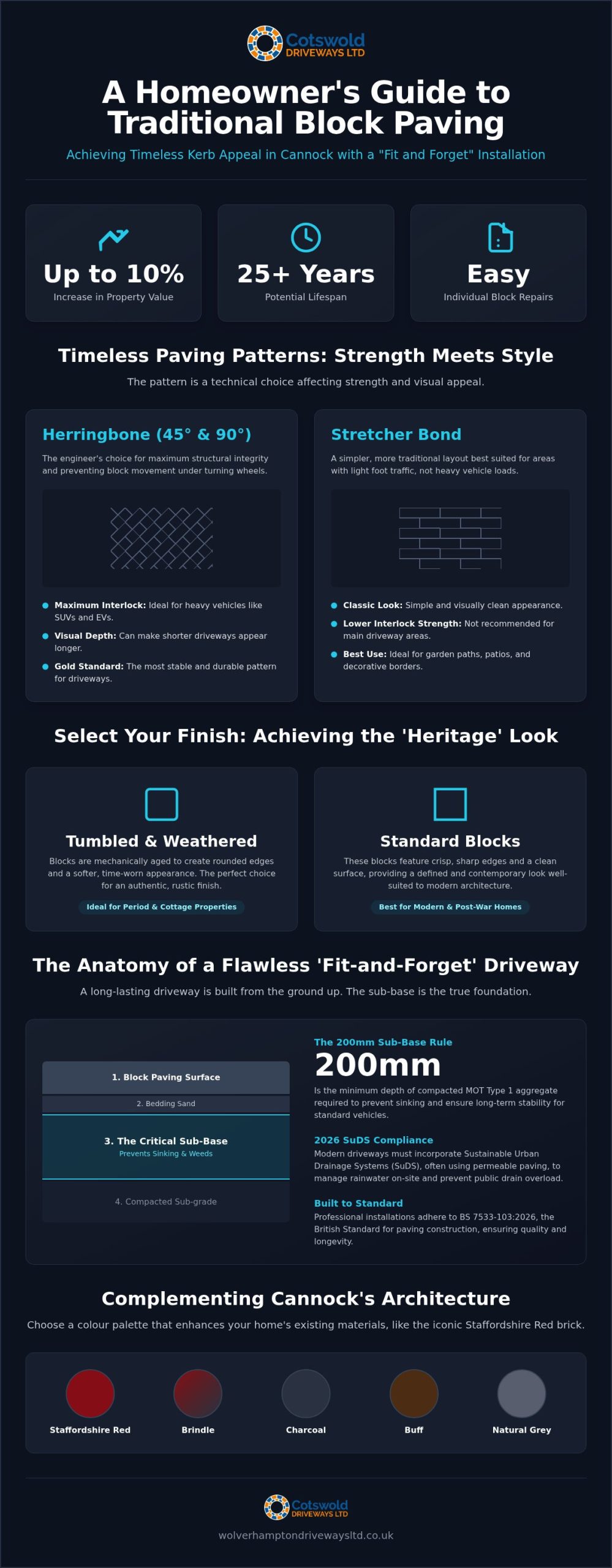
The herringbone pattern is widely considered the gold standard for structural integrity. By laying blocks at either a 45-degree or 90-degree angle, you create a complex interlock that prevents the blocks from shifting when you turn your steering wheel. This is particularly vital if you own a heavy SUV or electric vehicle. A 45-degree herringbone is the most stable pattern for heavy SUVs because it spreads the load more evenly across the sub-base.
Beyond strength, this pattern offers clever visual benefits. If you have a shorter driveway, laying the herringbone pattern pointing towards the house can create an illusion of length. It is also worth checking the UK government guidelines regarding how these patterns affect water runoff; certain layouts can help direct surface water toward drainage channels more effectively. This ensures your drive remains functional whilst looking professional.
Stretcher Bond and Basketweave: Decorative Alternatives
Not every area of your property needs the heavy-duty interlock of herringbone. For narrow garden paths or decorative borders, the Stretcher Bond is a fantastic choice. It mimics traditional brickwork with blocks laid end-to-end in parallel rows. It creates a clean, minimalist look that doesn’t distract from the house itself. This simplicity is often the best match for modern-traditional hybrid homes.
Basketweave is seeing a real revival amongst Cannock residents with period properties. This “Tudor” style involves pairs of blocks laid at right angles to each other, creating a woven effect. While it is beautiful, it is best reserved for patios or footpaths where vehicle traffic is minimal. To make these simpler patterns pop, we often recommend using a contrasting charcoal or brindle border to frame the area. For those with larger frontages, adding circular features or octants can break up a large expanse of paving, adding a touch of luxury to the overall design.
If you are unsure which layout fits your space, our team at Wolverhampton Driveways Ltd can show you examples of these patterns in action across the local area.
Weathered vs. Standard Blocks: Achieving the ‘Heritage’ Look
Choosing the right block type is just as important as the pattern itself. In Cannock, where we have a mix of period properties and modern estates, the texture of your paving can either clash with or complement your home. When researching traditional block paving styles Cannock, you will usually find three main material options: standard concrete, tumbled blocks, and premium clay pavers. Each has its own strengths in terms of slip resistance, durability, and how well they maintain their appearance over time.
Standard concrete blocks are the most common choice. They feature sharp, clean edges and a uniform colour palette. They work well for homeowners who want a modern-traditional hybrid feel. However, they can show wear and tear more clearly than their weathered counterparts. For a truly authentic finish, many residents now look toward materials that offer more character from the moment they are laid.
The Rise of Tegula Paving in Cannock
Tumbled blocks, frequently referred to as Tegula paving, have become a staple in the WS11 area. These blocks undergo a “tumbling” process during manufacturing which distresses the edges and surfaces. Tumbled blocks provide a softer, more ‘established’ look from day one. This makes them perfect for matching the natural stone features or older brickwork found amongst Cannock’s historic buildings. This shift in preference for traditional block paving styles Cannock homeowners are making is largely due to the low-maintenance nature of tumbled products.
There is a practical side to this choice too. Weathered blocks hide dirt and tyre marks much better than smooth-faced alternatives. Because the surface is naturally uneven, minor stains don’t stand out as much, keeping your driveway looking cleaner for longer. When selecting these materials, it is vital to work with accredited landscaping professionals who understand how to grade and lay textured blocks. Poor installation can lead to pooling water in the “valleys” of the blocks, so the sub-base and drainage must be precise.
Clay Pavers: The Premium Traditional Choice
If you want the ultimate heritage finish, clay pavers are the gold standard. Unlike concrete, which is coloured with pigments that can fade over decades, clay is a natural material. The rich reds and deep oranges are fired into the block itself. It is the “forever” block because its colour will never wash away. Whilst they are a premium investment, they offer a level of sophistication that concrete struggles to match. Installation requires a skilled hand; clay pavers often need a specific type of jointing sand to prevent the blocks from moving whilst allowing for natural expansion.
Many homeowners who choose clay for their driveway also carry the look through to the rear of their property. If you are considering this, you might find our guide on Garden Patio Design Wolverhampton helpful for planning a cohesive look across your entire outdoor space. Clay provides excellent slip resistance due to its naturally dense texture, making it a safe choice for both vehicles and pedestrians in the damp West Midlands climate.
Selecting the Right Colour Palette for Cannock’s Architecture
Your driveway’s colour is the bridge between your home and the street. In Cannock, where the iconic Staffordshire Red brickwork dominates many residential streets, choosing the wrong shade can make your property look washed out or cluttered. When selecting traditional block paving styles Cannock residents find that the most successful projects either complement the existing brickwork or provide a sharp, professional contrast. It’s about creating a harmonious look that enhances your home’s kerb appeal and reflects the character of the neighbourhood.
Using deep red or charcoal blocks is a classic way to honour local heritage. However, the multi-tonal approach is often the most practical choice for a busy family home. Brindle blocks, which feature a mix of red and charcoal tones, are incredibly popular because they hide oil drips and tyre marks much better than solid colours. To give the installation a high-end finish, we always recommend a charcoal border. This darker “frame” anchors the driveway and makes even simple patterns look like a bespoke architectural feature.
Complementing Red Brick and Terracotta
Matching your driveway colour exactly to your house bricks can sometimes feel overwhelming. It can result in a “sea of red” that lacks visual definition. Instead, consider the power of contrast. For Cannock’s 1930s-style homes, charcoal and slate grey blocks provide a modern-traditional look that makes the red brickwork pop. If you prefer a softer entrance, a warm palette including Autumn Mix or Heather tones can create a welcoming feel without being too aggressive. Buff and brindle tones are also excellent for properties with stone lintels or lighter rendering, as they pick up those secondary architectural details beautifully.
Practicality and Maintenance in the West Midlands
The damp West Midlands climate means you need to think about long-term maintenance when picking a palette. Lighter colours, such as buff or light grey, tend to show moss and algae more clearly after a wet winter. We suggest using high-quality blocks from reliable suppliers like Marshalls or Wolverhampton. These manufacturers use superior pigments that resist UV fading and stay vibrant for longer. Even with the best materials, every driveway needs occasional care to look its best. You can find detailed advice on keeping your blocks pristine in our guide to Driveway Cleaning and Repairs Stafford.
If you want to see how these colours look against real homes in your area, book a free design consultation and we can bring physical samples directly to your door.
Professional Installation: Why the Sub-Base is the Real Driveway
While choosing between different traditional block paving styles Cannock homeowners often focus on the surface finish. However, the blocks are only as good as what lies beneath them. A driveway is a structural element of your home, and its longevity depends entirely on the foundation. Without a deep, compacted sub-base, even the most expensive clay pavers will eventually sink or shift under the weight of modern vehicles. We follow a strict “200mm Rule” for our installations. This involves excavating to a depth that allows for a substantial layer of MOT Type 1 stone, which is then compacted in stages to create a solid, unyielding platform.
Edge restraints are another critical component that many DIY enthusiasts or cut-price installers overlook. Think of these as the “anchor” for your driveway. We bed heavy-duty kerbs or blocks into a concrete haunching to prevent the pattern from spreading over time. This is especially vital for intricate traditional layouts like Herringbone, where the interlocking strength relies on the blocks being kept under constant lateral pressure. Without these restraints, the West Midlands dampness can cause the jointing sand to wash out, leading to loose blocks and eventual structural failure.
Drainage and Permeability Regulations
In 2026, managing surface water is a legal necessity. Under SuDS (Sustainable Urban Drainage Systems) regulations, any new driveway over five square metres must either be permeable or have a dedicated drainage system. If you choose a non-permeable traditional block, you must install ACO drains and soakaways to ensure water stays within your property boundary. Professional installation ensures water flows away from your home’s foundations, protecting your damp-proof course. Failing to meet these standards can result in enforcement notices from Cannock Chase District Council, which can complicate future house sales.
Why Choose a Local Specialist?
The soil conditions in South Staffordshire are often heavy in clay. This type of ground expands and contracts significantly with the changing seasons, which can wreak havoc on poorly installed driveways. As local specialists, we understand these specific ground conditions and adjust our sub-base depth accordingly. Our team at Wolverhampton Driveways Ltd is committed to the community, providing no-nonsense quotes and a reliable, punctual service that treats your property with respect. We don’t believe in “patching” problems; we believe in doing the job right the first time so you can enjoy a maintenance-free entrance for decades.
We take pride in being the “reliable local master-craftsman” for the WS11 and WS12 areas. Our focus is on high-quality workmanship that adds genuine value to your home. Contact us today for a free block paving quote in Cannock and let’s start planning your property’s transformation.
Transform Your Cannock Home with Expert Paving
Choosing a new driveway is a significant decision that impacts your property’s value and daily experience. We’ve explored how traditional block paving styles Cannock homeowners love, such as Herringbone and Tegula, provide a perfect blend of heritage aesthetics and modern durability. Remember that the secret to a drive that lasts 25 years isn’t just the blocks you see on top. It’s the 200mm compacted sub-base and the meticulous attention to SuDS-compliant drainage that keeps your entrance level and flood-free.
As fully insured local specialists with over 20 years of West Midlands experience, we understand the specific clay-heavy ground conditions in your area. We take pride in delivering no-nonsense, high-quality workmanship that stands the test of time. Whether you’re matching a Victorian terrace or a modern semi, our team is here to ensure your project is stress-free from start to finish. We focus on getting the technical details right so you don’t have to worry about sinking or weeds.
Request Your Free Block Paving Quote in Cannock
Let’s create a front entrance that you’ll be proud to drive onto every single day. We look forward to helping you transform your home’s kerb appeal with a professional installation that lasts.
Frequently Asked Questions
Do I need planning permission for a block paved driveway in Cannock?
You don’t usually need planning permission if your driveway uses permeable materials or directs rainwater to a soakaway on your own land. Under UK law, any new surface over five square metres must meet these SuDS requirements to prevent local flooding. If you choose an impermeable traditional block paving style and don’t provide on-site drainage, you’ll need to apply to Cannock Chase District Council. We design our installations to be compliant from the start.
How long does it take to install a traditional block paving driveway?
A standard driveway installation usually takes between three and five days to complete from start to finish. This timeframe includes the initial excavation, laying the 200mm sub-base, and the final compaction of the blocks. Larger or more complex projects with intricate patterns or circular features might take slightly longer. We pride ourselves on being punctual and efficient, ensuring your front entrance is back in use as quickly as possible without rushing the foundation work.
What is the best way to prevent weeds from growing in my block paving?
The best way to stop weeds is to ensure a high-quality installation with a weed-suppressant membrane and properly compacted jointing sand. Most weeds actually grow from seeds landing in the surface joints rather than coming up from underneath. Regular sweeping and the occasional application of jointing sand top-ups will prevent organic matter from settling. For long-term peace of mind, applying a professional sealer can further protect the sand and discourage growth.
Can block paving handle heavy vehicles like vans or large SUVs?
Yes, block paving is exceptionally durable and can easily handle the weight of large SUVs, vans, and electric vehicles. The key is choosing a 45-degree herringbone pattern, which provides the best interlocking strength and prevents blocks from shifting under heavy steering. When exploring traditional block paving styles Cannock homeowners often choose this layout for its structural benefits. We also ensure the sub-base is deep enough to support heavier modern vehicle loads.
How much does a new block paving driveway cost in Cannock?
The cost of a new driveway depends on several factors, including the total area size, the type of blocks you choose, and the complexity of the pattern. Premium materials like clay pavers will naturally cost more than standard concrete blocks. Other considerations include the amount of excavation required and the specific drainage solutions needed for your property. We offer free, no-nonsense quotes to provide an accurate figure based on your unique requirements and site conditions.
Is it better to use clay or concrete blocks for a traditional look?
Clay pavers are often considered the premium choice because their natural colours won’t fade over time, whereas concrete blocks are generally more budget-friendly. Both materials can achieve a beautiful traditional look. Concrete offers a wider variety of shapes and textures, making it very versatile for modern-traditional hybrids. Clay is exceptionally dense and slip-resistant, which is a major benefit in the damp West Midlands climate. Your choice often depends on your property’s specific architectural character.
What is ‘Tegula’ paving and why is it so popular for older homes?
Tegula paving is a type of tumbled block that features distressed edges and a weathered surface to mimic aged stone. It is incredibly popular for older homes in Cannock because it creates an established look that feels original to the property. These blocks are also very practical because their uneven texture helps to hide tyre marks and minor oil drips. When searching for traditional block paving styles Cannock residents often find Tegula to be the most authentic heritage option.
Does block paving require a lot of maintenance compared to resin?
Block paving requires slightly more maintenance than resin bound surfaces, but it is much easier and cheaper to repair. You’ll need to sweep it occasionally and top up the jointing sand every few years to keep the blocks stable. In contrast, while resin is very low maintenance, it can be difficult to patch if it cracks or needs to be dug up for utility access. Block paving allows you to lift and replace individual units without leaving a mark.